
Market Report · May 18, 2026

This market report covers trends, opportunities, and forecasts in the global automotive specialty coating technology market to 2031 by technology (solvent-borne, waterborne, and powder), application (engine & exhaust, interior, transmission, wheel rims, and others), and region (North America, Europe, Asia Pacific, and the Rest of the World)
We'll send your sample report shortly.
![Automotive Specialty Coating Technology Market Trend and Forecast by Application [Value from 2019 to 2031]:](https://lucintel.com/images/Automotive-Specialty-Coating-Technology-Market-Segment.png "Automotive Specialty Coating Technology Market Trend and Forecast by Application [Value from 2019 to 2031]:")
• Eco-friendly Coatings: There is a growing demand for eco-friendly coatings arising out of strict environmental regulations and consumer demands for sustainable products. Waterborne and powder coatings are replacing solvent-borne alternatives for reductions in VOC emissions and greater sustainability in production. It should be noted, however, that attainment of global standards in the form of compliance with environmental standards will depend on this transition.
• Advanced Durability and Performance: Coatings are being developed to withstand harsh automotive environments, including extreme temperatures, UV exposure, and chemical exposure. Enhanced durability is becoming a key focus, especially in automotive exterior coatings, where resistance to scratches, chips, and weathering is vital. These coatings improve the longevity of vehicles while reducing maintenance costs.
• Lightweight Coatings: A huge thrust for efficiency with the advent of electric vehicles has brought a growing need for lighter coatings that contribute to the reduction of overall weight for vehicles. Lighter coatings help reduce the overall weight of the vehicle, which leads to increased fuel efficiency and driving range in the case of electric vehicles. These coatings help automobile manufacturers achieve better performance in addition to sustainability.
• Customization and Aesthetics: The automobile industry is progressively growing towards individual vehicle aesthetics, thereby creating increased specialty coatings usage, which provides a range of finishes and effects. From matte to glossy finish, and from the capability to be customized in a thousand colors, coatings have become a critical part of vehicle design and consumer choice, thereby allowing manufacturers to receive an advantage in the market.
• Automated and Efficient Coating Processes: The application of automotive coatings is increasingly being automated. Within robotic coating technology, major improvements are emerging, as well as advancements in artificial intelligence (AI) coating application, making the application more accurate and effective by the use of robots at a faster speed. Then, it will reduce the cost of production by minimizing waste and maintaining high quality over lots of units for production. These emerging trends are changing the landscape of the market for Automotive Specialty Coating Technology in their pursuit of sustainability, performance, and appeal. The shift towards eco-friendly coatings and the rising demand for long-lasting, light-in-weight, as well as highly customised coatings, lead to new developments in the sector. Simultaneously, improvements in automation and AI-driven processes enhance efficiency and reduce waste. These trends propel the automotive coatings sector into a more sustainable, performance-oriented, and consumer-driven future.
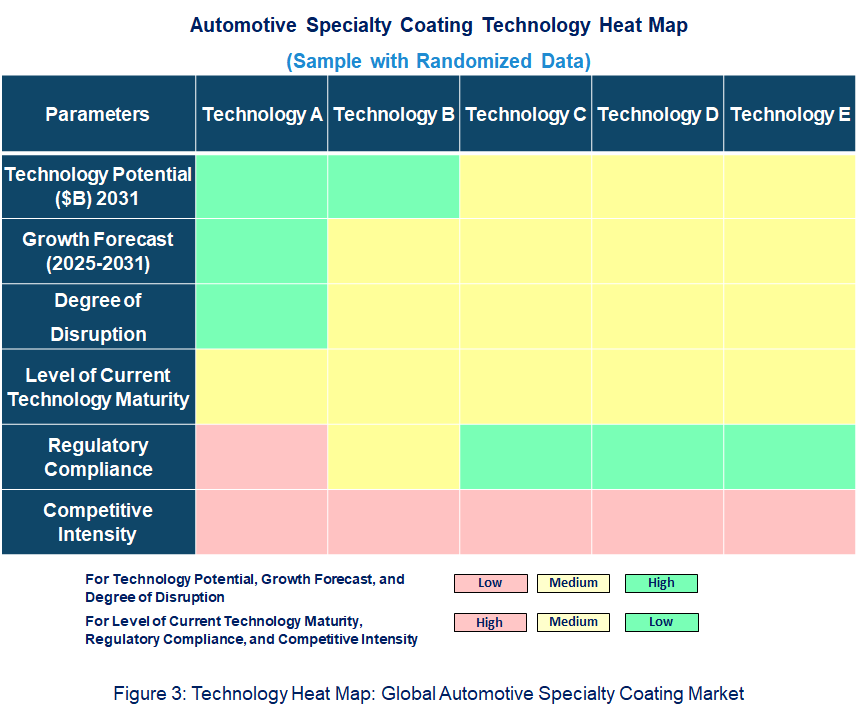
• Technological Potential: In the automotive specialty coatings market is high, especially concerning waterborne and powder coatings, as these technologies provide greater environmental benefits, such as reduced VOC emissions and improved durability for electric vehicles and autonomous cars that require specialist coatings for heat resistance and battery protection.
• Degree of Disruption: It is moderate, as solvent-based coatings are still widely used, though there is a trend of substitution with more environmentally friendly alternatives. Waterborne and powder coatings are gradually gaining more market share, but they have not yet become fully disruptive to the traditional coating market.
• Current Technology Maturity Level: It is considered mature for waterborne and powder coatings, which have seen excellent improvements in performance, curing times, and finish quality. While these technologies are well established in the automotive industry, research and development activities continue to improve them.
• Regulatory Compliance: It plays an important role in the switch to greener, cleaner coatings, due to regulations like VOC limits, environmental sustainability, and safety standards.
• PPG Advances Waterborne Coatings Technology: PPG has gained leadership within the automotive specialty market through its various waterborne technologies, including coatings. The company has researched and developed solutions that reduce volatile organic compounds (VOCs) while still providing superior durability and finishes. PPG's coatings are increasingly applied to automotive interior and exterior applications to meet tighter environmental regulations and sustainability trends. This development helps automakers meet global environmental quality standards while maintaining the highest levels of aesthetic and performance in automotive designs.
• BASF SE: BASF has focused on the development of eco-friendly coatings, such as waterborne and powder coatings, to provide premium refinishing for automobiles in pursuit of sustainability. Coatings for electric vehicles require higher temperature resistance and better corrosion protection. Their goal is to limit energy use in manufacturing while meeting regulatory requirements and customer requests for sustainable, high-quality solutions.
• Axalta Coating Systems: Axalta has expanded its portfolio with high-performance coatings for electric and conventional vehicles. Additionally, the company has introduced waterborne and powder coatings that offer better performance in less time, which are necessary to enhance manufacturing productivity. Axalta's commitment to innovation has led to the development of high-performance coatings for the automotive industry, providing stronger protection against weathering, degradation, and corrosion—factors that directly affect vehicle lifespan and quality.
• Akzo Nobel: Akzo Nobel has focused on environmentally friendly coating solutions for the automotive sector with an emphasis on sustainability without sacrificing performance. Their "Sikkens" brand of coatings incorporates waterborne and UV-cured technologies that provide more strength and improved resistance against scratches and stains. They have also improved powder coatings by providing support for components with high heat resistance, such as engine and exhaust parts. This enhances vehicle quality while still adhering to strict environmental guidelines.
• Sherwin-Williams: Sherwin-Williams has continued to push the boundaries of formulation to provide much-needed high-performance coatings for automotive applications, both in powder coating and sustainable solutions. Their products demonstrate outstanding durability, corrosion resistance, and superior finish quality, meeting the growing demand for environmentally responsible coatings. Sherwin-Williams has also led the development of coatings for electric vehicle-related components, where battery and motor parts require specific protective coatings to ensure long-term durability and performance. These developments indicate the continuous push for innovations in the automotive specialty coatings market, particularly toward sustainable technologies that do not compromise performance or regulatory compliance. As car manufacturers face increasing pressure to meet stringent environmental standards, these key players are investing in advanced systems to enhance vehicle aesthetics while improving overall efficiency and reducing the automotive industry's environmental footprint.
• Increasing Demand for Environmental Friendliness: Moving forward, the automotive sector will follow a 'greener' route with a focus on environmental concerns and life cycle assessment. As a result, there is an increased demand for waterborne and powder coatings to replace conventional solvent-based systems, offering reduced VOC emissions and complying with environmental standards worldwide.
• Enhanced Emphasis on Durability and Performance: Coatings that enhance vehicle durability are in rising demand, particularly for higher-stress applications such as exterior body panels, powertrain components, and battery packs in electric vehicles. The high-performance protection offered by specialty coatings, such as powder coatings, results in longer vehicle life and lower maintenance costs.
• Regulatory Compliance and Environmental Standards: Tightening environmental regulations, especially those related to VOC emission standards, have compelled the automotive coatings market to increasingly look toward more environmentally friendly solutions. Manufacturers must innovate to meet regulations set by agencies such as the EPA in the United States and European standards like REACH.
• Coating Technology Advancement: The market is fueled by the continued development of coating technologies, such as UV-curable coatings and improved waterborne solutions. These technologies cure faster, provide better finishes, and increase production efficiency, giving automakers a competitive edge. Important Challenges Facing the Automotive Specialty Coating Technology Market:
• High Production Costs for Advanced Coatings: Green and advanced coatings, such as powder coatings and high-performance waterborne solutions, can be more costly to produce compared to traditional solvent-based coatings. This acts as a barrier to entry for smaller manufacturers or those with limited budgets.
• Compatibility Issues with Existing Systems: Transitioning from traditional solvent-borne coatings to newer, more sustainable systems, such as waterborne or powder coatings, may raise compatibility issues with existing systems. This transition often requires higher upfront investments in equipment upgrades and training for manufacturers.
• Supply Chain Constraints: The automotive coatings market is affected by supply chain disruptions, mainly due to the global scarcity of raw materials and production components for specialized coatings. These disruptions can cause delays in manufacturing timelines and increase costs for automotive producers and coatings suppliers. The growth in the specialty coating technology market for automobiles is considerable, driven by regulatory pressures, sustainability trends, and a focus on vehicle performance and longevity. Eco-friendly coatings, such as waterborne and powder solutions, are changing the market by improving durability, meeting environmental standards, and enhancing vehicle aesthetics. However, high production costs, compatibility issues, and supply chain disruptions must be addressed to maintain the momentum in this rapidly evolving market. Automotive manufacturers are well-positioned to meet consumers' needs and regulatory requirements while improving vehicle quality and sustainability as they continue to innovate and adopt advanced coating technologies.
• PPG
• BASF SE
• Axalta Coating Systems
• Akzo Nobel
• Sherwin-Williams
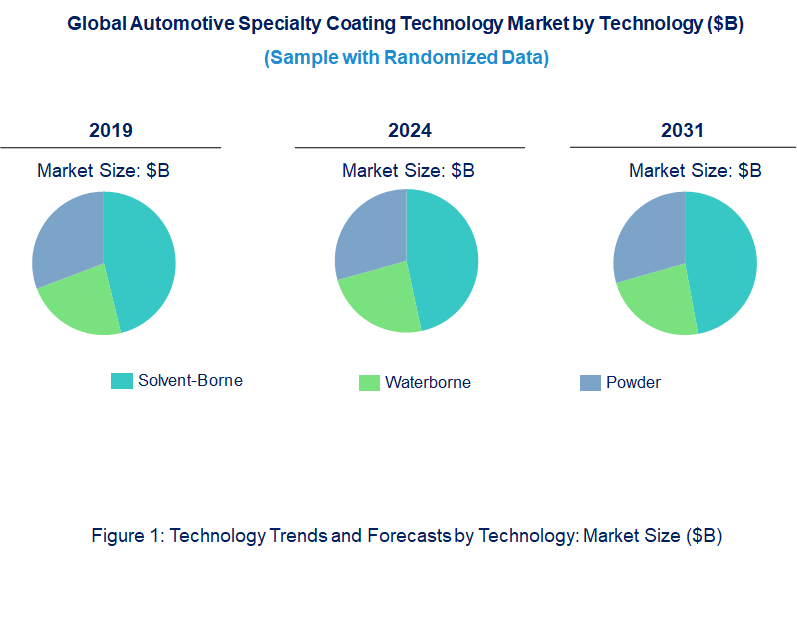
• Technology Readiness by Type of Different Technologies for Automotive Specialty Coating Technology Market: The technology readiness of solvent-borne, waterborne, and powder coatings in the automotive specialty coating market varies. Solvent-borne coatings are mature and widely adopted, particularly for high-performance applications, but face significant challenges due to regulatory pressures. Waterborne coatings are rapidly evolving, with key applications in high-volume manufacturing processes such as OEM automotive and aftermarket services, due to improved formulation technologies. Powder coatings have reached a high level of readiness, especially in non-critical applications, with benefits such as reduced energy usage and cost efficiency. Competitive levels are high for solvent-borne coatings, while waterborne and powder coatings are becoming more prominent as regulatory compliance and sustainability become essential in automotive manufacturing.
• Competitive Intensity and Regulatory Compliance for Different Technologies in the Automotive Specialty Coating Technology Market: In terms of competitive intensity and regulatory compliance, solvent-borne coatings face increasing pressure due to tightening environmental regulations around VOC emissions, creating a challenging competitive environment. Waterborne coatings offer a favorable regulatory position due to their reduced environmental impact, enhancing their competitiveness in markets with stringent regulations. Powder coatings also enjoy strong regulatory compliance, offering a significant edge in terms of environmental benefits. The competitive landscape in the automotive specialty coating market is influenced by factors such as production costs, innovation in coating formulations, and regulatory adaptability, with waterborne and powder technologies leading in compliance-driven markets.
• Disruption Potential of Different Technologies for Automotive Specialty Coating Technology Market: The disruption potential of different technologies such as solvent-borne, waterborne, and powder coatings in the automotive specialty coating market varies significantly. Solvent-borne coatings have a high impact due to their excellent durability and aesthetic qualities but are hindered by environmental concerns over VOC emissions. Waterborne coatings, which have a lower environmental footprint, are increasingly gaining traction due to stricter environmental regulations, offering improved sustainability while maintaining performance. Powder coatings are poised for growth due to their efficient application process, cost-effectiveness, and zero VOC emissions, which align well with the rising demand for eco-friendly solutions in automotive applications.
• Solvent-Borne
• Waterborne
• Powder
• Engine & Exhaust
• Interior
• Transmission
• Wheel Rims
• Others
• North America
• Europe
• Asia Pacific
• The Rest of the World
• Latest Developments and Innovations in the Automotive Specialty Coating Technology Technologies
• Companies / Ecosystems
• Strategic Opportunities by Technology Type


Choose a license that fits your team. Instant PDF delivery.
Prices exclude taxes. Instant delivery. Custom licensing available on request.
Market Report · May 18, 2026
Market Report · May 18, 2026
Market Report · May 18, 2026
Trusted partner for strategic intelligence and business growth


Receive a complimentary market analysis tailored to your industry. Our analysts will identify key growth opportunities and competitive dynamics specific to your business.

Market size, growth rate, and key trend analysis for your specific sector.

Top competitor positioning and market share analysis.

Strategic recommendations backed by data-driven insights.
Get curated market intelligence and competitive moves straight to your inbox.
By subscribing, you agree to receive our monthly insights. Unsubscribe anytime.
Receive a complimentary market analysis tailored to your industry. Our analysts will identify key growth opportunities and competitive dynamics specific to your business.
Market size, growth rate, and key trend analysis for your specific sector.
Top competitor positioning and market share analysis.
Strategic recommendations backed by data-driven insights.
Get curated market intelligence, emerging trends, and competitive moves straight to your inbox each month.
By subscribing, you agree to receive our monthly insights. Unsubscribe anytime.
We'll send your sample report shortly.