
Market Report · May 18, 2026

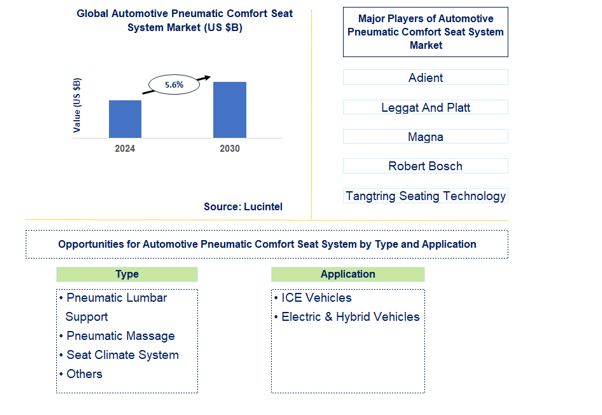
Key data points: The growth forecast = 5.6% annually for the next 6 years. Scroll below to get more insights. This market report covers trends, opportunities, and forecasts in the global automotive pneumatic comfort seat system market to 2030 by type (pneumatic lumbar support, pneumatic massage, seat climate system, and others), application (ICE vehicles and electric & hybrid vehicles), and region (North America, Europe, Asia Pacific, and the Rest of the World)
We'll send your sample report shortly.
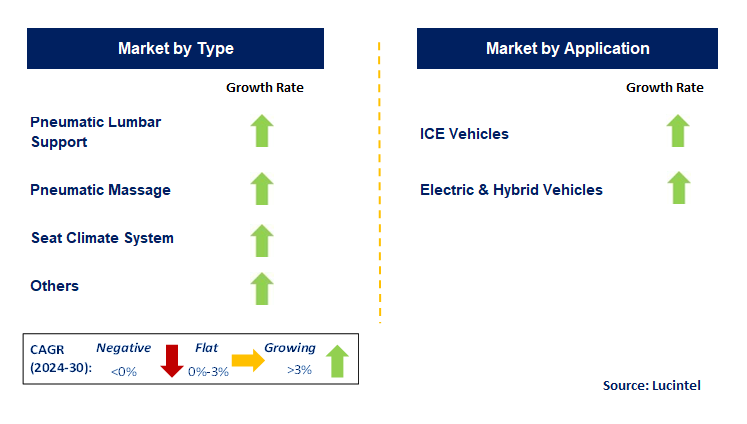
• Lucintel forecasts that, within the type category, pneumatic lumbar support is expected to witness the highest growth over the forecast period.
• Within the application category, ICE vehicle is expected to witness higher growth.
• In terms of regions, APAC is expected to witness the highest growth over the forecast period. A more than 150-page report is developed to help in your business decisions.
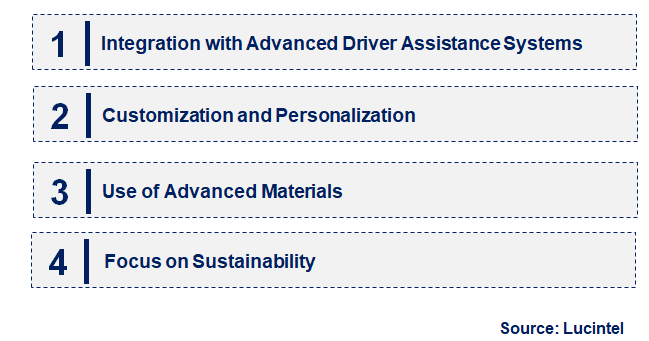
• Integration with Advanced Driver Assistance Systems (ADAS): Pneumatic comfort seats are increasingly being integrated with ADAS to enhance comfort based on driving conditions, including dynamic lumbar support and real-time adjustable seating positions, thereby enhancing the overall driving experience and safety.
• Customization and Personalization: There is an increasing trend towards highly customized pneumatic seat systems. This can be attributed to factors such as adjustable firmness, available heating or cooling options, and even memory settings that cater to individual preferences, offering more passenger satisfaction than standardized settings alone.
• Use of Advanced Materials: The comfort and durability of pneumatic seat systems are being improved through the use of new materials, such as high-performance foams and durable polymers, providing better cushioning, support, and overall seat performance.
• Focus on Sustainability: Eco-friendly materials and waste reduction in production are increasingly used by manufacturers as they adopt sustainable practices. This aligns with the automotive industry’s shift toward greener technologies. These trends are driving significant advancements in the automotive pneumatic comfort seat system market. Key factors influencing future seat comfort and performance include ADAS integration, higher customization levels, advanced materials, and environmental conservation.
• Advanced Adjustability Features: Recent advancements include advanced pneumatic systems offering dynamic adjustability and improved comfort features. Such systems have multiple air bladders that can be individually regulated to adjust lumbar support and seat firmness according to driver or passenger preferences, enhancing occupant comfort and driving experience.
• Enhanced Integration with Vehicle Systems: Other vehicle systems, including ADAS and climate control, are increasingly interconnected with pneumatic seat systems. Through this integration, seats can adjust to changing conditions, such as weather or individual preferences. For example, during aggressive driving, seats can provide extra support or adjust temperature settings.
• Focus on Ergonomics and Health Benefits: Manufacturers are focusing on ergonomic design to increase health benefits by providing enhanced lumbar support and pressure-relief cushioning. These improvements aim to reduce fatigue and improve driver health during long trips.
• Sustainability and Eco-Friendly Materials: The automotive industry is placing greater emphasis on sustainability in pneumatic seat systems by using environmentally friendly materials. This involves incorporating recycled materials and reducing the ecological footprint of the production process. Manufacturers are also exploring ways to make seats more durable and recyclable. These developments represent significant milestones in the automotive pneumatic comfort seat system market. Innovations in adjustability, system integration, ergonomic design, and sustainability are shaping the future of seat comfort and functionality.
• Expanding Premium Features: There is an opportunity to develop high-end pneumatic comfort seat systems with advanced adjustability, memory settings, and integrated massage functions. Such products would cater to the growing demand for luxury features in vehicles, enhancing competition in the premium automotive segment.
• Developing Cost-Effective Solutions: Creating affordable pneumatic comfort seat systems that maintain high comfort standards presents a key growth opportunity, especially in emerging markets. Companies can make advanced comfort features more accessible by focusing on cost-effective manufacturing methods and materials.
• Leveraging Technological Innovations: Significant growth potential exists through investment in smart sensors and real-time seating adjustments supported by AI technology. These technologies enhance consumer comfort and appeal to those seeking sophisticated vehicle options, such as advanced lumbar support and smart temperature control systems.
• Sustainability Focus: The use of eco-friendly materials and sustainable manufacturing processes offers growth opportunities aligned with increasing environmental awareness. This can be achieved by using recycled materials and reducing carbon emissions during production, appealing to environmentally conscious consumers and meeting regulatory standards. These strategic growth opportunities underscore the potential for innovation and market expansion in the automotive pneumatic comfort seat system sector. Companies should focus on premium features, cost-effectiveness, technological advancements, and sustainability to drive future growth and improve their competitive position.
• Consumer Demand for Comfort: The growing demand for improved vehicle comfort is driving the adoption of advanced pneumatic seat systems. Consumers are increasingly concerned with comfort features, such as adjustable back support and seating position.
• Technological Advancements: Advances in pneumatic systems, materials, and integration with vehicle technologies have increased market penetration. Features like real-time adjustment capabilities allow for greater flexibility in seating, while smart sensors enhance seat performance for an improved user experience.
• Increased Focus on Health and Ergonomics: There is a growing recognition of the health benefits associated with ergonomic car seating. Manufacturers are introducing seats with enhanced lumbar support and pressure-relief features to address back pain and fatigue during long-distance driving.
• Luxury and Premium Vehicle Trends: The rising demand for luxury and high-end vehicles has increased requirements for advanced comfort features. Leading automotive brands are adopting complex pneumatic seat systems to attract customers seeking premium driving experiences. Challenges in the automotive pneumatic comfort seat system market are:
• High Production Costs: Manufacturers face significant costs due to the advanced pneumatic systems and high-quality materials required. These added costs limit the large-scale adoption of these comfort features.
• Integration Complexity: Integrating pneumatic seat systems with other vehicle technologies, such as ADAS and climate control, can be complex. Technical and engineering challenges arise when ensuring compatibility and smooth operation with existing vehicle systems.
• Durability and Maintenance: Ensuring that pneumatic seat systems remain durable and reliable under various conditions can be challenging. Long-term wear or maintenance requirements can impact overall performance and lead to consumer dissatisfaction.
• Regulatory Compliance: Manufacturers must comply with various regulations and standards regarding safety and environmental concerns. These regulatory demands can affect pneumatic seat design and production across different regions. Consumer demand for comfort, technological advancements, health benefits, and luxury trends drive the automotive pneumatic comfort seat system market. However, challenges such as high production costs, integration complexity, durability, and regulatory compliance must be addressed to sustain market growth and development.
• Adient
• Leggat and Platt
• Magna
• Robert Bosch
• Tangtring Seating Technology
• Faurecia
• Gentherm
• Kongsberg Automotive
• Lear Corporation
• Grammer
• Pneumatic Lumbar Support
• Pneumatic Massage
• Seat Climate System
• Others
• ICE Vehicles
• Electric & Hybrid Vehicles
• North America
• Europe
• Asia Pacific
• The Rest of the World
• United States: In the U.S., improvements in automotive pneumatic comfort seat systems are concentrating on synchronizing adaptive seating technologies with advanced driver assistance systems (ADAS). Manufacturers have come up with seats that can be adjusted more effectively such as dynamic cushioning that adapts according to driving conditions and customizable lumbar support. This integration is expected to enhance driving comfort and ergonomics thus meeting the increasing demand for personalized vehicle interiors.
• China: The Chinese market is seeing explosive growth in the automotive pneumatic comfort seat system industry due to increasing attention paid towards premium car features. Local producers employ new material science approaches along with innovative techniques making seats more comfortable and supportive. Furthermore, there is a strong drive toward greater automation like automated adjustment systems that cater to passenger preferences as well as road conditions improving overall comfort and user experience.
• Germany: In Germany, the provision of luxury pneumatic comfort seats that also ensure safety has been prioritized by its automotive industry. German companies such as Mercedes-Benz and BMW use top-end materials together with sophisticated air-adjustment technology increasing passenger comfort levels. The country has also emphasized developing seats suited for long drives which provide better ergonomics because of its premiumization approach towards automobile experiences based on engineering excellence.
• India: The Indian market for automotive pneumatic comfort seat systems is shifting focus toward low-cost and domestic production. With the aim of making advanced comfort features more affordable to customers, there has been a growing interest in developing low-cost pneumatic systems capable of providing better comfort and support. This trend is due to increased demand by middle-class consumers for high-end vehicle features within a cost-sensitive market.
• Japan: Japan is increasingly exploring advanced technology in seat adjustment and materials used in automotive pneumatic comfort seats. Japanese companies adopt highly sophisticated air-adjustment devices such as memory foams with precise shaping that enhances the aspect of comfort. The focus here also falls on weight reduction through the employment of lightweight materials as well as improved manufacturing processes that increase the performance and cost efficiency of pneumatic seat systems.


• Adient
• Leggat and Platt
• Magna
• Robert Bosch
• Tangtring Seating Technology
• Faurecia
• Gentherm
• Kongsberg Automotive
• Lear Corporation
• Grammer Q5. Which automotive pneumatic comfort seat system market segment will be the largest in future? Answer: Lucintel forecasts that pneumatic lumbar support is expected to witness the highest growth over the forecast period. Q6. In automotive pneumatic comfort seat system market, which region is expected to be the largest in next 5 years? APAC is expected to witness the highest growth over the forecast period. Q.7 Do we receive customization in this report? Answer: Yes, Lucintel provides 10% customization without any additional cost.


Choose a license that fits your team. Instant PDF delivery.
Prices exclude taxes. Instant delivery. Custom licensing available on request.
Market Report · May 18, 2026
Market Report · May 18, 2026
Market Report · May 18, 2026
Trusted partner for strategic intelligence and business growth


Receive a complimentary market analysis tailored to your industry. Our analysts will identify key growth opportunities and competitive dynamics specific to your business.

Market size, growth rate, and key trend analysis for your specific sector.

Top competitor positioning and market share analysis.

Strategic recommendations backed by data-driven insights.
Get curated market intelligence and competitive moves straight to your inbox.
By subscribing, you agree to receive our monthly insights. Unsubscribe anytime.
Receive a complimentary market analysis tailored to your industry. Our analysts will identify key growth opportunities and competitive dynamics specific to your business.
Market size, growth rate, and key trend analysis for your specific sector.
Top competitor positioning and market share analysis.
Strategic recommendations backed by data-driven insights.
Get curated market intelligence, emerging trends, and competitive moves straight to your inbox each month.
By subscribing, you agree to receive our monthly insights. Unsubscribe anytime.
We'll send your sample report shortly.