
Market Report · July 31, 2026

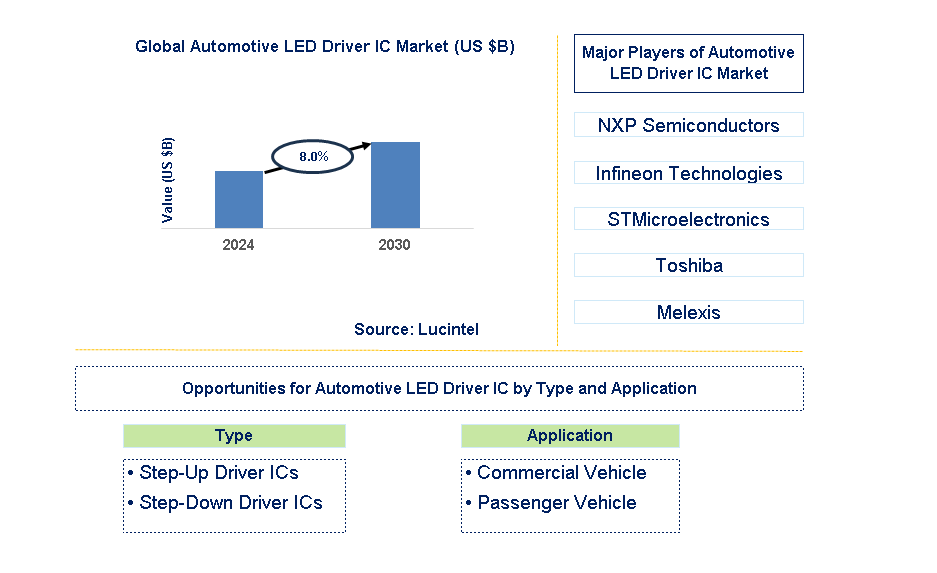
Key data points: The growth forecast = 8.0% annually for the next 6 years. Scroll below to get more insights. This market report covers trends, opportunities, and forecasts in the global automotive led driver IC market to 2030 by type (step-up driver ICs and step-down driver ICs), application (commercial vehicle and passenger vehicle), and region (North America, Europe, Asia Pacific, and the Rest of the World)
We'll send your sample report shortly.
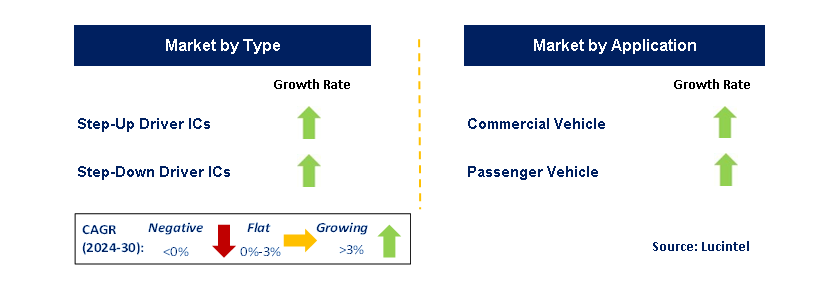
• Lucintel forecasts that, within the type category, step-up driver ICs is expected to witness higher growth over the forecast period.
• In terms of regions, APAC is expected to witness the highest growth over the forecast period due to expansion of the automobile industry in the area, decline in LED lighting costs, rising consumer living standards, and a firmly established automotive sector in China. Gain valuable insights for your business decisions with our comprehensive 150+ page report
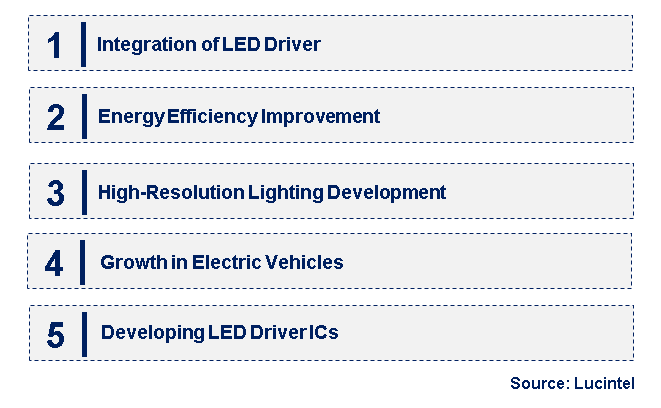
• Integration of LED Driver: The integration of LED driver ICs in automotive systems with advanced driver assistance systems is on the rise. In turn, these systems enable features such as adaptive lighting and automatic high-beam adjustments to improve vehicle safety and make driving more responsive and visible.
• Energy Efficiency Improvement: There is an increasing emphasis on energy-efficient LED driver ICs. Firms can develop low-power consumption, highly efficient ICs that add value to vehicle fuel efficiency and reduce the environmental impacts of automotive lighting systems as a whole.
• High-Resolution Lighting Development: The trend for high-resolution and dynamic lighting is increasing. Automotive LED driver ICs are positioned to support high-definition, customizable lighting patterns that enhance vehicle aesthetics and better illuminate a wide range of driving conditions.
• Growth in Electric Vehicles: The rise in electric vehicles is driving innovations in LED driver ICs for electric vehicle applications. These ICs are designed to support the unique lighting requirements for electric vehicles, including energy efficiency and integration with electric power management systems.
• Developing LED Driver ICs: Compact and robust designs are the focus in developing LED driver ICs. These designs are crucial to accommodate modern vehicle interior spaces and provide the required durability for consistent performance in varied operational conditions. The integration with ADAS, among other emerging trends within the automotive LED driver IC market, further encourages new energy efficiency, high-resolution lighting, applications in EVs, and compact designs. This will increase the safety, performance, and efficiency of vehicles, consequently redefining the future of automotive lighting technologies.
• Introduction of High-Efficiency Driver ICs: New high-efficiency LED driver ICs are being introduced to the market, focusing on reducing power consumption and enhancing performance. These driver ICs support more efficient lighting systems, which improve fuel efficiency and extend battery life in electric vehicles.
• Further development of LED driver ICs is underpinned by advancements in adaptive lighting technologies. Such technologies enable features such as automatic beam adjustments and dynamic light distribution, which greatly enhance safety and visibility in a wide range of driving conditions.
• Improved Integration with Vehicle System Controls: There is a focus on further improving integration between LED driver ICs and in-car control systems. This development supports seamless communication between lighting systems and other in-vehicle electronics, enabling features like synchronous lighting and real-time adjustments.
• Smart Lighting Features Growth: There is growth in the usage of smart lighting features; hence, LED driver ICs support programmable and personalized lighting to provide customized settings and enhanced aesthetic appeal in tune with modern vehicle design trends.
• More Emphasis on Reliability and Durability: The new driver ICs are designed to enhance the reliability and durability of the system in typically harsh automotive environments. Their improvements ensure that the operation of LED lighting systems is consistent and reliable, with longevity in the life of the vehicle. Recent announcements in the automotive LED driver IC market regarding various devices that improve design efficiency and performance; further developments in adaptive lighting; greater levels of integration; smart lighting features; and enhanced reliability are driving improvements in safety and functionality in vehicle lighting.
• The expansion into electric vehicle markets paves the way for specialized LED driver ICs capable of meeting the specific requirements of applications in electric vehicles, such as energy efficiency and integration into electrically powered systems, thus supporting the development of innovative lighting solutions.
• Integration with Autonomous Driving Systems: Driver ICs can find avenues for growth in integration with autonomous driving systems. Advanced lighting solution requirements for autonomous vehicles necessitate driver ICs that support features like adaptive lighting among other functions for automated driving.
• Development of High-Performance Adaptive Lighting: Increased demand for high-performance adaptive lighting applications requires LED driver ICs to support these features, realizing modern vehicle lighting functions, including automatic beam adjustments and dynamic light patterns.
• Smart Lighting Solutions: The adoption of smart lighting solutions offers many possibilities for LED driver ICs, including programmable and custom lighting features that enhance both the aesthetics and functionality of the vehicle.
• Growth in Global Automotive Markets: The expansion of automotive markets across the globe, mainly in developing economies, offers opportunities for growth. Increased automotive production and sales ensure that demand rises for sophisticated lighting solutions with LED driver ICs in new automobile models. Strategic growth opportunities, such as the growth in EVs, integration with autonomous driving systems, high-performance adaptive lighting, smart lighting solutions, and increased global market growth, are driving innovation and development within the automotive LED driver IC market.
• Technological Advancements: Developments in manufacturing processes for semiconductors and LED lighting drive the growth of the automotive LED driver IC market. Driver ICs have improved in performance, energy efficiency, and integrated functionalities through various innovations, allowing for increased sophistication in lighting solutions.
• Demand for Value-Added Features on the Rise: An increase in demand for features such as adaptive and smart lighting applications proliferates advanced LED driver ICs. These value-added features enhance vehicle safety and aesthetic value, thereby driving this market through continuous upgrades and innovations.
• The rise of electric and autonomous vehicles also opens new opportunities for demand for specific LED driver ICs designed for these new automotive technologies.
• The focus on energy efficiency in automotive lighting drives the development of high-performance LED driver ICs. The existence of energy-efficient ICs contributes positively to fuel economy and reduces environmental impact, aligning with industry trends and regulatory requirements.
• Growth in Production and Sales of Automobiles: Growing automotive production and sales globally increase demand for LED driver ICs. More production means more sophisticated lighting system requirements and driver ICs, ultimately contributing to market growth. Challenges in the automotive LED driver IC market include:
• High Prices of Advanced Driver ICs: The high prices of advanced ICs for LED drivers act as a restraint on market growth. Designing and producing integrated circuits require significant investment, and high prices can negatively affect affordability and market acceptance.
• Complex Integration: Integrating LED driver ICs with existing onboard automotive systems can be quite complex. Compatibility with various automotive electronic and control systems requires careful design and development, which may pose challenges for manufacturers.
• Regulatory Compliance and Standards: Meeting regulatory standards and industry requirements can be challenging. Compliance with evolving regulations, including the certification processes for LED driver ICs, demands ongoing efforts and resources, creating dynamic market conditions. The driving forces for the automotive LED driver IC market include technological advancement, growth in demand for advanced feature lighting, expansion in electric and autonomous vehicles, a focus on energy efficiency, and growth in automotive production.
• NXP Semiconductors
• Infineon Technologies
• STMicroelectronics
• Toshiba
• Melexis
• Step-Up Driver ICs
• Step-Down Driver ICs
• Commercial Vehicle
• Passenger Vehicle
• North America
• Europe
• Asia Pacific
• The Rest of the World
• United States: Recent developments reported in the country include automotive LED driver ICs targeted at safety and energy efficiency. Companies are integrating sophisticated control algorithms to build high-performance ICs that support adaptive lighting systems and dynamic illumination features, matching the increasing demand for ADAS.
• China: The Chinese automotive LED driver IC market continues to experience phenomenal growth due to increasing domestic production capabilities while reducing reliance on imports. Recent developments include partnerships between local manufacturers and international firms to advance technology and scale up production to meet the automotive industry’s growing demands.
• Germany: Germany is taking the lead in integrating automotive LED driver ICs into advanced automotive systems, such as smart lighting and automated driving. Local manufacturers focus on developing high-precision driver ICs for high-definition and adaptive lighting to comply with rigorous EU regulations on vehicle safety and performance.
• India: The automotive LED driver IC market is gaining momentum as local automotive makers increasingly adopt advanced lighting features, including collaborations with global technology providers to enhance LED driver IC capabilities by offering cost-effective solutions that meet rising demand for modern vehicle lighting systems.
• Japan: Automotive LED driver ICs in Japan have recently realized compact, high-efficiency designs. In the past couple of years, Japanese companies have actively developed driver ICs for optimal performance in harsh environments, ensuring perfect integration with advanced in-car electronics. These efforts have solidified Japan's leading position in automotive technology.


• NXP Semiconductors
• Infineon Technologies
• STMicroelectronics
• Toshiba
• Melexis Q5. Which automotive LED driver IC market segment will be the largest in future? Answer: Lucintel forecasts that, within the type category, step-up driver ICs is expected to witness higher growth over the forecast period.. Q6. In automotive LED driver IC market, which region is expected to be the largest in next 5 years? Answer: In terms of regions, APAC is expected to witness the highest growth over the forecast period due to expansion of the automobile industry in the area, decline in LED lighting costs, rising consumer living standards, and a firmly established automotive sector in China. Q.7 Do we receive customization in this report? Answer: Yes, Lucintel provides 10% customization without any additional cost.


Choose a license that fits your team. Instant PDF delivery.
Prices exclude taxes. Instant delivery. Custom licensing available on request.
Market Report · July 31, 2026
Market Report · July 22, 2026
Market Report · July 17, 2026
Trusted partner for strategic intelligence and business growth


Receive a complimentary market analysis tailored to your industry. Our analysts will identify key growth opportunities and competitive dynamics specific to your business.

Market size, growth rate, and key trend analysis for your specific sector.

Top competitor positioning and market share analysis.

Strategic recommendations backed by data-driven insights.
Get curated market intelligence and competitive moves straight to your inbox.
By subscribing, you agree to receive our monthly insights. Unsubscribe anytime.
Receive a complimentary market analysis tailored to your industry. Our analysts will identify key growth opportunities and competitive dynamics specific to your business.
Market size, growth rate, and key trend analysis for your specific sector.
Top competitor positioning and market share analysis.
Strategic recommendations backed by data-driven insights.
Get curated market intelligence, emerging trends, and competitive moves straight to your inbox each month.
By subscribing, you agree to receive our monthly insights. Unsubscribe anytime.
We'll send your sample report shortly.