
Market Report · May 18, 2026

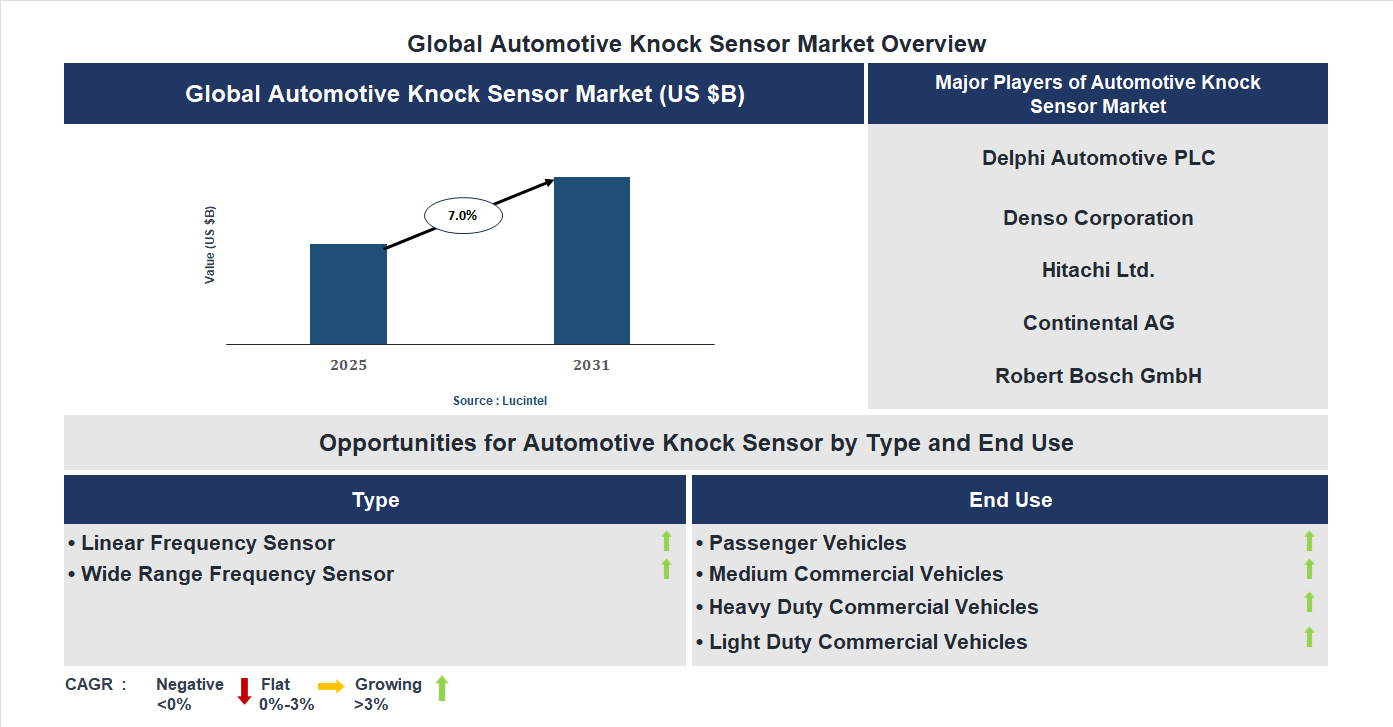
Key data points: The growth forecast = 7% annually for the next 7 years. Scroll below to get more insights. This market report covers trends, opportunities and forecasts in automotive knock sensor market to 2031 by type (linear frequency sensor and wide range frequency sensor), end use (passenger vehicles, medium commercial vehicles, heavy duty commercial vehicles, and light duty commercial vehicles), and region (North America, Europe, Asia Pacific, and the Rest of the World)
We'll send your sample report shortly.
• Lucintel forecasts that, within the type category, wide range frequency sensor is expected to witness higher growth over the forecast period.
• Within the end use category, passenger vehicle is expected to witness the highest growth.
• In terms of region, APAC is expected to witness the highest growth over the forecast period. Gain valuable insights for your business decisions with our comprehensive 150+ page report. Sample figures with some insights are shown below.
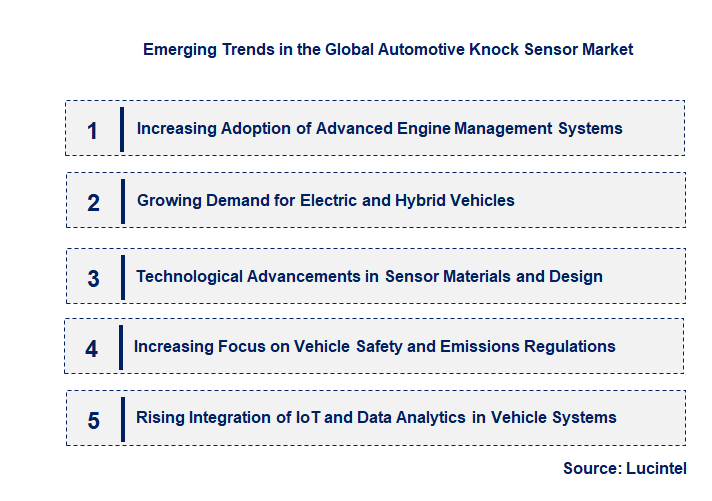
• Increasing adoption of advanced engine management systems: This trend involves integrating knock sensors with sophisticated engine control units (ECUs) to optimize engine performance. As vehicles become more technologically advanced, automakers are deploying sensors that provide real-time data to prevent knocking, improve fuel efficiency, and reduce emissions. This integration enhances engine durability and performance, leading to better vehicle reliability and customer satisfaction. The rise of connected vehicles further amplifies this trend, as data from knock sensors can be used for predictive maintenance and remote diagnostics, ultimately transforming engine management practices.
• Growing demand for electric and hybrid vehicles: The shift towards electric (EVs) and hybrid vehicles is significantly impacting the knock sensor market. While traditional internal combustion engines rely heavily on knock sensors to prevent engine knocking, EVs and hybrids are designed with different powertrain architectures that may require specialized sensors. The demand for sensors that can operate efficiently in electric and hybrid systems is increasing, driven by stricter emission regulations and consumer preferences for sustainable mobility. This trend is prompting sensor manufacturers to innovate and develop new sensor types compatible with electric powertrains, expanding market opportunities.
• Technological advancements in sensor materials and design: Innovations in materials such as piezoelectric ceramics and improved manufacturing techniques are enhancing the sensitivity, durability, and miniaturization of knock sensors. These advancements enable sensors to operate effectively under extreme conditions like high temperatures and vibrations, which are common in automotive environments. Improved sensor design also allows for better integration with vehicle electronics, leading to more accurate detection of knocking events. These technological improvements are crucial for meeting the demands of modern engines and are expected to drive market growth by providing more reliable and cost-effective solutions.
• Increasing focus on vehicle safety and emissions regulations: Stricter global safety and emissions standards are compelling automakers to adopt advanced sensor technologies. Knock sensors play a vital role in optimizing engine combustion, reducing harmful emissions, and ensuring vehicle safety. As governments implement tighter regulations, the demand for sensors that can help meet these standards is rising. This regulatory push encourages innovation and investment in sensor technology, fostering market growth. Additionally, automakers are emphasizing real-time monitoring and adaptive engine control systems, which rely heavily on accurate knock detection to comply with environmental and safety requirements.
• Rising integration of IoT and data analytics in vehicle systems: The incorporation of Internet of Things (IoT) technology and data analytics is transforming how knock sensors are utilized. Sensors now transmit data to cloud-based platforms for analysis, enabling predictive maintenance and improved engine performance management. This integration allows automakers and fleet operators to monitor vehicle health remotely, reduce downtime, and optimize maintenance schedules. The use of big data analytics enhances understanding of engine behavior, leading to better sensor calibration and innovation. This trend is making the market more dynamic, with increased opportunities for connected vehicle solutions and smarter engine management systems. In summary, these emerging trends are collectively reshaping the automotive knock sensor market by fostering innovation, improving vehicle performance, and aligning with global sustainability and safety standards. The market is becoming more integrated, intelligent, and responsive to technological and regulatory changes, paving the way for a more efficient and sustainable automotive future.
• Technological Advancements in Sensor Materials: New materials such as piezoelectric ceramics and composite sensors have improved sensitivity and durability, leading to more accurate detection of engine knocking. This enhances engine performance and reduces maintenance costs, positively impacting automakers and consumers.
• Integration with Advanced Engine Management Systems: Knock sensors are now seamlessly integrated with electronic control units (ECUs) and engine control modules (ECMs), enabling real-time adjustments to engine parameters. This integration results in optimized fuel efficiency, lower emissions, and improved vehicle performance.
• Expansion into Electric and Hybrid Vehicles: As electric and hybrid vehicles gain popularity, knock sensors are being adapted for these platforms to monitor and manage different types of engine and motor operations. This expansion broadens the market scope and opens new revenue streams for sensor manufacturers.
• Adoption of Wireless and Smart Sensors: The shift towards wireless and IoT-enabled sensors allows for easier installation, real-time data transmission, and predictive maintenance. These smart sensors improve vehicle diagnostics and reduce downtime, benefiting manufacturers and end-users.
• Regulatory and Emission Standards Driving Demand: Stricter emission regulations worldwide compel automakers to incorporate advanced knock sensors to meet compliance. This regulatory push accelerates market growth and encourages innovation in sensor technology. The recent developments in the automotive knock sensor market are significantly enhancing engine efficiency, vehicle safety, and environmental compliance. Technological innovations and expanding applications are driving market growth, making vehicles smarter and more sustainable. As these trends continue, the market is poised for sustained expansion, benefiting automakers, consumers, and regulatory agencies by delivering more efficient, reliable, and eco-friendly vehicles.
• Advanced Engine Management Systems: Integration of knock sensors into sophisticated engine control units enables real-time detection and adjustment of engine parameters, leading to improved fuel efficiency and reduced emissions. This enhances vehicle performance and aligns with stricter environmental standards.
• Electric and Hybrid Vehicles: As electric and hybrid vehicles gain popularity, the need for specialized knock sensors tailored to these powertrains presents a significant growth avenue. These sensors help optimize performance and ensure safety in emerging vehicle technologies.
• Aftermarket Replacement Market: The increasing vehicle age and maintenance needs create a substantial aftermarket demand for knock sensors. Providing reliable, cost-effective replacement sensors can generate steady revenue streams for manufacturers and suppliers.
• Sensor Miniaturization and Integration: Developing smaller, more integrated knock sensors allows for easier installation and better integration into compact engine designs. This innovation supports the trend toward lightweight, space-efficient vehicle components.
• Smart Sensor Technologies: Incorporating IoT-enabled sensors with advanced diagnostics capabilities offers predictive maintenance and enhanced engine monitoring. This technological leap improves vehicle reliability and reduces downtime, appealing to both manufacturers and consumers. In summary, these growth opportunities are transforming the automotive knock sensor market by fostering innovation, expanding application scope, and meeting evolving vehicle performance and environmental standards. Companies that leverage these opportunities will be better positioned to lead in a competitive and rapidly advancing industry.
• Technological Advancements: The continuous development of sophisticated engine control units (ECUs) and sensor technologies has significantly improved the accuracy and reliability of knock sensors. These advancements enable better detection of engine knocking, leading to optimized engine performance, reduced emissions, and enhanced fuel efficiency. As automakers focus on integrating smart sensors with real-time data processing, the demand for high-performance knock sensors increases. This technological evolution supports the development of more efficient, eco-friendly vehicles, thereby expanding the market. Moreover, innovations such as wireless sensors and miniaturization are further fueling market growth by enabling easier installation and maintenance.
• Rising Vehicle Production: The global increase in vehicle manufacturing, driven by rising disposable incomes and urbanization, directly impacts the demand for automotive components, including knock sensors. As automakers produce more vehicles, especially in emerging markets, the need for reliable engine management systems grows. This surge in vehicle production, particularly in passenger cars and commercial vehicles, creates a substantial market opportunity for knock sensor suppliers. Additionally, the shift towards electric and hybrid vehicles, which require advanced engine management, further amplifies the demand for high-quality knock sensors, supporting overall market expansion.
• Stringent Emission Regulations: Governments worldwide are implementing strict emission standards to combat pollution and promote environmental sustainability. These regulations compel automakers to adopt advanced engine control technologies that optimize combustion processes and reduce harmful emissions. Knock sensors play a vital role in achieving these goals by preventing engine knocking, which can lead to increased emissions and engine damage. Compliance with standards such as Euro 6, EPA Tier 3, and others necessitates the integration of high-precision knock sensors, thereby driving market growth. This regulatory push encourages automakers to invest in better sensor technologies to meet legal requirements and consumer expectations.
• Growing Demand for Fuel-Efficient Vehicles: Consumers are increasingly prioritizing fuel economy due to rising fuel prices and environmental concerns. Knock sensors contribute to this demand by enabling engines to operate at optimal ignition timing, reducing fuel consumption and emissions. As automakers develop more efficient engines, the reliance on advanced sensors like knock sensors intensifies. The trend toward downsized and turbocharged engines further emphasizes the need for precise knock detection to prevent engine damage and maintain performance. This consumer-driven shift toward fuel-efficient vehicles sustains the growth trajectory of the knock sensor market, especially in regions with high fuel prices.
• Integration of IoT and Smart Technologies: The integration of Internet of Things (IoT) and smart sensor technologies into automotive systems is transforming vehicle diagnostics and maintenance. Knock sensors equipped with IoT capabilities can transmit real-time data to manufacturers and service providers, enabling predictive maintenance and improved engine performance. This technological integration enhances vehicle safety, reduces downtime, and lowers maintenance costs. Automakers are increasingly adopting connected sensors to meet the demands of modern, connected vehicles. The proliferation of smart automotive solutions thus acts as a significant driver, expanding the scope and capabilities of knock sensors in the automotive industry. The challenges facing this automotive knock sensor market include:
• Technological Complexities: Developing highly accurate and durable knock sensors involves overcoming significant technological hurdles. Sensors must operate reliably under extreme engine conditions, including high temperatures, vibrations, and exposure to contaminants. Achieving the right balance between sensitivity and durability is complex, requiring advanced materials and manufacturing processes. Additionally, integrating sensors seamlessly with existing engine control systems demands sophisticated design and calibration. These technological complexities can increase development costs and time-to-market, potentially limiting the adoption of new sensor technologies and restraining market growth.
• High Manufacturing Costs: The production of advanced knock sensors involves expensive materials, precision engineering, and stringent quality control measures. Incorporating features such as miniaturization, wireless connectivity, and enhanced durability further escalates manufacturing expenses. These high costs can translate into higher retail prices, making sensors less attractive to cost-sensitive automakers and consumers. Consequently, price competition becomes intense, and profit margins may be squeezed, especially for suppliers unable to scale production efficiently. Managing manufacturing costs while maintaining high quality remains a key challenge for market players.
• Stringent Regulatory Compliance: While regulations drive market growth, they also pose significant compliance challenges. Automakers and sensor manufacturers must adhere to diverse and evolving standards across different regions, which can involve complex testing, certification, and documentation processes. Non-compliance can lead to penalties, recalls, and reputational damage. Additionally, meeting these regulatory requirements often necessitates substantial investments in research, development, and quality assurance. Navigating the regulatory landscape requires considerable expertise and resources, which can act as barriers for smaller players and slow down innovation and market expansion. In summary, the automotive knock sensor market is shaped by technological innovations, increasing vehicle production, regulatory pressures, consumer demand for efficiency, and smart technology integration. However, technological challenges, high costs, and regulatory complexities pose significant hurdles. These drivers and challenges collectively influence the market’s growth trajectory, requiring stakeholders to innovate continuously and adapt strategically. Overall, the market is poised for growth, driven by technological progress and regulatory support, but must address key challenges to sustain long-term expansion.
• Delphi Automotive PLC
• Denso Corporation
• Hitachi Ltd.
• Continental AG
• Robert Bosch GmbH
• HYUNDAI KEFICO Corporation
• NGK Spark Plugs
• Linear Frequency Sensor
• Wide Range Frequency Sensor
• Passenger Vehicles
• Medium Commercial Vehicles
• Heavy Duty Commercial Vehicles
• Light Duty Commercial Vehicles
• North America
• Europe
• Asia Pacific
• The Rest of the World
• United States: The U.S. market has seen increased adoption of advanced knock sensors integrated with engine control units (ECUs) for better performance and emissions compliance. Leading automakers are investing in sensor miniaturization and enhanced durability to meet stringent EPA standards. The rise of electric vehicles has also prompted innovations in sensor technology to optimize hybrid engine performance. Additionally, government incentives for cleaner vehicles are encouraging manufacturers to upgrade sensor systems for improved fuel efficiency.
• China: China remains the largest automotive market, with rapid growth in electric and hybrid vehicle production. The focus is on developing high-sensitivity knock sensors capable of operating under diverse climatic conditions. Domestic companies are investing heavily in R&D to produce cost-effective sensors that meet local regulatory standards. The government’s push for new energy vehicles (NEVs) is driving demand for advanced sensor technologies to enhance engine management and reduce emissions.
• Germany: As a leader in automotive engineering, Germany has seen significant advancements in sensor technology, emphasizing precision and reliability. German automakers are integrating smart knock sensors with real-time data processing capabilities to improve engine efficiency and reduce emissions. The focus on sustainable mobility has led to innovations in sensor materials and design, ensuring durability under harsh conditions. Regulatory pressures for lower emissions are also prompting upgrades in sensor systems across the industry.
• India: The Indian automotive market is witnessing increased adoption of knock sensors driven by stricter emission norms and fuel efficiency standards. Local manufacturers are focusing on developing affordable, robust sensors suitable for diverse terrains and climatic conditions. The growth of electric and hybrid vehicles in India is also influencing sensor technology development, with an emphasis on cost-effective solutions. Government initiatives promoting cleaner vehicles are further boosting market demand for advanced knock sensor systems.
• Japan: Japan’s automotive industry is characterized by a focus on high-performance and reliable sensor systems. Japanese automakers are investing in innovative materials and miniaturization techniques to enhance sensor sensitivity and lifespan. The integration of knock sensors with advanced engine control systems is improving vehicle performance and fuel economy. Japan’s emphasis on environmental sustainability and strict emission regulations continue to drive technological advancements in the knock sensor market.


• Delphi Automotive PLC
• Denso Corporation
• Hitachi Ltd.
• Continental AG
• Robert Bosch GmbH
• HYUNDAI KEFICO Corporation
• NGK Spark Plugs Q5. Which automotive knock sensor market segment will be the largest in future? Answer: Lucintel forecasts that, within the type category, wide range frequency sensor is expected to witness higher growth over the forecast period. Q6. In automotive knock sensor market, which region is expected to be the largest in next 5 years? Answer: In terms of region, APAC is expected to witness the highest growth over the forecast period. Q7. Do we receive customization in this report? Answer: Yes, Lucintel provides 10% customization without any additional cost.


Choose a license that fits your team. Instant PDF delivery.
Prices exclude taxes. Instant delivery. Custom licensing available on request.
Market Report · May 18, 2026
Market Report · May 18, 2026
Market Report · May 18, 2026
Trusted partner for strategic intelligence and business growth


Receive a complimentary market analysis tailored to your industry. Our analysts will identify key growth opportunities and competitive dynamics specific to your business.

Market size, growth rate, and key trend analysis for your specific sector.

Top competitor positioning and market share analysis.

Strategic recommendations backed by data-driven insights.
Get curated market intelligence and competitive moves straight to your inbox.
By subscribing, you agree to receive our monthly insights. Unsubscribe anytime.
Receive a complimentary market analysis tailored to your industry. Our analysts will identify key growth opportunities and competitive dynamics specific to your business.
Market size, growth rate, and key trend analysis for your specific sector.
Top competitor positioning and market share analysis.
Strategic recommendations backed by data-driven insights.
Get curated market intelligence, emerging trends, and competitive moves straight to your inbox each month.
By subscribing, you agree to receive our monthly insights. Unsubscribe anytime.
We'll send your sample report shortly.