
Country Research · January 18, 2024

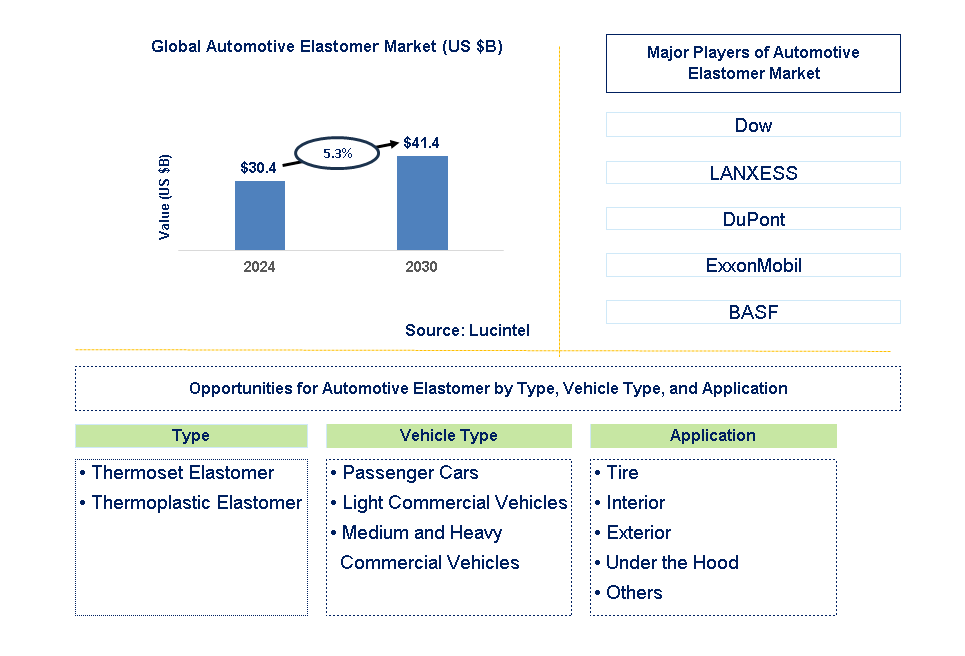
Key data points: The market size in 2030 = $41.4 billion, growth forecast = 5.3% annually for the next 6 years. Scroll below to get more insights. This market report covers trends, opportunities, and forecasts in the global automotive elastomer market to 2030 by type (thermoset elastomer and thermoplastic elastomer), vehicle type (passenger cars, light commercial vehicles, and medium and heavy commercial vehicles), application (tire, interior, exterior, under the hood, and others), and region (North America, Europe, Asia Pacific, and the Rest of the World)
We'll send your sample report shortly.
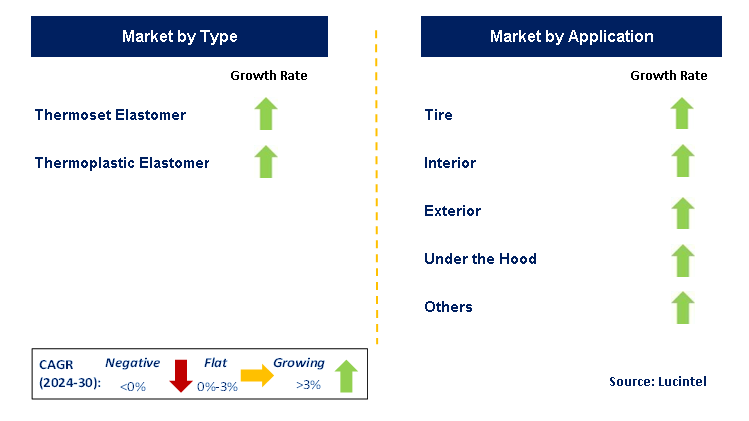
• Lucintel forecasts that, within the type category, thermoset elastomer will remain larger segment over the forecast period due to the growing use and application of synthetic and natural rubber in the automotive sector.
• In terms of regions, APAC will remain the largest region over the forecast period due to the existence of significant market suppliers, the affordability of labor and raw resources, and the widespread use of cutting-edge technology. Gain valuable insights for your business decisions with our comprehensive 150+ page report
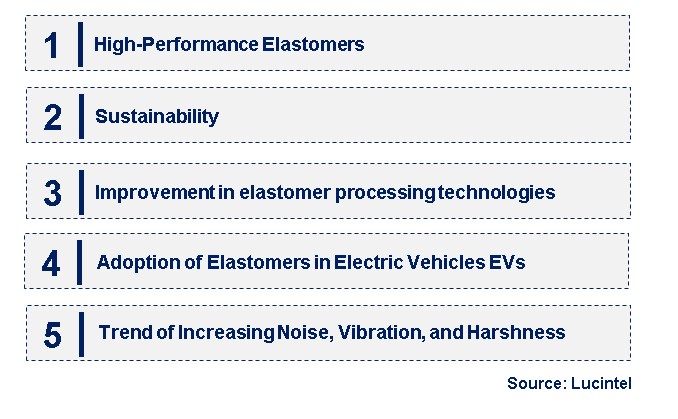
• High-Performance Elastomers: The use of high-performance elastomers in automotive applications is trending. They provide heat resistance, durability, and flexibility, among other properties, which ensure enhanced performance and prolong the vehicle's life.
• Sustainability: The emphasis on sustainability in the automotive elastomer market is strong. Companies are developing eco-friendly elastomers using bio-based materials and recyclable elastomer options that help minimize environmental impact and comply with regulatory policies.
• Improvement in Elastomer Processing Technologies: New, innovative processing technologies are enhancing the capability to manufacture automotive elastomers. Advanced techniques improve material properties and make the production process more efficient and cost-effective; therefore, elastomers demonstrate better performance and competitiveness in the market.
• Adoption of Elastomers in Electric Vehicles (EVs): Specialty elastomers are in high demand due to the rise of electric vehicles. These materials provide performance benefits for several components of electric vehicles, reduce weight, and increase energy efficiency.
• Trend of Increasing Noise, Vibration, and Harshness Reduction: Elastomers are increasingly used for noise reduction, vibration, and harshness (NVH). Advanced elastomers are under development to help effectively reduce noise, vibration, and harshness, thus enabling a more comfortable and quieter driving experience. The key trends currently emerging in the automotive elastomer market include the development of high-performance materials, a focus on sustainability, advanced processing technologies, applications in electric vehicles, and NVH reduction. These trends are driving a transformation in the industry, urging innovation to meet new needs for performance linked to environmental responsibility.
• Development of New Materials: New elastomers have achieved much higher temperature capabilities along with flexibility and durability. These materials respond to and meet the requirements for both performance and safety in modern automotive applications.
• Increased Usage of Eco-Friendly Elastomers: The use of bio-based or recycled materials in eco-friendly elastomers is on the rise. Such innovations follow global sustainability objectives and regulatory needs, thus decreasing the ecological footprint of automotive parts.
• Improvements in Elastomer Processing Techniques: New processing techniques enhance efficiency and quality in elastomer production. Advanced manufacturing techniques offer improved material consistency, reduced production costs, and enhanced performance in automotive elastomers.
• Increased Demand for Hybrid and Electric Vehicles: The demand for hybrid and electric vehicles necessitates highly specific elastomers. Newly developed formulations of elastomers now meet the unique needs of EVs, from reduced weight to improved energy efficiency, facilitating the shift to greener transportation modes.
• Advanced Development in NVH Solutions: The manufacturing of advanced elastomers for noise, vibration, and harshness reduction is one of the latest developments. These materials enhance comfort by minimizing noise and vibration inside the vehicle. These are indeed exciting times for the automotive elastomer market, as recent developments in material innovation, increased usage of eco-friendly options, advanced processing techniques, expansion into electric vehicle segments, and NVH solutions primarily drive growth and innovation. In each category, changes in strategies aim to meet the evolving needs of the auto industry through improvements in performance and sustainability of elastomer components.
• Electric Vehicle Component Growth: The growth of electric vehicles is creating new frontiers in the automotive elastomers market for electric vehicle components. Elastomers will be imperative in achieving higher performance with lightweight and energy efficiency, thus driving demand in the electric vehicle market.
• Automotive Interior Improvements: Development within automotive interiors includes items such as seals, gaskets, and vibration dampers made from elastomers. The development of elastomer materials has improved interior comfort, appearance, and sound dampening for vehicle occupants.
• Growth in High-Performance Applications: The demand for more sophisticated parts in automobiles creates a need for newer elastomers. Innovative technology in elastomers allows for superior durability, temperature resistance, and flexibility where required.
• More Emphasis on Sustainability: A greater emphasis by the automotive sector on sustainability opens opportunities for eco-friendly elastomers. The development and usage of bio-based and recyclable elastomers align with regulatory imperatives and customer demand, thus driving segment growth.
• Advanced NVH Solution Development: Development opportunities for elastomers are emerging in advanced NVH solutions. These materials help create a quiet and comfortable driving experience by improving in-vehicle acoustics, which are increasingly in demand. Strategic growth opportunities remain strong for the automotive elastomer market, including expansion into electric vehicle components, advancements in automotive interiors, growth in high-performance applications, a greater focus on sustainability, and the development of advanced NVH solutions. Tapping into such opportunities opens a path to innovation and growth in response to continuously changing industry needs and consumer expectations.
• Improvements in Elastomer Technology: Advancements in elastomer technology drive market growth by improving material performance and opening up more application opportunities. Innovations in processing techniques and material formulations enhance durability, flexibility, and efficiency to meet modern vehicle needs.
• Increasing Demand for Electric Vehicles: The rising demand for electric vehicles creates avenues for the growth of automotive elastomers. Specialized EV parts are addressed using advanced performance elastomers that improve performance, reduce overall weight, and facilitate energy efficiency. Factors such as vehicle comfort and performance drive the demand for advanced elastomers. Materials used in interior components and NVH solutions enhance the driving experience, thus promoting market growth.
• Growing Demand from the Automotive Sector: The increasing demand from the flourishing automobile industry, particularly in developing nations, propels the demand for automotive elastomers. Growing production and technological advancements accelerate the need for high-performance elastomer solutions.
• Regulatory and Environmental Compliance: Increased regulations and environmental standards favor the application of green elastomers. Companies are seeking green raw materials to fulfill regulatory requirements and meet consumer demand. Challenges in the automotive elastomer market include:
• High Cost of Production: The advanced production costs for elastomers can reduce the market's growth rate. Research and development, along with manufacturing processes for specialty elastomers, are capital-intensive, which may lead to increased final product costs and affect profitability.
• Complexity in Material Formulation: The demand for complex elastomeric formulations to achieve required performance characteristics presents challenges. Advanced materials require sophisticated technology and expertise to maintain consistency and quality.
• Regulatory and Environmental Standards: Ever-changing regulatory and environmental standards continue to challenge the automotive elastomer market. Manufacturers must adapt to regulatory changes, impacting production processes and costs. These drivers include technological advancements, demand for electric vehicles, vehicle comfort, industry expansion, and adherence to regulations. High production costs, complexities in material formulation, and evolving regulations are challenges that must be addressed in navigating this market. Growth opportunities and market dynamics must be aligned accordingly to control the growing automotive elastomer market.
• Dow
• LANXESS
• DuPont
• ExxonMobil
• BASF
• SABIC
• Huntsman International
• Continental
• INEOS
• Mitsui Chemicals
• Thermoset Elastomer
• Thermoplastic Elastomer
• Passenger Cars
• Light Commercial Vehicles
• Medium and Heavy Commercial Vehicles
• Tire
• Interior
• Exterior
• Under the Hood
• Others
• North America
• Europe
• Asia Pacific
• The Rest of the World
• United States: The latest trends in U.S. automotive elastomers include several high-performance material innovations that improve durability and reduce vehicle weight. The development of synthetic elastomers has also shown better resistance to extreme temperatures and harsh chemicals. As research focuses on sustainable materials, companies are working on bio-based and recyclable elastomers to meet environmental regulations and consumer demand.
• China: Growth in China is driven by increased automotive production and advances in manufacturing technology. The country is developing advanced elastomers for electric and hybrid vehicles to provide improved energy efficiency and performance. Companies headquartered in China are also engaged in R&D to enhance production methods and fulfill international quality standards while addressing environmental concerns.
• Germany: Germany is at the forefront of developing high-tech automotive elastomers with value-added properties that improve vehicle performance and safety. Innovations include improved vibration damping, noise reduction, and better weather resistance. Significant consideration is being given to integrating elastomers into advanced automotive systems, particularly those related to autonomous driving technologies and electric vehicles.
• India: The automotive elastomer market in India is in its development stage, focusing on making products more affordable and functional. New product developments include cost-effective elastomers that still meet the growing automobile industry’s requirements for comfort and safety. Indian manufacturers are also planning to expand production capacities to cater to domestic and international market demands.
• Japan: Japanese companies have made advancements in high-performance and lightweight materials in automotive elastomer technology. Recent developments include the use of heat-resistant and more durable elastomers in hybrid and electric vehicles. Japanese companies are also investing in environmentally friendly elastomer solutions that align with global sustainability trends.


• Dow
• LANXESS
• DuPont
• ExxonMobil
• BASF
• SABIC
• Huntsman International
• Continental
• INEOS
• Mitsui Chemicals Q6. Which automotive elastomer market segment will be the largest in future? Answer: Lucintel forecasts that, within the type category, thermoset elastomer will remain larger segment over the forecast period due to the growing use and application of synthetic and natural rubber in the automotive sector. Q7. In automotive elastomer market, which region is expected to be the largest in next 5 years? Answer: In terms of regions, APAC will remain the largest region over the forecast period due to the existence of significant market suppliers, the affordability of labor and raw resources, and the widespread use of cutting-edge technology. Q.8 Do we receive customization in this report? Answer: Yes, Lucintel provides 10% customization without any additional cost.


Choose a license that fits your team. Instant PDF delivery.
Prices exclude taxes. Instant delivery. Custom licensing available on request.
Country Research · January 18, 2024
Trusted partner for strategic intelligence and business growth


Receive a complimentary market analysis tailored to your industry. Our analysts will identify key growth opportunities and competitive dynamics specific to your business.

Market size, growth rate, and key trend analysis for your specific sector.

Top competitor positioning and market share analysis.

Strategic recommendations backed by data-driven insights.
Get curated market intelligence and competitive moves straight to your inbox.
By subscribing, you agree to receive our monthly insights. Unsubscribe anytime.
Receive a complimentary market analysis tailored to your industry. Our analysts will identify key growth opportunities and competitive dynamics specific to your business.
Market size, growth rate, and key trend analysis for your specific sector.
Top competitor positioning and market share analysis.
Strategic recommendations backed by data-driven insights.
Get curated market intelligence, emerging trends, and competitive moves straight to your inbox each month.
By subscribing, you agree to receive our monthly insights. Unsubscribe anytime.
We'll send your sample report shortly.