
Market Report · May 18, 2026

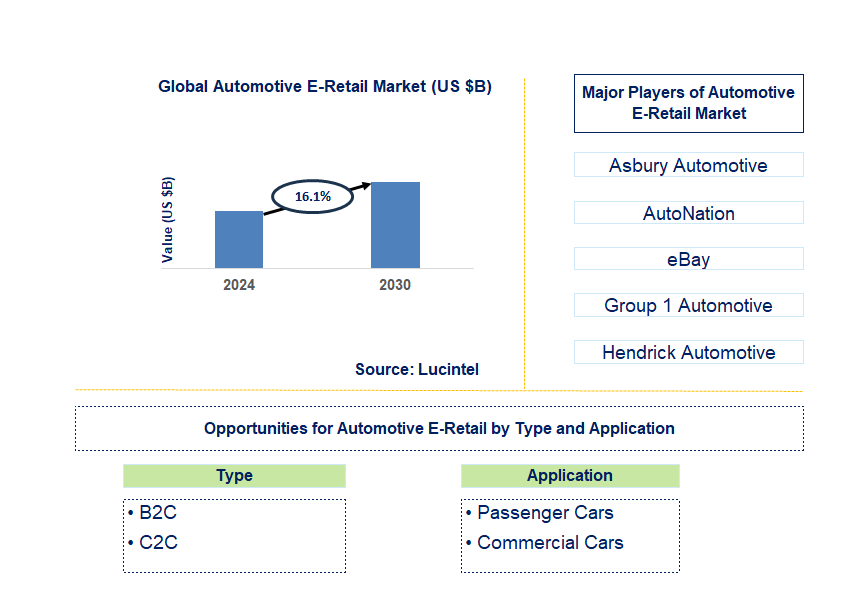
Key data points: The growth forecast = 16.1% annually for the next 6 years. Scroll below to get more insights. This market report covers trends, opportunities, and forecasts in the global automotive e-retail market to 2030 by type (B2C and C2C), application (passenger cars and commercial cars), and region (North America, Europe, Asia Pacific, and the Rest of the World)
We'll send your sample report shortly.
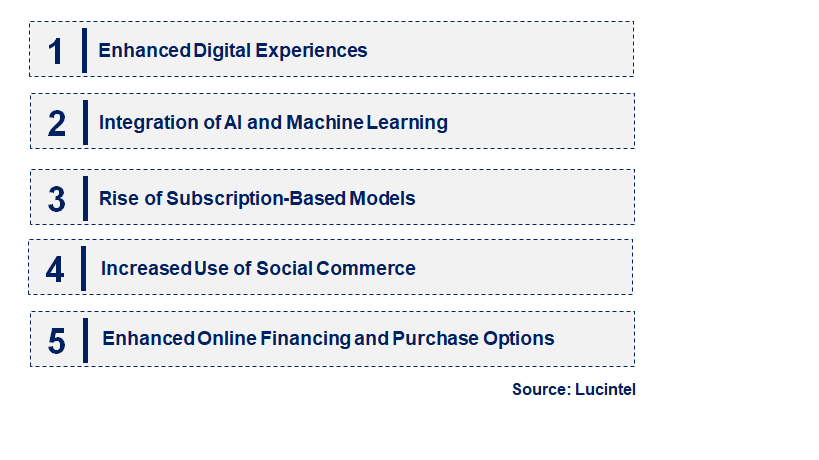
• Enhanced Digital Experiences: The shift towards providing immersive digital experiences is revolutionizing automotive e-retail. Advanced technologies like virtual reality (VR) and augmented reality (AR) are utilized to offer virtual showrooms and test drives, allowing consumers to explore vehicles in a detailed and interactive manner. This trend enhances customer engagement and makes the online car-buying process more convenient and informative.
• Integration of AI and Machine Learning: Artificial intelligence (AI) and machine learning are becoming integral to automotive e-retail. These technologies are used for personalized recommendations, predictive analytics, and chatbots that offer real-time assistance. AI helps analyze consumer behavior and preferences to tailor the shopping experience, thereby increasing customer satisfaction and potentially boosting sales conversion rates.
• Rise of Subscription-Based Models: Subscription-based car ownership models are gaining traction, providing consumers with flexible and convenient options. This trend allows users to pay a monthly fee for access to a vehicle, which often includes maintenance and insurance. Such models cater to changing consumer preferences for flexibility and convenience, moving away from traditional car ownership and leasing.
• Increased Use of Social Commerce: Social commerce is becoming a significant trend in automotive e-retail. Platforms like Instagram and Facebook are used for targeted advertising, live-streamed product demos, and interactive customer engagement. This integration helps brands reach a broader audience and leverage social media's influence to drive sales and enhance brand awareness.
• Enhanced Online Financing and Purchase Options: The development of comprehensive online financing and purchase options simplifies the buying process. E-retailers offer integrated tools for loan applications, credit scoring, and insurance quotes directly on their platforms. This trend streamlines the purchase process and provides a one-stop-shop experience for consumers, reducing the need for in-person visits to dealerships. These trends are reshaping the automotive e-retail market by enhancing the digital experience, personalizing interactions through AI, offering flexible ownership models, leveraging social media for engagement, and streamlining the purchase process. Collectively, they contribute to a more seamless, convenient, and customer-centric online car-buying experience, setting new standards in the industry.
• Growth of Online-Only Dealerships: The rise of online-only dealerships, such as Carvana and Vroom, represents a major shift in the automotive sales landscape. These platforms offer a fully digital buying experience, from vehicle selection to delivery. They leverage technology to streamline the purchasing process, often including features like virtual test drives and automated financing, which cater to the growing consumer demand for convenience and transparency.
• Expansion of Omnichannel Strategies: Traditional dealerships are increasingly adopting omnichannel strategies to bridge the gap between online and offline experiences. By integrating digital tools with physical locations, dealers offer a more cohesive customer journey. This includes online browsing with the option for in-person test drives and service, reflecting a hybrid approach that aims to enhance customer satisfaction and streamline the buying process.
• Advances in Digital Payment Solutions: The integration of advanced digital payment solutions has become a significant development in automotive e-retail. Platforms are incorporating secure and flexible payment options, including digital wallets and cryptocurrencies, to facilitate smoother transactions. This innovation caters to the evolving preferences of consumers and enhances the overall efficiency of the purchasing process.
• Enhanced Data Analytics and Personalization: Automotive e-retailers are increasingly utilizing data analytics to offer personalized shopping experiences. By analyzing consumer behavior and preferences, platforms can tailor recommendations and marketing efforts more effectively. This use of data not only improves customer engagement but also enhances the likelihood of conversion by providing relevant and timely information.
• Focus on Sustainability and Green Technologies: Sustainability has become a prominent focus in automotive e-retail, with many platforms and manufacturers emphasizing eco-friendly practices. This includes promoting electric vehicles (EVs) and sustainable manufacturing processes. The growing awareness of environmental issues among consumers is driving this trend, influencing purchasing decisions and shaping the future of automotive e-retail. These developments reflect a broader trend toward digitalization, convenience, and personalization in automotive e-retail. They are shaping the industry by enhancing customer experiences, integrating new technologies, and addressing evolving consumer expectations, ultimately driving growth and innovation in the market.
• Virtual and Augmented Reality Showrooms: Virtual and augmented reality (VR/AR) showrooms offer a transformative way for consumers to experience vehicles online. By using VR and AR technologies, e-retailers can provide immersive, interactive vehicle previews and test drives from the comfort of the consumer's home. This enhances customer engagement and satisfaction, reduces the need for physical dealership visits, and allows potential buyers to explore vehicle features in greater detail. As VR/AR technology becomes more accessible, it presents a significant growth opportunity for e-retailers to attract and retain customers.
• AI-Powered Personalization and Recommendations: Artificial intelligence (AI) is increasingly used to offer personalized shopping experiences in automotive e-retail. AI-driven algorithms analyze user data to provide tailored vehicle recommendations, personalized marketing, and targeted promotions. This level of personalization enhances the customer journey by aligning offerings with individual preferences and behaviors, leading to higher conversion rates and customer loyalty. The growth of AI in this application helps e-retailers better meet customer needs and differentiate themselves in a competitive market.
• Subscription-Based Ownership Models: Subscription-based ownership models are gaining traction as consumers seek more flexible and convenient options. These models allow customers to pay a monthly fee for access to a vehicle, often including insurance and maintenance. This flexibility appeals to those who prefer not to commit to long-term ownership or lease agreements. The rise of these models presents a growth opportunity for e-retailers to tap into a new segment of consumers who value convenience and adaptability.
• Enhanced Online Financing Solutions: The integration of sophisticated online financing solutions is a significant growth opportunity in automotive e-retail. E-retailers are developing platforms that offer seamless financing options, including instant credit checks, loan approvals, and digital paperwork. These enhancements streamline the purchasing process, making it easier for customers to secure financing without visiting a dealership. As financial technology evolves, its integration into e-retail platforms can drive increased sales and customer satisfaction.
• Social Media Integration and Commerce: Social media platforms are becoming crucial for automotive e-retail, offering opportunities for targeted advertising, live-streamed events, and direct sales. Integrating social commerce features allows e-retailers to reach potential customers through platforms like Instagram, Facebook, and TikTok. This integration leverages social media’s extensive reach and engagement to drive traffic to e-retail sites and increase sales. By capitalizing on social media trends and user behaviors, e-retailers can enhance their marketing efforts and expand their customer base. These strategic growth opportunities are reshaping the automotive e-retail market by enhancing the digital buying experience, offering flexible ownership options, and integrating advanced technologies. They represent significant potential for growth and innovation, enabling e-retailers to better meet evolving consumer preferences and stay competitive in a rapidly changing landscape.
• Asbury Automotive
• AutoNation
• eBay
• Group 1 Automotive
• Hendrick Automotive
• Lithia Motors
• Penske
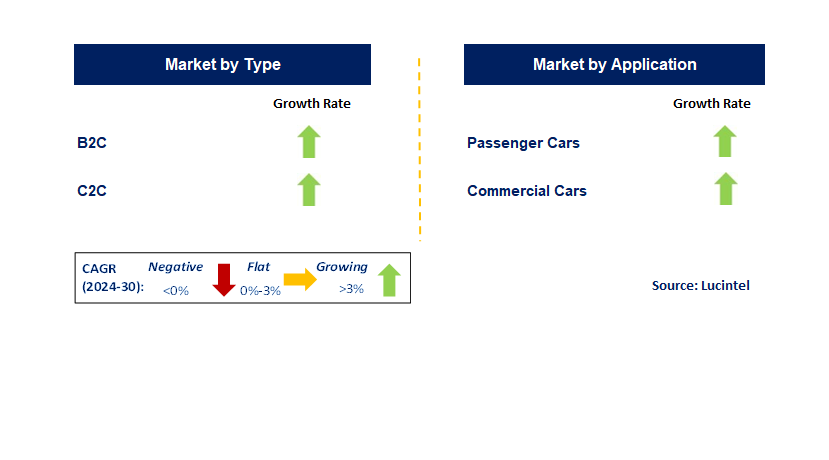
• B2C
• C2C
• Passenger Cars
• Commercial Cars
• North America
• Europe
• Asia Pacific
• The Rest of the World
• United States: In the U.S., automotive e-retail has seen significant growth with the rise of online-only dealerships and platforms offering virtual car-buying experiences. Companies like Carvana and Vroom have expanded their services, providing end-to-end online car purchasing, including financing and home delivery. Additionally, traditional dealerships are enhancing their digital presence, integrating virtual tours and AI-driven customer service to compete in the growing e-commerce landscape.
• China: China remains a leader in automotive e-retail, characterized by its adoption of advanced digital technologies and integration of social commerce. Platforms like Alibaba’s Tmall and JD.com are pioneering the use of augmented reality (AR) and live-streaming to enhance the online car-buying experience. Additionally, local manufacturers are increasingly leveraging these platforms to reach a broader audience and streamline the purchasing process.
• Germany: In Germany, the automotive e-retail sector is gaining traction as major automakers and startups alike invest in digital sales channels. BMW and Mercedes-Benz are enhancing their online sales platforms to provide a more seamless and personalized experience. Furthermore, the German market is seeing a rise in subscription-based models and online-only dealerships, reflecting a shift towards more flexible ownership options.
• India: The Indian automotive e-retail market is emerging with significant growth potential, driven by increasing internet penetration and mobile usage. Online platforms like Cars24 and OLX Autos are making headway, offering transparent pricing and extensive vehicle information. Additionally, traditional car manufacturers are beginning to invest in digital sales strategies, focusing on enhancing their online presence and customer engagement.
• Japan: The Japanese automotive e-retail market is evolving with a focus on technological integration and customer-centric services. Major players are adopting AI and machine learning to personalize the online buying experience. The market is also seeing a rise in digital platforms offering detailed vehicle information and virtual showrooms, which cater to the tech-savvy Japanese consumer base and facilitate easier online transactions.


• Asbury Automotive
• AutoNation
• eBay
• Group 1 Automotive
• Hendrick Automotive
• Lithia Motors
• Penske Q5. Which automotive e-retail market segment will be the largest in future? Answer: Lucintel forecasts that B2C is expected to witness the higher growth over the forecast period. Q6. In automotive e-retail market, which region is expected to be the largest in next 5 years? Answer: In terms of regions, APAC is expected to witness highest growth over the forecast period. Q.7 Do we receive customization in this report? Answer: Yes, Lucintel provides 10% customization without any additional cost.


Choose a license that fits your team. Instant PDF delivery.
Prices exclude taxes. Instant delivery. Custom licensing available on request.
Market Report · May 18, 2026
Market Report · May 18, 2026
Market Report · May 18, 2026
Trusted partner for strategic intelligence and business growth


Receive a complimentary market analysis tailored to your industry. Our analysts will identify key growth opportunities and competitive dynamics specific to your business.

Market size, growth rate, and key trend analysis for your specific sector.

Top competitor positioning and market share analysis.

Strategic recommendations backed by data-driven insights.
Get curated market intelligence and competitive moves straight to your inbox.
By subscribing, you agree to receive our monthly insights. Unsubscribe anytime.
Receive a complimentary market analysis tailored to your industry. Our analysts will identify key growth opportunities and competitive dynamics specific to your business.
Market size, growth rate, and key trend analysis for your specific sector.
Top competitor positioning and market share analysis.
Strategic recommendations backed by data-driven insights.
Get curated market intelligence, emerging trends, and competitive moves straight to your inbox each month.
By subscribing, you agree to receive our monthly insights. Unsubscribe anytime.
We'll send your sample report shortly.