
Market Report · May 18, 2026

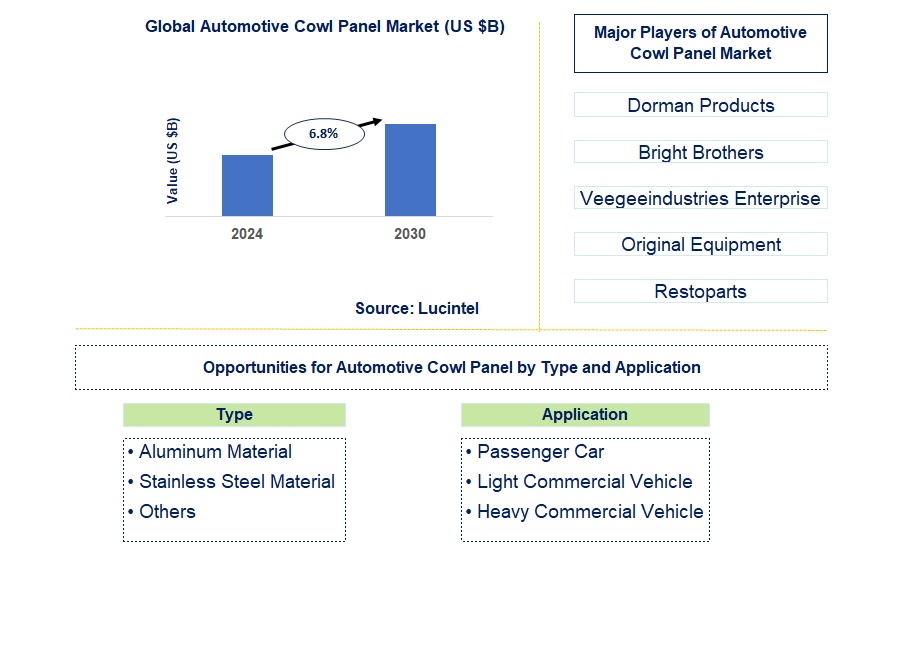
Key data points: The growth forecast = 6.8% annually for the next 6 years. Scroll below to get more insights. This market report covers trends, opportunities, and forecast in the global automotive cowl panel market to 2030 by type (aluminum material, stainless steel material, and others), application (passenger car, light commercial vehicle, and heavy commercial vehicle), and region (North America, Europe, Asia Pacific, and the Rest of the World)
We'll send your sample report shortly.
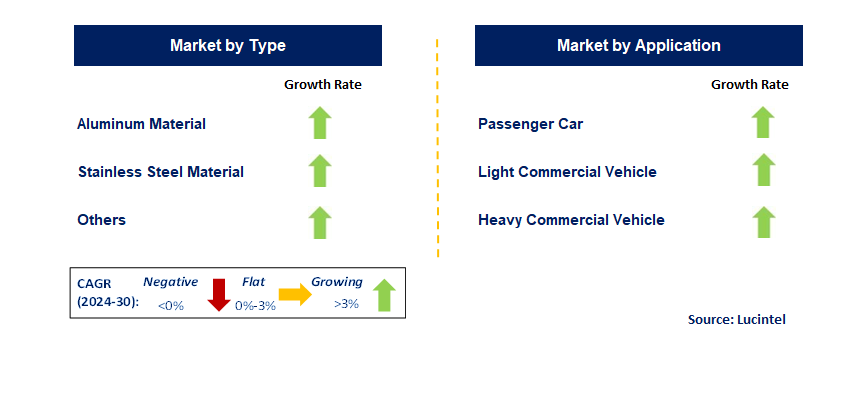
• Lucintel forecasts that, within the type category, aluminum material is expected to witness a higher growth over the forecast period.
• Within the application category, passenger car is expected to witness the highest growth.
• In terms of regions, North America is expected to witness the highest growth over the forecast period due to expansion of the vehicle sector and a high demand for safety precautions, as well as, growing automotive sales and production in the region. A more than 150-page report is developed to help in your business decisions.
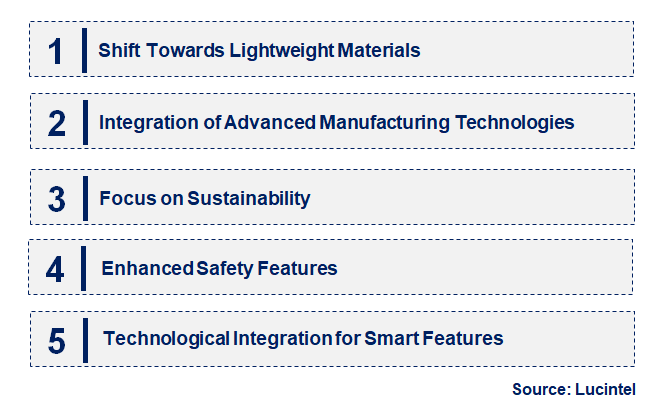
• Shift Towards Lightweight Materials: To improve fuel efficiency and vehicle performance, lightweight materials such as aluminum and composites are being used more frequently. This shift is driven by stringent emissions regulations that need to be met, alongside the goal of improving overall vehicle dynamics.
• Integration of Advanced Manufacturing Technologies: The application of sophisticated manufacturing techniques, such as automation and 3D printing, has improved accuracy while increasing efficiency in the production of cowl panels. Additionally, these technologies lower production costs and accommodate complex designs and customizations.
• Focus on Sustainability: There is an emerging trend toward the use of sustainable and recyclable materials for making cowl panels. This trend aligns with the broader objectives of the automobile industry to mitigate environmental pollution and enhance overall sustainability.
• Enhanced Safety Features: Improvements in cowl panel design aim at enhancing safety standards in cars. These innovations range from the use of impact-resistant materials to the development of designs that enhance structural integrity, thereby ensuring passenger safety.
• Technological Integration for Smart Features: There is a rising trend of integrating smart technologies, such as sensors and electronics, into cowl panels. These features facilitate real-time data collection and monitoring, improving vehicle functionality and enhancing the user experience. In conclusion, these trends have major implications for the automotive cowl panel market, influencing material selection, manufacturing processes, and overall vehicle designs.
• Adoption of Advanced Composites: Manufacturers are increasingly using advanced composites in the production of cowl panels due to their high strength-to-weight ratios, which improve vehicle performance and fuel efficiency. This indicates a broader shift toward the use of high-performance materials in automobile design.
• Increased Automation in Production: The integration of automated production technologies has streamlined processes, making it easier to manufacture cowl panels. Automation increases precision, reduces production time, and trims costs, enabling manufacturers to meet growing demand while improving product quality.
• Growth of Lightweight Materials: There is a notable trend toward using lightweight materials like aluminum and composites to enhance vehicle efficiency. This shift stems from regulatory pressures, coupled with consumer demand for more fuel-efficient and environmentally friendly cars.
• Enhanced Safety Features: Recent advances have focused on enhancing safety by incorporating impact-resistant materials into cowl panels. This improves overall vehicle safety and helps meet stringent safety regulations.
• Sustainability Initiatives: More sustainable practices are being adopted by manufacturers in cowl panel production, including recycling materials used and employing green technologies during the manufacturing process. This shift reflects a common commitment to reducing the environmental impact of automobiles. In conclusion, these developments are transforming the automotive cowl panel market through enhanced resources, safer manufacturing methods, and environmentally friendly technologies, among others.
• Expansion into Emerging Markets: There is significant growth potential in emerging markets, where automotive industries are expanding rapidly. Companies can take advantage of this growth by entering these markets and offering tailored solutions to capitalize on the increasing demand for advanced cowl panels and rising vehicle production.
• Development of Lightweight Solutions: Investment in the development of lightweight cowl panels made from materials such as aluminum and composites presents an opportunity for innovation. The advent of such materials has resulted in better vehicle performance and increased fuel efficiency, creating a demand for more sophisticated car components.
• Integration of Advanced Technologies: This trend enables differentiation through the incorporation of smart sensors or electronics into cowl panels. This drives the creation of more complex and feature-rich vehicle components, thus enhancing functionality.
• Focus on Sustainability: Prioritizing sustainability means utilizing green processes and materials so that companies can meet regulatory requirements while appealing to environmentally conscious consumers. By focusing on sustainability, companies align with industry objectives and gain a competitive advantage.
• Collaboration with Automotive OEMs: Strategic alliances with original equipment manufacturers (OEMs) can drive growth by offering customized solutions and co-developing advanced cowl panel technologies. These joint efforts will facilitate product development and expand market coverage. In conclusion, these opportunities underscore the potential for expansion through market penetration, product development driven by technology, and strategic alliances, resulting in advancements within the automotive cowl panel market.
• Dorman Products
• Bright Brothers
• Veegeeindustries Enterprise
• Original Equipment Reproduction
• Restoparts
• Sherman
• Dynacorn
• Aluminum Material
• Stainless Steel Material
• Others
• Passenger Car
• Light Commercial Vehicle
• Heavy Commercial Vehicle
• North America
• Europe
• Asia Pacific
• The Rest of the World
• United States: In the U.S., there has been a shift toward using advanced composite materials to make cowl panels lighter and improve fuel efficiency. Additionally, new manufacturing technologies, such as automated production lines, have streamlined the production process, making it more precise and reducing costs.
• China: China has experienced rapid growth in the use of aluminum for cowl panels, driven by the demand for lightweight parts to support EV development. The country is investing in advanced facilities to meet this demand, boosting capacity and innovation within the sector.
• Germany: Germany is integrating high-strength steels with advanced composites in cowl panels to improve safety performance. German manufacturers have also adopted Industry 4.0 practices, including smart manufacturing technologies like digital twins, which raise productivity and enhance product quality.
• India: India's growing automotive industry requires cost-efficient cowl panels, which are still largely made of steel due to low costs. However, there is increasing interest in aluminum and composites to boost vehicle performance while complying with stricter regulations.
• Japan: Japan's automotive industry is moving away from traditional metals like mild steel toward alternatives like lightweight plastics, often bonded with adhesives rather than welded or riveted. Japanese firms are leading in innovations involving lightweight materials and advanced coatings that improve vehicle performance and sustainability.


• Dorman Products
• Bright Brothers
• Veegeeindustries Enterprise
• Original Equipment Reproduction
• Restoparts
• Sherman
• Dynacorn Q5. Which automotive cowl panel market segment will be the largest in the future? Answer: Lucintel forecasts that aluminum material is expected to witness a higher growth over the forecast period. Q6. In the automotive cowl panel market, which region is expected to be the largest in the next 5 years? Answer: North America is expected to witness the highest growth over the forecast period due to the expansion of the vehicle sector and a high demand for safety precautions, as well as, growing automotive sales and production in the region. Q7. Do we receive customization in this report? Answer: Yes, Lucintel provides 10% customization without any additional cost.


Choose a license that fits your team. Instant PDF delivery.
Prices exclude taxes. Instant delivery. Custom licensing available on request.
Market Report · May 18, 2026
Market Report · May 18, 2026
Market Report · May 18, 2026
Trusted partner for strategic intelligence and business growth


Receive a complimentary market analysis tailored to your industry. Our analysts will identify key growth opportunities and competitive dynamics specific to your business.

Market size, growth rate, and key trend analysis for your specific sector.

Top competitor positioning and market share analysis.

Strategic recommendations backed by data-driven insights.
Get curated market intelligence and competitive moves straight to your inbox.
By subscribing, you agree to receive our monthly insights. Unsubscribe anytime.
Receive a complimentary market analysis tailored to your industry. Our analysts will identify key growth opportunities and competitive dynamics specific to your business.
Market size, growth rate, and key trend analysis for your specific sector.
Top competitor positioning and market share analysis.
Strategic recommendations backed by data-driven insights.
Get curated market intelligence, emerging trends, and competitive moves straight to your inbox each month.
By subscribing, you agree to receive our monthly insights. Unsubscribe anytime.
We'll send your sample report shortly.