
Market Report · May 18, 2026

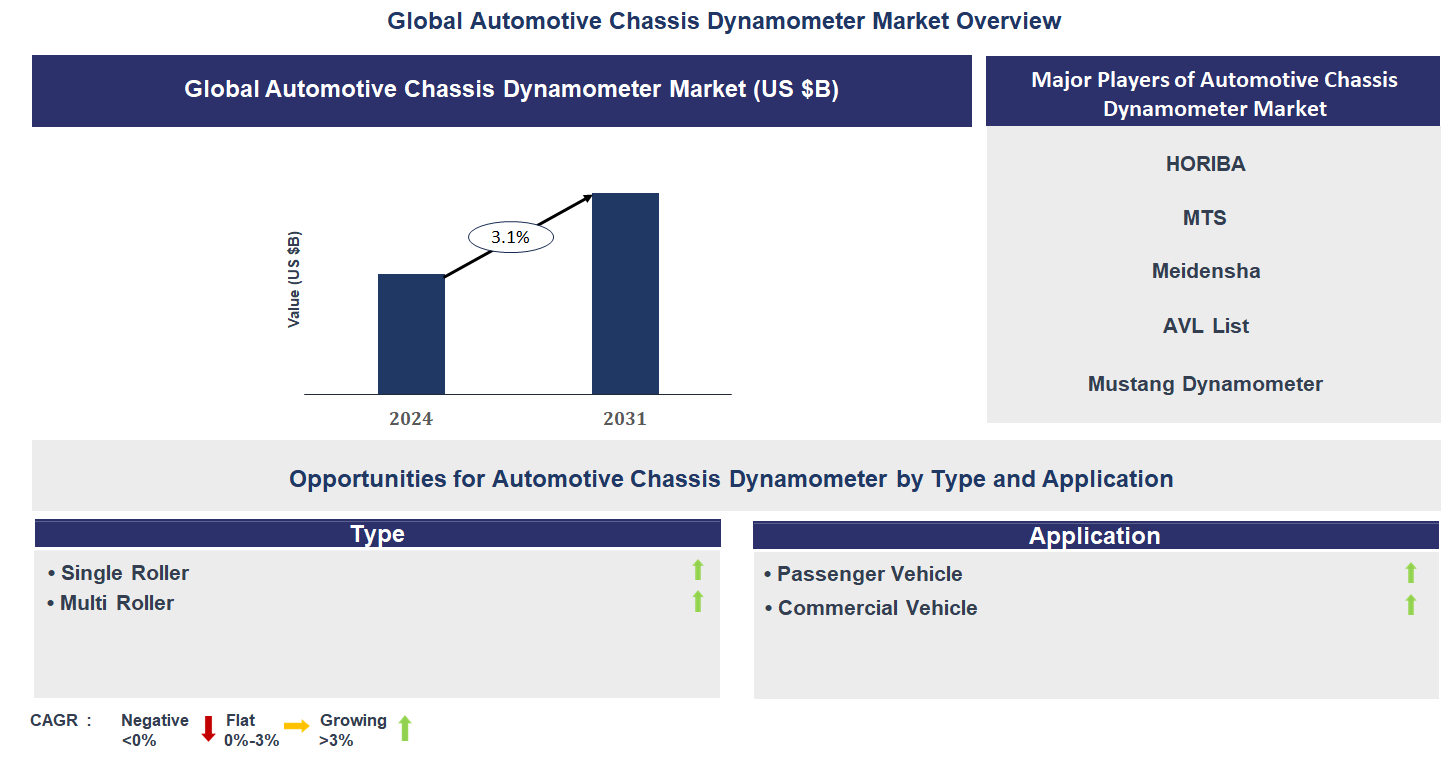
Key data points: The growth forecast = 3.1% annually for the next 7 years. Scroll below to get more insights. This market report covers trends, opportunities and forecasts in automotive chassis dynamometer market to 2031 by type (single roller and multi roller), application (passenger vehicle and commercial vehicle), and region (North America, Europe, Asia Pacific, and the Rest of the World)
We'll send your sample report shortly.
• Lucintel forecasts that, within the type category, multi roller is expected to witness higher growth over the forecast period.
• Within the application category, passenger vehicle is expected to witness higher growth.
• In terms of region, APAC is expected to witness the highest growth over the forecast period. Gain valuable insights for your business decisions with our comprehensive 150+ page report. Sample figures with some insights are shown below.
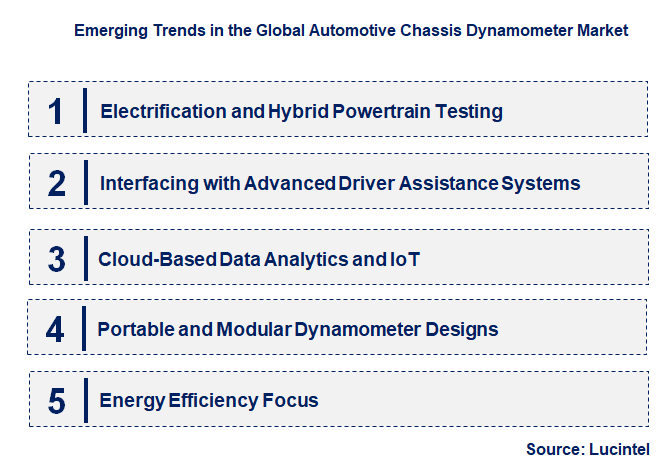
• Electrification and Hybrid Powertrain Testing: Global transition to electric vehicles (EVs) and hybrid electric vehicles (HEVs) is a key trend. Chassis dynamometers are now required to handle sophisticated powertrains that integrate internal combustion engines, electric motors, and battery packs. This means highly specialized systems able to mimic a range of conditions, such as regenerative braking, battery charge and discharge cycles, and total energy usage. The need for these sophisticated, multi-powertrain dynos is a major force behind innovation.
• Interfacing with Advanced Driver Assistance Systems: Autonomous and semi-autonomous cars are boosting demand for dynos capable of emulating intricate driving situations. The trend is towards interlinking chassis dynamometers with hardware-in-the-loop (HIL) and software-in-the-loop (SIL) simulations. These enable engineers to simulate ADAS capabilities such as adaptive cruise control, lane-keeping assist, and automated emergency braking in a secure and controlled way. This is very important for the reliable and safe operation of such next-generation systems.
• Cloud-Based Data Analytics and IoT: New-generation chassis dynamometers are producing enormous amounts of data. The new trend is to analyze this data in real-time using cloud-based data analytics and IoT (Internet of Things). This enables manufacturers to compare test results from different labs simultaneously, detect trends, and make informed decisions to speed the development cycle. This trend is also supporting predictive maintenance of the dyno equipment itself, reducing downtime and increasing efficiency.
• Portable and Modular Dynamometer Designs: To address the variable needs of big automotive players as well as smaller aftermarket companies, there is a move towards portable and modular dynamometer designs. These are simpler to install, can be rearranged to suit different applications, and typically involve less upfront cost. Portable dynos are also being utilized for on-site diagnostics and testing, delivering a cost-effective option compared to an entire test facility. This trend is increasing the availability of advanced testing technology.
• Energy Efficiency Focus: With growing testing needs for EVs, the amount of energy consumed by large dynamometer facilities is also becoming a major concern. The new trend is to design more energy-efficient dyno systems. This involves utilizing synchronous motors that are capable of both powering from the vehicle and regenerating back to the grid, as well as creating sophisticated control algorithms to maximize energy utilization during testing cycles. Emphasis on sustainability is emerging as a critical differentiator for top-tier suppliers. These trends are combined to drive the automotive chassis dynamometer market away from being a specialist test tool for performance and emissions to being at the heart of a integrated, intelligent, and sustainable vehicle development process.
• All-Wheel-Drive Dyno Development: The increase in all-wheel-drive and four-wheel-drive car popularity, especially within the SUV and crossover market, has created a major development in the market. Current chassis dynamometers are now engineered with the four-roller setup, enabling proper simulation of torque distribution and performance in all four wheels. This is also important in the testing of the dynamics of such vehicles and for the verification of the sophisticated systems that control power flow between the axles.
• Use of Electrically Assisted Dynamometers: The evolution to electric and hybrid vehicles has driven the creation and use of electrically assisted dynamometers. Unlike their traditional absorption dynamometer counterparts, these systems can actively mimic forces on the wheels of the vehicle, like a headwind or grade. This is necessary for proper testing of the performance, range, and efficiency of electric powertrains. This innovation also enables energy regeneration during testing, enhancing the overall energy efficiency of the test facility.
• Emphasis on Noise, Vibration, and Harshness Testing: Due to the quiet nature of electric vehicles, NVH testing has become a key application for chassis dynamometers. Some recent advances involve the use of acoustic sensors and purpose-designed software to record and analyze tiny vibrations and sounds generated by the vehicle. This enables engineers to detect and resolve noise and discomfort sources, resulting in a high-quality ride experience. This advancement is testimony to the industry’s move from performance and emissions to a wider spectrum of vehicle attributes.
• Expanded Automation and Software Integration: The auto world is embracing automation, and the dyno market is not different. The most notable advancement is the integration of sophisticated software and automation equipment that can conduct a full test cycle with minimal human input. This involves automated vehicle positioning, execution of test protocols, and data analysis. This advancement radically enhances testing efficiency, minimizes human error, and facilitates the effortless performance of intricate, repeatable test procedures.
• Increase in Real Driving Emissions Simulation: Directives such as the Worldwide Harmonized Light Vehicles Test Procedure (WLTP) and RDE are compelling manufacturers to test their vehicles under conditions that are more realistic. One key innovation here is the employment of chassis dynamometers to simulate RDE cycles, incorporating speed, load, and ambient temperature variations. This enables manufacturers to make sure their vehicles meet stringent emissions targets and to optimize performance across a broad spectrum of actual operating conditions. These advancements are collectively influencing the marketplace by enabling chassis dynamometers to be more versatile, efficient, and critical components of contemporary vehicle development. They are creating demand for more sophisticated, software-based systems capable of addressing the challenges of next-generation vehicles and regulation.
• Electric Vehicle and Battery Testing: The rapid growth of the EV market presents a significant growth opportunity. The unique testing requirements of EVs, such as battery performance, range validation, and the efficiency of regenerative braking, require specialized chassis dynamometers. The strategic opportunity is to develop and market dyno systems that are optimized for EV testing, including those with high-power electrical capabilities and advanced battery simulation software. This application is a key and expanding niche in the market.
• Autonomous and ADAS Testing: As autonomous and advanced driver assistance systems (ADAS) become more common, so does the testing of them in a controlled way. The strategic imperative is to offer dyno systems that are combined with simulators and HIL (hardware-in-the-loop) configurations. This makes it possible to test complicated real-world situations, including vehicle-to-vehicle communication and sensor operation, with high accuracy and reproducibility. By concentrating on this use case, businesses can access the autonomous vehicle market with high growth.
• Emissions and Compliance Testing: With increasing global emissions regulations, like Euro 7 and RDE, there is an ongoing requirement for advanced emissions testing. The strategic potential is in delivering chassis dynamometers that meet current regulatory requirements and are capable of reproducing a broad spectrum of driving cycles. Firms can sell both the hardware and the software needed for certification, making themselves the go-to partners for manufacturers to guarantee regulatory compliance.
• Aftermarket and Performance Tuning: The automotive aftermarket, including the performance tuning business, represents a strong growth opportunity. As the tuners look to maximize their cars, they are turning more and more to chassis dynamometers to confirm performance. The potential is to deliver affordable, user-friendly, and portable dyno systems aimed at smaller shops and individuals. This market space opens doors for firms to move beyond high-volume OEM shops and access a high-volume market with a unique set of needs.
• Research and Development and Academic Applications: R&D departments and academic institutions are prime customers for chassis dynamometers in the development of future technologies. The strategic space here lies in offering dyno systems for R&D applications that necessitate high flexibility and customizability. Firms can provide platforms that can be adapted with ease to try out new powertrain ideas, materials, and control systems. This volume, though smaller in size, is important for remaining on the leading edge of technological advancement and for the formation of long-term alliances. These growth opportunities of a strategic nature are redefining the market by promoting specialization and innovation. The market is transforming from one-size-fits-all to a more application-specific strategy, opening up new paths of growth and a more diversified range of products and services.
• HORIBA
• MTS
• Meidensha
• AVL List
• Mustang Dynamometer
• Power Test
• MAHA
• Ono Sokki
• Rototest
• KRATZER
• Single Roller
• Multi Roller
• Passenger Vehicle
• Commercial Vehicle
• North America
• Europe
• Asia Pacific
• The Rest of the World
• United States: In America, the market is being formed by the rising requirement for electric vehicle (EV) testing. Manufacturers and research institutions are investing in high-power electric powertrain-capable specialized chassis dynamometers that can test battery efficiency and validate regenerative braking systems. There is a strong trend in the aftermarket space as well, with high-performance tuning shops using advanced dyno systems to maximize vehicle performance and meet emissions standards. The market is also witnessing a trend towards more modular and portable solutions.
• China: China’s market is growing rapidly, driven by its global lead in car production and electric vehicle production. The government drive toward rigorous emissions and safety regulation has triggered a huge demand for chassis dynamometers. One important development is the local manufacturing of high-end dyno systems, which means decreased dependence on foreign sources. In addition, expenditures on research and development labs are propelling the use of high-precision, multi-roller chassis dynamometers to aid in developing a broad range of new car models.
• Germany: Being a forerunner in automobile engineering, the German market has a concentration on high-performance and combined test solutions. German producers are leaders in creating sophisticated chassis dynamometers capable of testing sophisticated hybrid and electric powertrains. One of the major developments is the integration of dynos with climate chambers and other simulation solutions for running extensive tests on thermal management, noise, vibration, and harshness. The market is further impacted by the country’s strong focus on compliance with Euro 7 emissions regulations.
• India: The Indian market is pushed by growing vehicle manufacturing and the adoption of more stringent emissions standards such as Bharat Stage (BS) VI and forthcoming Real Driving Emissions (RDE) regulations. This has instigated a robust demand for chassis dynamometers to ensure conformity. Of particular note is the rise of local production and use of affordable, two-wheel-drive dynos appropriate for the country’s large passenger car and motorcycle markets. The market is also experiencing investments from independent testing labs as well as original equipment manufacturers in order to increase their testing capacity.
• Japan: The market in Japan is innovation-oriented and mature. Most recent innovations are aimed at enhancing the accuracy and energy efficiency of chassis dynamometers. Japanese suppliers like Horiba are at the forefront of creating small, energy-efficient dynos with sophisticated control systems that are important for testing electric and autonomous cars. The market is also experiencing a trend towards marrying simulation software with hardware for faster vehicle development cycles and less physical testing.


• HORIBA
• MTS
• Meidensha
• AVL List
• Mustang Dynamometer
• Power Test
• MAHA
• Ono Sokki
• Rototest
• KRATZER Q5. Which automotive chassis dynamometer market segment will be the largest in future? Answer: Lucintel forecasts that, within the type category, multi roller is expected to witness higher growth over the forecast period. Q6. In automotive chassis dynamometer market, which region is expected to be the largest in next 5 years? Answer: In terms of region, APAC is expected to witness the highest growth over the forecast period. Q7. Do we receive customization in this report? Answer: Yes, Lucintel provides 10% customization without any additional cost.


Choose a license that fits your team. Instant PDF delivery.
Prices exclude taxes. Instant delivery. Custom licensing available on request.
Market Report · May 18, 2026
Market Report · May 18, 2026
Market Report · May 18, 2026
Trusted partner for strategic intelligence and business growth


Receive a complimentary market analysis tailored to your industry. Our analysts will identify key growth opportunities and competitive dynamics specific to your business.

Market size, growth rate, and key trend analysis for your specific sector.

Top competitor positioning and market share analysis.

Strategic recommendations backed by data-driven insights.
Get curated market intelligence and competitive moves straight to your inbox.
By subscribing, you agree to receive our monthly insights. Unsubscribe anytime.
Receive a complimentary market analysis tailored to your industry. Our analysts will identify key growth opportunities and competitive dynamics specific to your business.
Market size, growth rate, and key trend analysis for your specific sector.
Top competitor positioning and market share analysis.
Strategic recommendations backed by data-driven insights.
Get curated market intelligence, emerging trends, and competitive moves straight to your inbox each month.
By subscribing, you agree to receive our monthly insights. Unsubscribe anytime.
We'll send your sample report shortly.