
Market Report · May 18, 2026

This market report covers trends, opportunities, and forecasts in the global automatic rebar tying machine market to 2031 by application (precast products factory, building & infrastructure construction, and others), end use industry (semi-automatic and fully automatic), and region (North America, Europe, Asia Pacific, and the Rest of the World)
We'll send your sample report shortly.
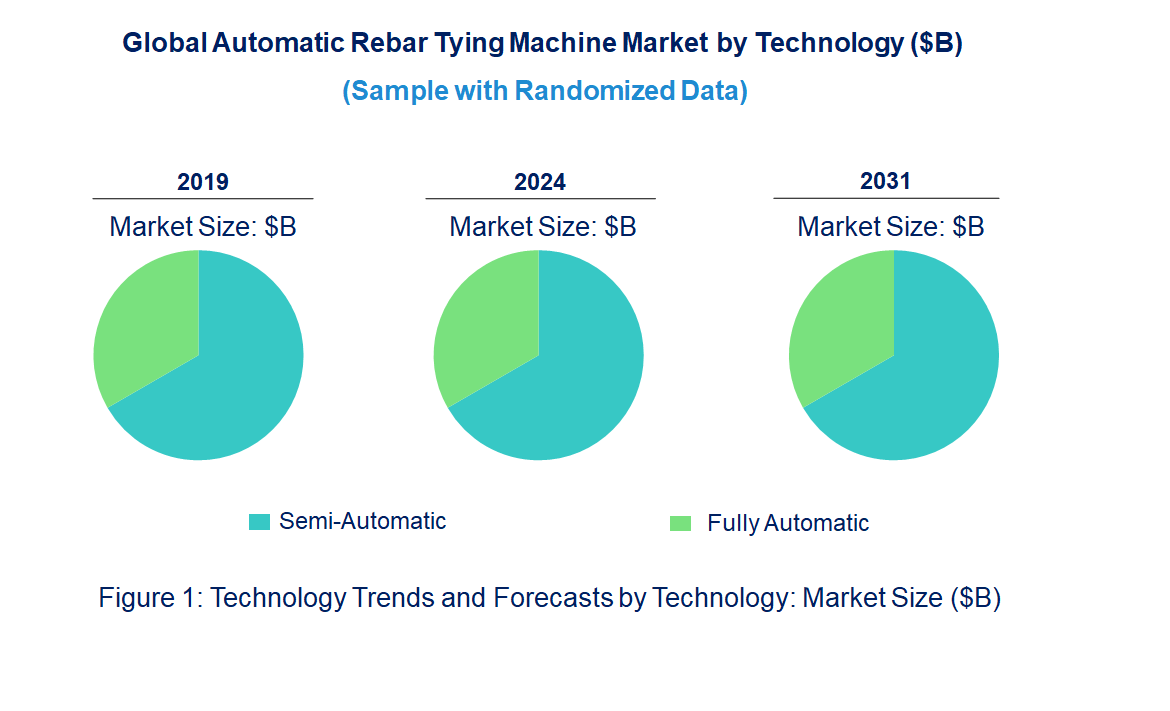
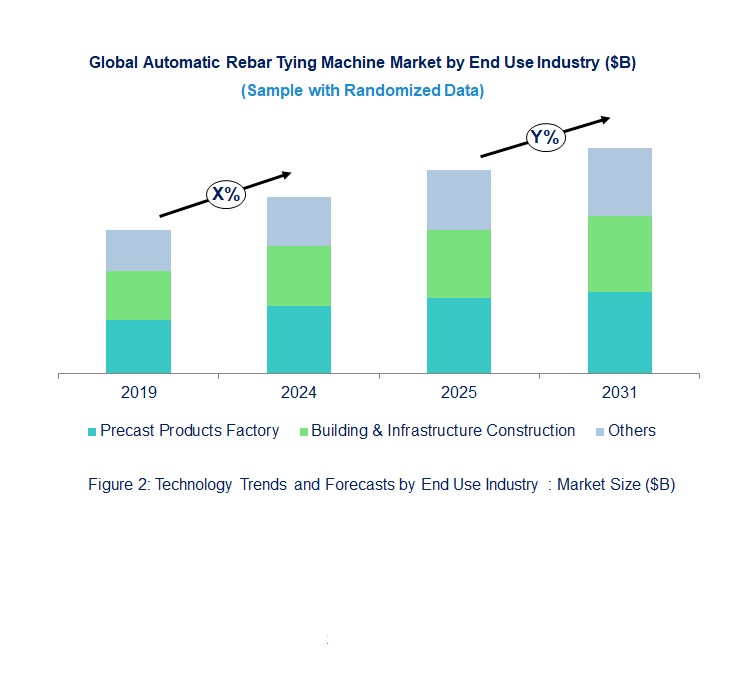
• Shift Toward Fully Automatic Machines: There is a clear trend toward the adoption of fully automatic rebar tying machines that can perform tasks without manual intervention. This shift is reducing labor dependency, enhancing speed, and improving precision in rebar installation, particularly for large-scale construction projects, thus increasing overall productivity.
• Integration of Smart Technology and IoT: The integration of Internet of Things (IoT) and smart technology into automatic rebar tying machines is enabling remote monitoring and control. This allows operators to track machine performance in real-time, optimize efficiency, and prevent malfunctions or downtime, ultimately improving the reliability and efficiency of the tying process.
• Development of Lightweight and Compact Machines: As construction projects demand more portable and space-efficient equipment, the trend toward lightweight, compact automatic rebar tying machines is growing. These machines are easier to transport, require less space for storage, and can be used in tight or complex construction sites, offering greater flexibility for builders.
• Increased Focus on Battery-Powered Machines: With the emphasis on reducing operational costs and minimizing environmental impact, there is a growing trend towards battery-powered automatic rebar tying machines. These machines are more energy-efficient, reducing the need for external power sources and offering a more sustainable alternative for construction projects, especially in remote areas.
• Enhanced Safety Features: Safety remains a top priority in the construction industry. The latest automatic rebar tying machines are equipped with enhanced safety features, such as automatic shut-off mechanisms, safety sensors, and ergonomic designs that minimize risks associated with manual tying. These innovations are contributing to safer working environments for construction workers. Emerging trends in the automatic rebar tying machine market are reshaping the construction industry by driving advancements in automation, portability, and safety. Fully automatic machines, smart technology integration, and battery-powered models are enabling greater efficiency and flexibility in construction projects. These trends not only optimize operational productivity but also ensure that rebar tying is faster, more reliable, and safer. As these technologies continue to evolve, they will further transform construction workflows, reducing labor costs and improving the overall quality of construction.
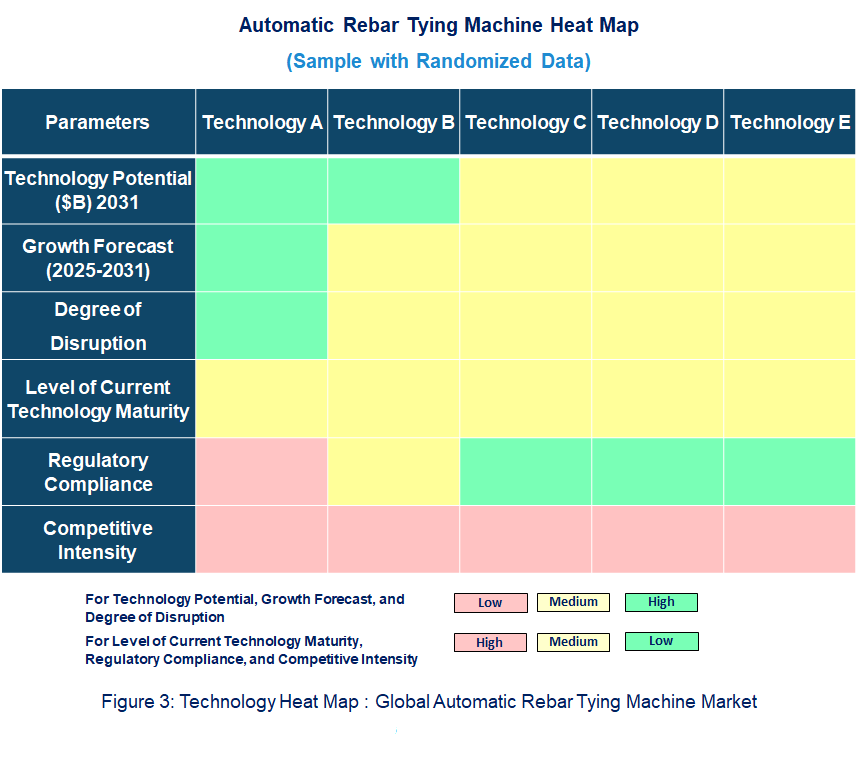
• Technology Potential: The technology potential of automatic rebar tying machines is substantial. By automating the rebar tying process, these machines improve productivity, reduce manual labor, and enhance consistency in tie quality. They can significantly reduce the risk of injury, as workers are less exposed to the repetitive and strenuous tasks of manual tying. These machines are particularly useful in large-scale construction projects, where they can handle a high volume of repetitive tasks, increasing efficiency and reducing project timelines.
• Degree of Disruption: Automatic rebar tying machines have the potential to disrupt traditional construction methods by replacing manual labor with automation, reducing human error, and increasing overall project efficiency. While their adoption has been growing, the disruption is gradual due to the need for initial investments and training for operators.
• Level of Current Technology Maturity: The technology is relatively mature, with various models available in the market. Many machines are already capable of tying rebar in different shapes and sizes, with advancements in automation and ease of use. However, there is still room for improvement in terms of battery life, speed, and adaptability to various construction environments.
• Regulatory Compliance: Regulatory compliance for automatic rebar tying machines focuses on safety standards. Manufacturers must ensure that their machines meet local and international safety regulations, including those related to electrical safety, machine operation, and operator training. As the technology evolves, regulatory bodies are likely to develop more specific guidelines to ensure that automation in construction aligns with safety and quality standards. In conclusion, the automatic rebar tying machine market presents significant technological potential, offering increased efficiency, safety, and productivity in the construction industry.
• Max: Max has launched advanced rebar tying machines, including battery-operated models that offer greater portability and efficiency. These machines are equipped with more durable motors and advanced tying mechanisms, allowing for quicker and more reliable tying of rebars. This development enhances on-site productivity by reducing labor costs and increasing operational efficiency.
• Makita: Makita has introduced lightweight, ergonomic rebar tying machines designed for ease of use in challenging construction environments. These machines feature improved battery life and faster tying speeds, significantly reducing the amount of time spent on manual labor, while providing construction workers with greater comfort and reduced fatigue.
• SURSPIDER: SURSPIDER’s automatic rebar tying machines have become popular for their user-friendly interface and multi-functionality. With models that can tie rebars in multiple configurations, SURSPIDER’s machines have helped improve tying precision and speed. This technology offers more flexibility for rebar tying on complex construction sites.
• Xindalu: Xindalu has made strides with rebar tying machines that offer advanced automatic features, including programmable tying patterns and adjustable tying tensions. These developments allow for more precise and customized applications, ensuring the rebar tie meets specific project requirements. This improves the overall safety and reliability of construction structures.
• SENCO: SENCO has focused on enhancing the battery-powered rebar tying machines, making them more durable and increasing their speed. The company’s new models offer longer operating hours and faster rebar tying speeds, allowing for higher productivity on construction sites. This results in significant cost savings and faster project completion times.
• Ben Tools: Ben Tools has been innovating with rebar tying machines that feature adjustable speed settings and ergonomic grips. Their machines are designed for optimal user comfort while maintaining high rebar tying speeds. This makes them a preferred choice for contractors looking for machines that are both efficient and easy to handle.
• TJEP: TJEP has introduced a variety of automatic rebar tying machines that emphasize versatility and reliability. Their machines cater to different rebar sizes and tying requirements, and are equipped with improved mechanisms to reduce maintenance needs. This enables contractors to complete projects more efficiently without the downtime caused by equipment issues.
• Kowy Tools: Kowy Tools’ latest rebar tying machines are designed with advanced safety features to prevent accidents on construction sites. Their machines include automatic shutoff features to reduce risks of over-tensioning and wire breakage, making them ideal for high-risk construction environments where safety is a priority.
• BN Products: BN Products has expanded its offering with high-speed rebar tying machines that have adjustable tying angles and user-friendly controls. Their products are optimized for high-volume tying tasks, allowing for consistent performance and improved rebar layout accuracy, which contributes to the structural integrity of concrete forms.
• Rapid Tool: Rapid Tool has introduced rebar tying machines with enhanced precision and faster tying speeds. Their machines are also designed with stronger motors and advanced torque control, ensuring consistent performance during prolonged usage. These developments have made Rapid Tool machines more popular in large-scale construction projects where reliability is critical. The automatic rebar tying machine market is witnessing rapid growth driven by increasing construction activity, a shortage of skilled labor, and a focus on improving construction efficiency.
• Increased Construction Projects: The rise in infrastructure development and construction activities globally has driven the demand for automated solutions, like rebar tying machines. These machines allow for faster and more precise work, accelerating project timelines and improving construction quality, which is critical in large-scale projects like bridges and high-rise buildings.
• Labor Shortages: Labor shortages in the construction industry have made automated solutions essential. Rebar tying machines reduce the reliance on manual labor, improving productivity and reducing the risk of worker fatigue or injury. This is especially important in markets facing a skilled labor shortage, making automation a critical solution.
• Focus on Efficiency and Cost Reduction: Construction companies are increasingly prioritizing efficiency and cost reduction. Rebar tying machines improve worksite productivity by speeding up the tying process and reducing human error. This leads to fewer material wastages, reduced labor costs, and faster project completion, ultimately driving the demand for these machines. Challenges in the automatic rebar tying machine market are:
• High Initial Investment: The cost of automatic rebar tying machines can be prohibitive for smaller construction companies. Although they offer long-term savings in labor costs, the upfront investment can be a barrier for adoption, particularly in price-sensitive markets or among smaller contractors.
• Training and Skill Requirements: Operating advanced rebar tying machines requires specialized skills and training. Construction workers need to be adequately trained to operate these machines efficiently, which adds to the cost and time investment. The lack of skilled labor to manage these machines can limit their widespread adoption.
• Machine Compatibility with Different Rebar Sizes: While many rebar tying machines are versatile, ensuring compatibility with various rebar sizes and tying patterns can be a challenge. Construction projects with different rebar configurations may require frequent adjustments to the machines, which can slow down the process and increase operational complexity. The drivers and challenges shape the automatic rebar tying machine market, encouraging continuous innovation while emphasizing the need for affordable, scalable, and performance-oriented material solutions to fully realize the technology’s potential.
• Max
• Makita
• Surspider
• Xindalu
• Senco
• Ben Tools
• Technology Readiness by Technology Type: Technology readiness in the automatic rebar tying machine market varies depending on the sector and specific application. Precast products factories are leading in terms of technology maturity, with automated machines already integral to production lines, allowing for high-volume, precise rebar tying with minimal human intervention. In building and infrastructure construction, the adoption of rebar tying machines is progressing rapidly, though there are still challenges regarding on-site adaptability and machine integration with other construction processes. The competitive level is high, with numerous players offering advanced machines equipped with features like programmable tying patterns and remote monitoring capabilities. Regulatory compliance is crucial in both sectors, particularly regarding worker safety, machine reliability, and adherence to construction standards. Other technologies, such as mobile rebar tying solutions, are emerging to cater to smaller, more flexible construction sites but are still less mature compared to fixed factory solutions. These machines are still evolving, with manufacturers focusing on increasing their adaptability, efficiency, and integration with broader automated construction systems.
• Competitive Intensity and Regulatory Compliance: The competitive intensity in the automatic rebar tying machine market is growing as more companies enter the field, driven by the increasing demand for automation in construction processes. In the precast products factory sector, automation has reached a high level, with key players offering specialized machines to meet the demands of large-scale rebar placement. The building and infrastructure construction sectors are also experiencing heightened competition, with multiple manufacturers developing machines that offer varying degrees of customization for different rebar configurations. As for regulatory compliance, safety standards and certifications are crucial in this market, with machines needing to comply with industry regulations to ensure worker safety and operational efficiency. Companies must also adhere to local construction regulations and quality standards, especially for large-scale infrastructure projects. Meeting these compliance requirements while maintaining a competitive edge is challenging, as manufacturers strive to innovate while ensuring their products meet global safety and performance standards.
• Disruption Potential by Technology Type: The disruption potential of various technologies in the automatic rebar tying machine market is significant, particularly in sectors like precast products factories, building construction, and infrastructure projects. In precast product manufacturing, automation technologies, including robotic rebar tying machines, help streamline the process, improving efficiency and reducing labor costs. In building and infrastructure construction, these machines provide enhanced accuracy and speed, especially for complex rebar configurations in large-scale projects like bridges and skyscrapers. Automation is rapidly transforming construction sites, where the use of rebar tying machines is increasing to replace manual labor. Other emerging technologies such as AI-driven machines with real-time data processing are poised to disrupt traditional methods by offering advanced features like predictive maintenance and adaptability to different construction requirements. This shift toward automation in rebar tying not only boosts productivity but also improves safety on construction sites by minimizing human error and exposure to hazardous tasks.
• Precast Products Factory
• Building & Infrastructure Construction
• Others
• Semi-Automatic
• Fully Automatic
• North America
• Europe
• Asia Pacific
• The Rest of the World
• Latest Developments and Innovations in the Automatic Rebar Tying Machine Technologies
• Companies / Ecosystems
• Strategic Opportunities by Technology Type


Choose a license that fits your team. Instant PDF delivery.
Prices exclude taxes. Instant delivery. Custom licensing available on request.
Market Report · May 18, 2026
Market Report · May 18, 2026
Market Report · May 18, 2026
Trusted partner for strategic intelligence and business growth


Receive a complimentary market analysis tailored to your industry. Our analysts will identify key growth opportunities and competitive dynamics specific to your business.

Market size, growth rate, and key trend analysis for your specific sector.

Top competitor positioning and market share analysis.

Strategic recommendations backed by data-driven insights.
Get curated market intelligence and competitive moves straight to your inbox.
By subscribing, you agree to receive our monthly insights. Unsubscribe anytime.
Receive a complimentary market analysis tailored to your industry. Our analysts will identify key growth opportunities and competitive dynamics specific to your business.
Market size, growth rate, and key trend analysis for your specific sector.
Top competitor positioning and market share analysis.
Strategic recommendations backed by data-driven insights.
Get curated market intelligence, emerging trends, and competitive moves straight to your inbox each month.
By subscribing, you agree to receive our monthly insights. Unsubscribe anytime.
We'll send your sample report shortly.