
Market Report · July 31, 2026

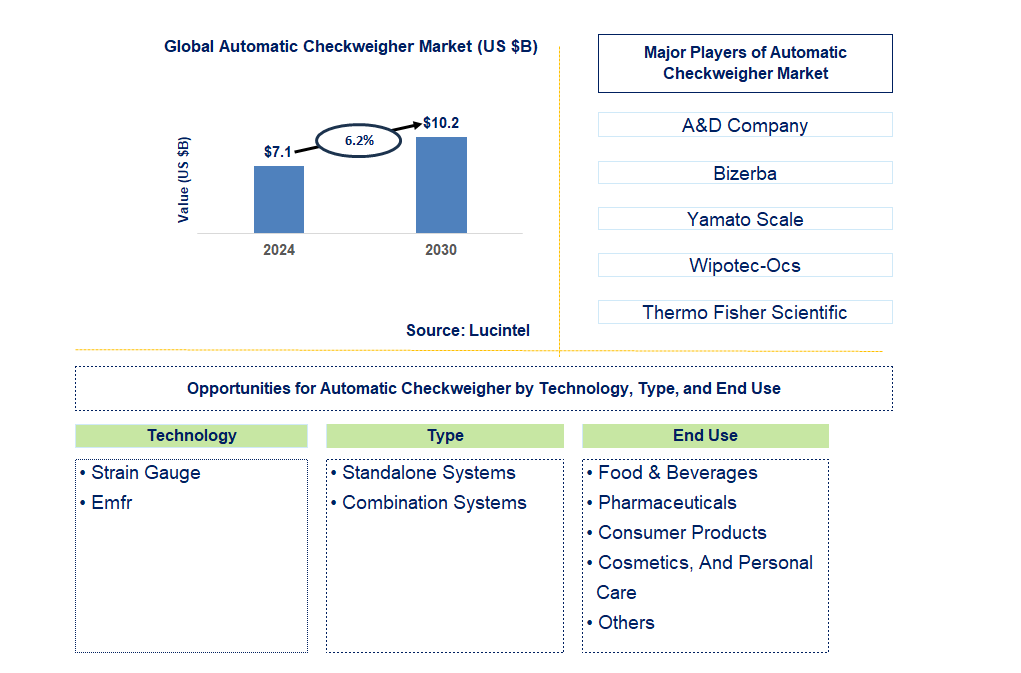
Key data points: The market size in 2030 = $10.2 billion, growth forecast = 6.2% annually next 6 years. Scroll below to get more insights. This market report covers trends, opportunities, and forecasts in the global automatic checkweigher market to 2030 by technology (strain gauge and emfr), type (standalone systems and combination systems), end use (food & beverages, pharmaceuticals, consumer products, cosmetics, and personal care, and others), and region (North America, Europe, Asia Pacific, and the Rest of the World)
We'll send your sample report shortly.
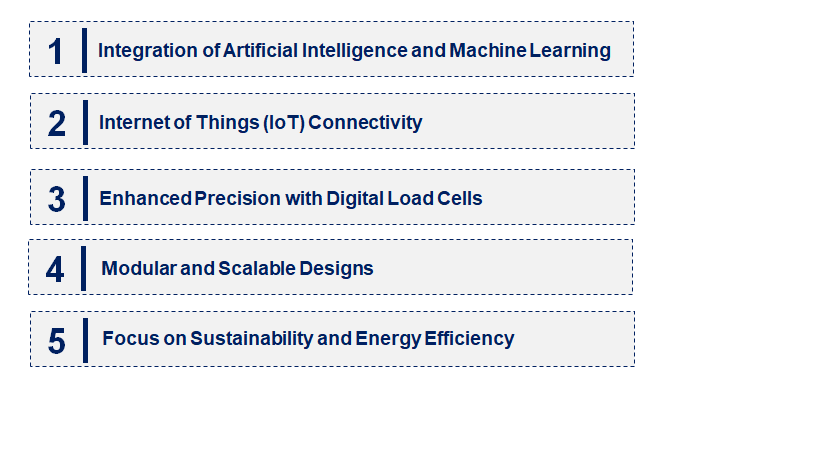
• Integration of Artificial Intelligence and Machine Learning: AI and machine learning are transforming automatic checkweighers by enabling real-time data analysis and decision-making. These technologies enhance accuracy by predicting and correcting errors dynamically, optimizing calibration processes, and improving overall system efficiency. AI algorithms can detect anomalies and deviations from set parameters more effectively than traditional methods, leading to reduced waste and increased compliance with quality standards. This integration allows for continuous improvement and adaptive functionality, making checkweighers more responsive to variations in production.
• Internet of Things (IoT) Connectivity: The IoT is revolutionizing checkweighing systems by enabling seamless connectivity and data sharing across the production line. IoT-enabled checkweighers provide real-time monitoring and remote diagnostics, allowing for immediate troubleshooting and maintenance. This connectivity also facilitates the collection and analysis of vast amounts of data, which can be used to optimize production processes and predict maintenance needs. IoT integration enhances operational efficiency, reduces downtime, and supports predictive maintenance strategies, making checkweighing systems more intelligent and interconnected.
• Enhanced Precision with Digital Load Cells: Digital load cells are becoming a standard feature in modern checkweighers, offering superior accuracy and stability compared to traditional analog systems. These load cells provide high-resolution measurements and more precise weight data, which are crucial for industries with stringent quality control requirements. Digital technology enables better signal processing and faster response times, improving the overall performance of checkweighers. Enhanced precision supports compliance with regulatory standards and ensures product consistency, which is vital for sectors like pharmaceuticals and food and beverage.
• Modular and Scalable Designs: Modular and scalable designs are gaining popularity as they offer flexibility and ease of integration into existing production lines. These designs allow for customization based on specific needs, such as varying production speeds and product types. Modular checkweighers can be easily expanded or upgraded, accommodating changes in production volume or technology without significant overhauls. This adaptability helps manufacturers optimize their systems for diverse applications and ensures that investments remain relevant as production requirements evolve.
• Focus on Sustainability and Energy Efficiency: Sustainability and energy efficiency are becoming key considerations in the design of automatic checkweighers. Manufacturers are increasingly focusing on developing systems that consume less energy and have a reduced environmental impact. This includes using energy-efficient components, reducing waste through more precise measurements, and designing systems that comply with environmental regulations. The drive toward sustainability aligns with broader corporate responsibility goals and can also result in cost savings over time by lowering operational expenses and enhancing overall efficiency. The focus on sustainability and energy efficiency reflects a growing commitment to environmental responsibility in the checkweigher market. By reducing energy consumption and waste, manufacturers can achieve cost savings and support their broader sustainability objectives.
• Integration of Advanced Data Analytics: Recent advancements in checkweighers now incorporate advanced data analytics to improve operational efficiency and decision-making. By leveraging big data and analytics, these systems can process and analyze vast amounts of weight data in real time. This enables manufacturers to identify trends, predict potential issues, and optimize production processes more effectively. Enhanced data analytics also allow for better monitoring of product quality and compliance with industry standards, leading to reduced waste and increased accuracy in weight measurements.
• Development of Smart Checkweighers with AI Capabilities: The integration of artificial intelligence (AI) in automatic checkweighers is a significant development, enabling systems to perform complex tasks such as real-time error detection and adaptive calibration. AI algorithms can learn from historical data to make precise adjustments and predict maintenance needs, enhancing overall system reliability and accuracy. Smart checkweighers with AI capabilities can adapt to varying production conditions and detect anomalies that traditional systems might miss, improving quality control and reducing downtime.
• Enhanced Connectivity Through the Internet of Things (IoT): The adoption of Internet of Things (IoT) technology has revolutionized automatic checkweighers by enabling seamless connectivity and remote monitoring. IoT-enabled checkweighers can transmit data to central systems, allowing for real-time performance tracking and remote diagnostics. This connectivity facilitates proactive maintenance, reduces downtime, and supports data-driven decision-making. By integrating with broader IoT ecosystems, checkweighers can be part of a more interconnected and efficient manufacturing environment.
• Introduction of Modular and Flexible Designs: Modular and flexible designs are becoming increasingly popular in automatic checkweighers, offering manufacturers greater adaptability and ease of integration. These designs allow for customization based on specific production needs and enable easy upgrades as requirements change. Modular checkweighers can be easily incorporated into existing production lines, accommodating varying production speeds and product types without major modifications. This flexibility supports diverse applications and helps manufacturers maintain efficiency as their operations evolve.
• Emphasis on Sustainability and Energy Efficiency: Sustainability and energy efficiency have become key focus areas in the development of automatic checkweighers. Manufacturers are designing systems that use less energy and have a lower environmental impact, incorporating energy-efficient components and optimizing processes to reduce waste. This emphasis aligns with broader corporate sustainability goals and can result in cost savings through reduced energy consumption and improved operational efficiency. Sustainable checkweighers help companies meet environmental regulations and demonstrate their commitment to responsible manufacturing practices. Emphasizing sustainability and energy efficiency reflects a growing commitment to environmental responsibility. This trend helps manufacturers achieve cost savings and supports broader sustainability objectives, making checkweighers more environmentally friendly and efficient.
• Food and Beverage Industry: The food and beverage industry is a major growth area for automatic checkweighers, driven by the need for precise weight measurement and compliance with strict regulatory standards. Checkweighers help ensure product consistency, reduce waste, and meet labeling requirements. Opportunities include developing checkweighers that can handle diverse product types, from bulk items to individually packaged goods, and integrating advanced features such as real-time data analytics and AI for enhanced accuracy and efficiency.
• Pharmaceutical Industry: In the pharmaceutical industry, automatic checkweighers play a critical role in maintaining high standards of accuracy and compliance with stringent regulations. There is an opportunity to develop checkweighers that meet the unique requirements of handling small, high-value, or sensitive pharmaceutical products. Incorporating features such as advanced error detection, real-time monitoring, and validation capabilities can address the industry's need for reliable quality control and regulatory adherence.
• Packaging Industry: The packaging industry represents a significant growth opportunity for automatic checkweighers due to the increasing complexity and variety of packaging formats. Checkweighers that can handle diverse packaging types and integrate seamlessly into high-speed production lines are in demand. Developing modular and scalable checkweighers that can adapt to different packaging requirements and support rapid changeovers will be crucial for capturing this market segment.
• E-commerce and Online Retail: The rise of e-commerce and online retail is driving demand for checkweighers that can efficiently handle high volumes of packages with varying sizes and weights. Opportunities include developing checkweighers with enhanced speed, accuracy, and integration capabilities to support automated sorting and fulfillment processes. Features such as real-time data collection and IoT connectivity can improve operational efficiency and accuracy in the fast-paced e-commerce environment.
• Consumer Goods and Electronics: In the consumer goods and electronics sectors, there is a growing need for checkweighers that can handle small, delicate, or high-value items with precision. Developing checkweighers with advanced features such as gentle handling, high-speed operation, and accurate weight measurement will be important. Additionally, integrating technologies like AI for real-time monitoring and quality control can address the specific demands of these sectors. Prioritizing sustainability and energy efficiency in checkweighers aligns with industry trends and regulatory demands. Developing environmentally friendly systems can offer cost savings and support broader sustainability objectives, enhancing the market appeal of checkweighers.
• A&D Company
• Bizerba
• Yamato Scale
• Wipotec-Ocs
• Thermo Fisher Scientific
• Bosch Packaging Technology
• Minebea Intec
• Strain Gauge
• Emfr
• Standalone Systems
• Combination Systems
• Food & Beverages
• Pharmaceuticals
• Consumer Products
• Cosmetics, And Personal Care
• Others
• North America
• Europe
• Asia Pacific
• The Rest of the World
• United States: In the U.S., the automatic checkweigher market is experiencing growth due to increasing demand for high-speed, high-accuracy systems in the food and beverage, pharmaceutical, and packaging industries. Recent advancements include the integration of AI and machine learning for real-time data analysis and enhanced accuracy. Additionally, there is a rising focus on compliance with stringent regulatory standards, which drives innovation in system reliability and traceability. Companies are also investing in modular designs for flexibility and easier integration into existing production lines.
• China: The automatic checkweigher market in China is expanding rapidly, driven by the country's booming manufacturing sector and the push toward Industry 4.0. Key developments include the adoption of advanced technologies such as IoT and big data analytics to optimize production processes and ensure quality control. Chinese manufacturers are also focusing on cost-effective solutions that cater to a diverse range of industries, including consumer goods and pharmaceuticals. Additionally, local companies are increasingly developing their own checkweighing systems, which helps reduce dependency on imports and supports the growth of domestic technology.
• Germany: Germany, known for its precision engineering, is leading in the development of high-precision automatic checkweighers. The market here is characterized by a strong emphasis on technological innovation, with advancements such as enhanced digital load cells and sophisticated calibration methods. German manufacturers are integrating these systems with advanced data analytics and automation to improve efficiency and reduce downtime. The market also benefits from the country’s robust regulatory environment, which drives the need for highly reliable and compliant checkweighing solutions, especially in the pharmaceutical and food industries.
• India: In India, the automatic checkweigher market is evolving, driven by rapid industrial growth and modernization of manufacturing processes. Key developments include the rise of affordable and scalable checkweighing solutions tailored to the needs of local industries, such as packaging and consumer goods. Technological advancements are also focusing on improving user interfaces and reducing maintenance costs. The Indian market is seeing a growing presence of both international and domestic players, which fosters competition and drives innovation in product offerings.
• Japan: The market for automatic checkweighers in Japan is marked by its emphasis on high-quality standards and technological sophistication. Recent trends include the integration of cutting-edge robotics and automation technologies to enhance operational efficiency and accuracy. Japanese companies are leading in the development of advanced checkweighers that incorporate features like real-time error correction and adaptive weighing capabilities. Additionally, there is a strong focus on sustainability and energy efficiency, aligning with broader national goals of environmental responsibility and reducing the carbon footprint of manufacturing processes.


• A&D Company
• Bizerba
• Yamato Scale
• Wipotec-Ocs
• Thermo Fisher Scientific
• Bosch Packaging Technology
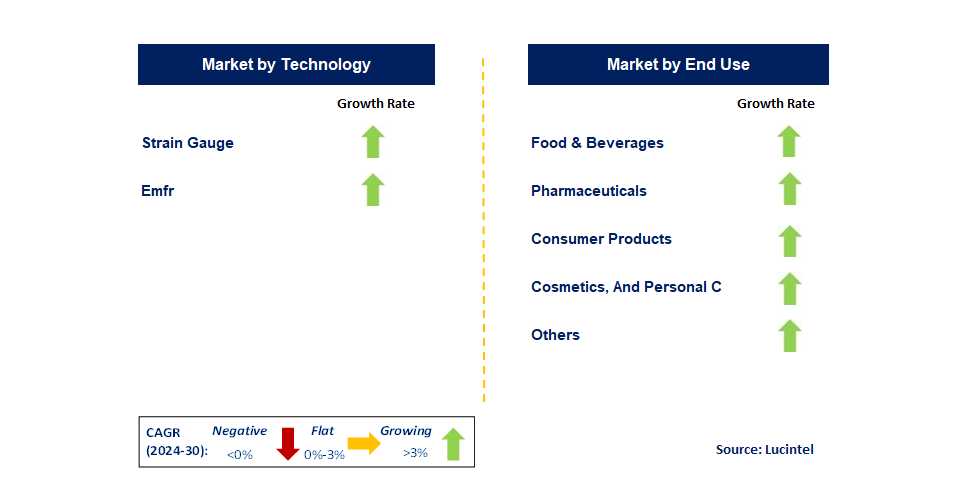
• Minebea Intec Q6. Which automatic checkweigher market segment will be the largest in future? Answer: Lucintel forecasts that emfr is expected to witness highest growth over the forecast period due to increase performance and provide sustained accuracy. Q7. In automatic checkweigher market, which region is expected to be the largest in next 5 years? Answer: APAC is expected to witness highest growth over the forecast period due to growing packaging industry, increasing consumer awareness regarding labeling and packaging of food products. Q.8 Do we receive customization in this report? Answer: Yes, Lucintel provides 10% customization without any additional cost. This report answers following 11 key questions:


Choose a license that fits your team. Instant PDF delivery.
Prices exclude taxes. Instant delivery. Custom licensing available on request.
Market Report · July 31, 2026
Market Report · July 31, 2026
Market Report · July 31, 2026
Trusted partner for strategic intelligence and business growth


Receive a complimentary market analysis tailored to your industry. Our analysts will identify key growth opportunities and competitive dynamics specific to your business.

Market size, growth rate, and key trend analysis for your specific sector.

Top competitor positioning and market share analysis.

Strategic recommendations backed by data-driven insights.
Get curated market intelligence and competitive moves straight to your inbox.
By subscribing, you agree to receive our monthly insights. Unsubscribe anytime.
Receive a complimentary market analysis tailored to your industry. Our analysts will identify key growth opportunities and competitive dynamics specific to your business.
Market size, growth rate, and key trend analysis for your specific sector.
Top competitor positioning and market share analysis.
Strategic recommendations backed by data-driven insights.
Get curated market intelligence, emerging trends, and competitive moves straight to your inbox each month.
By subscribing, you agree to receive our monthly insights. Unsubscribe anytime.
We'll send your sample report shortly.