
Report Feature
Audiophile Grade Capacitor Market Trends and Forecast
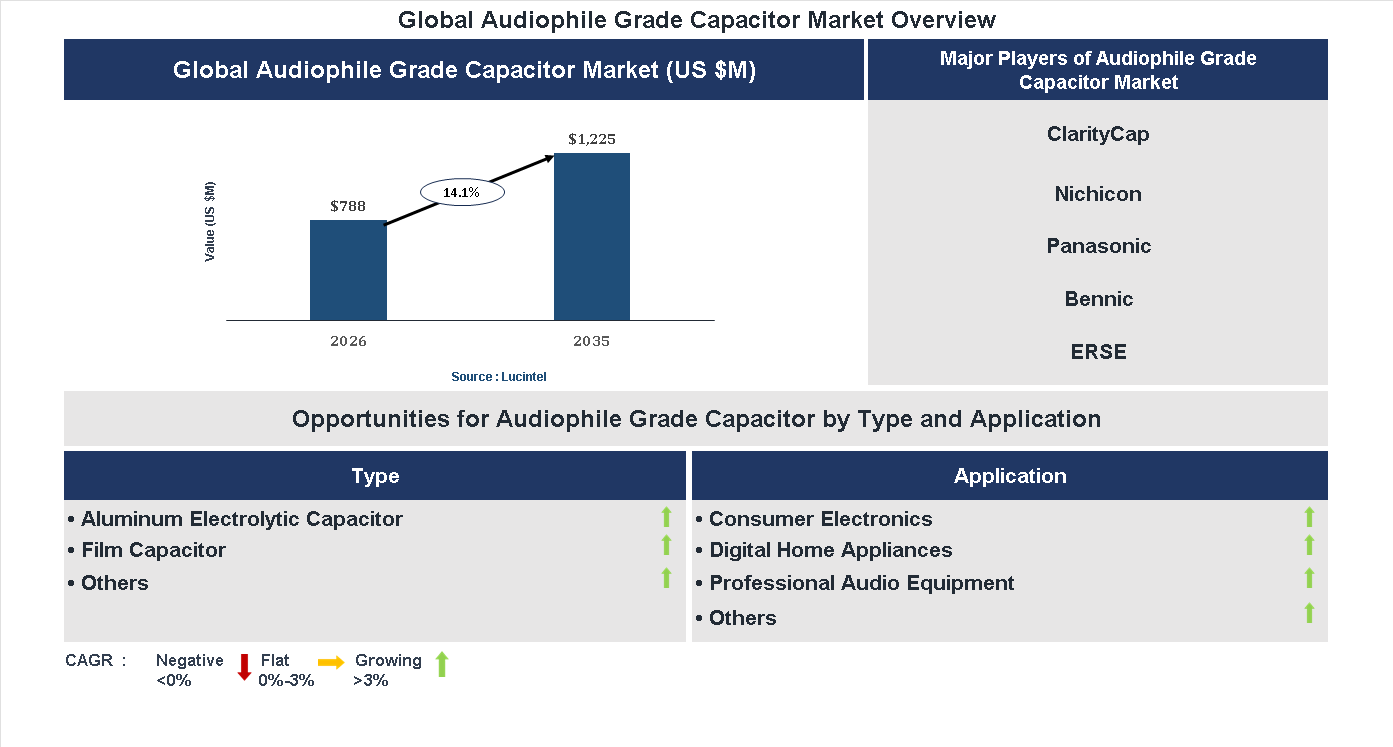
The future of the global audiophile grade capacitor market looks promising with opportunities in the consumer electronics, digital home appliance, and professional audio equipment markets. The global audiophile grade capacitor market is expected to reach an estimated $1,225 million by 2035 with a CAGR of 14.1% from 2026 to 2035. The major drivers for this market are the increasing demand for high quality audio, the rising adoption of premium audio equipment, and the growing interest in high fidelity sound systems.• Lucintel forecasts that, within the type category, film capacitor is expected to witness higher growth over the forecast period.
• Within the application category, professional audio equipment is expected to witness the highest growth.
• In terms of region, APAC is expected to witness the highest growth over the forecast period. Gain valuable insights for your business decisions with our comprehensive 150+ page report. Sample figures with some insights are shown below.
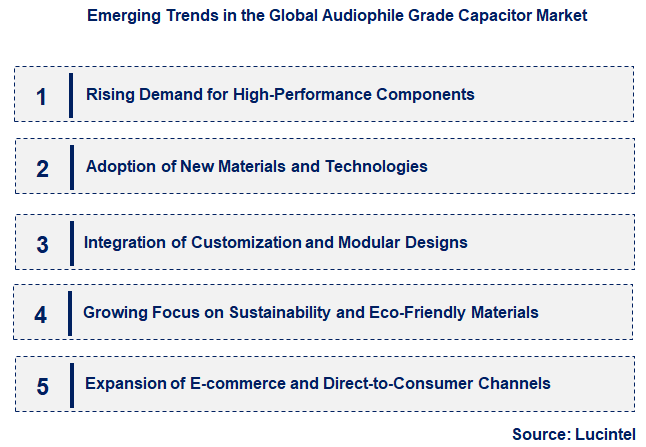
Emerging Trends in the Audiophile Grade Capacitor Market
The audiophile grade capacitor market is experiencing a significant transformation driven by technological advancements, consumer preferences, and industry innovations. As audio enthusiasts seek higher fidelity and superior sound quality, manufacturers are innovating to meet these demands. The market is also influenced by the growing popularity of high-end audio systems, increased awareness of component quality, and the integration of new materials and manufacturing techniques. These developments are not only enhancing product performance but also expanding market opportunities. Understanding these emerging trends is crucial for stakeholders aiming to capitalize on the evolving landscape and meet the rising expectations of audiophiles worldwide.• Rising Demand for High-Performance Components: The market is witnessing increased demand for capacitors that deliver exceptional sound clarity and stability. Audiophiles prioritize components with low distortion, high precision, and durability, prompting manufacturers to develop capacitors with advanced dielectric materials and improved manufacturing processes. This trend is driven by the desire for authentic sound reproduction and the need for reliable performance in high-end audio systems, thereby expanding the market for premium audiophile-grade capacitors.
• Adoption of New Materials and Technologies: Innovations in dielectric materials such as polypropylene, oil-impregnated paper, and ceramic composites are revolutionizing capacitor performance. These materials offer better frequency response, reduced noise, and enhanced longevity. Additionally, emerging technologies like nanomaterials and advanced coating techniques are improving capacitor stability and reducing parasitic effects. This trend is enabling manufacturers to produce capacitors that meet the stringent requirements of audiophiles, thus elevating overall sound quality and expanding product offerings.
• Integration of Customization and Modular Designs: Customization options are becoming increasingly popular among audiophiles seeking tailored audio experiences. Manufacturers are offering modular capacitor solutions that can be easily upgraded or replaced, allowing users to optimize their systems. This trend promotes flexibility, personalization, and ease of maintenance, which are highly valued in high-end audio setups. It also encourages innovation in design and manufacturing, fostering a competitive market landscape.
• Growing Focus on Sustainability and Eco-Friendly Materials: Environmental concerns are influencing the market, with manufacturers adopting eco-friendly materials and sustainable manufacturing practices. Biodegradable dielectrics, reduced use of hazardous substances, and energy-efficient production processes are gaining traction. This trend aligns with the broader shift towards sustainability in electronics, appealing to environmentally conscious consumers. It also enhances brand reputation and compliance with regulatory standards, thereby opening new avenues for market growth.
• Expansion of E-commerce and Direct-to-Consumer Channels: The rise of online retail platforms is transforming how audiophile-grade capacitors are marketed and sold. Direct-to-consumer channels enable manufacturers to reach niche markets more effectively, offer customized products, and gather customer feedback for continuous improvement. E-commerce also facilitates access to global markets, increasing product visibility and sales. This trend is democratizing access to high-quality audio components and fostering a more dynamic, customer-centric market environment. In summary, these emerging trends are reshaping the audiophile grade capacitor market by enhancing product performance, promoting innovation, and expanding accessibility. They are driving a shift towards higher quality, sustainability, and customization, ultimately elevating the standards of high-end audio systems and meeting the evolving demands of audiophiles worldwide.
Recent Development in the Audiophile Grade Capacitor Market
The audiophile grade capacitor market is experiencing rapid growth driven by increasing consumer demand for high-fidelity audio equipment. Advances in technology and a shift towards premium audio experiences are fueling innovation and expansion within this niche. Manufacturers are focusing on quality, durability, and performance to meet the expectations of audiophiles and professional users. This evolving landscape presents significant opportunities for market players to capitalize on the rising interest in superior audio components and customized solutions.• Growth in Consumer Audio Enthusiasm: The rising popularity of high-end audio systems among consumers is boosting demand for audiophile-grade capacitors, which are essential for superior sound quality. As consumers seek immersive listening experiences, manufacturers are innovating to produce capacitors that deliver enhanced clarity, stability, and longevity. This trend is expanding the market, encouraging new product development, and increasing sales across retail and online channels.
• Technological Innovations in Capacitor Design: Recent developments in materials and manufacturing processes are leading to more efficient, reliable, and compact capacitors. Innovations such as improved dielectric materials and advanced manufacturing techniques are enhancing performance parameters like frequency response and noise reduction. These technological advancements are enabling manufacturers to meet the stringent requirements of high-fidelity audio equipment, thereby expanding the market and opening new avenues for product differentiation.
• Rising Adoption in Professional Audio Equipment: The professional audio industry is increasingly adopting audiophile-grade capacitors for use in high-end amplifiers, mixing consoles, and studio equipment. The demand is driven by the need for precise sound reproduction and durability under demanding conditions. This adoption is not only expanding the market size but also elevating the standards for audio quality, encouraging further innovation and investment in premium capacitor solutions.
• Increasing Focus on Customization and Specialty Capacitors: Consumers and manufacturers are seeking customized capacitor solutions tailored to specific audio applications. Specialty capacitors with unique characteristics such as low ESR, high stability, and specific tonal qualities are gaining popularity. This trend is fostering a niche market for bespoke products, encouraging manufacturers to develop specialized offerings that cater to high-end audio enthusiasts and professional users, thereby diversifying the market landscape.
• Expansion into Emerging Markets: Growing disposable incomes and increasing awareness of high-quality audio are driving market expansion into emerging regions such as Asia-Pacific and Latin America. These markets present significant growth opportunities due to the rising demand for premium audio equipment. Local manufacturers are also entering the space, offering cost-effective yet high-performance capacitors, which is further fueling market growth and global penetration. These developments are significantly impacting the audiophile grade capacitor market by driving innovation, expanding consumer and professional adoption, and opening new regional opportunities. The focus on technological advancements, customization, and emerging markets is fostering a dynamic environment that promises sustained growth. As a result, the market is becoming more competitive, diverse, and aligned with the increasing demand for high-fidelity audio experiences worldwide.
Strategic Growth Opportunities in the Audiophile Grade Capacitor Market
The audiophile grade capacitor market is experiencing significant growth driven by increasing consumer demand for high-fidelity audio equipment and advancements in electronic component technology. As audio enthusiasts seek superior sound quality, manufacturers are innovating with premium capacitors that enhance audio clarity and durability. The market's expansion is also fueled by the rise of custom audio systems, professional audio applications, and the integration of high-end components in consumer electronics. These factors collectively create substantial opportunities for growth and innovation within this niche segment.• Expanding High-End Audio Equipment Market: The surge in demand for premium audio systems among audiophiles and professional users is driving the need for superior capacitors. These capacitors improve sound quality by reducing noise and distortion, making them essential for high-fidelity audio devices. As consumers increasingly invest in luxury audio products, manufacturers are focusing on developing audiophile-grade capacitors that meet the rigorous standards of sound clarity and reliability, thus fueling market growth.
• Increasing Adoption in Professional Audio Applications: The professional audio industry, including recording studios, concert sound systems, and broadcasting equipment, requires high-performance components for optimal sound reproduction. Audiophile-grade capacitors are preferred for their stability, low ESR, and longevity, which ensure consistent audio quality. The growing demand for high-quality sound in professional settings is prompting manufacturers to innovate and supply specialized capacitors, expanding market opportunities.
• Technological Advancements in Capacitor Materials: Innovations in dielectric materials and manufacturing processes are enhancing the performance of audiophile-grade capacitors. New materials such as polypropylene, oil-filled, and film capacitors offer improved frequency response, lower distortion, and greater durability. These advancements enable manufacturers to produce capacitors that meet the stringent requirements of audiophiles, thereby expanding the market for high-performance components and encouraging product differentiation.
• Rising Consumer Preference for Custom and Boutique Audio Products: Consumers seeking personalized and high-end audio experiences are fueling demand for boutique and custom audio equipment. These products often incorporate premium capacitors to deliver superior sound quality. The trend towards customization and high-performance components is encouraging manufacturers to develop specialized audiophile-grade capacitors, creating niche markets and increasing overall market size.
• Growth of Smart and Connected Audio Devices: The proliferation of smart speakers, wireless headphones, and connected home audio systems is creating new opportunities for high-quality capacitors. These devices require components that support high fidelity, low power consumption, and miniaturization. Audiophile-grade capacitors are increasingly integrated into these products to enhance sound performance, driving innovation and expanding the market into new consumer electronics segments. The overall market is poised for substantial growth as technological innovations, consumer preferences, and professional applications converge to elevate the importance of audiophile-grade capacitors, fostering a dynamic environment for industry expansion and product development.
Audiophile Grade Capacitor Market Driver and Challenges
The audiophile grade capacitor market is influenced by a range of technological, economic, and regulatory factors that shape its growth and development. Advances in audio technology and consumer preferences for high-fidelity sound systems drive demand for premium capacitors. Economic conditions, including disposable income levels and investment in high-end audio equipment, also play a significant role. Regulatory standards related to electronic components and environmental considerations impact manufacturing practices and product innovation. Together, these factors create a dynamic environment where technological innovation and market trends intersect with regulatory frameworks, influencing the overall trajectory of the audiophile capacitor industry. The factors responsible for driving the audiophile grade capacitor market include:-• Technological Innovation: The continuous development of advanced materials and manufacturing techniques enhances capacitor performance, leading to improved audio fidelity. Innovations such as low ESR (Equivalent Series Resistance) and high stability under varying conditions attract audiophiles seeking superior sound quality. These technological advancements enable manufacturers to produce capacitors that meet the high standards of audiophile enthusiasts, fueling market growth. As audio equipment becomes more sophisticated, the demand for high-performance capacitors increases, making innovation a key driver in maintaining competitive advantage and expanding market share.
• Rising Consumer Demand for High-Fidelity Audio: The increasing popularity of high-end audio systems among consumers, driven by a desire for superior sound quality, significantly boosts demand for audiophile-grade capacitors. Enthusiasts and professional audio engineers seek components that deliver clarity, warmth, and accuracy in sound reproduction. This trend is supported by the growth of home theater systems, audiophile music streaming, and custom audio setups. As consumers become more discerning and willing to invest in premium audio equipment, the market for high-quality capacitors expands, encouraging manufacturers to innovate and diversify their product offerings.
• Growth of the Premium Audio Equipment Market: The expanding market for premium and custom audio equipment directly influences the demand for audiophile-grade capacitors. Manufacturers of high-end speakers, amplifiers, and DACs require capacitors that can sustain high performance over time. The increasing adoption of boutique and handcrafted audio components further propels this growth. As the market for luxury audio products grows globally, especially in regions like North America and Europe, the need for specialized capacitors that meet exacting standards becomes more pronounced, driving industry innovation and investment.
• Environmental and Regulatory Standards: Stricter environmental regulations concerning the use of hazardous substances and energy-efficient manufacturing processes impact the production of audiophile capacitors. Manufacturers are compelled to develop eco-friendly materials and comply with standards such as RoHS and REACH, which influence design and sourcing decisions. These regulations can pose challenges but also create opportunities for innovation in sustainable materials and manufacturing techniques. Adapting to these standards ensures market players remain compliant and competitive in a global landscape increasingly focused on environmental responsibility.
• Technological Integration with Digital Platforms: The integration of digital technologies and smart audio systems influences the demand for advanced capacitors. As consumers adopt wireless, streaming, and networked audio devices, manufacturers need capacitors that support digital signal processing and high-speed data transfer. This integration demands components with enhanced stability, low noise, and compatibility with digital circuitry. The ability to innovate in this space allows companies to cater to the evolving needs of modern audiophiles, fostering growth in the market for capacitors that can support next-generation audio technologies. The challenges facing the audiophile grade capacitor market include:-
• Price Volatility of Raw Materials: Fluctuations in the prices of raw materials such as aluminum, tantalum, and polypropylene significantly impact manufacturing costs. These materials are essential for producing high-quality capacitors, and price volatility can lead to increased production costs and reduced profit margins. Manufacturers may face difficulties in maintaining consistent pricing strategies, which can affect competitiveness and supply chain stability. Additionally, sourcing sustainable and eco-friendly materials adds complexity, potentially leading to delays and increased costs, thereby challenging market growth and profitability.
• Rapid Technological Obsolescence: The fast pace of technological advancements in audio equipment can render existing capacitor designs obsolete quickly. Manufacturers must continuously innovate to keep up with new audio formats, digital standards, and integration requirements. This rapid obsolescence increases R&D expenses and inventory risks, as older stock may become unsellable. Companies need to balance innovation with cost management, which can be challenging, especially for smaller players. Failure to adapt swiftly can result in loss of market share and diminished competitiveness.
• Stringent Regulatory Compliance and Environmental Standards: Increasing regulatory requirements related to environmental safety, product safety, and electronic waste management pose ongoing challenges. Compliance involves significant investment in testing, certification, and sustainable manufacturing practices. Non-compliance can lead to legal penalties, product recalls, and damage to brand reputation. Navigating diverse international standards complicates global expansion efforts. As regulations evolve, manufacturers must continuously update their processes and materials, which can be resource-intensive and hinder rapid product development. In summary, the audiophile grade capacitor market is driven by technological innovation, rising consumer demand for high-fidelity sound, growth in premium audio equipment, and regulatory shifts toward sustainability. However, it faces challenges such as raw material price volatility, rapid technological obsolescence, and stringent regulatory compliance. These drivers foster a competitive environment focused on innovation and quality, while challenges necessitate strategic adaptation and resilience. Overall, the market's future depends on balancing technological progress with sustainable practices and regulatory adherence, shaping a landscape poised for continued growth amid evolving consumer preferences and technological advancements.
List of Audiophile Grade Capacitor Companies
Companies in the market compete on the basis of product quality offered. Major players in this market focus on expanding their manufacturing facilities, R&D investments, infrastructural development, and leverage integration opportunities across the value chain. With these strategies audiophile grade capacitor companies cater increasing demand, ensure competitive effectiveness, develop innovative products & technologies, reduce production costs, and expand their customer base. Some of the audiophile grade capacitor companies profiled in this report include-• ClarityCap
• Nichicon
• Panasonic
• Bennic
• ERSE
• V-Cap
• Audyn
• Jantzen Audio
• Mallory
• JB Capacitor
Audiophile Grade Capacitor Market by Segment
The study includes a forecast for the global audiophile grade capacitor market by type, application, and region.Audiophile Grade Capacitor Market by Type [Value from 2019 to 2035]:
• Aluminum Electrolytic Capacitor
• Film Capacitor
• Others
Audiophile Grade Capacitor Market by Application [Value from 2019 to 2035]:
• Consumer Electronics
• Digital Home Appliances
• Professional Audio Equipment
• Others
Audiophile Grade Capacitor Market by Region [Value from 2019 to 2035]:
• North America
• Europe
• Asia Pacific
• The Rest of the World
Country Wise Outlook for the Audiophile Grade Capacitor Market
The audiophile grade capacitor market has experienced significant growth driven by increasing consumer demand for high-fidelity audio equipment, technological advancements, and a rising appreciation for premium sound quality. As audio enthusiasts seek superior components, manufacturers are innovating to meet these expectations, leading to market expansion across major regions. The United States, China, Germany, India, and Japan are key players, each contributing unique developments that shape the global landscape. These countries are focusing on product innovation, expanding distribution channels, and adopting sustainable manufacturing practices to stay competitive and meet the evolving preferences of audiophiles worldwide.• United States: The US market has seen a surge in high-end audio equipment sales, with manufacturers investing heavily in research and development of audiophile-grade capacitors. Companies are focusing on enhancing product durability, reducing noise, and improving sound clarity. There is also a growing trend toward eco-friendly materials and sustainable manufacturing practices. Retailers and online platforms are expanding their offerings, making premium capacitors more accessible to consumers. Additionally, collaborations between audio brands and capacitor manufacturers are driving innovation, resulting in more refined and high-performance products tailored for audiophiles.
• China: China is rapidly emerging as a major hub for the production and innovation of audiophile capacitors. The country benefits from a large manufacturing base, enabling cost-effective production of high-quality components. Chinese companies are investing in advanced materials and precision engineering to improve capacitor performance. The domestic market is also expanding, with increasing demand from local audio enthusiasts and professional audio sectors. Export growth is driven by competitive pricing and quality improvements, positioning China as a key player in the global audiophile capacitor market. R&D efforts are focused on miniaturization and enhancing thermal stability.
• Germany: Germany remains a leader in high-precision electronic components, including audiophile-grade capacitors. The market is characterized by a focus on quality, reliability, and innovative design. German manufacturers are integrating cutting-edge materials such as polypropylene and film capacitors to deliver superior sound performance. The country’s emphasis on sustainability is reflected in eco-friendly production processes and recyclable materials. German companies are also collaborating with premium audio equipment brands to develop customized solutions. The market benefits from a strong engineering tradition, ensuring high standards and technological advancements that appeal to discerning audiophiles worldwide.
• India: The Indian audiophile capacitor market is witnessing rapid growth due to increasing disposable incomes and a rising middle class interested in high-fidelity audio systems. Local manufacturers are expanding their product portfolios, focusing on affordability without compromising quality. There is a growing demand for vintage and boutique audio equipment, which requires specialized capacitors. The market is also benefiting from government initiatives promoting electronics manufacturing and exports. E-commerce platforms are playing a crucial role in making premium capacitors accessible to a broader audience. Innovations in material science and manufacturing processes are helping Indian companies improve product performance and reliability.
• Japan: Japan continues to be a prominent player in the audiophile capacitor market, known for its technological innovation and high-quality standards. Japanese manufacturers are developing advanced capacitors using materials like tantalum and ceramic to achieve exceptional sound clarity and stability. The market is driven by a strong domestic demand for premium audio equipment and a global reputation for precision engineering. Sustainability practices are increasingly integrated into manufacturing processes. Japanese companies are also investing in R&D to create miniaturized, high-performance capacitors suitable for compact audio devices. The country’s focus on quality and innovation sustains its leadership position in the global audiophile capacitor industry.

Features of the Global Audiophile Grade Capacitor Market
Market Size Estimates: Audiophile grade capacitor market size estimation in terms of value ($M). Trend and Forecast Analysis: Market trends (2019 to 2025) and forecast (2026 to 2035) by various segments and regions. Segmentation Analysis: Audiophile grade capacitor market size by type, application, and region in terms of value ($M). Regional Analysis: Audiophile grade capacitor market breakdown by North America, Europe, Asia Pacific, and Rest of the World. Growth Opportunities: Analysis of growth opportunities in different types, applications, and regions for the audiophile grade capacitor market. Strategic Analysis: This includes M&A, new product development, and competitive landscape of the audiophile grade capacitor market. Analysis of competitive intensity of the industry based on Porter’s Five Forces model.
FAQ
Q1. What is the audiophile grade capacitor market size? Answer: The global audiophile grade capacitor market is expected to reach an estimated $1,225 million by 2035. Q2. What is the growth forecast for audiophile grade capacitor market? Answer: The global audiophile grade capacitor market is expected to grow with a CAGR of 14.1% from 2026 to 2035. Q3. What are the major drivers influencing the growth of the audiophile grade capacitor market? Answer: The major drivers for this market are the increasing demand for high quality audio, the rising adoption of premium audio equipment, and the growing interest in high fidelity sound systems. Q4. What are the major segments for audiophile grade capacitor market? Answer: The future of the audiophile grade capacitor market looks promising with opportunities in the consumer electronics, digital home appliance, and professional audio equipment markets. Q5. Who are the key audiophile grade capacitor market companies? Answer: Some of the key audiophile grade capacitor companies are as follows:• ClarityCap
• Nichicon
• Panasonic
• Bennic
• ERSE
• V-Cap
• Audyn
• Jantzen Audio
• Mallory
• JB Capacitor Q6. Which audiophile grade capacitor market segment will be the largest in future? Answer: Lucintel forecasts that, within the type category, film capacitor is expected to witness higher growth over the forecast period. Q7. In audiophile grade capacitor market, which region is expected to be the largest in next 5 years? Answer: In terms of region, APAC is expected to witness the highest growth over the forecast period. Q8. Do we receive customization in this report? Answer: Yes, Lucintel provides 10% customization without any additional cost.
Table of Contents
List of Figures
List of Tables
Methodology
- In-depth interviews of the major players in this market
- Detailed secondary research from competitors’ financial statements and published data
- Extensive searches of published works, market, and database information pertaining to industry news, company press releases, and customer intentions
- A compilation of the experiences, judgments, and insights of Lucintel’s professionals, who have analyzed and tracked this market over the years.


Buy Now
Choose a license that fits your team. Instant PDF delivery.
Prices exclude taxes. Instant delivery. Custom licensing available on request.
Key Questions
- • What are some of the most promising, high-growth opportunities for the audiophile grade capacitor market by type (aluminum electrolytic capacitor, film capacitor, and others), application (consumer electronics, digital home appliances, professional audio equipment, and others), and region (North America, Europe, Asia Pacific, and the Rest of the World)?
- • Which segments will grow at a faster pace and why?
- • Which region will grow at a faster pace and why?
- • What are the key factors affecting market dynamics? What are the key challenges and business risks in this market?
- • What are the business risks and competitive threats in this market?
- • What are the emerging trends in this market and the reasons behind them?
- • What are some of the changing demands of customers in the market?
- • What are the new developments in the market? Which companies are leading these developments?
- • Who are the major players in this market? What strategic initiatives are key players pursuing for business growth?
- • What are some of the competing products in this market and how big of a threat do they pose for loss of market share by material or product substitution?
- • What M&A activity has occurred in the last 7 years and what has its impact been on the industry? For any questions related to Audiophile Grade Capacitor Market, Audiophile Grade Capacitor Market Size, Audiophile Grade Capacitor Market Growth, Audiophile Grade Capacitor Market Analysis, Audiophile Grade Capacitor Market Report, Audiophile Grade Capacitor Market Share, Audiophile Grade Capacitor Market Trends, Audiophile Grade Capacitor Market Forecast, Audiophile Grade Capacitor Companies, write Lucintel analyst at email: helpdesk@lucintel.com. We will be glad to get back to you soon.


