
Market Report · July 22, 2026

Key data points: The market size in 2035 = $1,124.0 million, growth forecast = 8.3% annually for the next 8 years. Scroll below to get more insights. This market report covers trends, opportunities and forecasts in astaxanthin market to 2035 by nature (natural and synthetic), form (powder and liquid), application (food & beverages, dietary supplements, animal feed, personal care & cosmetics, and pharmaceuticals), and region (North America, Europe, Asia Pacific, and the Rest of the World)
We'll send your sample report shortly.
• Lucintel forecasts that, within the nature category, synthetic is expected to witness higher growth over the forecast period.
• Within the application category, animal feed is expected to witness the highest growth.
• In terms of region, Europe is expected to witness the highest growth over the forecast period.
Gain valuable insights for your business decisions with our comprehensive 150+ page report. Sample figures with some insights are shown below.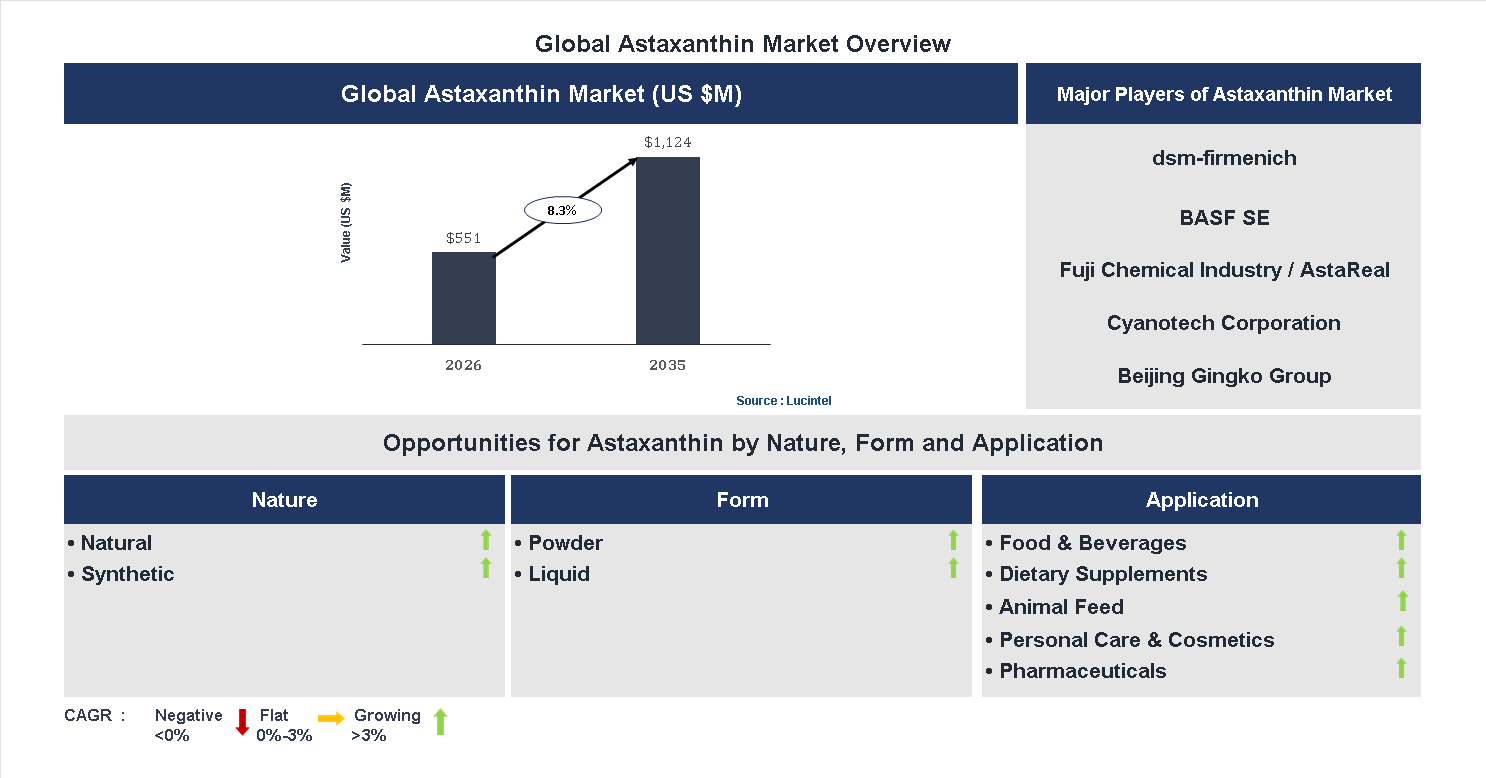
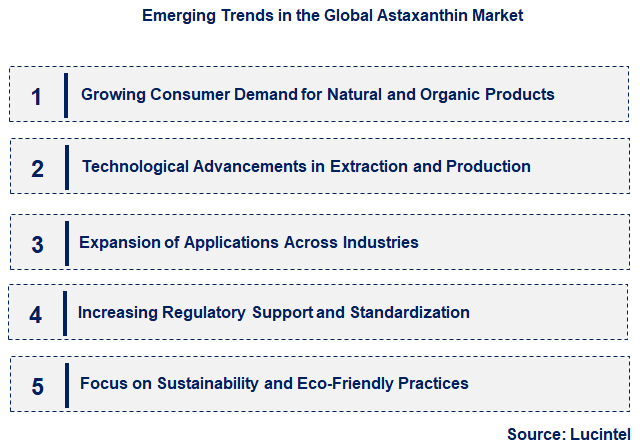
• Growing Consumer Demand for Natural and Organic Products: Consumers are increasingly prioritizing natural, organic, and clean-label products. This shift is driven by health consciousness and concerns over synthetic additives. As a result, manufacturers are focusing on sourcing high-quality, sustainably produced astaxanthin to meet these preferences. This trend boosts market growth by expanding the customer base and encouraging product innovation that emphasizes purity and natural origins.
• Technological Advancements in Extraction and Production: Innovations in extraction methods, such as supercritical CO2 extraction, are improving yield, purity, and cost-efficiency. These technological improvements enable the production of higher-quality astaxanthin at lower costs, making it more accessible for various applications. Enhanced extraction techniques also reduce environmental impact, aligning with sustainability goals and increasing market competitiveness.
• Expansion of Applications Across Industries: Originally used mainly in dietary supplements, astaxanthin is now gaining traction in cosmetics, animal feed, and functional foods. Its antioxidant properties are valued in skincare products, pet foods, and fortified foods. This diversification broadens market opportunities, stimulates innovation, and drives demand across multiple sectors, contributing to overall industry growth.
• Increasing Regulatory Support and Standardization: Governments and industry bodies are establishing guidelines and standards for astaxanthin production and labeling. Regulatory approval in key markets enhances consumer confidence and facilitates international trade. Clear regulations also encourage manufacturers to adhere to quality standards, ensuring product safety and boosting market credibility.
• Focus on Sustainability and Eco-Friendly Practices: Sustainability initiatives, such as using microalgae cultivation and renewable energy sources, are gaining prominence. Companies are adopting eco-friendly practices to reduce carbon footprints and meet consumer expectations for environmentally responsible products. This focus on sustainability not only enhances brand reputation but also aligns with global environmental goals, influencing market development positively.
• Growing Consumer Demand for Natural Antioxidants: Increasing awareness of health benefits associated with natural antioxidants is driving demand for astaxanthin. Consumers are seeking products that promote skin health, anti-aging, and immune support, fueling market growth. This trend encourages companies to innovate and expand product portfolios, leading to higher sales and market penetration. The shift towards natural ingredients also influences regulatory policies, fostering a more favorable environment for sustainable sourcing and production.
• Expansion in Nutraceutical and Dietary Supplement Markets: The rising popularity of dietary supplements and functional foods is significantly impacting astaxanthin sales. Manufacturers are developing targeted formulations for skin health, eye protection, and athletic performance. This expansion enhances market revenue streams and encourages research into new health claims. As consumer interest in preventive healthcare grows, the nutraceutical sector becomes a vital growth driver, attracting investments and fostering innovation in product development.
• Innovations in Extraction and Production Technologies: Advances in green extraction methods, such as supercritical CO2 extraction, are improving yield efficiency and reducing environmental impact. These technological innovations lower production costs and ensure high-quality, sustainable products. Companies adopting these methods gain competitive advantages by meeting regulatory standards and consumer expectations for eco-friendly practices. This progress supports large-scale commercialization and diversification of astaxanthin sources, including algae and yeast.
• Increasing Applications in Cosmetics and Personal Care: The use of astaxanthin in skincare and cosmetic products is expanding due to its potent antioxidant properties and skin-protective effects. Brands are incorporating it into anti-aging creams, sunscreens, and serums, appealing to health-conscious consumers. This diversification enhances market reach and opens new revenue streams. The trend also encourages R&D investments to develop innovative formulations, strengthening the products position as a natural, effective ingredient in beauty products.
• Rising Adoption in Animal Feed and Aquaculture: The demand for natural pigmentation and health supplements in aquaculture and livestock is boosting astaxanthin use. It improves the coloration of farmed fish and enhances immune responses, leading to healthier animals and higher-quality products. This application supports sustainable farming practices and meets consumer preferences for natural, ethically sourced products. The growth in this sector contributes significantly to overall market expansion and encourages further research into cost-effective production methods.
• Growing Demand for Natural Antioxidants in Nutraceuticals: The rising consumer focus on health and wellness has significantly increased demand for natural antioxidants like astaxanthin. Its proven benefits in reducing oxidative stress, supporting skin health, and enhancing immune function make it a preferred ingredient in dietary supplements and functional foods. Manufacturers are investing in sustainable extraction and production techniques to meet quality standards, thereby expanding market reach and driving growth in the nutraceutical segment.
• Expansion of Astaxanthin Applications in Animal Nutrition: The use of astaxanthin in aquaculture and livestock feed is gaining momentum due to its ability to improve pigmentation, boost immunity, and enhance the overall health of animals. As the aquaculture industry seeks sustainable and natural feed additives, astaxanthin offers a viable solution. This application not only supports the health of farmed species but also meets consumer demand for ethically sourced, high-quality seafood, opening new revenue streams for producers.
• Technological Innovations in Production Processes: Advances in biotechnological methods, such as fermentation and synthetic biology, are enabling more efficient and cost-effective production of astaxanthin. These innovations reduce reliance on natural sources like microalgae, ensuring consistent quality and supply. Improved extraction and purification techniques also enhance product stability and bioavailability, making astaxanthin more attractive to manufacturers and consumers alike, thereby accelerating market growth.
• Increasing Regulatory Support and Standardization: Governments and industry bodies are establishing clearer regulations and quality standards for natural ingredients like astaxanthin. This regulatory support fosters consumer confidence and facilitates international trade. Certification programs and quality assurance protocols help differentiate high-quality products, encouraging manufacturers to invest in compliant production. Such standardization efforts are crucial for expanding market access and ensuring sustainable growth across regions.
• Rising Consumer Preference for Clean-Label and Sustainable Products: Consumers are increasingly seeking transparent, natural, and sustainably sourced ingredients in their products. Astaxanthin, derived from microalgae or other natural sources, aligns with these preferences. Brands are leveraging eco-friendly cultivation and extraction methods to appeal to environmentally conscious consumers. This trend drives innovation in product formulations and marketing strategies, expanding the market for natural astaxanthin-based products and reinforcing its position as a premium, sustainable ingredient.
• Technological Advancements: The development of innovative extraction and stabilization techniques has significantly improved the yield and purity of astaxanthin. These advancements reduce production costs and enable large-scale manufacturing, making the product more accessible. Moreover, biotechnology innovations allow for the sustainable cultivation of microalgae, the primary source of natural astaxanthin, ensuring a consistent supply and quality. As research progresses, new formulations and delivery systems are emerging, expanding applications in nutraceuticals, cosmetics, and animal feed. These technological improvements are crucial for meeting increasing global demand and maintaining a competitive advantage.
• Rising Health Awareness and Consumer Demand: Increasing awareness about the health benefits of astaxanthin, such as antioxidant properties, skin health, and anti-inflammatory effects, has significantly boosted consumer interest. The growing trend towards natural and plant-based supplements further fuels demand, especially in developed regions like North America and Europe. Consumers are actively seeking functional foods and dietary supplements that promote wellness and prevent chronic diseases. This shift in consumer preferences encourages manufacturers to innovate and expand product portfolios, thereby driving market growth. The rising prevalence of lifestyle-related health issues also contributes to the increased adoption of astaxanthin-based products.
• Expansion in End-Use Industries: The application scope of astaxanthin is broadening across various industries. In the nutraceutical sector, it is used in dietary supplements and functional foods. The cosmetics industry leverages its antioxidant properties for anti-aging and skin protection products. The aquaculture industry utilizes astaxanthin as a feed additive to enhance the coloration and health of farmed fish and shrimp. Additionally, the pet food industry is adopting astaxanthin for its health benefits. This diversification of end-use applications is expanding market opportunities and encouraging investments in research and development, thereby supporting overall market growth.
• Regulatory Support and Standardization: Governments and regulatory bodies are increasingly recognizing the benefits of natural antioxidants like astaxanthin, leading to supportive policies and standards. Regulatory approvals and quality certifications facilitate market entry and consumer trust. For instance, approvals for dietary supplements and food additives in key markets boost product acceptance. Standardization of extraction processes and safety assessments ensures product consistency and safety, which are critical for global trade. These regulatory frameworks help legitimize the market, attract investments, and promote innovation, ultimately fostering sustainable growth.
• Growing Investment and Strategic Collaborations: The market has seen increased investments from major players and startups aiming to capitalize on the rising demand. Strategic collaborations, joint ventures, and acquisitions facilitate technology transfer, expand distribution channels, and enhance R&D capabilities. Funding for research into new applications and sustainable production methods is also rising. These investments accelerate product development, improve supply chain efficiency, and expand market reach. As a result, the competitive landscape becomes more dynamic, fostering innovation and ensuring the markets long-term growth potential.
• Regulatory and Safety Concerns: Despite growing acceptance, regulatory hurdles remain a significant challenge. Different countries have varying standards for natural supplements and food additives, complicating market entry. Concerns over safety, dosage, and potential side effects require extensive testing and certification, which can delay product launches and increase costs. Additionally, the lack of harmonized regulations hampers international trade. Ensuring compliance with evolving safety standards is crucial for market players, but it demands significant investment in research and quality assurance, which can be a barrier for smaller companies.
• Environmental and Sustainability Issues: The cultivation of microalgae, the primary source of natural astaxanthin, raises environmental concerns such as water usage, energy consumption, and waste management. Unsustainable practices can lead to ecological imbalance and regulatory restrictions. Moreover, the extraction process often involves the use of solvents and chemicals, which pose environmental risks if not managed properly. Addressing these issues requires adopting sustainable cultivation and extraction methods, which may involve higher costs and technological challenges. Failure to do so could impact market reputation and lead to stricter regulations.
• Market Competition and Price Volatility: The increasing number of manufacturers and suppliers intensifies competition, leading to price wars and margin pressures. Fluctuations in raw material prices, especially microalgae biomass, can significantly impact profitability. Additionally, technological advancements by competitors may lead to product differentiation, making it difficult for some players to maintain market share. Price volatility can also affect consumer purchasing behavior, especially in price-sensitive markets. To remain competitive, companies must invest in innovation and cost-effective production, which can be challenging amid market uncertainties.
• dsm-firmenich
• BASF SE
• Fuji Chemical Industry / AstaReal
• Cyanotech Corporation
• Beijing Gingko Group
• Algatech Ltd.
• Algalif Iceland ehf.
• Divi’s Laboratories Ltd.
• ENEOS Holdings Inc.
• Biogenic Co. Ltd.
• Natural
• Synthetic
• Powder
• Liquid
• Food & Beverages
• Dietary Supplements
• Animal Feed
• Personal Care & Cosmetics
• Pharmaceuticals
• North America
• Europe
• Asia Pacific
• The Rest of the World
• United States: The U.S. market has seen rapid growth due to rising health consciousness and demand for natural supplements. Major companies are investing in sustainable extraction techniques and expanding product portfolios to include high-purity astaxanthin. Regulatory agencies are providing clearer guidelines, boosting consumer confidence. The cosmetic industry is increasingly incorporating astaxanthin for its antioxidant properties, while the animal feed segment is expanding with innovative formulations. E-commerce platforms are playing a vital role in distribution, making products more accessible. Overall, the U.S. remains a leading market with ongoing innovation and consumer education initiatives.
• China: China is emerging as a significant player in the astaxanthin market, driven by a large consumer base and growing health awareness. Local manufacturers are adopting advanced extraction technologies to improve yield and quality. The government’s support for nutraceuticals and functional foods is fostering market growth. The cosmetic sector is also expanding, with domestic brands launching products containing astaxanthin. Additionally, China is investing in sustainable production methods to meet environmental standards. The increasing popularity of natural ingredients in traditional medicine and wellness products further propels market expansion. Export opportunities are also being explored as global demand rises.
• Germany: Germanys market is characterized by a focus on high-quality, organic, and sustainably sourced astaxanthin products. The country’s strict regulatory environment ensures product safety and efficacy, boosting consumer trust. The cosmetic industry is a major driver, with demand for anti-aging and antioxidant skincare products. The nutraceutical sector is also growing, supported by health-conscious consumers seeking natural supplements. German companies are investing in research collaborations to develop innovative formulations. The emphasis on sustainability and eco-friendly production processes aligns with European Union standards, positioning Germany as a key hub for premium astaxanthin products in Europe.
• India: The Indian market is witnessing rapid growth due to increasing awareness of health benefits and a rising middle class with disposable income. Local manufacturers are adopting cost-effective extraction methods to meet demand. The nutraceutical segment is expanding, with a focus on dietary supplements and functional foods. The cosmetic industry is also incorporating astaxanthin for its anti-aging properties. Government initiatives promoting wellness and traditional medicine are supporting market development. Additionally, the rise of e-commerce platforms is facilitating wider distribution. As awareness and affordability increase, India is poised to become a significant market for astaxanthin in Asia.
• Japan: Japan remains a mature market with a strong focus on health and wellness. Consumers prefer high-quality, scientifically backed products, leading to a demand for premium astaxanthin supplements. The cosmetic industry is leveraging astaxanthin for anti-aging skincare, with innovative formulations gaining popularity. Japanese companies are investing heavily in research to develop novel applications and improve extraction techniques. Regulatory standards are stringent, ensuring product safety and efficacy. The aging population drives demand for health supplements, while sustainability practices are increasingly prioritized. Japan’s market is characterized by a blend of traditional health practices and cutting-edge innovation, maintaining its leadership position globally.


• dsm-firmenich
• BASF SE
• Fuji Chemical Industry / AstaReal
• Cyanotech Corporation
• Beijing Gingko Group
• Algatech Ltd.
• Algalif Iceland ehf.
• Divi’s Laboratories Ltd.
• ENEOS Holdings Inc.
• Biogenic Co. Ltd.
Q6. Which astaxanthin market segment will be the largest in future?

Choose a license that fits your team. Instant PDF delivery.
Prices exclude taxes. Instant delivery. Custom licensing available on request.
Market Report · July 22, 2026
Market Report · July 22, 2026
Market Report · July 22, 2026
Trusted partner for strategic intelligence and business growth


Receive a complimentary market analysis tailored to your industry. Our analysts will identify key growth opportunities and competitive dynamics specific to your business.

Market size, growth rate, and key trend analysis for your specific sector.

Top competitor positioning and market share analysis.

Strategic recommendations backed by data-driven insights.
Get curated market intelligence and competitive moves straight to your inbox.
By subscribing, you agree to receive our monthly insights. Unsubscribe anytime.
Receive a complimentary market analysis tailored to your industry. Our analysts will identify key growth opportunities and competitive dynamics specific to your business.
Market size, growth rate, and key trend analysis for your specific sector.
Top competitor positioning and market share analysis.
Strategic recommendations backed by data-driven insights.
Get curated market intelligence, emerging trends, and competitive moves straight to your inbox each month.
By subscribing, you agree to receive our monthly insights. Unsubscribe anytime.
We'll send your sample report shortly.