
Market Report · July 16, 2026

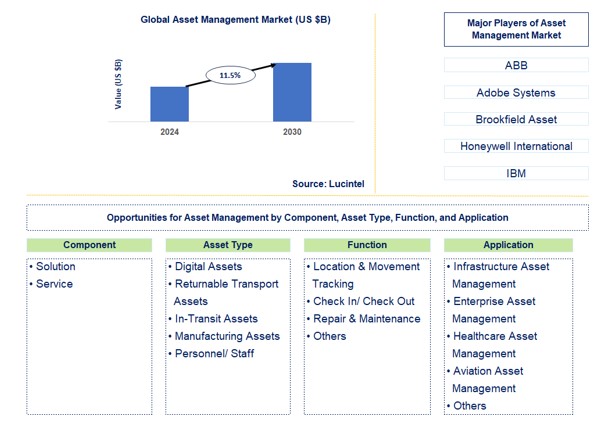
Key data points: The growth forecast = 11.5% annually for the next 6 years. Scroll below to get more insights. This market report covers trends, opportunities, and forecasts in the global asset management market to 2030 by component (solution and service), asset type (digital assets, returnable transport assets, in-transit assets, manufacturing assets, and personnel/ staff), function (location & movement tracking, check in/ check out, repair & maintenance, and others), application (infrastructure asset management, enterprise asset management, healthcare asset management, aviation asset management, and others), and region (North America, Europe, Asia Pacific, and the Rest of the World)
We'll send your sample report shortly.
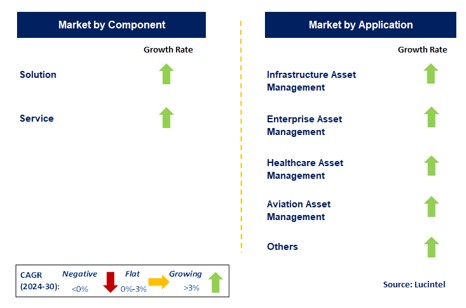
• Lucintel forecasts that, within the component category, solution will remain a larger segment over the forecast period due to its 2D code-reading capabilities, long-term reliability, and multiple code-reading abilities.
• Within the application category, aviation will remain the largest segment due to escalating demand for airborne freight and in-flight passenger transportation.
• In terms of region, North America will remain the largest segment over the forecast period due to the rising adoption of interconnected, intelligent, and secure technologies for asset-centric applications. Gain valuable insights for your business decisions with our comprehensive 150+ page report.
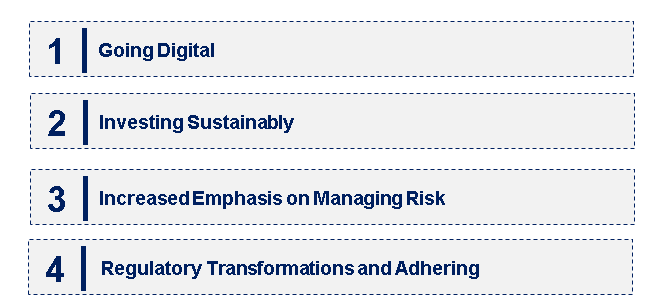
• Going Digital: Currently, digital transformation is taking place in the asset management market through the integration of technologies such as artificial intelligence (AI), machine learning, and big data analytics. These technologies improve investment decisions, enhance risk management, and increase the efficiency of business processes. Similarly, digital solutions are making it easier for clients to access services while simultaneously improving cost-effectiveness. This transformation has significantly helped asset management services become more accessible and efficient. Furthermore, it promotes innovation by offering opportunities for personalized, customer-centric solutions based on data within asset management companies.
• Investing Sustainably: Sustainable investing, based on environmental, social, and corporate governance (ESG) factors, is quickly becoming a major focus in the asset management sector. Investors today prefer investments that align with their values and make a positive contribution to society or the environment. As a result, sustainable strategies are increasingly being integrated into asset plans for clients by firms that are concerned with setting up products that are environmentally sensitive as well as ethical. These products meet the demand from socially conscious investors and appeal to them more than conventional financial products. By focusing on sustainability, these firms are influencing the direction of investment choices, putting sustainability at the forefront of decision-making when choosing portfolios or making other investment-related decisions.
• Increased Emphasis on Managing Risk: There has been a significant increase in the focus on managing risks within various forms of institutionalized management, including asset management. Firms are now using more sophisticated tools and methodologies to hedge against risks. This includes the use of advanced analytics, scenario analysis, and stress testing to better understand and manage potential risks. The increasing complexity of financial markets, coupled with economic uncertainties, has driven asset managers to enhance their risk frameworks, ensuring that investment strategies become more resilient.
• Regulatory Transformations and Compliance: Regulatory changes are one of the biggest trends in the asset management market, as they impact how this sector operates and what participants must do to comply with new rules and regulations. These changes affect areas such as reporting standards, transparency, and, most importantly, investor protection (Bodie, Kane & Marcus, 2010). Asset managers must develop systems to facilitate compliance in order to avoid legal issues while operating within jurisdictions where certain requirements are binding. For example, regulations like those outlined by Edwards and Benjamin have increased accountability through regulatory reforms, resulting in a more transparent marketplace. This has a direct impact on how investment managers work. The discussed trends have had a significant impact on the industry due to recent developments in the asset management space. Digital transformation, sustainable investing, improvements in risk management, and regulatory compliance, along with the growing trend of alternative investments, have led to innovation and change. What asset managers do is increasingly influenced by these trends, which in turn shape how they make investment decisions and carry out operations. However, the diversification of opportunities has made it necessary for asset managers to be more flexible in order to meet the changing needs of clients and remain competitive in a dynamic environment.
• Digital transformation: The asset management industry has embraced digital transformation by incorporating technologies such as artificial intelligence (AI), machine learning, and big data analytics, among others. These innovations improve investment decision-making processes, facilitate risk management activities, and streamline operations. Moreover, digital platforms make asset management services easily accessible and personalized. This shift has led to higher operational efficiency, greater accuracy in processing, and more client engagement in the course of asset management.
• Focus on sustainable investing: Sustainable investing is gaining momentum, with asset managers integrating Environmental, Social, and Governance (ESG) factors into their investment approaches. This represents a growing interest among investors who prefer investments that align with their values or contribute to positive social and environmental outcomes. Sustainable investing reshapes the market by emphasizing long-term value creation along ethical lines, which affects portfolio construction strategies and results in new product development for investment purposes.
• Regulatory changes: Regulations continue to significantly impact asset managers, as compliance requirements have led to changes in investment practices and reporting standards. Regulatory updates related to transparency, investor protection, and data privacy issues are shaping how firms execute their mandate as asset managers. Consequently, greater accountability is required under these regulatory adjustments, as they necessitate stricter operational standards, prompting firms to adapt their plans and systems to cater to emerging regulatory demands.
• Rise of passive investment strategies: Notably, the rise of passive strategies, including index funds and exchange-traded funds (ETFs), has been a significant development in the asset management market. Investors are increasingly preferring lower-cost, passively managed products compared to traditional active ones. This trend is motivated by the demand for cost-effectiveness and transparency. As a result, portfolio dynamics and competition have been influenced by asset managers offering more passive investment products. Recent developments in the asset management market—including digital transformation, a focus on sustainable investing, regulatory changes, the rise of passive strategies, and increased use of data analytics—are changing the industry's configuration. These adjustments improve investment strategies, increase operational efficiency, and accommodate evolving investor preferences. As a result, there is higher transparency among service providers, enabling them to be more innovative and transparent, which will position them well for future challenges and opportunities.
• Digital Investment Platforms: The expansion of digital investment platforms presents a significant opportunity for asset managers to broaden their reach while improving customer experience. These platforms manage investments with simple interfaces and provide customized advice based on data analytics. Fintech solutions are helping make asset management services more inclusive for a wider audience, including the tech-savvy younger generation, thereby propelling market expansion.
• Sustainable Investment Products: There is a growing demand for sustainable investment products that incorporate ESG (Environmental, Social, and Governance) criteria. Sustainable investment products can be developed by offering solutions that align with environmental and social goals. For example, funds could focus on renewable energy, social impact, or corporate governance purposes. Asset managers have an opportunity to position themselves uniquely in the market as there is an increasing emphasis on sustainability, attracting new types of investors who prioritize social responsibility.
• Alternative Investments: The rise of alternative investments, such as real estate, private equity, and hedge funds, provides an opportunity for diversification. Portfolio managers seeking non-traditional assets are responding to increased demand from investors today. Alternative investments offer prospects of higher returns and appealing investment options, as they attract those seeking diversification outside traditional assets found in public financial markets. As a result, asset managers should develop a variety of alternative products to meet investors' demands.
• Data-Driven Insights: Asset managers can benefit from using data analytics and artificial intelligence tools to gain insights into market trends and investor behavior. By adopting data-driven approaches, they can improve investment decision-making, enhance performance tracking, and develop personalized investment strategies. This trend is fostering innovation and creating opportunities for asset managers to provide better, customized solutions, making investments more effective. Strategic opportunities for growth in the asset management market, such as digital investment platforms, sustainable products, alternative investments, data-driven insights, and expansion into emerging markets, highlight the evolving landscape of the industry. These opportunities are driven by technological innovations, shifts in investor preferences, and changing market trends. By embracing these opportunities, asset managers can improve their offerings, enter new ventures, and contribute to the overall advancement of the sector, while meeting the changing needs of customers over time.
• Technological Innovation: Technological innovation is one of the major drivers of the asset management market, as AI, machine learning, and data analytics have begun to transform investment strategies and operational processes. These technologies improve the decision-making process, support risk management, and enhance efficiency. The incorporation of digital tools into platforms drives creativity among asset managers, allowing them to provide personalized responses based on data.
• Evolving Investor Preferences: Changes in investors’ preferences are impacting developments in the asset management market, where sustainable investing and low-cost passive strategies are becoming common themes. Investors today want their investments to align with their values, and transparency is also important. As a result, investment managers are incorporating ESG (Environmental, Social, and Governance) screening into their investment strategies and offering more passive products. This is transforming investment practices and influencing many other aspects of the market.
• Increased Focus on Sustainability: The importance of sustainability has grown for firms operating in the asset management market, making it a key driver for the industry. Investors and asset owners are increasingly considering ESG factors in their selection process. This trend reflects a desire for socially responsible investments aimed at creating long-term value without harming society or stakeholders. The development of sustainable investment products and the integration of ESG criteria into investment strategies push parts of the market forward and influence investment decisions. Challenges in the asset management market include:
• Regulatory Compliance: One of the biggest challenges in the asset management market is regulatory compliance, which influences both investment strategies and reporting obligations. Firms must address several issues related to regulation, such as transparency, investor protection, and data privacy, which can be complex and costly. To comply with these regulatory changes, asset managers must adjust their processes, affecting their operations and market dynamics.
• Market Volatility: Fluctuations in financial markets, driven by various factors, can affect investment performance and client portfolios, making it difficult for asset managers to manage risk. To maintain performance levels and meet client expectations, asset managers must respond promptly to changing market conditions. Risk-mitigating strategies must be implemented to ensure that the effects of volatility do not disrupt value-driven investment approaches. The driving forces and challenges that shape the industry landscape include technological innovation, evolving investor preferences, increased focus on sustainability, regulatory compliance, and market volatility. These factors influence investment strategies, operational practices, and market dynamics. Therefore, addressing these drivers and challenges will be essential for asset managers to navigate the rapidly evolving financial environment, identify opportunities, and remain competitive.
• ABB
• Adobe Systems
• Brookfield Asset Management
• Honeywell International
• IBM
• Oracle
• Rockwell Automation
• Siemens
• WSP
• Zebra Technologies
• Solution
• Service
• Digital Assets
• Returnable Transport Assets
• In-Transit Assets
• Manufacturing Assets
• Personnel/ Staff
• Location & Movement Tracking
• Check In/ Check Out
• Repair & Maintenance
• Others
• Infrastructure Asset Management
• Enterprise Asset Management
• Healthcare Asset Management
• Aviation Asset Management
• Others
• North America
• Europe
• Asia Pacific
• The Rest of the World
• United States: The digitalization era has hit the United States asset management market, leading to modernized investment systems that employ AI (Artificial Intelligence) and ML (Machine Learning) for better strategy development and risk management. Furthermore, there is an increase in sustainable investments characterized by the integration of ESG criteria into company portfolios. The market dynamics have also shifted due to legislative amendments, influencing various investment decisions and reporting methods.
• China: China's economy is growing rapidly, making its investors more sophisticated, which contributes to growth in China’s asset management market. On the other hand, fintech solutions enable people to access and manage their investments more quickly than ever before. In addition, there has been a growing search for ESG-related funds, reflecting a general green shift worldwide. There are also regulatory reforms aimed at improving liquidity provision and investor protection measures, which have affected the asset management business in China.
• Germany: Sustainable investment strategies are being integrated into the German asset management market, while compliance levels are increasing sharply across the industry. German asset managers now place great importance on ESG issues when making sustainable investment decisions. This also includes enhancing the customer experience through advanced data analytics and other fintech innovations aimed at improving investment operations efficiency within firms in Germany. Regulatory changes driven by European Union directives have also influenced market conditions, prompting firms in the industry to realign their operations and reporting efforts.
• India: The growing middle class and increasing financial literacy are driving India’s asset management market toward growth. In addition, more digital investment platforms aimed at reaching a broad audience are being built. Furthermore, ESG investing is gaining traction as sustainability has become an important consideration for investors before making any decisions. At the same time, regulatory reforms in this sector are necessary to promote transparency and protect participants’ interests. These changes are resulting in shifts in asset management practices today.
• Japan: In Japan, technological changes and demographic shifts are transforming the asset management industry. The adoption of digital tools and platforms has improved investment management practices and customer relationships for asset owners. Additionally, many Japanese portfolio managers are placing more emphasis on ESG factors when constructing stock portfolios for their clients. Strategies have also been tailored to meet the needs of retirees and long-term investors, given that Japan’s population is aging every year. Consequently, there have been adjustments to investment policies and compliance obligations due to recent regulatory updates.


• ABB
• Adobe Systems
• Brookfield Asset Management
• Honeywell International
• IBM
• Oracle
• Rockwell Automation
• Siemens
• WSP
• Zebra Technologies Q5. Which asset management market segment will be the largest in future? Answer: Lucintel forecasts that solution will remain the larger segment over the forecast period due to its 2D code-reading capabilities, long-term reliability, and multiple code-reading abilities. Q6. In asset management market, which region is expected to be the largest in next 5 years? Answer: North America will remain the largest segment over the forecast period due to the rising adoption of interconnected, intelligent, and secure technologies for asset-centric applications. Q.7 Do we receive customization in this report? Answer: Yes, Lucintel provides 10% customization without any additional cost.


Choose a license that fits your team. Instant PDF delivery.
Prices exclude taxes. Instant delivery. Custom licensing available on request.
Market Report · July 16, 2026
Market Report · May 18, 2026
Market Report · May 18, 2026
Trusted partner for strategic intelligence and business growth


Receive a complimentary market analysis tailored to your industry. Our analysts will identify key growth opportunities and competitive dynamics specific to your business.

Market size, growth rate, and key trend analysis for your specific sector.

Top competitor positioning and market share analysis.

Strategic recommendations backed by data-driven insights.
Get curated market intelligence and competitive moves straight to your inbox.
By subscribing, you agree to receive our monthly insights. Unsubscribe anytime.
Receive a complimentary market analysis tailored to your industry. Our analysts will identify key growth opportunities and competitive dynamics specific to your business.
Market size, growth rate, and key trend analysis for your specific sector.
Top competitor positioning and market share analysis.
Strategic recommendations backed by data-driven insights.
Get curated market intelligence, emerging trends, and competitive moves straight to your inbox each month.
By subscribing, you agree to receive our monthly insights. Unsubscribe anytime.
We'll send your sample report shortly.