
Market Report · July 22, 2026

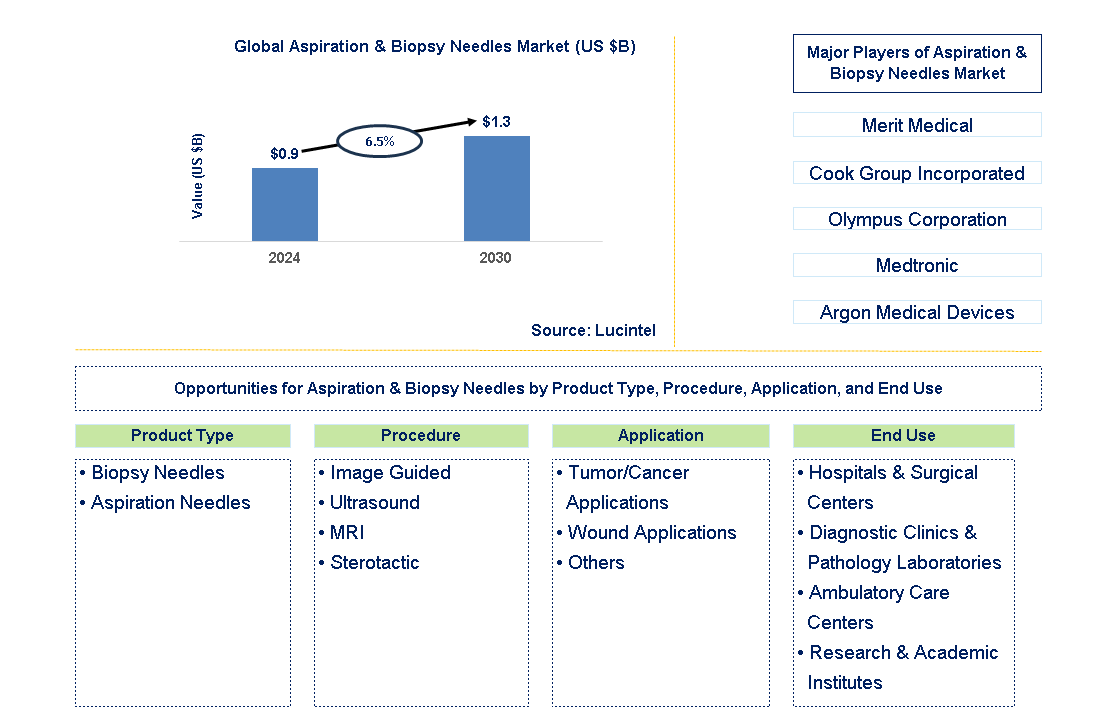
Key data points: The market size in 2030 = $1.3 billion, growth forecast = 6.5% annually next 6 years. Scroll below to get more insights. This market report covers trends, opportunities, and forecast in the global aspiration & biopsy needles market to 2030 by product type (biopsy needles and aspiration needles), procedure (image guided, ultrasound, MRI, and sterotactic), application (tumor/cancer applications, wound applications, and others), end use (hospitals & surgical centers, diagnostic clinics & pathology laboratories, ambulatory care centers, and research & academic institutes), and region (North America, Europe, Asia Pacific, and the Rest of the World)
We'll send your sample report shortly.
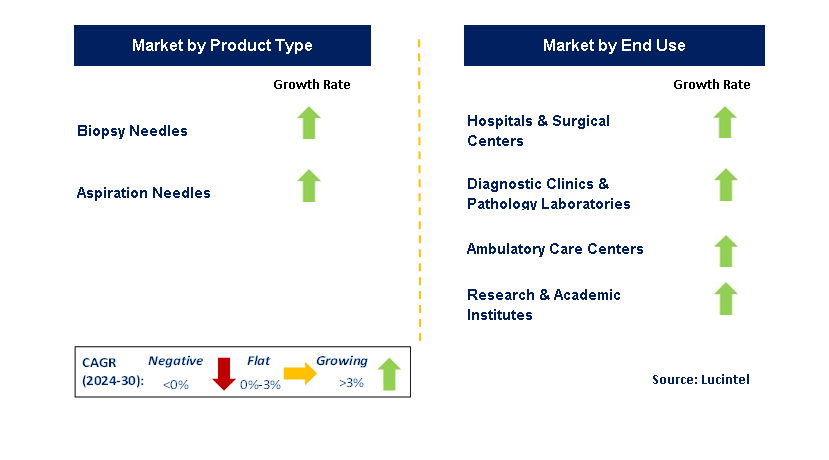
• Lucintel forecasts that biopsy needles will remain the larger segment over the forecast period due to its increasing adoption in a wide range of procedures, such as breast biopsy, lung biopsy, prostate biopsy, and bone marrow biopsy.
• Within this market, hospitals & surgical centers will remain the largest segment due to growing number of patients in the hospitals.
• North America is expected to witness highest growth over the forecast period due to high prevalence of cancer and presence of well-developed healthcare facilities in the region. A more than 150-page report is developed to help in your business decisions.
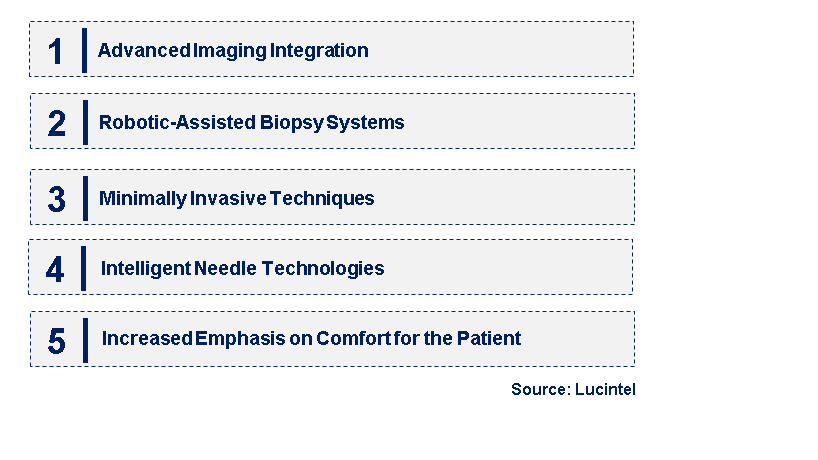
• Advanced Imaging Integration: Advanced imaging modalities, such as real-time ultrasound and MRI, are combined in this context to enhance the precision of aspiration and biopsy. These techniques provide excellent visualization of the target area, which helps precisely place the needle and reduce the risks of complications. Thus, the trend is toward value diagnostics and outcomes.
• Robotic-Assisted Biopsy Systems: The introduction of robotic-assisted systems to perform biopsy procedures is on the rise. These systems are highly precise and well-controlled, ensuring minimal human error, thereby making the procedures more accurate. Additionally, robotic assistance allows for improved maneuverability and accessibility at complex or difficult-to-reach sites, facilitating ease during biopsy procedures.
• Minimally Invasive Techniques: There is a growing interest in making biopsy and aspiration techniques minimally invasive. Along with novel needle designs and technologies that seek to diminish patient discomfort and minimize procedural pain, the trend toward less invasiveness suggests a general preference for minimal procedural invasiveness, coupled with comfort for patients.
• Intelligent Needle Technologies: Recently, smart needles have begun to hit the market, integrated with sensors and the capability for data transmission. Advantages of such technologies include real-time feedback during procedures for greater accuracy and informed decision-making. Smart needles improve procedural accuracy and support diagnostics with a greater degree of informed decision-making.
• Increased Emphasis on Patient Comfort: Development trends have increasingly focused on comfort regarding aspiration and biopsy needles. For example, needle designs that create minimal discomfort or pain, alongside advanced sedation techniques to smooth the procedure for patients, combine to reflect a broader shift toward comfort and patient-centeredness in diagnostics. These emerging trends are having a transformative effect on the aspiration and biopsy needles market, ensuring enhanced precision, safety, and comfort for patients. Advanced integration of imaging, robotic-assisted systems, minimally invasive techniques, smart needle technologies, and a focus on patient comfort are the innovative driving forces behind the improvement in diagnostic procedure quality.
• Advanced Imaging Guidance: The development of advanced imaging guidance systems, such as needle-based ultrasound and MRI integration, has made the aspiration and biopsy needles market go through a transformational phase. Advanced guidance systems provide improved precision to the placement of needles, reduce procedural errors, and enhance diagnostic accuracies. Imaging modality integration hence supports better outcomes and minimizing patient risk.
• Development of Robotic-Assisted Biopsy Systems: The important development would be the robotic-assisted biopsy systems, which gained a leap in precision and control over procedures. These systems allow for greater maneuverability and accuracy at sites that are more anatomically challenging. Robotics during the procedure assure effectiveness of the biopsy procedure and reduce the rate of complications.
• Introduction of Smart Needle Technologies: Smart needles with integrated sensors and real-time feedback are emerging in the market. Such needles, while at work, will be able to provide data such as pressure and angular measurements during procedures, which enables more accurate diagnostics. Smart needle technologies facilitate improved decision-making and enhance overall procedural outcomes.
• Introduction of Minimally Invasive Needle Designs: Needles are being designed to be minimally invasive, thus allowing patients less discomfort and recovery time. New needle designs have their focus on smaller gauge sizes and advanced coatings to reduce pain and enhance patient comfort. This development fits within the rising trend of medical procedures that are less invasive.
• Manufacturers' Expanding Needle Portfolios: The companies in the biopsy and aspiration needles market also continue to widen their product portfolios by launching different types of needles for various clinical applications. It includes the addition of procedure-specific needles, needles for targeting specific anatomic locations, and needles for specific patient populations. An expanding portfolio of needles supports personalized diagnosis with better outcomes. These are the factors contributing to significant changes in the aspiration and biopsy needles market as new technologies are introduced with increased procedural efficiency. Innovation in image guidance, robotic assistance, smart needles, minimal invasiveness, and portfolio expansion of needles themselves serves to better diagnose and treat patients.
• Oncology Applications: The primary growth opportunity for aspiration and biopsy needles lies in oncology. The demand for diagnostic tumor biopsies and aspirations is driving the need for advanced needle technologies. Innovations in design, along with imaging integrations, are supporting precise tumor sampling and promoting the detection and treatment planning of cancer.
• Orthopedic Procedures: Aspiration and biopsy needles are finding increasing applications in orthopedic procedures. Needles are used to collect synovial fluid and bone marrow, aiding in the diagnosis of musculoskeletal disorders. The development of specialty needles for orthopedic applications is improving diagnostic outcomes and speed.
• Cardiovascular Diagnostics: A rapidly increasing area of application is cardiovascular diagnostics for aspiration and biopsy needles. In this context, needles sample tissue from the heart and vessels for diagnostic purposes. Advancements in needle technology, along with imaging guidance, are expected to improve cardiovascular biopsy precision, thereby enhancing the diagnosis of heart conditions.
• Pulmonary Medicine: In pulmonary medicine, aspiration and biopsy needles are used to sample lung tissue and fluid. Ongoing development of needles optimized for lung procedures, coupled with better integration of imaging, will continue to facilitate more accurate diagnosis and management of respiratory conditions. This reflects a growing demand for precision diagnostics within pulmonary medicine.
• Infectious Disease Management: There is an increasing use of aspiration and biopsy needles in managing infectious diseases. Needles are used to acquire samples from infected tissue or fluid for analysis. Innovations in needle technology and enhanced diagnostic capabilities are improving the detection of infectious diseases, thereby supporting better patient outcomes. Applications in oncology, orthopedics, cardiovascular diagnostics, pulmonary medicine, and infectious disease management have opened up growth opportunities in the aspiration and biopsy needles market on strategic levels. Advancements in needle technology and its integration with imaging techniques for diagnostics with greater accuracy are among the factors that will continue to support diagnostics and expand the market space.
• Technological Advancements: Technological advancements encompass improvements in needle design, imaging integration, and smart needle technologies, among others. These advancements enhance precision, safety, and efficiency during biopsy and aspiration procedures. Innovation supports better diagnostic outcomes, thus driving demand for advanced needle technologies.
• Increasing Demand for Minimally Invasive Procedures: A key factor contributing to market growth is the rising demand for minimally invasive procedures. Aspiration and biopsy needles fall under this category, which is associated with minimal procedural pain and faster recovery. The growing demand for less invasive approaches fosters the development and adoption of advanced needle technologies.
• Rising Incidence of Chronic Diseases: The increasing incidence of tumors and cardiac disorders within the population drives the demand for aspiration and biopsy needles. There is a heightened need for advanced biopsy techniques and technologies for diagnosing and monitoring disease conditions. These factors favor the growth of the needle market due to the rising prevalence of chronic diseases.
• Expanding Healthcare Infrastructure: The growth of healthcare infrastructure in developing countries and modernization efforts serve as a driving factor for the market. Improved healthcare facilities and increased investments in various medical technologies have supported the demand for advanced aspiration and biopsy needles. Better infrastructure enables easier access to diagnostic procedures, fueling market demand.
• Focus on Precision Medicine: Precision medicine is accelerating innovation within aspiration and biopsy needles. New-generation, advanced biopsy techniques are essential for diagnostics and treatment, as the precision of tissue sample collection is critical. This need for personalized medicine underpins research and acceptance of technologies that improve diagnostic outcomes. Challenges in the aspiration and biopsy needles market include:
• Regulatory Hurdles: Complicated regulatory requirements and approvals can delay the introduction of new needle technologies. The adoption of advanced needles depends on complex and sometimes unclear regulatory processes, along with differing standards across regions. Addressing these regulatory hurdles is crucial for market entry and growth.
• High Costs of Advanced Technologies: One major drawback is the high cost associated with advanced aspiration and biopsy needle technologies. Access and adoption may be limited, especially in price-sensitive markets, due to the costs of research, development, and production. Effective cost management and cost-effective solutions will be vital for market penetration.
• Integration with Existing Systems: Integrating new needle technologies into existing healthcare systems can be challenging. Interoperability and compatibility with existing diagnostic and imaging systems must be ensured. Overcoming integration challenges is essential for maximizing the resultant benefits of new technologies. The market for aspiration and biopsy needles is driven by factors such as technological advancements, increasing demand for minimally invasive procedures, rising incidence of chronic diseases, improvements in healthcare infrastructure, and a focus on precision medicine. Conversely, regulatory hurdles, high costs, and integration challenges must be addressed to facilitate further market growth and innovation.
• Merit Medical
• Cook Group Incorporated
• Olympus Corporation
• Medtronic
• Argon Medical Devices
• Boston Scientific Corporation
• Cardinal Health
• Biopsy Needles
• Aspiration Needles
• Image Guided
• Ultrasound
• MRI
• Sterotactic
• Tumor/Cancer Applications
• Wound Applications
• Others
• Hospitals & Surgical Centers
• Diagnostic Clinics & Pathology Laboratories
• Ambulatory Care Centers
• Research & Academic Institutes
• North America
• Europe
• Asia Pacific
• The Rest of the World
• United States: In the U.S., recent developments include advanced biopsy needles integrated with advanced imaging guidance systems. The use of novel technologies—such as needle-based ultrasound imaging and robotic-assisted systems—will ease procedures and improve efficacy in performing biopsies. Additionally, there has been interest in developing needles that offer better ergonomics and reduced pain during procedures for improved patient experiences and outcomes.
• China: The aspiration and biopsy needles market in China has seen changes in end markets with the introduction of more affordable and innovative products. Local players are finding entry points through newer types of needles and technologies, which are becoming available due to the increasing demand for minimally invasive diagnostic procedures. Further investments in healthcare infrastructure and research into medical devices will provide access to newer and more advanced needle technologies.
• Germany: Germany has made significant progress in developing high-precision needles integrated with advanced imaging for aspiration and biopsy. New products featuring improved needle-tip designs and advanced tracking systems allow for enhanced accuracy in biopsies, leading to better patient outcomes and procedural efficiency.
• India: The market in India is also growing, with increased access to more economical and technologically modern biopsy needles. Companies are striving to develop better needle designs, and integration with imaging technologies is expected to increase diagnostic precision. A rapidly growing healthcare infrastructure, coupled with demand for minimally invasive procedures, indicates a rise in demand for advanced biopsy and aspiration needles.


• Merit Medical
• Cook Group Incorporated
• Olympus Corporation
• Medtronic
• Argon Medical Devices
• Boston Scientific Corporation
• Cardinal Health Q6. Which aspiration & biopsy needles market segment will be the largest in future? Answer: Lucintel forecasts that biopsy needles will remain the larger segment over the forecast period due to its increasing adoption in a wide range of procedures, such as breast biopsy, lung biopsy, prostate biopsy, and bone marrow biopsy. Q7. In aspiration & biopsy needles market, which region is expected to be the largest in next 5 years? Answer: North America is expected to witness highest growth over the forecast period due to high prevalence of cancer and presence of well-developed healthcare facilities in the region. Q.8 Do we receive customization in this report? Answer: Yes, Lucintel provides 10% customization without any additional cost.


Choose a license that fits your team. Instant PDF delivery.
Prices exclude taxes. Instant delivery. Custom licensing available on request.
Market Report · July 22, 2026
Market Report · July 22, 2026
Market Report · July 22, 2026
Trusted partner for strategic intelligence and business growth


Receive a complimentary market analysis tailored to your industry. Our analysts will identify key growth opportunities and competitive dynamics specific to your business.

Market size, growth rate, and key trend analysis for your specific sector.

Top competitor positioning and market share analysis.

Strategic recommendations backed by data-driven insights.
Get curated market intelligence and competitive moves straight to your inbox.
By subscribing, you agree to receive our monthly insights. Unsubscribe anytime.
Receive a complimentary market analysis tailored to your industry. Our analysts will identify key growth opportunities and competitive dynamics specific to your business.
Market size, growth rate, and key trend analysis for your specific sector.
Top competitor positioning and market share analysis.
Strategic recommendations backed by data-driven insights.
Get curated market intelligence, emerging trends, and competitive moves straight to your inbox each month.
By subscribing, you agree to receive our monthly insights. Unsubscribe anytime.
We'll send your sample report shortly.