
Market Report · July 22, 2026

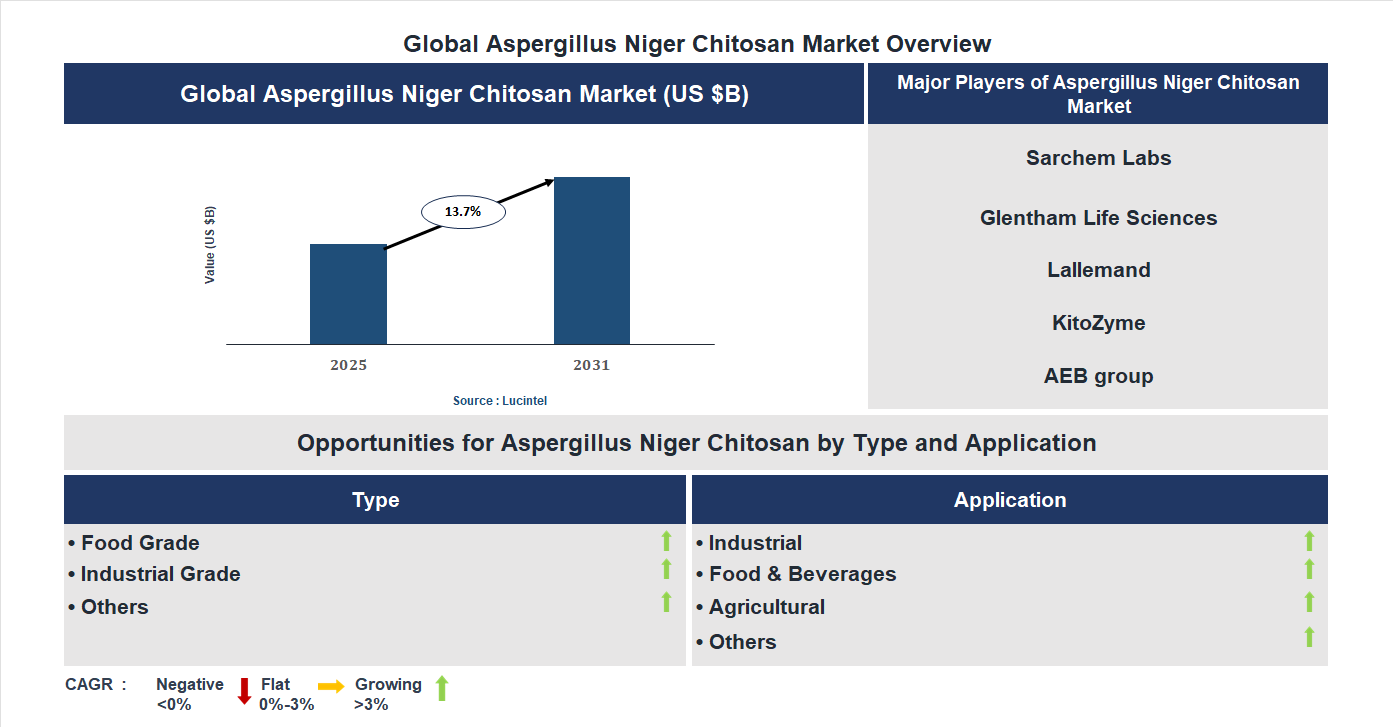
Key data points: The growth forecast = 13.7% annually for the next 7 years. Scroll below to get more insights. This market report covers trends, opportunities and forecasts in aspergillus niger chitosan market to 2031 by type (food grade, industrial grade, and others), application (industrial, food & beverages, agricultural, and others), and region (North America, Europe, Asia Pacific, and the Rest of the World)
We'll send your sample report shortly.
• Lucintel forecasts that, within the type category, food grade is expected to witness higher growth over the forecast period.
• Within the application category, food & beverage is expected to witness the highest growth.
• In terms of region, APAC is expected to witness the highest growth over the forecast period. Gain valuable insights for your business decisions with our comprehensive 150+ page report. Sample figures with some insights are shown below.
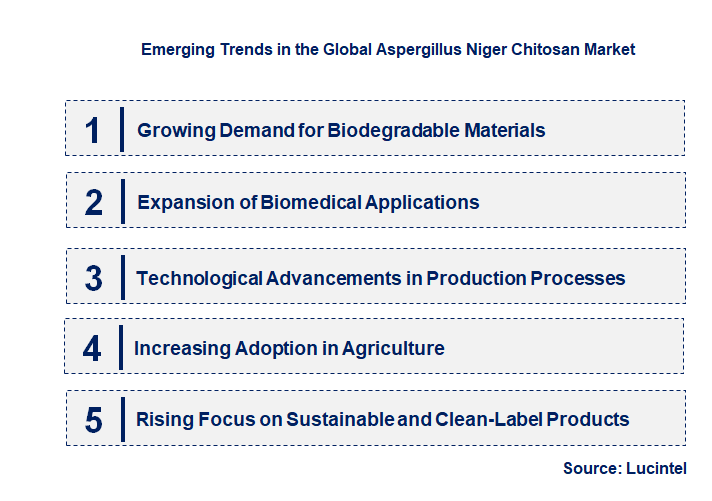
• Growing demand for biodegradable materials: The increasing awareness of environmental issues has led to a surge in demand for biodegradable and eco-friendly products. Chitosan derived from Aspergillus niger offers a sustainable alternative to synthetic polymers, making it highly attractive for packaging, agriculture, and biomedical applications. This trend is encouraging manufacturers to innovate and expand their product portfolios, ultimately reducing reliance on non-degradable plastics and supporting global sustainability goals.
• Expansion of biomedical applications: The unique properties of Aspergillus niger chitosan, such as biocompatibility, antimicrobial activity, and biodegradability, are driving its adoption in medical and pharmaceutical sectors. It is increasingly used in wound dressings, drug delivery systems, and tissue engineering. The rising prevalence of chronic wounds and infections, coupled with the demand for natural medical materials, is fueling this trend, which is expected to significantly boost market growth and innovation in healthcare.
• Technological advancements in production processes: Innovations in fermentation technology and extraction methods are improving the efficiency, yield, and purity of chitosan from Aspergillus niger. These advancements reduce production costs and environmental impact, making the product more accessible and affordable. Enhanced control over the manufacturing process also allows for customization of chitosan properties, catering to specific industry needs and expanding its application scope.
• Increasing adoption in agriculture: Chitosan from Aspergillus niger is gaining popularity as a natural plant growth enhancer and biopesticide. Its ability to stimulate plant immunity and promote growth aligns with the shift towards organic farming practices. This trend is supported by government initiatives promoting sustainable agriculture and the rising demand for organic produce, which together are expanding the market for agricultural applications of Aspergillus niger chitosan.
• Rising focus on sustainable and clean-label products: Consumers are increasingly seeking products with natural, non-toxic, and environmentally friendly ingredients. This trend is influencing industries such as food, cosmetics, and personal care to incorporate Aspergillus niger chitosan as a natural preservative, thickener, or functional ingredient. The emphasis on transparency and sustainability is driving product innovation and market expansion, positioning Aspergillus niger chitosan as a key component in clean-label formulations. In summary, these emerging trends are significantly reshaping the Aspergillus niger chitosan market by fostering innovation, promoting sustainability, and expanding application areas. They are enabling manufacturers to meet evolving consumer preferences and regulatory standards, ultimately driving market growth and competitiveness in a rapidly changing landscape.
• Technological Innovations: New extraction and purification techniques have improved chitosan quality, increasing its efficacy and safety. These advancements reduce production costs and environmental impact, making products more accessible and appealing to end-users. Enhanced processing methods also enable the development of specialized chitosan variants tailored for specific applications, boosting market competitiveness and innovation.
• Expanding Application Areas: The market is witnessing a surge in applications such as pharmaceuticals, agriculture, food packaging, and water treatment. This diversification broadens revenue streams for manufacturers and reduces dependency on traditional sectors. The increased adoption in healthcare for wound healing and drug delivery is particularly notable, driving demand and market growth.
• Regulatory Support and Standards: Governments and regulatory bodies are establishing clearer guidelines for chitosan use, ensuring safety and quality. This regulatory framework fosters consumer confidence and encourages industry investment. Compliance with international standards also facilitates global trade, expanding market reach and encouraging innovation within regulatory boundaries.
• Increased Research and Development: Ongoing R&D efforts are focused on improving extraction efficiency, developing novel formulations, and exploring new applications. Academic and industry collaborations are accelerating innovation, leading to the discovery of new functionalities and market niches. This continuous research enhances product performance and opens up new growth avenues.
• Market Expansion and Strategic Partnerships: Companies are forming alliances and expanding geographically to tap into emerging markets. Strategic partnerships facilitate technology transfer, joint ventures, and increased distribution channels. These collaborations help overcome regional barriers and accelerate market penetration, fostering overall industry growth. In summary, recent developments in the Aspergillus Niger Chitosan Market are driving innovation, expanding application scopes, and strengthening regulatory frameworks. These changes are collectively enhancing product quality, increasing market competitiveness, and opening new growth opportunities. As a result, the market is poised for sustained growth, driven by technological progress and strategic industry collaborations.
• Healthcare: Growing demand for biocompatible materials : Aspergillus Niger Chitosan is increasingly used in wound dressings, drug delivery systems, and tissue engineering due to its biocompatibility and biodegradability, improving patient outcomes and reducing recovery times.
• Agriculture: Sustainable crop protection solutions : The biopolymer is utilized in seed coatings, plant growth stimulants, and soil conditioners, promoting eco-friendly farming practices and reducing reliance on chemical pesticides and fertilizers.
• Food Industry: Natural food preservatives and packaging : Its antimicrobial properties are leveraged in food preservation, extending shelf life, and in biodegradable packaging, aligning with consumer preferences for natural and sustainable products.
• Water Treatment: Eco-friendly filtration systems : Aspergillus Niger Chitosan is employed in water purification processes, removing contaminants effectively while offering a biodegradable alternative to synthetic polymers, supporting environmental safety.
• Cosmetics: Natural skincare and personal care products : The market for natural and organic cosmetics is expanding, with Chitosan used in formulations for its moisturizing, film-forming, and antimicrobial properties, appealing to health-conscious consumers. In summary, these growth opportunities are significantly impacting the Aspergillus Niger Chitosan market by broadening its application spectrum, fostering innovation, and promoting sustainable practices. This diversification is attracting new investments, enhancing market competitiveness, and driving overall industry growth.
• Technological Advancements: The development of innovative fermentation and extraction techniques has significantly improved chitosan yield and purity. Biotechnology companies are investing in optimizing Aspergillus Niger strains, leading to more efficient production processes. These advancements reduce costs and enable large-scale manufacturing, making chitosan more accessible across various industries. Enhanced quality control and customization options further boost market appeal. As technology continues to evolve, the ability to produce high-quality chitosan sustainably will be a key driver, supporting the expansion into new applications and markets.
• Increasing Demand from Pharmaceutical Industry: The pharmaceutical sector is a major consumer of chitosan due to its biocompatibility, biodegradability, and antimicrobial properties. It is used in wound dressings, drug delivery systems, and tissue engineering. Rising prevalence of chronic diseases and the need for advanced medical materials are fueling demand. Moreover, the shift towards natural and biocompatible materials in healthcare enhances the market’s growth prospects. As research progresses, new therapeutic applications are emerging, further propelling the demand for Aspergillus Niger-derived chitosan.
• Growing Use in Agriculture: Chitosan is increasingly utilized in agriculture as a biopesticide, plant growth enhancer, and soil conditioner. Its ability to stimulate plant immune responses and improve crop yields aligns with the global shift towards sustainable farming practices. The demand for organic produce and environmentally friendly crop protection solutions is boosting the adoption of chitosan-based products. Governments and organizations promoting eco-friendly agriculture are also supporting this trend through subsidies and regulations, which in turn expand the market for Aspergillus Niger-derived chitosan.
• Rising Consumer Awareness and Sustainability Trends: Consumers are increasingly aware of the environmental impact of synthetic chemicals and are seeking natural alternatives. Chitosan, being biodegradable and derived from renewable sources, aligns with sustainability goals. This trend encourages industries such as food packaging, cosmetics, and personal care to incorporate chitosan-based products. The emphasis on eco-friendly and sustainable materials is driving manufacturers to adopt Aspergillus Niger-based chitosan, thereby expanding its market presence and encouraging innovation in product development.
• Expansion of End-Use Industries: The diversification of end-use industries such as food, cosmetics, water treatment, and textiles is a significant driver. The versatility of chitosan allows its application across multiple sectors, increasing overall market demand. For instance, in water treatment, it is used for flocculation and purification; in cosmetics, for skin care products; and in food, as a preservative and packaging material. The expansion of these industries, especially in emerging economies, provides new opportunities for growth and market penetration. The challenges facing the aspergillus niger chitosan market include:
• Technological Limitations: Despite advancements, challenges remain in optimizing fermentation processes for consistent high-yield production of Aspergillus Niger chitosan. Variability in raw material quality, strain stability, and process scalability can hinder large-scale manufacturing. Additionally, extraction and purification techniques may involve complex, costly procedures that limit cost competitiveness. Overcoming these technological barriers requires significant research and development investment, which can delay commercialization and increase product prices, thereby impacting market growth.
• Regulatory and Quality Standards: The market faces stringent regulatory requirements related to safety, purity, and environmental impact. Different regions have varying standards, complicating global commercialization. Ensuring compliance involves rigorous testing and certification processes, which can be time-consuming and costly. Regulatory uncertainties and delays may restrict market entry for new products and limit innovation. Additionally, lack of standardized quality benchmarks for Aspergillus Niger-derived chitosan can create market fragmentation and reduce consumer confidence.
• Market Competition and Price Fluctuations: The presence of alternative biopolymers and synthetic materials poses competitive challenges. Price volatility of raw materials, such as chitin and fermentation substrates, can affect production costs and profit margins. Market players face pressure to reduce prices while maintaining quality, which can impact profitability. Moreover, the entry of new competitors and technological innovations from other regions intensifies competition, potentially leading to market saturation and reduced growth opportunities. In summary, the Aspergillus Niger Chitosan Market is driven by technological innovations, expanding applications in pharmaceuticals, agriculture, and sustainability trends, along with industry diversification. However, technological constraints, regulatory complexities, and competitive pressures pose significant challenges. These factors collectively influence the market’s growth potential, requiring stakeholders to focus on innovation, compliance, and strategic positioning to capitalize on emerging opportunities while mitigating risks. The overall impact suggests a dynamic but competitive landscape with substantial growth prospects if challenges are effectively managed.
• Sarchem Labs
• Glentham Life Sciences
• Lallemand
• KitoZyme
• AEB group
• Handary
• Chitosanlab vegan
• Food Grade
• Industrial Grade
• Others
• Industrial
• Food & Beverages
• Agricultural
• Others
• North America
• Europe
• Asia Pacific
• The Rest of the World
• United States: The U.S. market is witnessing significant growth due to rising demand in healthcare, wound healing, and water treatment sectors. Advances in extraction technology and increasing research collaborations are enhancing product quality. The government’s focus on sustainable and biodegradable materials further boosts market prospects. Key players are expanding their product portfolios to include innovative applications such as drug delivery systems and food packaging. The U.S. also sees a surge in startups exploring new uses of Aspergillus Niger Chitosan, fostering a competitive environment and driving market expansion.
• China: China remains a dominant player in the Aspergillus Niger Chitosan market, driven by its large-scale production capabilities and expanding pharmaceutical and agricultural sectors. The government’s support for bio-based products and sustainable practices accelerates market growth. Recent developments include improved extraction methods that increase yield and purity, along with increased investments in R&D. The Chinese market is also witnessing rising exports, with domestic demand for eco-friendly packaging and water treatment solutions fueling growth. Local companies are forming strategic alliances to innovate and expand their product offerings globally.
• Germany: Germany’s market growth is fueled by its strong pharmaceutical and cosmetic industries, emphasizing high-quality and sustainable products. Innovations in extraction and purification processes are improving product efficacy and safety. The country’s focus on environmental regulations encourages the adoption of biodegradable and eco-friendly materials. German companies are investing in research to develop new applications, including medical devices and food preservation. The market benefits from collaborations between academia and industry, fostering technological advancements. Overall, Germany’s emphasis on quality and sustainability positions it as a key player in the European Aspergillus Niger Chitosan market.
• India: India’s market is rapidly expanding due to increasing applications in agriculture, pharmaceuticals, and water treatment. The government’s initiatives promoting bio-based products and sustainable agriculture practices support growth. Recent developments include cost-effective extraction techniques and local manufacturing capabilities, making products more accessible. The rising demand for natural preservatives and biopesticides is driving innovation. Additionally, India’s large agricultural sector is adopting Aspergillus Niger Chitosan for crop protection and soil health improvement. The market is also benefiting from international collaborations and investments in research, positioning India as a significant emerging market.
• Japan: Japan’s market growth is characterized by a focus on high-value applications in cosmetics, healthcare, and food industries. Technological advancements in extraction and formulation are enhancing product performance. Japan’s stringent regulatory standards promote the development of safe and effective products, encouraging innovation. The country is also exploring new uses in medical devices and wound care. Japanese companies are investing in sustainable sourcing and eco-friendly production methods to meet consumer demand for environmentally responsible products. The market’s future growth is supported by ongoing research collaborations and a strong emphasis on quality and safety standards.


• Sarchem Labs
• Glentham Life Sciences
• Lallemand
• KitoZyme
• AEB group
• Handary
• Chitosanlab vegan Q5. Which aspergillus niger chitosan market segment will be the largest in future? Answer: Lucintel forecasts that, within the type category, food grade is expected to witness higher growth over the forecast period. Q6. In aspergillus niger chitosan market, which region is expected to be the largest in next 5 years? Answer: In terms of region, APAC is expected to witness the highest growth over the forecast period. Q7. Do we receive customization in this report? Answer: Yes, Lucintel provides 10% customization without any additional cost.


Choose a license that fits your team. Instant PDF delivery.
Prices exclude taxes. Instant delivery. Custom licensing available on request.
Market Report · July 22, 2026
Market Report · July 22, 2026
Market Report · July 22, 2026
Trusted partner for strategic intelligence and business growth


Receive a complimentary market analysis tailored to your industry. Our analysts will identify key growth opportunities and competitive dynamics specific to your business.

Market size, growth rate, and key trend analysis for your specific sector.

Top competitor positioning and market share analysis.

Strategic recommendations backed by data-driven insights.
Get curated market intelligence and competitive moves straight to your inbox.
By subscribing, you agree to receive our monthly insights. Unsubscribe anytime.
Receive a complimentary market analysis tailored to your industry. Our analysts will identify key growth opportunities and competitive dynamics specific to your business.
Market size, growth rate, and key trend analysis for your specific sector.
Top competitor positioning and market share analysis.
Strategic recommendations backed by data-driven insights.
Get curated market intelligence, emerging trends, and competitive moves straight to your inbox each month.
By subscribing, you agree to receive our monthly insights. Unsubscribe anytime.
We'll send your sample report shortly.