
Market Report · July 31, 2026

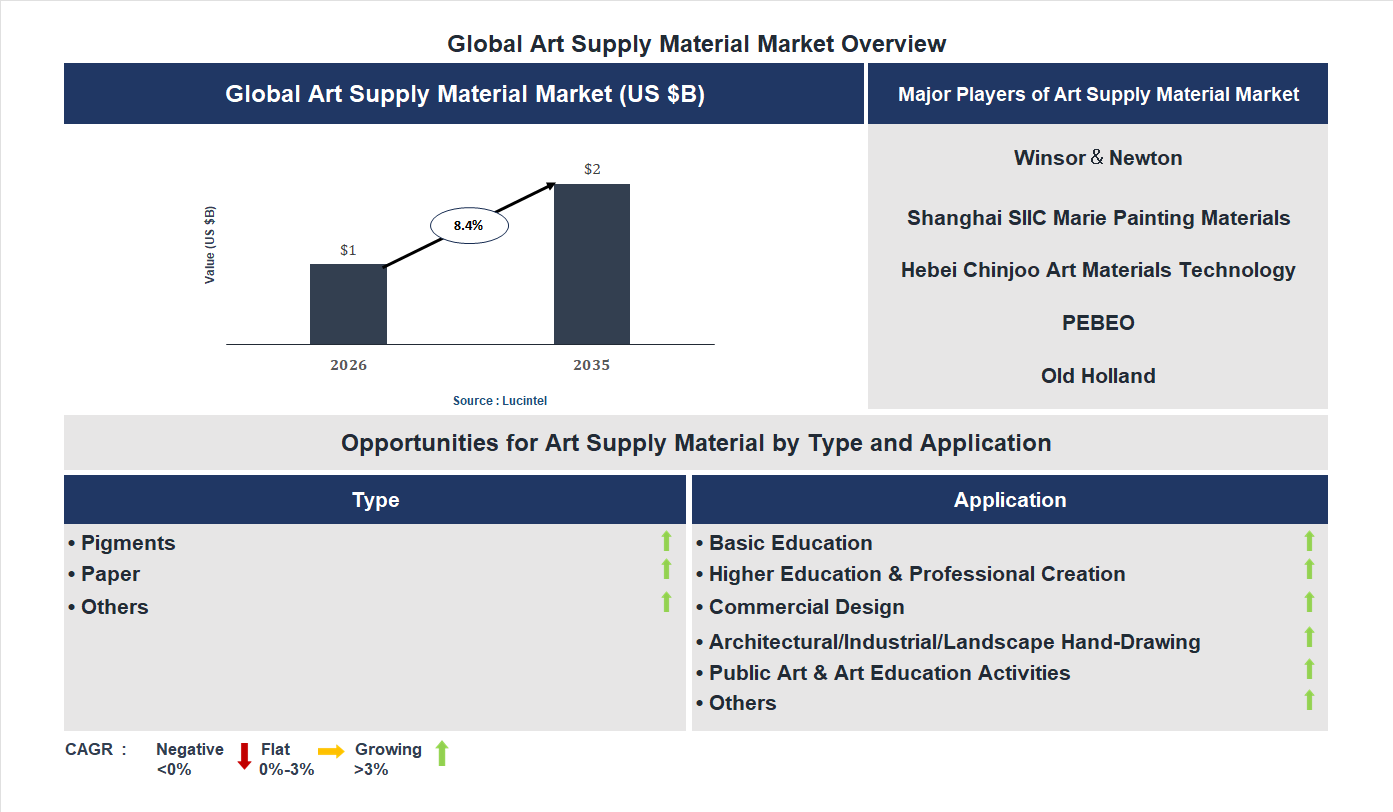
Key data points: The market size in 2035 = $2 billion, growth forecast = 8.4% annually for the next 8 years. Scroll below to get more insights. This market report covers trends, opportunities and forecasts in art supply material market to 2035 by type (pigments, paper, and others), application (basic education, higher education & professional creation, commercial design, architectural/industrial/landscape hand-drawing, public art & art education activities, and others), and region (North America, Europe, Asia Pacific, and the Rest of the World)
We'll send your sample report shortly.
• Lucintel forecasts that, within the type category, pigment is expected to witness higher growth over the forecast period.
• Within the application category, public art & art education activity is expected to witness the highest growth.
• In terms of region, APAC is expected to witness the highest growth over the forecast period. Gain valuable insights for your business decisions with our comprehensive 150+ page report. Sample figures with some insights are shown below.
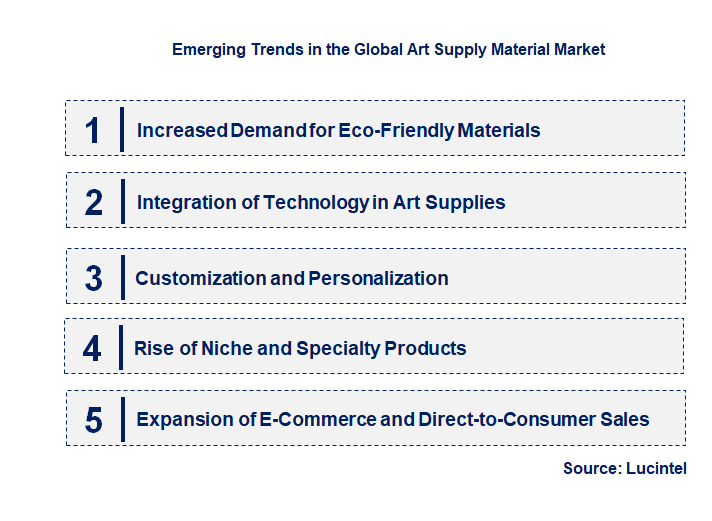
• Increased Demand for Eco-Friendly Materials: Growing environmental awareness among consumers is driving demand for sustainable art supplies. Artists and buyers prefer products made from biodegradable, non-toxic, and recycled materials, reducing ecological footprints. Companies are investing in eco-conscious manufacturing processes and transparent sourcing to appeal to this environmentally conscious segment. This trend encourages innovation in biodegradable paints, recycled paper, and non-toxic inks, fostering a market shift toward sustainability. It also aligns with global efforts to reduce waste and promote responsible consumption, making eco-friendly art supplies a significant growth area.
• Integration of Technology in Art Supplies: Technological advancements are revolutionizing art materials, with digital integration becoming prominent. Products like smart brushes, digital tablets, and augmented reality tools are enhancing creative possibilities. These innovations enable artists to experiment with new techniques, improve precision, and share their work globally. The market is witnessing increased collaboration between tech firms and traditional art supply manufacturers, leading to hybrid products that combine physical and digital elements. This trend expands the scope of art creation, attracting tech-savvy artists and opening new revenue streams for industry players.
• Customization and Personalization: Consumers increasingly seek personalized art supplies tailored to their specific needs and styles. Brands are offering customizable palettes, brushes, and sketchbooks, allowing artists to select features like size, color, and material. Digital platforms facilitate direct engagement with customers, enabling bespoke product offerings. This trend enhances customer satisfaction and loyalty while differentiating brands in a competitive market. It also encourages innovation in product design and manufacturing processes, fostering a more inclusive and user-centric approach that caters to diverse artistic preferences.
• Rise of Niche and Specialty Products: The market is witnessing a surge in niche and specialty art supplies catering to specific techniques, mediums, or artistic communities. Examples include watercolor-specific brushes, graffiti markers, or eco-friendly calligraphy inks. These products meet the needs of dedicated artists seeking high-performance tools for particular styles. The growth of online communities and social media platforms accelerates awareness and demand for such specialized supplies. This trend allows manufacturers to target niche markets effectively, fostering innovation and expanding the overall market scope by addressing unique artistic requirements.
• Expansion of E-Commerce and Direct-to-Consumer Sales: The shift toward online shopping is significantly impacting the art supply market. E-commerce platforms provide wider reach, convenience, and access to a broader range of products. Direct-to-consumer sales enable brands to build stronger relationships with customers, gather feedback, and offer personalized services. Virtual demonstrations, tutorials, and online communities further enhance engagement. This trend reduces reliance on traditional retail channels, lowers costs, and accelerates product launches. As digital adoption grows, the market is becoming more accessible, dynamic, and responsive to consumer needs, fostering rapid growth and innovation. These trends are reshaping the art supply material market by fostering sustainability, technological integration, customization, niche specialization, and digital expansion. Collectively, they are driving innovation, expanding market reach, and aligning the industry with contemporary values and technological progress. This evolution is creating new opportunities for manufacturers, retailers, and artists, ensuring the market remains vibrant and adaptable to future demands.
• Growing Demand for Eco-Friendly Art Supplies: Increasing environmental awareness among consumers is driving demand for sustainable art materials. Eco-friendly products, such as biodegradable paints and recycled paper, are gaining popularity, encouraging manufacturers to adopt greener practices. This shift not only benefits the environment but also appeals to a broader customer base seeking responsible consumption options. As a result, companies investing in eco-friendly innovations are gaining competitive advantages, expanding their market share, and setting new industry standards.
• Expansion of Digital Art Tools and Materials: The rise of digital art has transformed the traditional art supply market, with increased demand for tablets, styluses, and digital brushes. Artists and students are embracing digital platforms for their convenience and versatility, prompting manufacturers to develop advanced tools with enhanced features. This growth in digital art supplies is opening new revenue streams, fostering innovation, and encouraging integration between physical and digital art forms, ultimately broadening the market scope and attracting tech-savvy consumers.
• Innovation in High-Performance and Specialty Materials: The market is witnessing a surge in high-performance art materials, such as professional-grade acrylics, watercolors, and specialty brushes. These products cater to artists seeking durability, precision, and unique effects, thereby elevating the quality of artwork. Manufacturers are investing in research to develop innovative formulations, which enhance artistic expression and meet the demands of professional artists. This trend boosts premium product sales and encourages the development of niche segments within the art supply industry.
• Rising Popularity of Art Education and DIY Culture: The increasing focus on art education and do-it-yourself (DIY) projects is fueling demand for affordable, accessible art supplies. Schools, community centers, and online platforms are promoting creative learning, leading to higher sales of beginner kits, craft supplies, and instructional materials. This trend supports market growth by expanding customer bases, encouraging brand loyalty, and fostering a culture of creativity. It also stimulates innovation in product design tailored for learners and hobbyists.
• Strategic Collaborations and Market Expansion: Companies are forming strategic partnerships with artists, educational institutions, and retail chains to expand their reach. These collaborations facilitate product innovation, brand visibility, and entry into new markets. Retail expansion into emerging economies is also boosting sales, driven by rising disposable incomes and growing interest in arts and crafts. Such strategic moves are strengthening market presence, diversifying product portfolios, and accelerating overall industry growth. The overall impact of these developments is a more dynamic, innovative, and sustainable art supply material market. Increased consumer engagement, technological integration, and eco-conscious practices are driving growth, expanding market segments, and fostering global competitiveness. These opportunities are shaping a resilient industry poised for continued expansion and diversification.
• Growing Demand for Eco-Friendly Art Supplies: Increasing environmental awareness among consumers is driving demand for sustainable art materials such as biodegradable paints, recycled paper, and non-toxic supplies. Educational institutions and professional artists are prioritizing eco-conscious products, creating a lucrative segment. Manufacturers investing in green materials and sustainable production processes can differentiate themselves and tap into a rapidly expanding market segment focused on environmental responsibility.
• Expansion of Digital and Hybrid Art Supplies: The integration of digital technology with traditional art supplies offers new creative possibilities. Products like digital drawing tablets, hybrid sketchbooks, and augmented reality art tools are gaining popularity among artists and students. This convergence of digital and physical art supplies caters to a broader audience, including tech-savvy youth and professional designers, fostering innovation and opening new revenue streams within the art supply market.
• Increasing Adoption in Educational Institutions: The rising emphasis on arts education in schools and universities boosts demand for art supplies. Governments and private institutions are investing in art programs, leading to increased procurement of paints, brushes, canvases, and craft materials. This growth in educational adoption supports steady demand, especially for affordable, durable, and versatile supplies, creating opportunities for manufacturers to develop specialized products tailored for academic use.
• Growth of Online Retail and Direct-to-Consumer Channels: The expansion of e-commerce platforms enables art supply brands to reach a global customer base efficiently. Online channels facilitate direct engagement with consumers, offering personalized product recommendations and exclusive deals. This shift reduces reliance on traditional brick-and-mortar stores, allowing brands to expand their market presence, gather customer insights, and innovate product offerings based on real-time feedback, thereby accelerating market growth.
• Development of Premium and Niche Art Materials: There is a rising demand for high-quality, specialized art supplies such as artist-grade paints, handcrafted brushes, and unique mediums like encaustic or mixed media kits. Artists and hobbyists seeking professional-grade tools are willing to invest in premium products, creating a niche market segment. Companies focusing on innovation, craftsmanship, and exclusivity can capitalize on this trend, fostering brand loyalty and commanding higher price points. The overall market outlook is positively influenced by these growth opportunities, encouraging innovation, sustainability, and expanded access. As consumer preferences evolve and technological integration deepens, the art supply material market is poised for sustained expansion, benefiting manufacturers, retailers, and end-users alike. Embracing these opportunities will be crucial for market players aiming to maintain competitiveness and foster long-term growth.
• Technological Advancements: The integration of new manufacturing technologies and digital platforms has revolutionized product development and distribution. 3D printing, eco-friendly materials, and innovative packaging have enhanced product quality and sustainability. Online retail channels have expanded market reach, enabling consumers worldwide to access a diverse range of art supplies. These technological innovations reduce costs, improve efficiency, and meet evolving consumer preferences, fueling market growth.
• Rising Art Education and Creative Initiatives: Increased emphasis on art education in schools and community programs has expanded the demand for art supplies. Governments and private organizations are investing in creative initiatives, workshops, and art festivals, which stimulate consumer interest and participation. This trend encourages both amateur and professional artists to purchase high-quality materials, thereby boosting sales and market expansion.
• Growing Popularity of DIY and Crafting Activities: The surge in do-it-yourself projects and crafting hobbies has significantly contributed to market growth. Consumers seek versatile, affordable, and innovative art supplies for personal projects, home decor, and gifting. The rise of social media platforms showcasing DIY tutorials has further propelled this trend, leading to increased demand for a wide array of art materials, from paints to specialty papers.
• Environmental and Sustainability Concerns: Increasing awareness about environmental impact has driven demand for eco-friendly and non-toxic art supplies. Manufacturers are adopting sustainable practices, such as biodegradable packaging and natural pigments, to meet consumer preferences and regulatory standards. This shift not only enhances brand reputation but also opens new market segments focused on green products, fostering long-term growth. The challenges in the art supply material market are:
• Regulatory and Safety Standards: Stringent regulations regarding chemical compositions, labeling, and environmental impact pose compliance challenges for manufacturers. Meeting these standards often involves additional costs and research to develop safe, non-toxic products. Non-compliance can lead to legal penalties and damage to brand reputation, making regulatory adherence a critical concern for market players.
• Volatility in Raw Material Prices: Fluctuations in the costs of raw materials such as pigments, plastics, and paper significantly impact profit margins. Supply chain disruptions, geopolitical tensions, and environmental factors can cause price volatility, forcing manufacturers to adjust pricing strategies. This unpredictability complicates inventory management and long-term planning, potentially hindering market stability.
• Intense Competition and Market Saturation: The market is highly competitive, with numerous established and emerging brands vying for consumer attention. Market saturation in developed regions limits growth opportunities, compelling companies to innovate and differentiate their offerings. Price wars and marketing battles can erode profit margins, challenging sustainable expansion and requiring strategic focus on niche segments and branding. The art supply material market is driven by technological innovations, educational initiatives, and changing consumer preferences towards sustainability. However, regulatory compliance, raw material price volatility, and intense competition pose significant challenges. These factors collectively influence market dynamics, requiring companies to adapt strategically. Embracing technological advancements and eco-friendly practices can unlock growth opportunities, while addressing regulatory and competitive pressures is essential for long-term success. Overall, the markets future hinges on balancing innovation with compliance and differentiation amidst evolving consumer demands.
• Winsor&Newton
• Shanghai SIIC Marie Painting Materials
• Hebei Chinjoo Art Materials Technology
• PEBEO
• Old Holland
• Daler-Rowney
• Schmincke
• Hangzhou Puqing Culture Creative
• Shandong New Wintree Art Supplies
• Magi-Wap
• Pigments
• Paper
• Others
• Basic Education
• Higher Education & Professional Creation
• Commercial Design
• Architectural/Industrial/Landscape Hand-Drawing
• Public Art & Art Education Activities
• Others
• North America
• Europe
• Asia Pacific
• The Rest of the World
• United States: The US market has seen increased demand for eco-friendly and non-toxic art supplies, driven by consumer awareness and regulatory pressures. Companies are investing in sustainable materials and innovative products like digital art tools. Online sales channels continue to grow, expanding access and convenience for consumers. Additionally, collaborations with educational institutions and art communities are fostering product innovation and market expansion.
• China: China remains a major manufacturing hub, with a focus on cost-effective production and expanding domestic consumption. Recent developments include the rise of premium art supplies targeting professional artists and hobbyists. E-commerce platforms like Taobao and JD.com have boosted sales, while local brands are gaining recognition for quality and innovation. The government’s support for cultural industries is also encouraging growth in art supply demand.
• Germany: The German market emphasizes high-quality, sustainable, and innovative art materials. There is a strong focus on environmentally friendly products, with many companies adopting eco-labeling and sustainable sourcing practices. Technological integration, such as digital art supplies and online customization options, is also prominent. The market benefits from a well-established art education sector and a culture of craftsmanship and quality.
• India: The Indian art supply market is experiencing rapid growth due to increasing interest in arts and crafts, driven by a young population and rising disposable incomes. Local manufacturers are expanding their product ranges, focusing on affordability and accessibility. E-commerce platforms are playing a crucial role in reaching rural and urban consumers. There is also a growing trend toward eco-friendly and innovative art materials, aligning with global sustainability trends.
• Japan: Japan’s market is characterized by a strong tradition of craftsmanship and innovation in art supplies. Recent developments include the integration of digital and traditional art tools, catering to a tech-savvy consumer base. Eco-conscious products are gaining popularity, with companies emphasizing sustainability. The market also benefits from a vibrant art community and a high level of consumer demand for premium, specialized art materials.


• Winsor&Newton
• Shanghai SIIC Marie Painting Materials
• Hebei Chinjoo Art Materials Technology
• PEBEO
• Old Holland
• Daler-Rowney
• Schmincke
• Hangzhou Puqing Culture Creative
• Shandong New Wintree Art Supplies
• Magi-Wap Q6. Which art supply material market segment will be the largest in future? Answer: Lucintel forecasts that, within the type category, pigment is expected to witness higher growth over the forecast period. Q7. In art supply material market, which region is expected to be the largest in next 5 years? Answer: In terms of region, APAC is expected to witness the highest growth over the forecast period. Q8. Do we receive customization in this report? Answer: Yes, Lucintel provides 10% customization without any additional cost.


Choose a license that fits your team. Instant PDF delivery.
Prices exclude taxes. Instant delivery. Custom licensing available on request.
Market Report · July 31, 2026
Market Report · July 31, 2026
Market Report · July 31, 2026
Trusted partner for strategic intelligence and business growth


Receive a complimentary market analysis tailored to your industry. Our analysts will identify key growth opportunities and competitive dynamics specific to your business.

Market size, growth rate, and key trend analysis for your specific sector.

Top competitor positioning and market share analysis.

Strategic recommendations backed by data-driven insights.
Get curated market intelligence and competitive moves straight to your inbox.
By subscribing, you agree to receive our monthly insights. Unsubscribe anytime.
Receive a complimentary market analysis tailored to your industry. Our analysts will identify key growth opportunities and competitive dynamics specific to your business.
Market size, growth rate, and key trend analysis for your specific sector.
Top competitor positioning and market share analysis.
Strategic recommendations backed by data-driven insights.
Get curated market intelligence, emerging trends, and competitive moves straight to your inbox each month.
By subscribing, you agree to receive our monthly insights. Unsubscribe anytime.
We'll send your sample report shortly.