
Report Feature
Arc Flash Protective Cloth Market Trends and Forecast
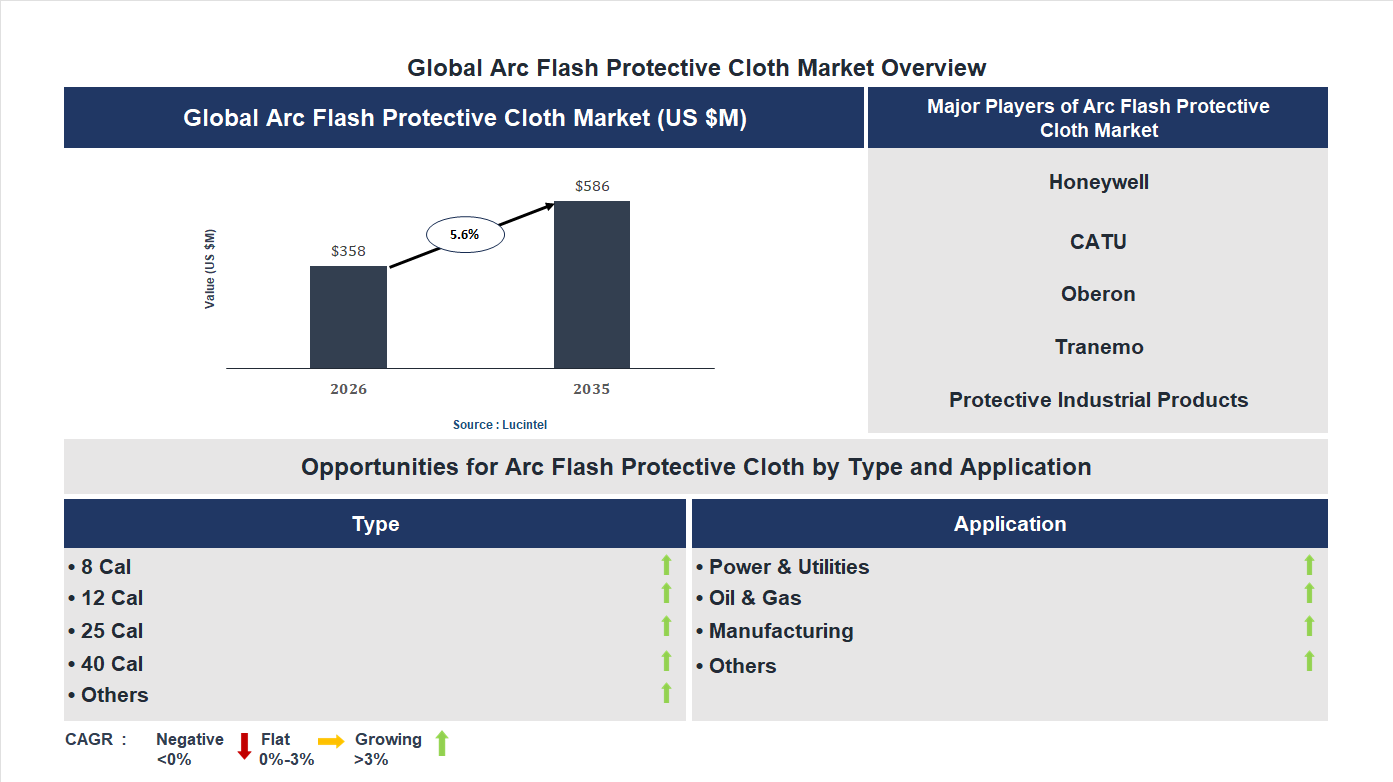
The future of the global arc flash protective cloth market looks promising with opportunities in the power & utility, oil & gas, and manufacturing markets. The global arc flash protective cloth market is expected to reach an estimated $586 million by 2035 with a CAGR of 5.6% from 2026 to 2035. The major drivers for this market are the increasing demand for electrical safety equipment, the rising focus on workplace hazard prevention, and the growing adoption in industrial safety protocols.• Lucintel forecasts that, within the type category, 25 cal is expected to witness the highest growth over the forecast period.
• Within the application category, power & utility is expected to witness the highest growth.
• In terms of region, APAC is expected to witness the highest growth over the forecast period. Gain valuable insights for your business decisions with our comprehensive 150+ page report. Sample figures with some insights are shown below.
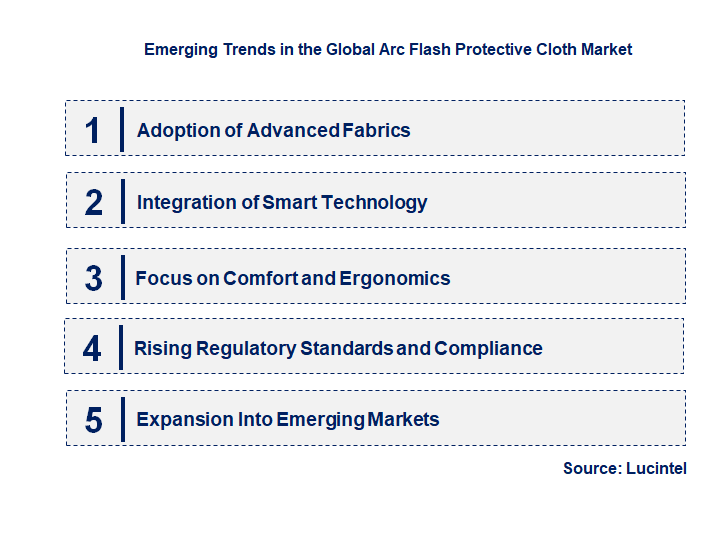
Emerging Trends in the Arc Flash Protective Cloth Market
The arc flash protective cloth market is experiencing rapid evolution driven by increasing safety regulations, technological advancements, and a growing awareness of electrical hazards across industries. As industries such as manufacturing, utilities, and construction prioritize worker safety, demand for innovative protective clothing is surging. Market players are investing in research and development to create more durable, comfortable, and effective arc flash protective fabrics. These developments are not only enhancing safety standards but also influencing market dynamics, leading to new product launches and strategic collaborations. The following key trends highlight the major shifts shaping this markets future trajectory.• Adoption of Advanced Fabrics: : The market is witnessing a shift towards fabrics embedded with flame-resistant and arc-resistant properties that offer superior protection. Innovations include multi-layered textiles, moisture-wicking materials, and lightweight composites that do not compromise safety for comfort. These fabrics enhance durability and provide better resistance against high-intensity electrical arcs, making protective clothing more effective and user-friendly. As a result, industries are increasingly adopting these advanced materials to meet stringent safety standards, thereby expanding market opportunities and encouraging manufacturers to invest in R&D.
• Integration of Smart Technology: : The incorporation of smart technology into arc flash protective clothing is a significant emerging trend. Features such as embedded sensors monitor temperature, arc exposure, and fabric integrity in real-time, providing immediate alerts to workers and safety managers. This integration improves response times during electrical incidents and enhances overall safety protocols. The adoption of IoT-enabled protective gear is driven by the need for proactive safety management, especially in high-risk environments. This trend is expected to revolutionize safety practices and create new revenue streams for tech-savvy manufacturers.
• Focus on Comfort and Ergonomics: : As the demand for longer wear times and increased mobility grows, manufacturers are prioritizing comfort and ergonomic design in protective clothing. Innovations include lightweight fabrics, ergonomic cuts, and moisture management systems that reduce fatigue and improve worker compliance. Enhanced comfort encourages consistent use of protective gear, thereby reducing accidents and injuries. This trend is particularly influential in sectors where workers are required to wear protective clothing for extended periods, leading to increased market penetration and customer satisfaction.
• Rising Regulatory Standards and Compliance: : Governments and industry bodies are implementing stricter safety regulations related to arc flash protection. These standards mandate specific performance criteria for protective clothing, prompting manufacturers to develop compliant products. The evolving regulatory landscape drives innovation and ensures higher safety levels, but also increases product development costs. Companies that proactively adapt to these standards gain competitive advantages, while non-compliant products risk market exclusion. This trend underscores the importance of continuous innovation and compliance in maintaining market relevance.
• Expansion into Emerging Markets: : Growing industrialization and infrastructure development in emerging economies are opening new avenues for arc flash protective cloths. Increased investments in electrical infrastructure, manufacturing plants, and construction projects drive demand for safety gear. Market players are expanding their distribution networks and customizing products to meet local standards and conditions. This expansion not only boosts sales but also fosters local manufacturing capabilities. As emerging markets prioritize safety, the market is poised for significant growth, making it a critical focus area for industry stakeholders. These trends are collectively transforming the arc flash protective cloth market by fostering innovation, enhancing safety standards, and expanding geographical reach. The integration of advanced materials and smart technology, coupled with a focus on comfort and regulatory compliance, is elevating product offerings. Simultaneously, emerging markets present substantial growth opportunities. Together, these developments are reshaping the market landscape, making arc flash protective clothing more effective, accessible, and aligned with modern safety demands.
Recent Development in the Arc Flash Protective Cloth Market
The arc flash protective cloth market is experiencing rapid growth driven by increasing safety regulations, technological advancements, and rising awareness of electrical safety hazards across industries. As companies prioritize worker safety, demand for innovative protective clothing has surged. Market players are investing in research and development to enhance fabric durability, comfort, and protection levels. This evolving landscape presents significant opportunities for manufacturers to expand their product lines and capture new markets, ultimately contributing to safer work environments worldwide.• Growing safety regulations: The implementation of stringent safety standards worldwide is compelling industries to adopt advanced protective clothing, boosting market demand.
• Technological innovations: Development of flame-resistant, moisture-wicking, and lightweight fabrics is improving worker comfort and safety, driving market growth.
• Increasing industrialization: Rapid industrial expansion, especially in emerging economies, is elevating the need for reliable arc flash protection solutions.
• Rising awareness of electrical hazards: Educational campaigns and safety protocols are raising awareness, leading to higher adoption of arc flash protective clothing.
• Expansion into new sectors: Growing applications in construction, oil & gas, and renewable energy sectors are broadening market opportunities and increasing sales. The markets growth is significantly influenced by regulatory compliance, technological progress, and expanding industrial sectors. Enhanced fabric technologies are providing better protection and comfort, encouraging wider adoption. Increased awareness and safety standards are pushing industries to invest more in protective clothing. As a result, the market is expected to see sustained growth, with manufacturers innovating to meet evolving safety needs. Overall, these developments are making arc flash protective cloth more accessible and effective, positively impacting global safety standards.
Strategic Growth Opportunities in the Arc Flash Protective Cloth Market
The arc flash protective cloth market is experiencing significant growth driven by increasing safety regulations, technological advancements, and rising awareness of electrical safety hazards across industries. As electrical infrastructure expands and modernization efforts accelerate, demand for specialized protective clothing is surging. Market players are focusing on innovation, sustainability, and customization to meet diverse industry needs. This evolving landscape presents numerous opportunities for growth, strategic partnerships, and product development, ultimately enhancing safety standards and reducing electrical injury risks worldwide.• Expansion into industrial sectors with high electrical risk: The market can grow by targeting industries such as manufacturing, oil and gas, and utilities, where electrical hazards are prevalent. Increasing safety regulations and compliance requirements drive demand for arc flash protective clothing, creating opportunities for manufacturers to develop industry-specific solutions that enhance worker safety and meet regulatory standards.
• Innovation in lightweight, breathable protective fabrics: Developing advanced materials that offer high protection levels while maintaining comfort can significantly boost market growth. Lightweight, moisture-wicking, and breathable fabrics improve wearer compliance and reduce fatigue, making protective clothing more appealing. Continuous research into nanotechnology and fabric engineering can lead to breakthroughs that set new industry standards.
• Customization and tailored protective solutions: Offering personalized arc flash protective cloths designed to fit specific job roles and environments can enhance safety and user acceptance. Custom solutions that consider factors like climate, work conditions, and electrical exposure levels can differentiate brands and meet diverse customer needs, fostering loyalty and expanding market share.
• Integration of smart technology for real-time safety monitoring: Incorporating sensors and IoT-enabled features into protective clothing can provide real-time data on electrical hazards, garment integrity, and environmental conditions. This technological integration enhances safety protocols, enables predictive maintenance, and appeals to tech-savvy industries, opening new revenue streams and elevating overall safety standards.
• Focus on sustainable and eco-friendly materials: Developing environmentally sustainable arc flash protective fabrics aligns with global green initiatives. Using recycled, biodegradable, or low-impact materials can attract environmentally conscious clients and comply with stricter regulations. Sustainability efforts can also reduce manufacturing costs and improve brand reputation, supporting long-term market growth. The overall market outlook is positively influenced by these growth opportunities, which collectively drive innovation, safety, and sustainability. As industries prioritize electrical safety and technological integration, the arc flash protective cloth market is poised for substantial expansion. Companies that capitalize on these opportunities can strengthen their market position, meet evolving customer demands, and contribute to safer working environments worldwide.
Arc Flash Protective Cloth Market Driver and Challenges
The arc flash protective cloth market is influenced by a variety of technological, economic, and regulatory factors that shape its growth and development. Advances in safety technology and increasing awareness of workplace safety standards drive demand for protective clothing. Economic growth in industrial sectors such as manufacturing, construction, and energy further fuels market expansion. Regulatory frameworks mandating safety compliance compel organizations to invest in high-quality protective gear. Additionally, technological innovations improve the effectiveness and comfort of protective clothing, encouraging adoption. However, the market also faces challenges such as high costs, regulatory complexities, and supply chain disruptions, which can hinder growth. Understanding these drivers and challenges is essential for stakeholders to navigate the market effectively. The factors responsible for driving the arc flash protective cloth market include:• Technological Advancements: The development of innovative fabrics and protective materials enhances the safety, durability, and comfort of arc flash protective clothing. New technologies such as flame-resistant fibers and moisture-wicking fabrics improve wearer safety and comfort, encouraging wider adoption across industries. Continuous R&D efforts lead to lighter, more flexible, and more effective protective gear, which appeals to end-users seeking both safety and comfort. These innovations also enable manufacturers to meet evolving safety standards, thereby expanding market opportunities.
• Increasing Workplace Safety Regulations: Governments and industry bodies are implementing stringent safety standards to protect workers from arc flash hazards. Regulations such as OSHA in the U.S. and similar standards worldwide mandate the use of protective clothing in high-risk environments. These regulations compel organizations to invest in compliant protective gear, thereby boosting market demand. The enforcement of safety norms also raises awareness among employers and employees about arc flash risks, further driving the adoption of protective clothing.
• Growing Industrialization and Infrastructure Development: Rapid industrial growth, especially in emerging economies, increases the number of workplaces exposed to arc flash hazards. Construction, manufacturing, and energy sectors are expanding, necessitating enhanced safety measures. Infrastructure projects and urbanization efforts lead to higher demand for protective clothing to ensure worker safety. This growth creates a substantial market opportunity for manufacturers to supply arc flash protective cloth, especially in regions experiencing rapid economic development.
• Rising Awareness of Occupational Safety: Increased awareness about workplace safety and the potential dangers of arc flash incidents encourages organizations to adopt protective measures proactively. Training programs, safety campaigns, and corporate responsibility initiatives emphasize the importance of protective clothing. As workers become more informed about risks, demand for high-quality arc flash protective cloth rises. This trend supports market growth by fostering a safety-first culture across various industries.
• Expansion of End-Use Industries: The proliferation of industries such as oil and gas, electrical utilities, and manufacturing directly impacts the demand for arc flash protective clothing. As these sectors grow, so does the need for specialized protective gear to prevent injuries from arc flash incidents. The increasing complexity and scale of industrial operations necessitate advanced protective solutions, thereby expanding the market for arc flash protective cloth. The challenges facing the arc flash protective cloth market include:
• High Cost of Protective Clothing: Advanced arc flash protective cloth involves sophisticated materials and manufacturing processes, resulting in higher costs. This can be a barrier for small and medium-sized enterprises with limited safety budgets. The expense may deter widespread adoption, especially in price-sensitive markets, thereby constraining market growth. Additionally, ongoing maintenance and replacement costs add to the financial burden on organizations.
• Regulatory Complexities and Variability: Differing safety standards and regulations across countries create compliance challenges for manufacturers and end-users. Navigating these diverse requirements can be complex and costly, potentially delaying product launches and market entry. Variability in standards also complicates product development and certification processes, hindering global market expansion.
• Supply Chain Disruptions: The market relies on specialized raw materials and manufacturing facilities, which are susceptible to disruptions due to geopolitical issues, pandemics, or logistical challenges. Such disruptions can lead to shortages, increased costs, and delays in product delivery. These factors negatively impact market stability and growth prospects, especially during global crises. The arc flash protective cloth market is driven by technological innovations, regulatory mandates, industrial growth, safety awareness, and expanding end-use sectors. However, high costs, regulatory complexities, and supply chain issues pose significant challenges. These factors collectively influence market dynamics, requiring stakeholders to adapt strategies to capitalize on opportunities while mitigating risks. Overall, the markets future growth hinges on balancing technological progress and regulatory compliance with addressing economic and logistical hurdles.
List of Arc Flash Protective Cloth Companies
Companies in the market compete on the basis of product quality offered. Major players in this market focus on expanding their manufacturing facilities, R&D investments, infrastructural development, and leverage integration opportunities across the value chain. With these strategies arc flash protective cloth companies cater increasing demand, ensure competitive effectiveness, develop innovative products & technologies, reduce production costs, and expand their customer base. Some of the arc flash protective cloth companies profiled in this report include-• Honeywell
• CATU
• Oberon
• Tranemo
• Protective Industrial Products
• Lakeland
• YOTSUGI
• ProGARM
• Chicago Protective Apparel
• Shanghai C&G Safety
Arc Flash Protective Cloth Market by Segment
The study includes a forecast for the global arc flash protective cloth market by type, application, and region.Arc Flash Protective Cloth Market by Type [Value from 2019 to 2035]:
• 8 Cal
• 12 Cal
• 25 Cal
• 40 Cal
• Others
Arc Flash Protective Cloth Market by Application [Value from 2019 to 2035]:
• Power & Utilities
• Oil & Gas
• Manufacturing
• Others
Arc Flash Protective Cloth Market by Region [Value from 2019 to 2035]:
• North America
• Europe
• Asia Pacific
• The Rest of the World
Country Wise Outlook for the Arc Flash Protective Cloth Market
The arc flash protective cloth market has experienced significant growth driven by increasing safety regulations, technological advancements, and rising awareness of electrical safety hazards worldwide. As industries modernize and infrastructure expands, demand for high-performance protective clothing has surged across various sectors. Countries are adopting stricter safety standards, prompting manufacturers to innovate and improve product offerings. The markets evolution reflects a focus on durability, comfort, and enhanced protection features. This global trend is particularly evident in major economies with extensive electrical infrastructure, where safety compliance is critical. The following summarizes recent developments in the United States, China, Germany, India, and Japan.• United States: The U.S. market has seen increased adoption of arc flash protective clothing due to stricter OSHA regulations and rising industrial safety standards. Innovations include lightweight, flame-resistant fabrics with enhanced moisture-wicking properties, improving worker comfort. The focus on compliance and safety training has driven demand, especially in the energy, manufacturing, and utility sectors. Additionally, technological integration such as smart fabrics with sensors for real-time hazard detection, is emerging.
• China: China’s market is rapidly expanding, fueled by industrial growth and infrastructure development. Manufacturers are investing in advanced textile technologies to produce more durable and cost-effective arc flash protective clothing. The government’s emphasis on workplace safety and increasing foreign investment in the electrical and manufacturing sectors is boosting demand. Local companies are also focusing on product innovation to meet international safety standards, leading to a more competitive market landscape.
• Germany: Germany’s market is characterized by high-quality standards and stringent safety regulations, particularly within the automotive and manufacturing industries. Companies are adopting innovative materials that offer superior protection while maintaining flexibility and comfort. The emphasis on sustainable and eco-friendly fabrics is also growing, aligning with Germany’s broader environmental initiatives. The market benefits from advanced R&D activities and collaborations between safety equipment manufacturers and textile innovators.
• India: The Indian market is witnessing rapid growth due to expanding industrial activities, urbanisation, and increasing awareness of electrical safety. Local manufacturers are focusing on affordable yet effective arc flash protective clothing to cater to a large workforce in construction, manufacturing, and energy sectors. The government’s initiatives to improve workplace safety standards are also contributing to market expansion. Innovations include the use of locally sourced materials and cost-effective manufacturing processes to meet rising demand.
• Japan: Japan’s market is driven by technological innovation and a strong emphasis on worker safety in highly automated industries. Companies are adopting advanced protective fabrics with enhanced heat resistance and durability. The focus on ergonomic design and comfort is prominent, catering to Japan’s technologically sophisticated workforce. Regulatory standards are strict, encouraging continuous product improvements. The market also sees integration of smart textiles and sensors for proactive safety management, reflecting Japan’s leadership in industrial safety technology.

Features of the Global Arc Flash Protective Cloth Market
Market Size Estimates: Arc flash protective cloth market size estimation in terms of value ($M). Trend and Forecast Analysis: Market trends (2019 to 2025) and forecast (2026 to 2035) by various segments and regions. Segmentation Analysis: Arc flash protective cloth market size by type, application, and region in terms of value ($M). Regional Analysis: Arc flash protective cloth market breakdown by North America, Europe, Asia Pacific, and Rest of the World. Growth Opportunities: Analysis of growth opportunities in different types, applications, and regions for the arc flash protective cloth market. Strategic Analysis: This includes M&A, new product development, and competitive landscape of the arc flash protective cloth market. Analysis of competitive intensity of the industry based on Porter’s Five Forces model.
FAQ
Q1. What is the arc flash protective cloth market size? Answer: The global arc flash protective cloth market is expected to reach an estimated $586 million by 2035. Q2. What is the growth forecast for arc flash protective cloth market? Answer: The global arc flash protective cloth market is expected to grow with a CAGR of 5.6% from 2026 to 2035. Q3. What are the major drivers influencing the growth of the arc flash protective cloth market? Answer: The major drivers for this market are the increasing demand for electrical safety equipment, the rising focus on workplace hazard prevention, and the growing adoption in industrial safety protocols. Q4. What are the major segments for arc flash protective cloth market? Answer: The future of the arc flash protective cloth market looks promising with opportunities in the power & utility, oil & gas, and manufacturing markets. Q5. Who are the key arc flash protective cloth market companies? Answer: Some of the key arc flash protective cloth companies are as follows:• Honeywell
• CATU
• Oberon
• Tranemo
• Protective Industrial Products
• Lakeland
• YOTSUGI
• ProGARM
• Chicago Protective Apparel
• Shanghai C&G Safety Q6. Which arc flash protective cloth market segment will be the largest in future? Answer: Lucintel forecasts that, within the type category, 25 cal is expected to witness the highest growth over the forecast period. Q7. In arc flash protective cloth market, which region is expected to be the largest in next 5 years? Answer: In terms of region, APAC is expected to witness the highest growth over the forecast period. Q8. Do we receive customization in this report? Answer: Yes, Lucintel provides 10% customization without any additional cost.
Table of Contents
List of Figures
List of Tables
Methodology
- In-depth interviews of the major players in this market
- Detailed secondary research from competitors’ financial statements and published data
- Extensive searches of published works, market, and database information pertaining to industry news, company press releases, and customer intentions
- A compilation of the experiences, judgments, and insights of Lucintel’s professionals, who have analyzed and tracked this market over the years.


Buy Now
Choose a license that fits your team. Instant PDF delivery.
Prices exclude taxes. Instant delivery. Custom licensing available on request.
Key Questions
- • What are some of the most promising, high-growth opportunities for the arc flash protective cloth market by type (8 cal, 12 cal, 25 cal, 40 cal, and others), application (power & utilities, oil & gas, manufacturing, and others), and region (North America, Europe, Asia Pacific, and the Rest of the World)?
- • Which segments will grow at a faster pace and why?
- • Which region will grow at a faster pace and why?
- • What are the key factors affecting market dynamics? What are the key challenges and business risks in this market?
- • What are the business risks and competitive threats in this market?
- • What are the emerging trends in this market and the reasons behind them?
- • What are some of the changing demands of customers in the market?
- • What are the new developments in the market? Which companies are leading these developments?
- • Who are the major players in this market? What strategic initiatives are key players pursuing for business growth?
- • What are some of the competing products in this market and how big of a threat do they pose for loss of market share by material or product substitution?
- • What M&A activity has occurred in the last 7 years and what has its impact been on the industry? For any questions related to Arc Flash Protective Cloth Market, Arc Flash Protective Cloth Market Size, Arc Flash Protective Cloth Market Growth, Arc Flash Protective Cloth Market Analysis, Arc Flash Protective Cloth Market Report, Arc Flash Protective Cloth Market Share, Arc Flash Protective Cloth Market Trends, Arc Flash Protective Cloth Market Forecast, Arc Flash Protective Cloth Companies, write Lucintel analyst at email: helpdesk@lucintel.com. We will be glad to get back to you soon.


