
Market Report · July 29, 2026

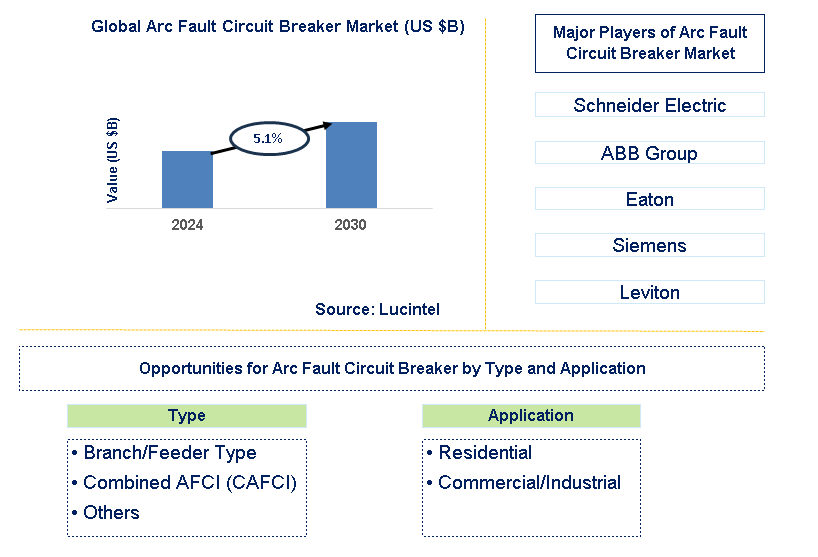
Key data points: The growth forecast = 5.1% annually for the next 6 years. Scroll below to get more insights. This market report covers trends, opportunities, and forecasts in the global arc fault circuit breaker market to 2030 by type (branch/feeder type, combined AFCI (CAFCI), and others), application (residential and commercial/industrial), and region (North America, Europe, Asia Pacific, and the Rest of the World)
We'll send your sample report shortly.
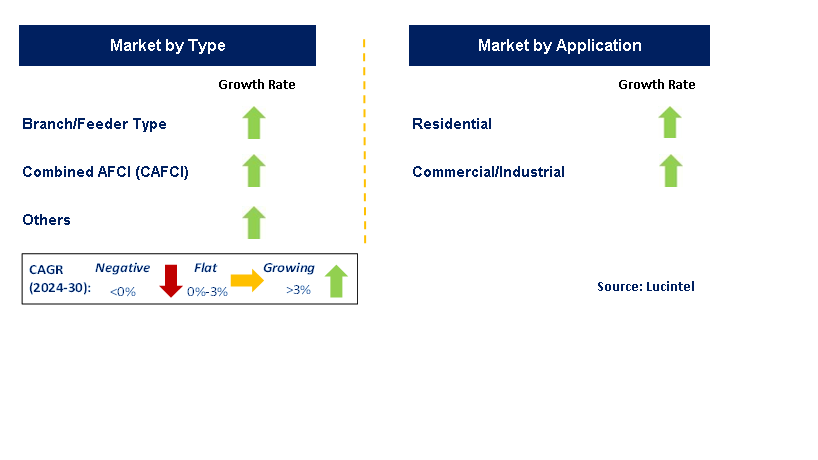
• Lucintel forecasts that, within the type category, branch/feeder type is expected to witness a higher growth over the forecast period.
• Within the application category, residential is expected to witness a higher growth.
• In terms of regions, APAC is expected to witness highest growth over the forecast period. Gain valuable insight for your business decisions with our comprehensive 150+ page report
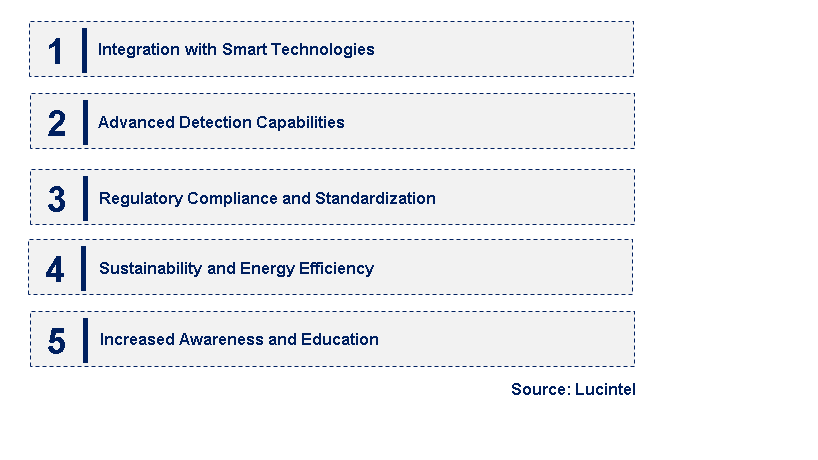
• Integration with Smart Technologies: The trend toward smart home integration is leading to the development of AFCBs that communicate with home automation systems. This enhances monitoring capabilities and allows for remote control, increasing user convenience and safety.
• Advanced Detection Capabilities: Manufacturers are focusing on improving detection algorithms to better differentiate between harmless and dangerous arcs. Enhanced sensitivity leads to more accurate performance, reducing false trips and improving reliability in critical applications.
• Regulatory Compliance and Standardization: As regulations become stricter globally, there is a push for AFCBs to comply with various safety standards. This trend encourages manufacturers to innovate and adapt their products to meet these evolving regulatory requirements.
• Sustainability and Energy Efficiency: The growing emphasis on sustainability is influencing the design of AFCBs. Manufacturers are developing energy-efficient models that minimize energy consumption while maintaining high safety standards, appealing to environmentally conscious consumers.
• Increased Awareness and Education: There is rising awareness of electrical safety among consumers and industry professionals, driving the demand for AFCBs. Educational initiatives highlight the importance of using AFCBs, encouraging adoption in both new and retrofit applications. These emerging trends are significantly reshaping the arc fault circuit breakers market, leading to enhanced product functionality, improved safety measures, and greater consumer acceptance of AFCBs in various applications.
• Smart AFCBs: The introduction of smart AFCBs that integrate with home automation systems allows for real-time monitoring and alerts. These devices enhance user safety by providing immediate notifications of potential electrical hazards.
• Improved Detection Technologies: Recent advancements in detection technologies enable AFCBs to better distinguish between normal and arcing conditions. This reduces nuisance tripping, which is a common issue with traditional breakers, thereby increasing user confidence.
• Enhanced Materials and Durability: Manufacturers are using advanced materials to improve the durability of AFCBs, ensuring they can withstand harsh environmental conditions. This development is particularly important for applications in outdoor or industrial settings.
• Focus on Training and Certification: There is increasing emphasis on training programs for electricians and installers regarding the installation and maintenance of AFCBs. This ensures proper usage and enhances overall safety in electrical systems.
• Market Expansion in Emerging Economies: Manufacturers are targeting emerging markets with tailored AFCB solutions that meet local safety standards. This strategy is helping to increase awareness and adoption of AFCBs in regions with growing construction activities. These recent developments are impacting the arc fault circuit breakers market by improving safety, enhancing product capabilities, and expanding market reach, ultimately contributing to a more secure electrical infrastructure.
• Residential Safety Upgrades: The growing demand for electrical safety upgrades in residential buildings presents a significant opportunity. Homeowners are increasingly prioritizing safety, leading to higher adoption rates of AFCBs in new constructions and retrofits.
• Commercial Building Regulations: Stricter safety regulations in commercial buildings create a strong market for AFCBs. Businesses seeking compliance with safety standards can benefit from integrating AFCBs into their electrical systems.
• Renewable Energy Systems: The rise of renewable energy installations, such as solar panels, is generating demand for AFCBs. These systems require reliable protection against arcing faults, presenting an opportunity for tailored AFCB solutions.
• Smart Home Integration: The trend toward smart homes offers opportunities for AFCB manufacturers to develop integrated solutions that work with home automation systems, enhancing user experience and safety.
• Educational Institutions and Facilities: There is potential for growth in educational institutions, where AFCBs can improve safety in laboratories and classrooms. Targeting schools and universities with tailored solutions can increase market penetration. These strategic growth opportunities indicate a promising future for the arc fault circuit breakers market. By focusing on these applications, manufacturers can enhance their offerings and contribute to the advancement of electrical safety solutions.
• Increased Safety Awareness: Growing awareness of electrical safety among consumers and professionals drives demand for AFCBs. As incidents of electrical fires become more widely publicized, the need for effective safety solutions is emphasized.
• Regulatory Compliance: Stricter regulations surrounding electrical installations are pushing manufacturers to innovate and produce compliant AFCBs. Compliance with national and international safety standards is essential for market success.
• Technological Advancements: Continuous innovations in detection technologies and smart integrations are driving growth. AFCBs that incorporate advanced features appeal to consumers looking for reliable safety solutions.
• Urbanization and Infrastructure Development: Rapid urbanization and the development of new infrastructure contribute to the increasing demand for AFCBs. As new buildings are constructed, there is a growing need for effective electrical safety measures.
• Environmental Concerns: The push for sustainable products is influencing the design of AFCBs. Manufacturers are focusing on energy-efficient solutions that align with environmental goals, attracting eco-conscious consumers. Challenges in the arc fault circuit breaker market are:
• Intense Competition: The presence of numerous players in the AFCB market creates significant competition. Manufacturers must focus on differentiation and innovation to maintain market share.
• Integration Issues: Integrating new AFCB technologies into existing electrical systems can pose challenges. Ensuring compatibility and performance standards is critical for successful implementation.
• Economic Fluctuations: Economic downturns can impact investments in construction and renovation projects, affecting the demand for AFCBs. Manufacturers need to be prepared for fluctuations in market conditions. The interplay of these drivers and challenges significantly impacts the arc fault circuit breakers market. By leveraging drivers and addressing challenges, stakeholders can enhance their strategies and achieve sustainable growth in this evolving market.
• Schneider Electric
• ABB Group
• Eaton
• Siemens
• Leviton
• Jiye Electric
• Fzkca
• Branch/Feeder Type
• Combined AFCI (CAFCI)
• Others
• Residential
• Commercial/Industrial
• North America
• Europe
• Asia Pacific
• The Rest of the World
• United States: In the U.S., advancements in AFCBs are focused on enhanced detection capabilities and integration with smart home technologies. Manufacturers are developing breakers that can differentiate between normal and dangerous arcs, improving reliability. Regulatory changes, including updates to the National Electrical Code (NEC), mandate the installation of AFCBs in specific residential applications, driving market growth. Additionally, partnerships between technology firms and manufacturers are leading to the development of more efficient and user-friendly AFCB solutions.
• China: China's AFCB market is expanding rapidly, fueled by the growing construction industry and rising safety standards. Local manufacturers are innovating to produce cost-effective AFCBs while adhering to international quality standards. The government’s push for safer electrical installations in residential and commercial buildings is prompting increased adoption of AFCBs. Additionally, ongoing research and development efforts are aimed at improving the functionality and reliability of these devices.
• Germany: Germany continues to lead in AFCB innovation, emphasizing high-quality engineering and safety standards. Manufacturers are investing in advanced technology to enhance the performance of AFCBs, including features that allow for remote monitoring and diagnostics. Regulatory requirements mandate the use of AFCBs in specific applications, contributing to steady market growth. Furthermore, the trend toward energy efficiency in electrical systems is driving demand for advanced AFCB solutions.
• India: In India, the AFCB market is gaining traction due to increasing awareness of electrical safety and fire prevention. Recent government initiatives promoting safe electrical practices in residential and commercial buildings are enhancing the adoption of AFCBs. Local manufacturers are focusing on affordable, reliable products tailored to the specific needs of the Indian market. Collaboration with international firms is also fostering innovation, improving the quality and reliability of AFCBs available in India.
• Japan: Japan's AFCB market is characterized by a strong emphasis on technology and safety. Japanese manufacturers are developing highly advanced AFCBs that integrate seamlessly with existing electrical systems. Innovations include improved detection algorithms and enhanced durability to withstand environmental conditions. The country’s stringent safety regulations are driving the demand for AFCBs, leading to continuous improvements and technological advancements in the market.


• Schneider Electric
• ABB Group
• Eaton
• Siemens
• Leviton
• Jiye Electric
• Fzkca Q5. Which arc fault circuit breaker market segment will be the largest in future? Answer: Lucintel forecasts that, within the type category, branch/feeder type is expected to witness the higher growth over the forecast period. Q6. In arc fault circuit breaker market, which region is expected to be the largest in next 5 years? Answer: In terms of regions, APAC is expected to witness highest growth over the forecast period. Q7. Do we receive customization in this report? Answer: Yes, Lucintel provides 10% customization without any additional cost.


Choose a license that fits your team. Instant PDF delivery.
Prices exclude taxes. Instant delivery. Custom licensing available on request.
Market Report · July 29, 2026
Market Report · July 20, 2026
Market Report · July 20, 2026
Trusted partner for strategic intelligence and business growth


Receive a complimentary market analysis tailored to your industry. Our analysts will identify key growth opportunities and competitive dynamics specific to your business.

Market size, growth rate, and key trend analysis for your specific sector.

Top competitor positioning and market share analysis.

Strategic recommendations backed by data-driven insights.
Get curated market intelligence and competitive moves straight to your inbox.
By subscribing, you agree to receive our monthly insights. Unsubscribe anytime.
Receive a complimentary market analysis tailored to your industry. Our analysts will identify key growth opportunities and competitive dynamics specific to your business.
Market size, growth rate, and key trend analysis for your specific sector.
Top competitor positioning and market share analysis.
Strategic recommendations backed by data-driven insights.
Get curated market intelligence, emerging trends, and competitive moves straight to your inbox each month.
By subscribing, you agree to receive our monthly insights. Unsubscribe anytime.
We'll send your sample report shortly.