
Viral Vector Manufacturing Market
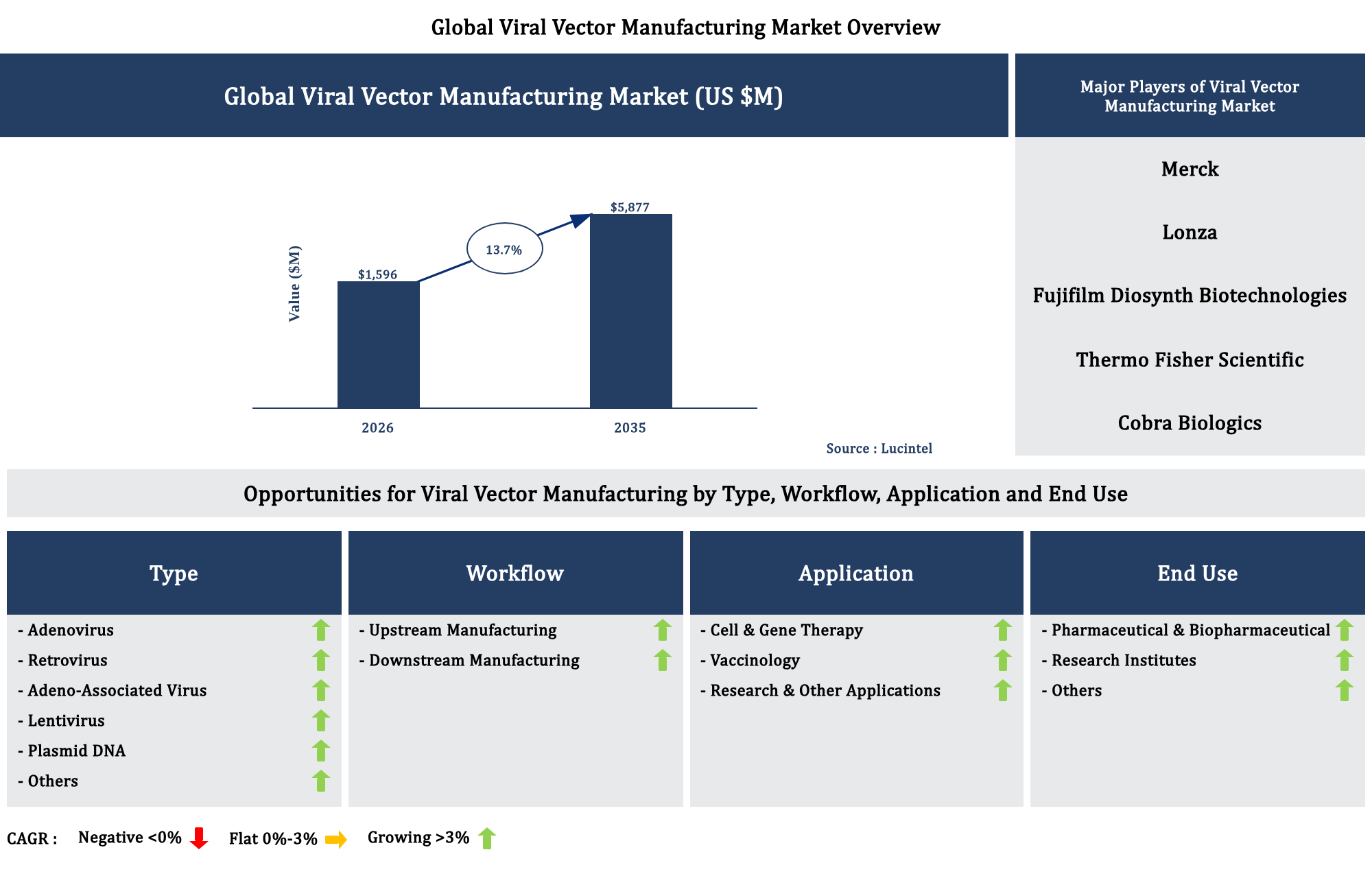
The future of the global viral vector manufacturing market looks promising with opportunities in the pharmaceutical & biopharmaceutical and research institute markets. The global viral vector manufacturing market is expected to reach an estimated $5,877 million by 2035 with a CAGR of 13.7% from 2026 to 2035. The major drivers for this market are the increasing demand for scalable manufacturing technologies, the growing investments in biotechnology companies, and the rising demand for government funding for life sciences.
Gain valuable insights for your business decisions with our comprehensive 150+ page report. Sample figures with some insights are shown below.
Emerging Trends in the Viral Vector Manufacturing Market
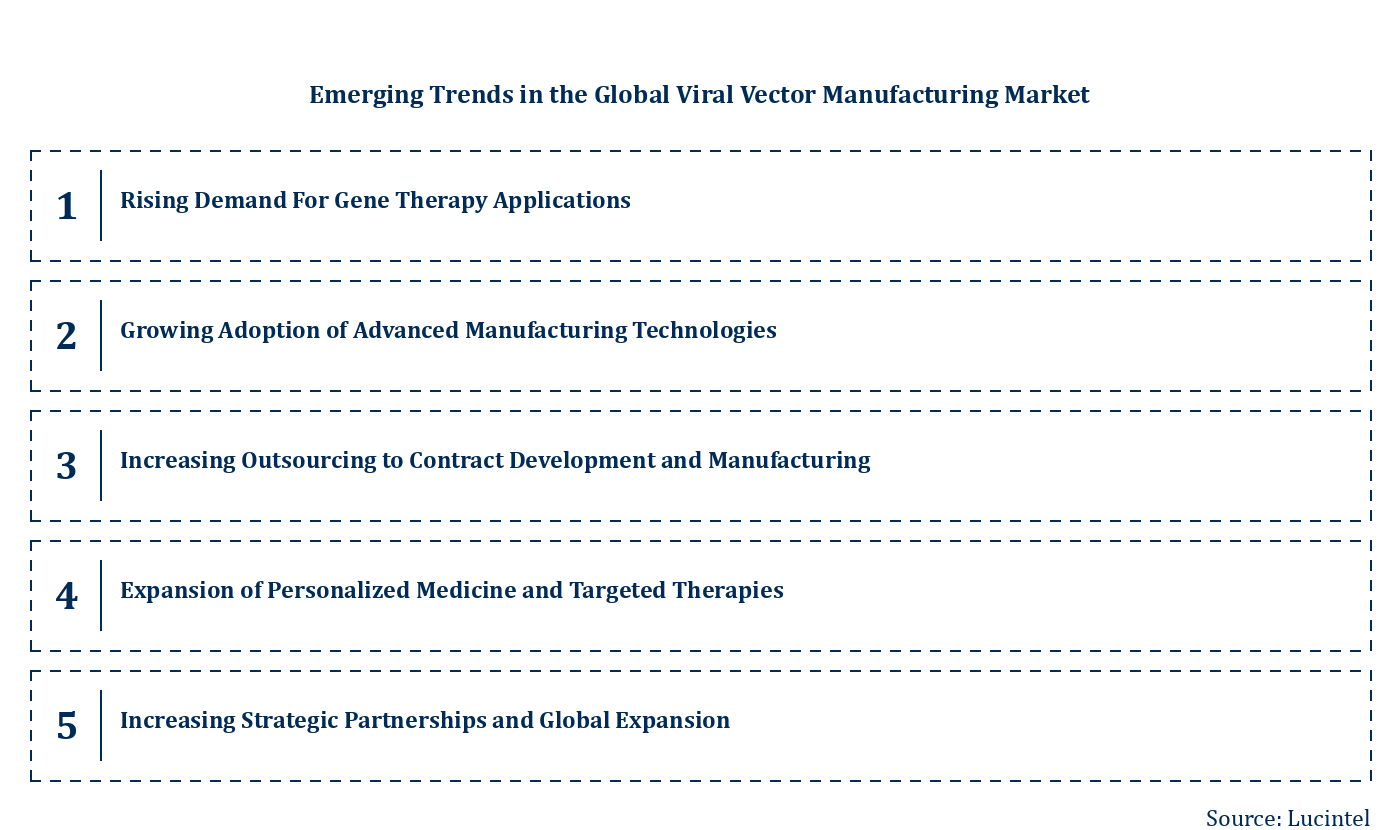
The viral vector manufacturing market is evolving rapidly, supported by strong growth in gene therapy pipelines, increasing regulatory approvals, and continuous advancements in biotechnology. The rising need for scalable, high-quality production systems and the shift toward commercialization of advanced therapies are reshaping industry dynamics. Companies are investing heavily in innovation, automation, and global expansion to meet growing demand. At the same time, collaboration across biopharmaceutical firms, contract manufacturers, and research institutions is accelerating development timelines. These changes are creating new opportunities while also redefining operational models, making emerging trends critical for understanding the future direction of the market.
The viral vector manufacturing market is being reshaped by the convergence of technological innovation, growing therapeutic demand, and evolving business models. Trends such as the rise of gene therapy, adoption of advanced manufacturing technologies, increased outsourcing, expansion of personalized medicine, and strategic collaborations are collectively driving transformation. These developments are improving scalability, efficiency, and accessibility of viral vector production while encouraging global competition and innovation. As these trends continue to evolve, they are expected to enhance the commercialization of advanced therapies and strengthen the long-term growth trajectory of the market.
Recent Developments in the Viral Vector Manufacturing Market
The viral vector manufacturing market is witnessing rapid advancements driven by increasing demand for gene therapies, technological innovation, and expanding biopharmaceutical pipelines. Companies are actively investing in capacity expansion, strategic collaborations, and advanced production technologies to address scalability challenges. Regulatory support and rising clinical success rates are further accelerating development activities. These recent developments are enhancing manufacturing efficiency, improving product quality, and enabling faster commercialization of therapies, thereby reshaping competitive dynamics and strengthening the overall growth trajectory of the global viral vector manufacturing market.
These recent developments are significantly transforming the viral vector manufacturing market by enhancing production capacity, improving efficiency, and accelerating innovation. Facility expansions, technological advancements, and strategic collaborations are enabling companies to meet growing demand and overcome manufacturing challenges. The increasing role of outsourcing and supportive regulatory frameworks further strengthens market growth. Collectively, these developments are improving scalability and accessibility of advanced therapies, driving commercialization, and positioning the market for sustained long term expansion in the evolving biotechnology landscape.
Strategic Growth Opportunities in the Viral Vector Manufacturing Market
The viral vector manufacturing market is experiencing strong growth driven by expanding gene therapy pipelines, increasing clinical success rates, and rising demand for advanced therapeutic solutions. Key application areas are creating new opportunities for manufacturers to innovate and scale production capabilities. As healthcare systems shift toward precision medicine, viral vectors are becoming essential in delivering targeted treatments. Investments in research, infrastructure, and partnerships are accelerating development across multiple applications, enabling companies to address unmet medical needs while strengthening their competitive position in the evolving biotechnology landscape.
These strategic growth opportunities are reshaping the viral vector manufacturing market by expanding its application across multiple therapeutic areas. Increasing use in gene therapy, vaccines, cell therapy, rare diseases, and neurological research is driving demand for advanced production capabilities. These opportunities are encouraging innovation, investment, and collaboration across the industry. As manufacturers adapt to evolving requirements, the market is becoming more dynamic and competitive, ultimately supporting the development and commercialization of next generation therapies and ensuring sustained long term growth.
Viral Vector Manufacturing Market Drivers and Challenges
The viral vector manufacturing market is influenced by a complex set of technological, economic, and regulatory factors that collectively shape its growth trajectory. Rapid advancements in gene therapy, increasing investment in biotechnology, and supportive regulatory frameworks are driving expansion. At the same time, challenges such as high production costs, scalability limitations, and stringent compliance requirements are creating barriers. The interplay between innovation and operational constraints is defining market dynamics. As demand for advanced therapies continues to grow, understanding these drivers and challenges is essential for stakeholders to navigate opportunities and risks effectively.
The factors responsible for driving the viral vector manufacturing market include:
The challenges in the viral vector manufacturing market are:
The viral vector manufacturing market is shaped by a dynamic balance between strong growth drivers and persistent challenges. Increasing demand for gene therapies, technological advancements, and rising investments are accelerating market expansion and innovation. However, high production costs, regulatory complexities, and scalability issues continue to pose significant barriers. Companies must adopt strategic approaches, including process optimization and partnerships, to overcome these challenges. Overall, while obstacles remain, the combined impact of these drivers and challenges is fostering a competitive and evolving market environment, supporting long term growth and the advancement of transformative therapies.
List of Viral Vector Manufacturing Market Companies
Companies in the market compete on the basis of product quality offered. Major players in this market focus on expanding their manufacturing facilities, R&D investments, infrastructural development, and leverage integration opportunities across the value chain. Through these strategies viral vector manufacturing market companies cater increasing demand, ensure competitive effectiveness, develop innovative products & technologies, reduce production costs, and expand their customer base. Some of the viral vector manufacturing market companies profiled in this report include-
Viral Vector Manufacturing Market by Segment
The study includes a forecast for the global viral vector manufacturing market by type, workflow, application, end use, and region.
Country Wise Outlook for the Viral Vector Manufacturing Market
The viral vector manufacturing market is experiencing rapid transformation globally, driven by advancements in gene and cell therapies, increasing clinical trials, and expanding biopharmaceutical investments. Countries are strengthening their manufacturing capabilities through facility expansions, regulatory support, and technological innovation. The shift toward scalable and cost-efficient production, along with rising outsourcing to contract development and manufacturing organizations, is accelerating market growth. Developed economies are focusing on innovation and infrastructure, while emerging markets are investing heavily to build domestic capabilities. Overall, recent developments reflect a strong global push toward improving production capacity, quality standards, and accessibility of viral vector-based therapies.
Features of the Viral Vector Manufacturing Market
Top 5 Companies
Table of Contents
List of Figures
List of Tables
Methodology
Lucintel has been in the business of market research and management consulting since 2000 and has published over 1000 market intelligence reports in various markets / applications and served over 1,000 clients worldwide. This study is a culmination of four months of full-time effort performed by Lucintel's analyst team. The analysts used the following sources for the creation and completion of this valuable report:
- In-depth interviews of the major players in this market
- Detailed secondary research from competitors' financial statements and published data
- Extensive searches of published works, market, and database information pertaining to industry news, company press releases, and customer intentions
- A compilation of the experiences, judgments, and insights of Lucintel's professionals, who have analyzed and tracked this market over the years.
Extensive research and interviews are conducted across the supply chain of this market to estimate market share, market size, trends, drivers, challenges, and forecasts. Below is a brief summary of the primary interviews that were conducted by job function for this report.

Thus, Lucintel compiles vast amounts of data from numerous sources, validates the integrity of that data, and performs a comprehensive analysis. Lucintel then organizes the data, its findings, and insights into a concise report designed to support the strategic decision-making process. The figure below is a graphical representation of Lucintel's research process.

Buy Now
Choose a license that fits your team. Instant PDF delivery.
Prices exclude taxes. Instant delivery. Custom licensing available on request.
Frequently Asked Questions
What is the viral vector manufacturing market size?
What is the growth forecast for viral vector manufacturing market?
What are the major drivers influencing the growth of the viral vector manufacturing market?
What are the major segments for viral vector manufacturing market?
Who are the key viral vector manufacturing market companies?
Some of the key viral vector manufacturing companies are as follows:
- Merck
- Lonza
- Fujifilm Diosynth Biotechnologies
- Thermo Fisher Scientific
- Cobra Biologics
- Catalent
- Wuxi Biologics
- Takara Bio
- Waisman Biomanufacturing
- Genezen Laboratories
Which viral vector manufacturing market segment will be the largest in future?
In viral vector manufacturing market, which region is expected to be the largest in next 8 years?
Do we receive customization in this report?
Key Questions
- • What are some of the most promising, high-growth opportunities for the viral vector manufacturing market by type (adenovirus, retrovirus, adeno-associated virus, lentivirus, plasmid DNA, and others), workflow (upstream manufacturing and downstream manufacturing), application (cell & gene therapy, vaccinology, and research & other applications), end use (pharmaceutical & biopharmaceutical, research institutes, and others), and region (North America, Europe, Asia Pacific, and the Rest of the World)?
- • Which segments will grow at a faster pace and why?
- • Which region will grow at a faster pace and why?
- • What are the key factors affecting market dynamics? What are the key challenges and business risks in this market?
- • What are the business risks and competitive threats in this market?
- • What are the emerging trends in this market and the reasons behind them?
- • What are some of the changing demands of customers in the market?
- • What are the new developments in the market? Which companies are leading these developments?
- • Who are the major players in this market? What strategic initiatives are key players pursuing for business growth?
- • What are some of the competing products in this market and how big of a threat do they pose for loss of market share by material or product substitution?
- • What M&A activity has occurred in the last 5 years and what has its impact been on the industry?


