
Report Feature
The technologies in smart appliance system market have undergone significant change in recent years, with traditional control to IoT enabled appliances. The rising wave of wireless technology are creating significant potential for advanced smart appliances in kitchen and home applications, and driving the demand for smart appliance.
In smart appliance market, various technologies such as Wi-Fi, Bluetooth, and NFC are used in smart appliances for control and monitoring. Increasing awareness on energy efficiency among consumers, increasing purchasing power, and changing lifestyles are creating new opportunities for various smart appliances technologies.
Some of the latest technological developments by various countries in the smart appliance market are as follows:
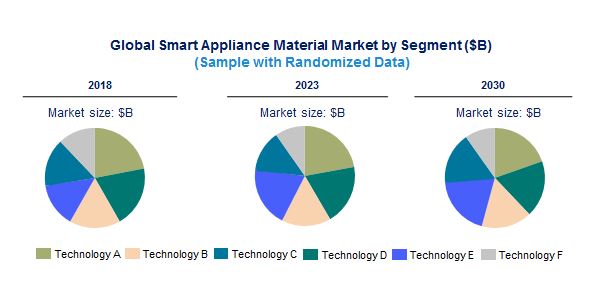
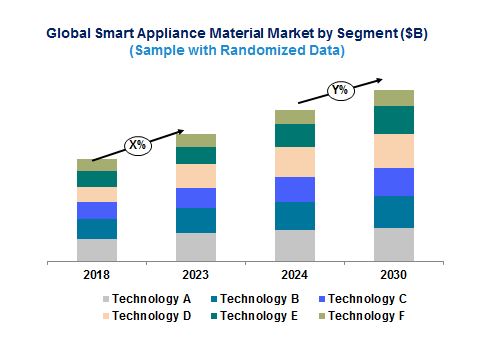
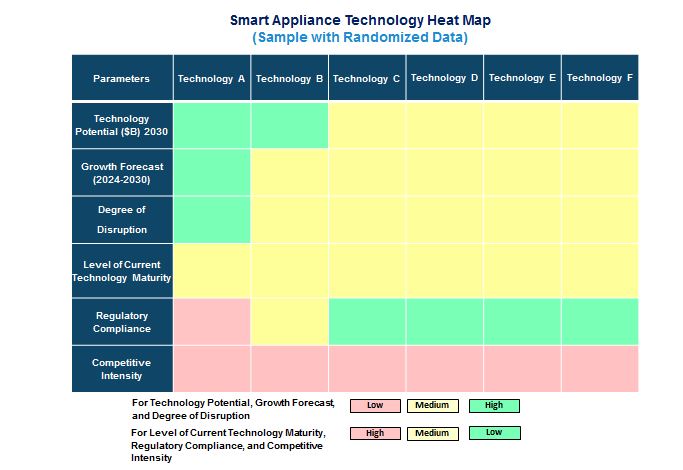
The study includes technology readiness, competitive intensity, regulatory compliance, disruption potential, trends, forecasts and strategic implications for the global smart appliance technology by application, technology, and region as follows:
Technology Readiness by Technology Type
Competitive Intensity and Regulatory Compliance
Disruption Potential by Technology Type
Trends and Forecasts by Technology Type [$M shipment analysis for 2018 to 2030]:
Trends and Forecasts by Application [$M shipment analysis for 2018 to 2030]:
Companies / Ecosystems
Strategic Opportunities by Technology Type
Some of the companies profiled in this report include Electrolux, General Electric, Koninklijke Philips, BSH Hausgerate, LG Electronics, Panasonic, Qingdao Haier, Samsung Electronics, and Whirlpool.
Below are the latest technological developments from top companies in the smart appliance market:
Q.1 What are some of the most promising and high-growth technology opportunities for the smart appliance market?
Q.2 Which technology will grow at a faster pace and why?
Q.3 What are the key factors affecting dynamics of different technologies? What are the drivers and challenges of these technologies in smart appliance market?
Q.4 What are the levels of technology readiness, competitive intensity and regulatory compliance in this technology space?
Q.5 What are the business risks and threats to these technologies in smart appliance market?
Q.6 What are the latest developments in smart appliance technologies? Which companies are leading these developments?
Q.7 Which technologies have potential of disruption in this market?
Q.8 Who are the major players in this smart appliance market? What strategic initiatives are being implemented by key players for business growth?
Q.9 What are strategic growth opportunities in this smart appliance technology space?
In smart appliance market, various technologies such as Wi-Fi, Bluetooth, and NFC are used in smart appliances for control and monitoring. Increasing awareness on energy efficiency among consumers, increasing purchasing power, and changing lifestyles are creating new opportunities for various smart appliances technologies.
Some of the latest technological developments by various countries in the smart appliance market are as follows:
- United States: Samsung announced a new line of refrigerators with Wi-Fi connectivity. This allows for remote monitoring and temperature control, potentially reducing food spoilage and energy waste. This initiative highlights the growing importance of Wi-Fi technology in smart appliances for offering users more convenience and control over their appliances.
- South Korea: LG unveiled a smart oven with Bluetooth connectivity. This oven allows users to download recipes and control it with voice commands. This announcement signifies the growing adoption of Bluetooth technology in smart appliances for enhancing user experience and functionality.
- China: Haier launched NFC-enabled washing machines. These washing machines allow for easy pairing with smartphones for cycle selection and diagnostics. This launch indicates the potential of NFC technology in simplifying the user experience and offering better control over smart appliance operations.
- Germany: The Chinese government introduced subsidies for consumers purchasing smart appliances with energy-saving features. This government initiative highlights the growing focus on promoting energy efficiency in the smart appliance market. This policy shift can potentially accelerate the adoption of smart appliances that contribute to environmental sustainability.
The study includes technology readiness, competitive intensity, regulatory compliance, disruption potential, trends, forecasts and strategic implications for the global smart appliance technology by application, technology, and region as follows:
Technology Readiness by Technology Type
Competitive Intensity and Regulatory Compliance
Disruption Potential by Technology Type
Trends and Forecasts by Technology Type [$M shipment analysis for 2018 to 2030]:
- Wi-Fi
- NFC
- Bluetooth
- Others
Trends and Forecasts by Application [$M shipment analysis for 2018 to 2030]:
-
Home
- Wi-Fi
- NFC
- Bluetooth
- Others
-
Kitchen
- Wi-Fi
- NFC
- Bluetooth
- Others
-
North America
- United States
- Canada
- Mexico
-
Europe
- United Kingdom
- Germany
- France
-
Asia Pacific
- Japan
- China
- South Korea
- India
- The Rest of the World
Companies / Ecosystems
Strategic Opportunities by Technology Type
Some of the companies profiled in this report include Electrolux, General Electric, Koninklijke Philips, BSH Hausgerate, LG Electronics, Panasonic, Qingdao Haier, Samsung Electronics, and Whirlpool.
Below are the latest technological developments from top companies in the smart appliance market:
- Samsung announced the launch of their new Bespoke AI range with Wi-Fi connectivity. This range allows users to remotely control and monitor their appliances, as well as receive personalized cooking recommendations.
- LG Electronics partnered with Qualcomm to develop next-generation smart appliances powered by Wi-Fi and AI chips. This collaboration aims to improve the efficiency and intelligence of LG's smart appliance lineup.
- Whirlpool unveiled their latest line of smart washers with NFC technology. With NFC, users can simply tap their smartphone on the washer to download optimal wash cycles based on the specific clothing items.
- Haier recently announced a partnership with a leading mobile payment platform to integrate NFC functionalities into their smart refrigerators. This will allow users to manage grocery lists and even reorder consumables directly from the refrigerator.
- Bosch introduced a new line of Bluetooth-enabled kitchen appliances. These appliances allow seamless communication and recipe syncing between various Bosch devices.
- Electrolux launched their vision for a future-proof smart home, which heavily relies on Bluetooth connectivity. Their focus is on inter-device communication and creating a more unified user experience across their smart appliance range.
Q.1 What are some of the most promising and high-growth technology opportunities for the smart appliance market?
Q.2 Which technology will grow at a faster pace and why?
Q.3 What are the key factors affecting dynamics of different technologies? What are the drivers and challenges of these technologies in smart appliance market?
Q.4 What are the levels of technology readiness, competitive intensity and regulatory compliance in this technology space?
Q.5 What are the business risks and threats to these technologies in smart appliance market?
Q.6 What are the latest developments in smart appliance technologies? Which companies are leading these developments?
Q.7 Which technologies have potential of disruption in this market?
Q.8 Who are the major players in this smart appliance market? What strategic initiatives are being implemented by key players for business growth?
Q.9 What are strategic growth opportunities in this smart appliance technology space?
Table of Contents
1. Executive Summary 2. Technology Landscape 2.1. Technology Background and Evolution 2.2. Technology and Application Mapping 2.3. Supply Chain
3. Technology Readiness 3.1. Technology Commercialization and Readiness 3.2. Drivers and Challenges in Smart Appliance Technologies 3.3. Competitive Intensity 3.4. Regulatory Compliance
4. Technology Trends and Forecasts Analysis from 2018-2030 4.1. Smart Appliance Opportunity 4.2. Technology Trends (2018-2023) and Forecasts (2024-2030)
5. Technology Opportunities (2018-2030) by Region 5.1. Smart Appliance Market by Region 5.2. North American Smart Appliance Technology Market
6. Latest Developments and Innovations in the Smart Appliance Technologies 7. Companies / Ecosystem 7.1. Product Portfolio Analysis 7.2. Market Share Analysis 7.3. Geographical Reach
8. Strategic Implications 8.1. Implications 8.2. Growth Opportunity Analysis
9. Company Profiles of Leading Players 9.1. Electrolux 9.2. General Electric 9.3. Koninklijke Philips 9.4. BSH Hausgerate 9.5. LG Electronics 9.6. Panasonic 9.7. Qingdao Haier 9.8. Samsung Electronics 9.9. Whirlpool
Methodology
Lucintel has been in the business of market research and management consulting since 2000 and has published over 1000 market intelligence reports in various markets / applications and served over 1,000 clients worldwide. This study is a culmination of four months of full-time effort performed by Lucintel's analyst team. The analysts used the following sources for the creation and completion of this valuable report:
- In-depth interviews of the major players in this market
- Detailed secondary research from competitors’ financial statements and published data
- Extensive searches of published works, market, and database information pertaining to industry news, company press releases, and customer intentions
- A compilation of the experiences, judgments, and insights of Lucintel’s professionals, who have analyzed and tracked this market over the years.
Extensive research and interviews are conducted across the supply chain of this market to estimate market share, market size, trends, drivers, challenges, and forecasts. Below is a brief summary of the primary interviews that were conducted by job function for this report.

Thus, Lucintel compiles vast amounts of data from numerous sources, validates the integrity of that data, and performs a comprehensive analysis. Lucintel then organizes the data, its findings, and insights into a concise report designed to support the strategic decision-making process. The figure below is a graphical representation of Lucintel’s research process.

Buy Now
Choose a license that fits your team. Instant PDF delivery.
Prices exclude taxes. Instant delivery. Custom licensing available on request.


