
Report Feature
Targeting Interleukin Antibody Market Trends and Forecast
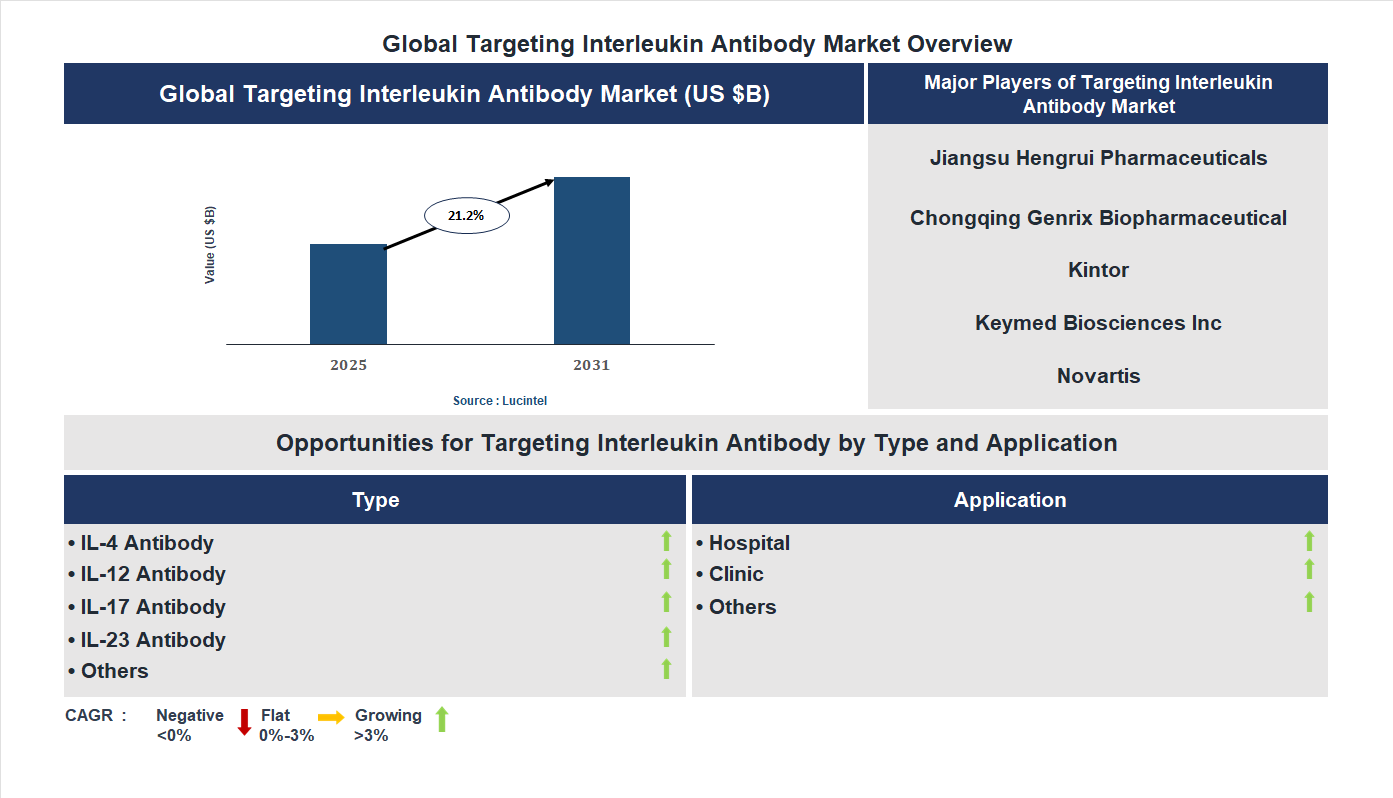
The future of the global targeting interleukin antibody market looks promising with opportunities in the hospital and clinic markets. The global targeting interleukin antibody market is expected to grow with a CAGR of 21.2% from 2025 to 2031. The major drivers for this market are the increasing incidence of autoimmune inflammatory disorders, the rising demand for precision biologic treatments, and the growing focus on cytokine targeted therapies.• Lucintel forecasts that, within the type category, IL-23 antibody is expected to witness the highest growth over the forecast period.
• Within the application category, hospital is expected to witness the highest growth.
• In terms of region, APAC is expected to witness the highest growth over the forecast period. Gain valuable insights for your business decisions with our comprehensive 150+ page report. Sample figures with some insights are shown below.
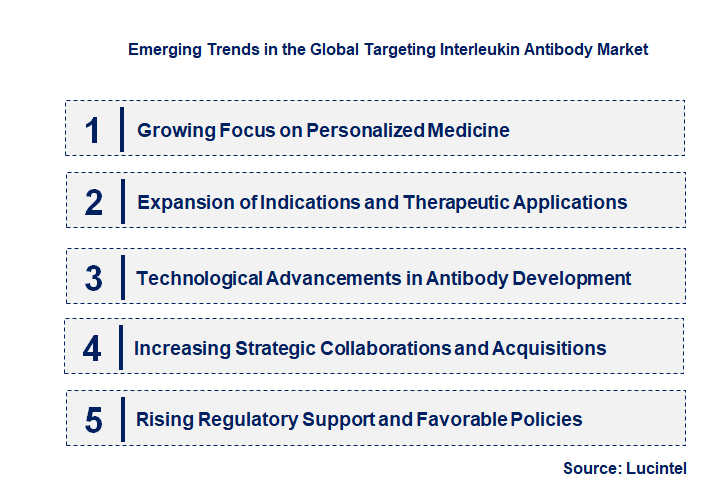
Emerging Trends in the Targeting Interleukin Antibody Market
The targeting interleukin antibody market is experiencing rapid growth driven by advances in immunotherapy, personalized medicine, and a deeper understanding of inflammatory and autoimmune diseases. As research progresses, new therapies are emerging, and existing treatments are becoming more targeted and effective. This evolving landscape is influenced by technological innovations, regulatory changes, and increasing demand for precision medicine. These developments are not only expanding the market size but also transforming how diseases are treated, leading to more effective and tailored therapeutic options. The following key trends highlight the major shifts shaping this dynamic market.• Growing Focus on Personalized Medicine: The market is increasingly emphasizing tailored therapies based on individual genetic and biomarker profiles. This approach enhances treatment efficacy and reduces adverse effects, leading to better patient outcomes. Advances in diagnostic tools enable precise identification of suitable candidates for interleukin antibody therapies, fostering a move away from one-size-fits-all treatments. As a result, pharmaceutical companies are investing heavily in biomarker research and companion diagnostics, which are expected to drive market growth and improve the success rate of new therapies.
• Expansion of Indications and Therapeutic Applications: Interleukin antibodies are now being explored for a broader range of diseases beyond traditional autoimmune and inflammatory conditions. Emerging research suggests potential in treating cancers, infectious diseases, and other chronic conditions. This diversification is opening new revenue streams and increasing market opportunities. The development of novel antibodies targeting different interleukins or pathways is also contributing to this trend, enabling more comprehensive treatment options and addressing unmet medical needs across various healthcare sectors.
• Technological Advancements in Antibody Development: Innovations such as bispecific antibodies, antibody-drug conjugates, and improved manufacturing processes are revolutionizing the market. These technologies enhance the specificity, potency, and safety profiles of interleukin antibodies. Additionally, advances in bioengineering and computational modeling accelerate the discovery and optimization of new candidates. These technological improvements are reducing development costs and timelines, enabling faster market entry for innovative therapies, and providing competitive advantages to industry players.
• Increasing Strategic Collaborations and Acquisitions: To stay ahead in this competitive landscape, pharmaceutical companies are forming strategic alliances, licensing agreements, and acquisitions. These collaborations facilitate access to novel technologies, expand product pipelines, and accelerate clinical development. Partnerships between biotech firms and big pharma are particularly prominent, fostering innovation and resource sharing. This trend is also driven by the need to navigate complex regulatory environments and to leverage combined expertise, ultimately leading to a more dynamic and consolidated market environment.
• Rising Regulatory Support and Favorable Policies: Governments and regulatory agencies are increasingly providing clear guidelines and accelerated approval pathways for innovative biologics, including interleukin antibodies. This support reduces time-to-market and encourages investment in research and development. Additionally, initiatives promoting orphan drug designation and reimbursement policies are incentivizing companies to develop therapies for rare and underserved conditions. These regulatory and policy developments are crucial in fostering innovation, ensuring safety and efficacy, and expanding access to advanced therapies, thereby fueling market growth. In summary, these trends are collectively reshaping the targeting of the interleukin antibody market by fostering innovation, expanding therapeutic options, and improving patient outcomes. The focus on personalized medicine, technological advancements, strategic collaborations, and supportive regulatory frameworks is driving growth and transforming the landscape into a more dynamic, efficient, and patient-centric industry.
Recent Development in the Targeting Interleukin Antibody Market
The targeting interleukin antibody market has experienced significant growth driven by advancements in immunotherapy and targeted treatments for inflammatory and autoimmune diseases. As research progresses, new therapies are emerging, expanding the market scope and improving patient outcomes. Key developments include innovative antibody designs, expanding indications, strategic collaborations, regulatory approvals, and technological advancements. These developments are shaping the future landscape of the market, making treatments more effective and accessible. The following highlights five major recent developments that are influencing the market dynamics and growth trajectory.• Innovative Antibody Designs: Development of bispecific and multispecific interleukin antibodies has enhanced targeting precision, reducing side effects and increasing efficacy. These novel designs allow for simultaneous modulation of multiple cytokines, offering comprehensive treatment options for complex diseases. The impact includes improved patient outcomes and expanded therapeutic applications, attracting more investment and research interest.
• Expanding Indications: New clinical trials are demonstrating the effectiveness of interleukin antibodies in treating a broader range of conditions, including rare autoimmune disorders and certain cancers. This expansion increases market size and diversifies revenue streams for pharmaceutical companies. It also offers hope for patients with limited treatment options, driving demand and adoption.
• Strategic Collaborations and Partnerships: Major pharmaceutical companies are forming alliances with biotech firms to accelerate the development and commercialization of interleukin antibody therapies. These collaborations facilitate resource sharing, innovation, and faster regulatory approvals. The impact is a quicker pipeline of new therapies reaching the market, boosting competition and innovation.
• Regulatory Approvals and Launches: Recent approvals by agencies like the FDA and EMA for new interleukin antibody drugs have accelerated market growth. These approvals validate the safety and efficacy of novel therapies, encouraging market entry and investment. The resulting product launches increase treatment options and market penetration, benefiting patients and providers.
• Technological Advancements: Advances in antibody engineering, such as improved stability and reduced immunogenicity, have enhanced drug performance. Additionally, innovations in delivery methods, including subcutaneous injections and sustained-release formulations, improve patient compliance. These technological improvements lead to more effective, convenient treatments, expanding market reach and patient acceptance. In summary, these recent developments are significantly impacting the targeting interleukin antibody market by fostering innovation, broadening therapeutic indications, accelerating drug approvals, and improving treatment delivery. Collectively, they are driving market growth, increasing competition, and offering new hope for patients with inflammatory and autoimmune diseases.
Strategic Growth Opportunities in the Targeting Interleukin Antibody Market
The targeting interleukin antibody market is experiencing rapid growth driven by advancements in immunotherapy, increasing prevalence of autoimmune diseases, and expanding research and development efforts. As the understanding of cytokine signaling pathways deepens, new therapeutic applications are emerging, creating significant opportunities for market expansion. Key applications such as autoimmune disorders, cancer, inflammatory diseases, infectious diseases, and transplant rejection are poised for substantial growth. These developments are transforming treatment paradigms, improving patient outcomes, and fostering innovation within the biopharmaceutical industry. The following are five key growth opportunities across these applications that are shaping the future of the targeting interleukin antibody market.• Autoimmune Disorders: The rising incidence of autoimmune diseases like rheumatoid arthritis and psoriasis is driving demand for targeted interleukin antibodies, leading to more effective and personalized treatments. This growth enhances patient quality of life and reduces healthcare costs by offering better disease management.
• Cancer Immunotherapy: Interleukin antibodies are increasingly used to modulate immune responses in cancer therapy, particularly in immuno-oncology. This application is expected to improve survival rates and reduce side effects, positioning interleukin antibodies as vital components of combination therapies.
• Inflammatory Diseases: The development of novel interleukin antibodies targeting inflammatory pathways offers new treatment options for conditions such as Crohn’s disease and ulcerative colitis. This expansion addresses unmet medical needs and opens new revenue streams for pharmaceutical companies.
• Infectious Diseases: Interleukin antibodies are being explored for managing cytokine storms and severe infections, especially in viral diseases like COVID-19. This application could revolutionize infectious disease treatment by providing rapid, targeted immune modulation.
• Transplant Rejection: Targeting interleukins involved in immune rejection processes offers promising strategies to prevent organ rejection. This application enhances transplant success rates and reduces reliance on broad immunosuppressants, improving patient outcomes. In summary, these growth opportunities are significantly impacting the targeting of interleukin antibody market by expanding its therapeutic scope, fostering innovation, and addressing unmet medical needs. As these applications evolve, they are expected to drive market growth, improve patient outcomes, and stimulate further research and development in immunotherapy.
Targeting Interleukin Antibody Market Driver and Challenges
The targeting interleukin antibody market is influenced by a complex interplay of technological advancements, economic factors, and regulatory frameworks. Innovations in biotechnology and personalized medicine are driving the development of targeted therapies, while economic considerations such as healthcare expenditure and funding impact market growth. Regulatory policies and approval processes also play a crucial role in shaping market dynamics. Additionally, the increasing prevalence of autoimmune and inflammatory diseases fuels demand for effective treatments. However, the market faces challenges related to high R&D costs, stringent regulatory requirements, and competition from alternative therapies. Understanding these drivers and challenges is essential for stakeholders aiming to capitalize on market opportunities and navigate potential obstacles effectively. The factors responsible for driving the targeting interleukin antibody market include:• Technological Innovations: The advent of advanced biotechnologies, such as monoclonal antibody engineering and personalized medicine, has significantly enhanced the development of targeted interleukin therapies. These innovations enable precise targeting of specific interleukins involved in disease pathways, improving efficacy and reducing side effects. As research progresses, new interleukin targets are identified, expanding the therapeutic landscape. The integration of artificial intelligence and bioinformatics accelerates drug discovery and development processes, reducing time-to-market. This technological evolution attracts investments and fosters collaborations, fueling market growth and offering hope for patients with previously untreatable conditions.
• Rising Prevalence of Autoimmune and Inflammatory Diseases: The increasing incidence of autoimmune disorders like rheumatoid arthritis, psoriasis, and inflammatory bowel disease is a major driver. These conditions often involve dysregulated interleukin activity, making interleukin-targeting antibodies highly effective. The growing patient population worldwide, coupled with improved diagnostic techniques, leads to higher demand for targeted therapies. Governments and healthcare providers are prioritizing treatment options that offer better outcomes and quality of life. Consequently, pharmaceutical companies are investing heavily in developing interleukin antibodies, which are seen as promising solutions for managing these chronic diseases, thereby expanding the market.
• Regulatory Approvals and Supportive Policies: Favorable regulatory environments and accelerated approval pathways for biologics are boosting market growth. Regulatory agencies like the FDA and EMA are streamlining approval processes for innovative interleukin therapies, reducing time and costs associated with bringing new drugs to market. Additionally, government initiatives and funding programs aimed at supporting biotech research further facilitate development. Clear guidelines for clinical trials and safety assessments instill confidence among investors and manufacturers. These regulatory supports not only expedite access to new treatments but also encourage innovation, ultimately expanding the availability of interleukin antibody therapies to a broader patient base.
• Strategic Collaborations and Partnerships: Collaborations between biotech firms, pharmaceutical giants, and research institutions are pivotal in advancing interleukin antibody development. These partnerships facilitate resource sharing, knowledge exchange, and risk mitigation. Joint ventures often lead to the discovery of novel interleukin targets and the development of combination therapies, enhancing treatment efficacy. Licensing agreements and mergers also enable companies to expand their product pipelines and market reach. Such strategic alliances accelerate innovation, reduce R&D costs, and improve commercialization prospects, thereby driving overall market growth and ensuring a steady pipeline of new interleukin antibody therapies.
• Growing Investment in R&D: Increased funding from private and public sectors is fueling research and development activities in the interleukin antibody domain. Venture capital investments, government grants, and corporate R&D budgets are supporting the discovery of new targets, antibody engineering, and clinical trials. This financial backing accelerates the development of next-generation therapies with improved safety and efficacy profiles. Moreover, R&D investments help overcome scientific challenges and regulatory hurdles, leading to innovative solutions. The continuous influx of capital ensures a robust pipeline of potential therapies, maintaining competitive momentum and expanding market opportunities. The challenges facing this targeting interleukin antibody market include:
• High R&D Costs and Long Development Timelines: Developing interleukin antibodies involves complex research, extensive clinical trials, and rigorous regulatory approval processes, all of which are costly and time-consuming. High R&D expenses can deter smaller biotech firms from entering the market, limiting innovation. Lengthy development timelines delay product commercialization, impacting profitability and investor confidence. Additionally, the risk of failure at various stages of development remains significant, further complicating market entry. These financial and temporal barriers hinder the rapid introduction of new therapies and may restrict market growth, especially in regions with limited funding.
• Stringent Regulatory Requirements: Despite some supportive policies, the regulatory landscape remains challenging. Biologics, including interleukin antibodies, must meet strict safety, efficacy, and quality standards, requiring extensive documentation and clinical evidence. Navigating diverse regulatory frameworks across countries adds complexity and delays approval processes. Any safety concerns or adverse events can lead to product recalls or rejection, impacting market confidence. These regulatory hurdles increase costs and extend timelines, potentially discouraging innovation and limiting the availability of new therapies in certain markets.
• Competition from Alternative Therapies and Biosimilars: The market faces intense competition from other biologic and small-molecule therapies targeting similar pathways. The emergence of biosimilars further intensifies price competition, potentially reducing profit margins for original manufacturers. Additionally, some diseases can be managed with non-interleukin targeted treatments, limiting market penetration. Rapid technological advancements may render existing therapies obsolete, forcing companies to continuously innovate. This competitive landscape pressures pricing strategies and necessitates ongoing R&D investments, which can strain resources and impact overall market sustainability. In summary, the targeting of the interleukin antibody market is driven by technological progress, rising disease prevalence, supportive regulatory policies, strategic collaborations, and increased R&D investments. However, high development costs, regulatory complexities, and intense competition pose significant challenges. These factors collectively influence the pace of innovation, market accessibility, and profitability. While growth opportunities are substantial, stakeholders must navigate these hurdles carefully to sustain long-term success. Overall, the markets evolution will depend on balancing innovation with regulatory compliance and competitive strategies, shaping a dynamic landscape with promising prospects for targeted therapies.
List of Targeting Interleukin Antibody Companies
Companies in the market compete on the basis of product quality offered. Major players in this market focus on expanding their manufacturing facilities, R&D investments, infrastructural development, and leverage integration opportunities across the value chain. With these strategies targeting interleukin antibody companies cater increasing demand, ensure competitive effectiveness, develop innovative products & technologies, reduce production costs, and expand their customer base. Some of the targeting interleukin antibody companies profiled in this report include-• Jiangsu Hengrui Pharmaceuticals
• Chongqing Genrix Biopharmaceutical
• Kintor
• Keymed Biosciences Inc
• Novartis
• Roche
• Amgen
• Johnson & Johnson
• AbbVie
• Eli Lilly
Targeting Interleukin Antibody Market by Segment
The study includes a forecast for the global targeting interleukin antibody market by type, application, and region.Targeting Interleukin Antibody Market by Type [Value from 2019 to 2031]:
• IL-4 Antibody
• IL-12 Antibody
• IL-17 Antibody
• IL-23 Antibody
• Others
Targeting Interleukin Antibody Market by Application [Value from 2019 to 2031]:
• Hospital
• Clinic
• Others
Targeting Interleukin Antibody Market by Region [Value from 2019 to 2031]:
• North America
• Europe
• Asia Pacific
• The Rest of the World
Country Wise Outlook for the Targeting Interleukin Antibody Market
The targeting interleukin antibody market has experienced significant growth driven by advances in immunotherapy, increasing prevalence of autoimmune diseases, and expanding research and development efforts worldwide. Countries are adopting innovative strategies to enhance treatment options, improve patient outcomes, and address unmet medical needs. Regulatory approvals and collaborations between biotech firms and pharmaceutical companies are accelerating market expansion. Technological advancements in antibody engineering and personalized medicine are also shaping the landscape. These developments reflect a global push toward more effective and targeted therapies, with each country contributing uniquely based on its healthcare infrastructure, research capabilities, and market dynamics.• United States: The US market has seen rapid growth with several interleukin antibody therapies receiving FDA approval for autoimmune and inflammatory diseases. Major biotech firms are investing heavily in R&D, leading to innovative treatments and combination therapies. The adoption of personalized medicine approaches is increasing, supported by advanced healthcare infrastructure and robust clinical trial activity. Strategic collaborations and acquisitions are common, further fueling market expansion. The US also leads in regulatory frameworks that facilitate faster approval processes, encouraging innovation and market entry.
• China: China is rapidly expanding its interleukin antibody market, driven by government initiatives to boost biotech innovation and healthcare modernization. Local companies are increasingly involved in R&D, with several candidates progressing through clinical trials. The market benefits from a large patient population and rising healthcare expenditure. Regulatory reforms have streamlined approval processes, encouraging domestic development. Additionally, collaborations with international firms are enhancing technological capabilities and accelerating product commercialization, positioning China as a significant player in this sector.
• Germany: Germanys market is characterized by a strong focus on research and development, supported by its robust biotech and pharmaceutical industries. The country is involved in developing next-generation interleukin antibodies with improved efficacy and safety profiles. Germany also benefits from a well-established healthcare system and a favorable regulatory environment, facilitating clinical trials and market access. Partnerships between academia and industry are common, fostering innovation. The country is increasingly investing in personalized medicine approaches, aiming to tailor treatments to individual patient needs.
• India: India is witnessing a growing interest in the interleukin antibody market, driven by the increasing prevalence of autoimmune and inflammatory diseases. The country’s expanding healthcare infrastructure and rising healthcare awareness are contributing to market growth. Domestic companies are focusing on developing cost-effective therapies to cater to a large patient base. Regulatory reforms are improving the approval process, encouraging local R&D. Collaborations with international firms are also emerging, helping Indian companies access advanced technologies and expand their product portfolios.
• Japan: Japans market is characterized by advanced research capabilities and a focus on innovative therapies. The country has approved several interleukin antibody treatments for autoimmune conditions, with ongoing clinical trials exploring new indications. Japan’s aging population is a significant driver, increasing demand for targeted immunotherapies. The government supports biotech innovation through funding and regulatory incentives. Collaborations between academia and industry are prevalent, fostering the development of next-generation antibodies. Japan’s emphasis on precision medicine is shaping the future of interleukin antibody therapies in the country.

Features of the Global Targeting Interleukin Antibody Market
Market Size Estimates: Targeting interleukin antibody market size estimation in terms of value ($B). Trend and Forecast Analysis: Market trends (2019 to 2024) and forecast (2025 to 2031) by various segments and regions. Segmentation Analysis: Targeting interleukin antibody market size by type, application, and region in terms of value ($B). Regional Analysis: Targeting interleukin antibody market breakdown by North America, Europe, Asia Pacific, and Rest of the World. Growth Opportunities: Analysis of growth opportunities in different types, applications, and regions for the targeting interleukin antibody market. Strategic Analysis: This includes M&A, new product development, and competitive landscape of the targeting interleukin antibody market. Analysis of competitive intensity of the industry based on Porter’s Five Forces model.
FAQ
Q1. What is the growth forecast for targeting interleukin antibody market? Answer: The global targeting interleukin antibody market is expected to grow with a CAGR of 21.2% from 2025 to 2031. Q2. What are the major drivers influencing the growth of the targeting interleukin antibody market? Answer: The major drivers for this market are the increasing incidence of autoimmune inflammatory disorders, the rising demand for precision biologic treatments, and the growing focus on cytokine targeted therapies. Q3. What are the major segments for targeting interleukin antibody market? Answer: The future of the targeting interleukin antibody market looks promising with opportunities in the hospital and clinic markets. Q4. Who are the key targeting interleukin antibody market companies? Answer: Some of the key targeting interleukin antibody companies are as follows:• Jiangsu Hengrui Pharmaceuticals
• Chongqing Genrix Biopharmaceutical
• Kintor
• Keymed Biosciences Inc
• Novartis
• Roche
• Amgen
• Johnson & Johnson
• AbbVie
• Eli Lilly Q5. Which targeting interleukin antibody market segment will be the largest in future? Answer: Lucintel forecasts that, within the type category, IL-23 antibody is expected to witness the highest growth over the forecast period. Q6. In targeting interleukin antibody market, which region is expected to be the largest in next 5 years? Answer: In terms of region, APAC is expected to witness the highest growth over the forecast period. Q7. Do we receive customization in this report? Answer: Yes, Lucintel provides 10% customization without any additional cost.
Table of Contents
List of Figures
List of Tables
Methodology
- In-depth interviews of the major players in this market
- Detailed secondary research from competitors’ financial statements and published data
- Extensive searches of published works, market, and database information pertaining to industry news, company press releases, and customer intentions
- A compilation of the experiences, judgments, and insights of Lucintel’s professionals, who have analyzed and tracked this market over the years.


Buy Now
Choose a license that fits your team. Instant PDF delivery.
Prices exclude taxes. Instant delivery. Custom licensing available on request.
Key Questions
- • What are some of the most promising, high-growth opportunities for the targeting interleukin antibody market by type (IL-4 antibody, IL-12 antibody, IL-17 antibody, IL-23 antibody, and others), application (hospital, clinic, and others), and region (North America, Europe, Asia Pacific, and the Rest of the World)?
- • Which segments will grow at a faster pace and why?
- • Which region will grow at a faster pace and why?
- • What are the key factors affecting market dynamics? What are the key challenges and business risks in this market?
- • What are the business risks and competitive threats in this market?
- • What are the emerging trends in this market and the reasons behind them?
- • What are some of the changing demands of customers in the market?
- • What are the new developments in the market? Which companies are leading these developments?
- • Who are the major players in this market? What strategic initiatives are key players pursuing for business growth?
- • What are some of the competing products in this market and how big of a threat do they pose for loss of market share by material or product substitution?
- • What M&A activity has occurred in the last 5 years and what has its impact been on the industry? For any questions related to Targeting Interleukin Antibody Market, Targeting Interleukin Antibody Market Size, Targeting Interleukin Antibody Market Growth, Targeting Interleukin Antibody Market Analysis, Targeting Interleukin Antibody Market Report, Targeting Interleukin Antibody Market Share, Targeting Interleukin Antibody Market Trends, Targeting Interleukin Antibody Market Forecast, Targeting Interleukin Antibody Companies, write Lucintel analyst at email: helpdesk@lucintel.com. We will be glad to get back to you soon.


