
Report Feature
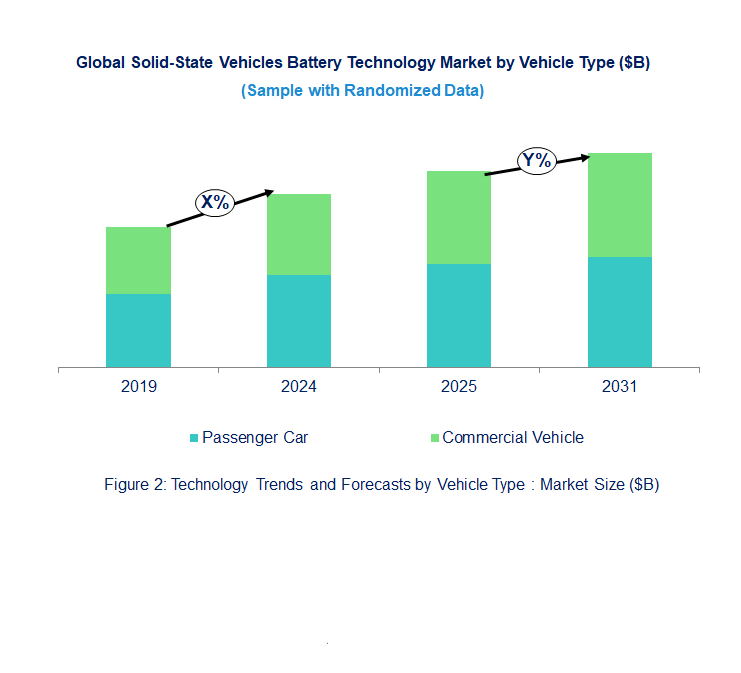
Solid-State Vehicles Battery Market Trends and Forecast
The technologies used in the solid-state vehicle battery market have shifted significantly in recent years, from conventional liquid electrolyte-based batteries to solid-state batteries (SSBs) employing solid electrolytes. With this shift, the applications of solid-state battery technology have become promising for higher energy density and safety, along with longer battery lifetimes. Furthermore, advancements in single-cell and multi-cell configurations allow for efficient energy storage solutions to be used by electric vehicles. Solid-state batteries are next in line to replace lithium-ion and offer faster charging times and reduced risk of thermal runaway, among other benefits. This development is a significant technological advancement for the EV industry.
Emerging Trends in the Solid-State Vehicles Battery Market
The solid-state vehicles battery market is observing key trends that influence its growth and innovation. These trends are paving the way for more efficient and sustainable energy storage solutions for electric vehicles. Below are the key emerging trends:• Shift Towards Solid-State Battery Technology: The transition from traditional lithium-ion batteries to solid-state batteries is gaining momentum. Solid-state technology offers improved energy density, faster charging times, and enhanced safety by eliminating the risk of liquid electrolyte leaks and fires. This trend is set to revolutionize the electric vehicle industry.
• Solid-State Battery Cell Miniaturization: In line with reducing the size and weight of electric vehicle batteries, solid-state battery cells are increasingly miniaturized. A compact, lightweight battery system offers more efficiency, which can minimize the overall weight of electric vehicles to improve performance and energy efficiency.
• Integration of Multi-Cell Battery Systems: Multi-cell battery systems are gaining acceptance because they can deliver higher energy storage capacity with better performance for electric vehicles. This trend supports an enhancement in the driving range of electric vehicles and helps reduce one of the major concerns for consumers and manufacturers.
• New Manufacturing Techniques for Solid-State Batteries: Improved manufacturing processes have emerged with scalable and cost-effective production methods, driving the commercial viability of solid-state technology. These processes reduce costs and allow manufacturers to produce solid-state batteries on a larger scale, making them cheaper for consumers.
• Recycling and Sustainability Focus: The need for sustainable and recyclable battery technologies is increasing alongside the growing demand for electric vehicles. Solid-state batteries are more sustainable compared to traditional lithium-ion batteries, utilizing less toxic materials and offering better recyclability. These trends show the development in the solid-state vehicle batteries market, driven by changing chemistry, manufacturing, and sustainability. Advances toward solid-state technology are poised to make electric vehicles the most widely accepted technology, given their efficiency, safety, and reduced ecological footprint.
Solid-State Vehicles Battery Market : Industry Potential, Technological Development, and Compliance Considerations
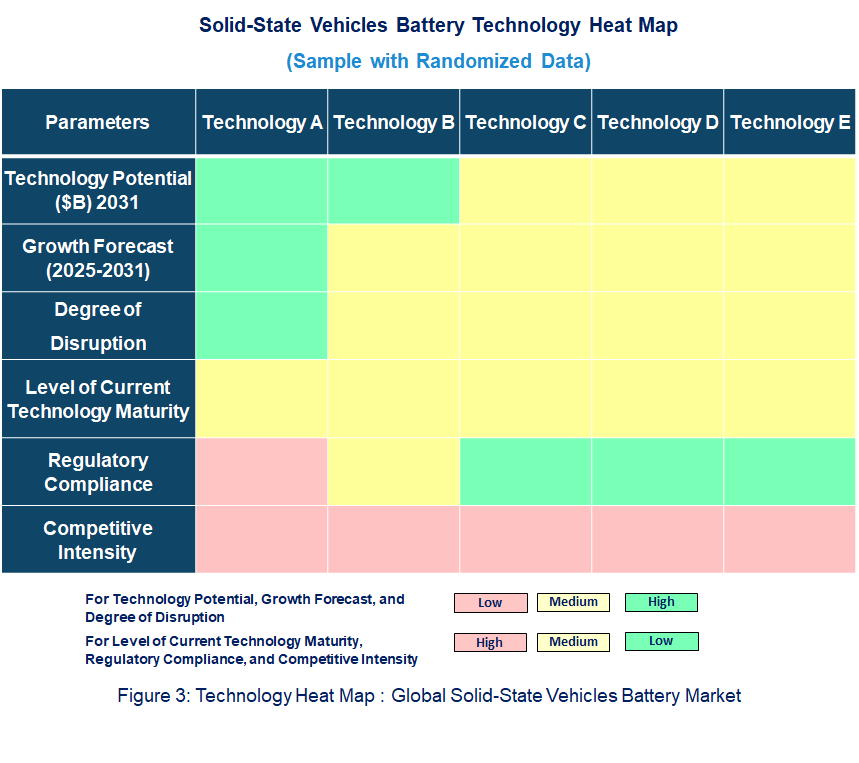
This focus area is on the research and development of solid-state technology in electric vehicles, using solid-state batteries. A solid electrolyte, instead of the liquid or gel-like electrolytes used in most Li-ion batteries, provides a different technology that offers higher energy density, safety, and longevity. Solid-state battery technology holds significant promise in enhancing the performance of electric vehicles and facilitating the transition to sustainable transportation.• Technology Potential: Solid-state batteries have immense potential in the EV market due to their ability to provide higher energy density, longer lifespan, and faster charging times compared to traditional lithium-ion batteries. These advantages could significantly extend the driving range of electric vehicles, reduce weight, and improve overall battery safety by reducing the risk of overheating or fires. The technology also has the potential to make EVs cheaper in the long term, increasing the accessibility of electric transport to the mass market.
• Degree of Disruption: It is very disruptive since it can substitute existing battery chemistries to address major issues facing current EV battery technology, such as energy density and safety concerns. Solid-state batteries may accelerate EV adoption by overcoming range anxiety and improving vehicle performance.
• Technology Maturity: Although solid-state battery technology is promising, it is still under development. Several companies are now scaling the technology, but it has not entered mainstream commercial use yet.
• Regulatory Compliance: Solid-state batteries must comply with regulatory standards for safety, environmental impact, and performance, such as the UN 38.3 transport regulations and ISO standards for battery manufacturing and testing. These regulations ensure the safe operation and environmental sustainability of batteries used in vehicles.
Recent Technological development in Solid-State Vehicles Battery Market by Key Players
The major players in the solid-state vehicle battery market have focused on improvements in battery technology to meet the rapidly growing demand for electric vehicles. A few recent innovations by leading industry players are as follows:• Hitachi has been developing solid-state batteries with advanced lithium metal anodes, which provide higher energy density and faster charging. This innovation will overcome the limitations of existing lithium-ion batteries and position Hitachi as a major player in the future market for electric vehicles.
• Enevate has made great strides in solid-state batteries, especially in developing high-energy-density batteries using silicon-dominant anodes. Their technology is set to significantly enhance the range and charging speed of electric vehicles, improving the overall EV driving experience.
• BMW Group is investing heavily in solid-state battery technologies to improve the performance of its electric vehicle offerings. The company is focusing on research partnerships with solid-state battery startups to bring high-performance, scalable battery systems to the market in the coming years.
• Ionic Materials is at the forefront of solid polymer electrolyte materials in solid-state batteries. Their technology optimizes battery safety and performance, with new developments that have garnered substantial investments to commercialize this work for electric vehicles.
• Ilika is advancing the development of solid-state batteries, focusing on improving the energy density and lifespan of its products. Their solid-state batteries are expected to play a key role in enabling the widespread adoption of electric vehicles due to their high safety standards and performance.
• LG Chem has been working on the development of next-generation batteries with automakers. Innovations in this area will accelerate energy storage, reduce environmental footprints, and advance electric mobility.
• Murata has developed advanced solid-state battery technologies that aim to be used in longer-lasting, faster-charging batteries. Their work is particularly important for the miniaturization of solid-state batteries, as they are in high demand as compact and lightweight battery sizes for electric vehicles.
• NGK Spark Plug has collaborated with top research organizations to develop solid-state batteries, providing better thermal stability and safety. Its solid-state battery solutions are expected to improve performance for both passenger cars and commercial electric vehicles.
• Johnson Battery is aggressively scaling up solid-state battery production and increasing energy density as electric vehicle demand increases. Its progress in battery efficiency and sustainability positions it as a key player in the future of EV battery technologies. These developments show how major companies are making significant investments in solid-state battery research, focusing on performance, safety, and scalability. Their innovations will be crucial for the future of electric vehicles, and the impact of these advancements on the industry is likely to be substantial.
Solid-State Vehicles Battery Market Driver and Challenges
The solid-state vehicle battery market is driven by several key opportunities and challenges that are influencing its growth trajectory. The factors responsible for driving the solid-state vehicles battery market include:• Demand for Longer Driving Range: Consumers and manufacturers are becoming increasingly interested in electric vehicles with longer driving ranges. Solid-state batteries appear to answer this call since they allow for higher energy density, offering greater distances per charge.
• Faster Charging Times: Solid-state batteries offer faster charging speeds compared to conventional lithium-ion batteries, making them more attractive for electric vehicles, where charging time is a key concern for users.
• Improved Safety and Durability: Solid-state batteries have a lower risk of thermal runaway and are less prone to damage than traditional lithium-ion batteries. This makes them a safer choice for electric vehicles, attracting consumer confidence.
• Government Incentives for EV Adoption: Increased support from governments through subsidies and incentives for electric vehicles is driving demand for better-performing batteries, including solid-state technology. This push for cleaner energy alternatives helps accelerate the adoption of solid-state batteries in EVs. Challenges in the solid-state vehicles battery market include:
• High Manufacturing Costs: Solid-state batteries are still very expensive to mass-produce. They are not yet within reach of the mass market. High production costs limit their commercial availability and keep them out of most consumers’ pockets.
• Material and Scalability Concerns: The right solid-state materials must be developed to combine high performance with scalability. Li metal or sulfide-based electrolytes are still in experimentation and can take years to mature for industrial-scale manufacturing.
• Technological Immaturity: Although promising, solid-state battery technology is still relatively immature compared to traditional lithium-ion batteries. Design, stability, and performance need to be improved to achieve commercialization in electric vehicles. Although the Solid-State Vehicles Battery Market is increasingly propelled by the growing need for longer-range electric vehicle batteries, faster charging, and improved safety, challenges such as high costs, scalability issues, and technological maturity need to be addressed before these batteries can gain widespread adoption, thus guiding market evolution.
List of Solid-State Vehicles Battery Companies
Companies in the market compete based on product quality offered. Major players in this market focus on expanding their manufacturing facilities, R&D investments, infrastructural development, and leverage integration opportunities across the value chain. With these strategies, solid-state vehicles battery companies cater to increasing demand, ensure competitive effectiveness, develop innovative products & technologies, reduce production costs, and expand their customer base. Some of the solid-state vehicles battery companies profiled in this report include.• Hitachi
• Enevate
• BMW Group
• Ionic Materials
• Ilika
• LG Chem
Solid-State Vehicles Battery Market by Technology
• Technology Readiness and Competitive Level for Single-Cell and Multi-Cell Solid-State Vehicle Batteries: Single-cell solid-state vehicle batteries are still in the early stages of commercialization but show very high potential due to their ability to offer higher energy densities and enhanced safety by eliminating the risks associated with traditional liquid electrolytes. Research and development are focused on scalability and manufacturing processes. Several companies have demonstrated prototype single-cell batteries for EV applications. In contrast, multi-cell solid-state battery systems are more mature in terms of technology readiness, focusing on efficiency, thermal management, and integration with advanced battery management systems for commercial electric vehicles. Multi-cell systems are suited to large-scale applications and are already being tested in several EV prototypes. There is high competition for both technologies, especially with players like Toyota, QuantumScape, and Solid Power leading the development of advanced solid-state batteries. Strict regulations exist, especially for safety, performance, and environmental considerations. For smaller EVs and consumer electronics, single-cell solutions may be more attractive; for larger commercial EVs and energy storage applications, multi-cell systems are preferred. Improvements in energy densities, safety, and manufacturing scalability hold promise for both technologies to see substantial growth.
• Competitive Intensity and Regulatory Compliance in Solid-State Vehicles Battery Market: Competition intensity in solid-state vehicle batteries is very high, with several players working on single-cell and multi-cell technologies to capture the rapidly growing market for high-performance batteries. Companies and research institutions are heavily investing in improving solid-state battery efficiency, longevity, and scalability. Single-cell technologies are attractive because they are less complex and offer higher energy density, but multi-cell solutions are necessary for larger vehicle applications where reliability and scalability are critical. Regulatory compliance is a concern; both technologies must meet appropriate safety standards, environmental regulations, and performance criteria. Battery safety, recycling, and reducing hazardous materials are the focus of most regulatory frameworks, such as those set by the International Electrotechnical Commission (IEC) and local environmental authorities. As the market becomes more established, regulatory bodies are expected to tighten standards on energy storage systems, especially regarding the safe handling of solid-state electrolytes and managing EV battery lifecycles. These regulatory requirements drive innovation and competition as companies seek to balance performance, cost, and compliance.
• Disruption Potential of Single-Cell and Multi-Cell Technologies for Solid-State Vehicles Battery Market: The solid-state vehicle battery market is experiencing potential disruption from both single-cell and multi-cell technologies, offering different strengths. Single-cell batteries boast simpler designs, fewer interconnections, reduced weight, and cost while offering high energy density and safety through an electrolyte-free, liquid-free system. In contrast, multi-cell battery configurations provide more scalable solutions, optimize energy storage in larger vehicles, and facilitate system reliability through redundant power sources. Additionally, the multi-cell battery allows easier integration within advanced battery management systems for better monitoring and control, advancing energy efficiency, safety, and cost. Single-cell designs are expected to gain market share due to low production costs and extended battery life, while multi-cell configurations will dominate commercial EVs because of scalability and reliability. These innovations promise to reshape the solid-state vehicle battery market, providing a more flexible and efficient way to power the next generation of electric vehicles.
Solid-State Vehicles Battery Market Trend and Forecast by Technology [Value from 2019 to 2031]:
• Single cell
• Multi cell
Solid-State Vehicles Battery Market Trend and Forecast by Vehicle Type [Value from 2019 to 2031]:
• Passenger Car
• Commercial Vehicle
Solid-State Vehicles Battery Market by Region [Value from 2019 to 2031]:
• North America
• Europe
• Asia Pacific
• The Rest of the World
• Latest Developments and Innovations in the Solid-State Vehicles Battery Technologies
• Companies / Ecosystems
• Strategic Opportunities by Technology Type
Features of the Global Solid-State Vehicles Battery Market
Market Size Estimates: Solid-state vehicles battery market size estimation in terms of ($B). Trend and Forecast Analysis: Market trends (2019 to 2024) and forecast (2025 to 2031) by various segments and regions. Segmentation Analysis: Technology trends in the global solid-state vehicles battery market size by various segments, such as vehicle type and technology in terms of value and volume shipments. Regional Analysis: Technology trends in the global solid-state vehicles battery market breakdown by North America, Europe, Asia Pacific, and the Rest of the World. Growth Opportunities: Analysis of growth opportunities in different vehicle types, technologies, and regions for technology trends in the global solid-state vehicles battery market. Strategic Analysis: This includes M&A, new product development, and competitive landscape for technology trends in the global solid-state vehicles battery market. Analysis of competitive intensity of the industry based on Porter’s Five Forces model.Table of Contents
Methodology
- In-depth interviews of the major players in this market
- Detailed secondary research from competitors’ financial statements and published data
- Extensive searches of published works, market, and database information pertaining to industry news, company press releases, and customer intentions
- A compilation of the experiences, judgments, and insights of Lucintel’s professionals, who have analyzed and tracked this market over the years.


Buy Now
Choose a license that fits your team. Instant PDF delivery.
Prices exclude taxes. Instant delivery. Custom licensing available on request.
Key Questions
- • What are some of the most promising potential, high-growth opportunities for the technology trends in the global solid-state vehicles battery market by technology (single cell and multi cell), vehicle type (passenger car and commercial vehicle), and region (North America, Europe, Asia Pacific, and the Rest of the World)?
- • Which technology segments will grow at a faster pace and why?
- • Which regions will grow at a faster pace and why?
- • What are the key factors affecting the dynamics of different technologies? What are the drivers and challenges of these technologies in the global solid-state vehicle battery market?
- • What are the business risks and threats to the technology trends in the global solid-state vehicles battery market?
- • What are the emerging trends in these technologies in the global solid-state vehicles battery market and the reasons behind them?
- • Which technologies have potential of disruption in this market?
- • What are the new developments in the technology trends in the global solid-state vehicles battery market? Which companies are leading these developments?
- • Who are the major players in technology trends in the global solid-state vehicles battery market? What strategic initiatives are being implemented by key players for business growth?
- • What are strategic growth opportunities in this solid-state vehicles battery technology space?
- • What M & A activities did take place in the last five years in technology trends in the global solid-state vehicles battery market?


