
Report Feature
PVDF Resin Market Trends and Forecast
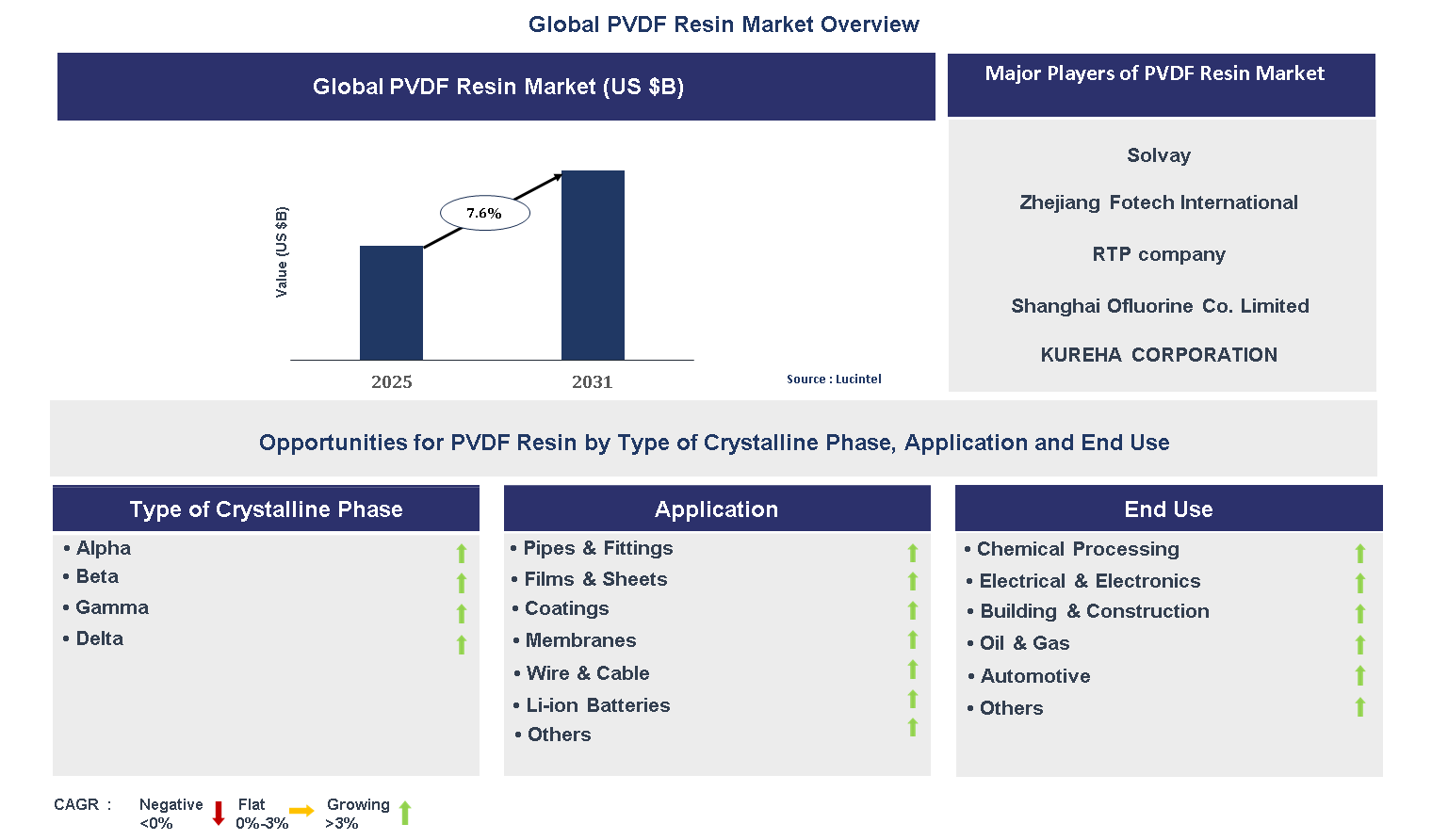
The future of the global PVDF resin market looks promising with opportunities in the chemical processing, electrical & electronics, building & construction, oil & gas, and automotive markets. The global PVDF resin market is expected to grow with a CAGR of 7.6% from 2025 to 2031. The major drivers for this market are the increasing demand for high-performance polymer materials, the rising use of PVDF in coatings applications, and the growing adoption of PVDF in renewable energy.• Lucintel forecasts that, within the type of crystalline phase category, alpha is expected to witness the highest growth over the forecast period.
• Within the end use category, chemical processing is expected to witness the highest growth.
• In terms of region, APAC is expected to witness the highest growth over the forecast period. Gain valuable insights for your business decisions with our comprehensive 150+ page report. Sample figures with some insights are shown below.
Emerging Trends in the PVDF Resin Market
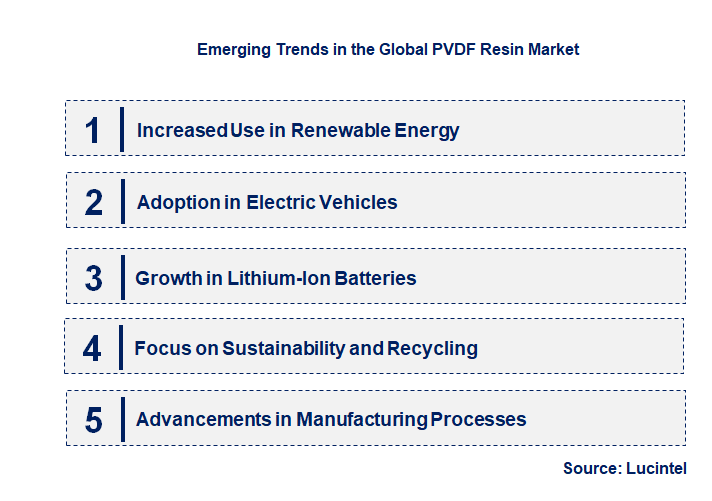
The PVDF resin market is evolving with significant emerging trends that reflect technological advancements, sustainability concerns, and changing consumer demands. These trends are reshaping the industry, particularly in high-tech applications like renewable energy, automotive, and electronics, where PVDFs superior properties are being increasingly leveraged.• Increased Use in Renewable Energy: PVDF resins are gaining traction in renewable energy sectors, especially in solar panels and wind turbines, due to their excellent weathering resistance and high efficiency. The materials durability and performance in extreme conditions make it ideal for applications that require long-lasting, reliable components. This trend is driven by global sustainability goals and the push toward cleaner energy sources.
• Adoption in Electric Vehicles: With the global shift toward electric vehicles (EVs), PVDF resins are seeing increasing adoption in battery components, connectors, and lightweight structural parts. Their chemical resistance, electrical insulating properties, and flame-retardant qualities make them ideal for EV applications. As automakers seek energy-efficient and lightweight materials, PVDF’s role in EV production continues to grow.
• Growth in Lithium-Ion Batteries: The demand for lithium-ion batteries in electric vehicles and portable electronics is boosting the PVDF resin market. PVDF is a key material in battery separators, ensuring the safe and efficient operation of batteries. As the global battery market grows, driven by the shift toward renewable energy and electric mobility, PVDFs role in battery manufacturing becomes more prominent.
• Focus on Sustainability and Recycling: Sustainability is a key driver in the PVDF resin market, with increasing demand for eco-friendly, recyclable materials. Manufacturers are focusing on improving the recyclability of PVDF products and reducing their environmental impact. As sustainability becomes a critical factor in product design, PVDF resins are being engineered to meet stricter environmental standards.
• Advancements in Manufacturing Processes: Innovations in PVDF resin manufacturing, such as improvements in polymerization techniques and cost-effective production processes, are driving the market forward. These advancements allow for the creation of high-performance PVDF resins with enhanced properties and lower costs. Companies are also exploring 3D printing technologies to further expand the applications of PVDF resins. These emerging trends are reshaping the PVDF resin market by expanding its applications in key sectors like renewable energy, electric vehicles, and lithium-ion batteries. As demand for high-performance materials increases, PVDF resins are positioned to play a crucial role in future technological advancements and sustainability efforts.
Recent Development in the PVDF Resin Market
Recent developments in the PVDF resin market highlight key innovations and shifts in production, with a focus on sustainability, high-tech applications, and regional market expansions. These developments are enhancing the material’s value proposition across industries like renewable energy, automotive, and electronics.• Expansion of Manufacturing Capacity: Global manufacturers are increasing their PVDF resin production capacity to meet rising demand from key sectors such as renewable energy and automotive. New production plants, particularly in China and the U.S., are being built to cater to the growing market for high-performance materials used in solar panels, electric vehicles, and batteries.
• Shift to Sustainable Production Practices: Sustainability is becoming a primary focus in PVDF resin production. Manufacturers are adopting greener practices such as reducing emissions, minimizing waste, and utilizing renewable energy sources in production. This shift aligns with global trends toward eco-friendly materials and is helping companies meet the increasing consumer demand for sustainable products.
• Technological Advancements in Battery Components: Innovations in PVDF resins are enhancing their use in lithium-ion batteries, particularly in separators and electrode components. These advancements improve the efficiency, safety, and longevity of batteries. With the growing demand for EVs and portable electronics, these innovations are positioning PVDF as a critical material in next-generation battery technologies.
• Increased Collaboration and Strategic Partnerships: Collaboration between resin manufacturers, battery producers, and automotive companies is accelerating the adoption of PVDF in key applications. Strategic partnerships are enabling companies to develop customized PVDF solutions for specific industries, driving innovation and expanding the material’s use in high-tech sectors such as automotive and electronics.
• Growth in Emerging Markets: The PVDF resin market is expanding in emerging economies, especially in Asia-Pacific and Latin America. Growth is driven by increased infrastructure development, demand for renewable energy solutions, and the adoption of electric vehicles. Local manufacturers are also ramping up production to meet domestic and international demand for PVDF-based products. These developments are driving the PVDF resin market toward greater production capacity, innovation, and global expansion. As the material continues to meet the demands of key industries such as renewable energy, automotive, and electronics, the market is poised for continued growth and transformation.
Strategic Growth Opportunities in the PVDF Resin Market
The PVDF resin market presents significant growth opportunities across multiple industries, driven by the materials unique properties and increasing demand in high-tech and renewable energy applications. Strategic investments and advancements in various sectors are unlocking new potential for PVDF resins, creating avenues for market growth and innovation.• Renewable Energy Applications: The renewable energy sector offers substantial growth opportunities for PVDF resins, particularly in solar panel components and wind turbine coatings. PVDF’s weather resistance, durability, and high efficiency make it ideal for harsh outdoor environments. As countries increase their focus on clean energy, the demand for PVDF in these applications will continue to rise.
• Automotive Industry: The automotive sector is experiencing a shift toward electric vehicles (EVs), which presents a significant opportunity for PVDF resins. With their lightweight, durable, and chemical-resistant properties, PVDF resins are being used in EV components like battery casings, connectors, and fuel systems. As EV adoption increases, the demand for PVDF in automotive applications will expand.
• Electronics and Electrical Applications: PVDF resins are widely used in the electronics industry for components such as capacitors, wires, and connectors. Their excellent electrical insulating properties make them ideal for high-performance applications. As the demand for electronic devices continues to grow, PVDF’s role in the sector is expected to increase, especially in consumer electronics and electrical systems.
• Lithium-Ion Battery Industry: The growing demand for lithium-ion batteries in electric vehicles, energy storage systems, and portable electronics is driving the PVDF resin market. PVDF is used in battery separators due to its superior chemical resistance and mechanical strength. As the global battery market grows, PVDF resins will become increasingly important in enhancing battery performance and safety.
• Infrastructure and Coatings: The construction and infrastructure sectors offer additional growth opportunities for PVDF resins, particularly in coatings and cladding materials. PVDF’s resistance to UV radiation, corrosion, and harsh chemicals makes it ideal for use in architectural coatings, piping systems, and protective coatings in industrial applications. As infrastructure development continues globally, the demand for PVDF in this area will rise. Strategic growth opportunities in PVDF resins are centered around industries like renewable energy, automotive, electronics, and infrastructure. As demand for sustainable and high-performance materials continues to rise, PVDF resins are positioned for growth across diverse applications, creating new avenues for market expansion.
PVDF Resin Market Driver and Challenges
The PVDF resin market is influenced by several key drivers and challenges, including technological advancements, market demand, and regulatory changes. Understanding these factors is crucial for stakeholders in the industry to navigate the evolving landscape and seize growth opportunities. The factors responsible for driving the PVDF resin market include: 1. Growing Demand for Renewable Energy: The increasing global demand for renewable energy solutions is a major driver for the PVDF resin market. PVDF’s use in solar panels and wind turbine components is expanding, driven by its durability and resistance to harsh environmental conditions. This trend aligns with the global push toward sustainable energy sources. 2. Advancements in Battery Technologies: The growing adoption of electric vehicles and energy storage systems is driving demand for PVDF in lithium-ion batteries. PVDF is used in separators and electrodes due to its excellent chemical stability and mechanical strength. As battery technologies evolve, PVDFs role in enhancing battery performance will continue to grow. 3. Shift to Electric Vehicles: The automotive industrys shift toward electric vehicles (EVs) is creating new growth opportunities for PVDF resins. The material’s properties make it ideal for use in battery housings, electrical connectors, and lightweight structural components, all of which are critical for EV production. As EV adoption accelerates, PVDF demand is expected to rise. 4. Focus on Sustainability: Sustainability is a key driver of PVDF resin adoption, with increasing consumer and regulatory pressures for eco-friendly materials. Manufacturers are focusing on developing recyclable and energy-efficient PVDF solutions, which are appealing to companies seeking to reduce their environmental footprint. 5. Technological Innovation in Manufacturing: Advancements in PVDF resin production technologies, such as more efficient polymerization processes, are driving market growth. These innovations enable manufacturers to produce higher-quality, cost-effective PVDF resins, expanding their applications in various industries and making the material more accessible. Challenges in the PVDF resin market are: 1. High Production Costs: The cost of producing PVDF resins remains a significant challenge, especially for small and medium-sized manufacturers. The high cost of raw materials and energy-intensive production processes can limit market accessibility and make PVDF resins more expensive compared to other materials. 2. Environmental and Regulatory Concerns: Although PVDF is known for its durability and performance, the production process can have environmental impacts, leading to regulatory scrutiny. Manufacturers must invest in cleaner production methods to comply with environmental regulations, adding complexity and cost to production. 3. Limited Recycling Options: PVDF resins, while highly durable, are not easily recyclable. This presents a challenge in terms of sustainability, as the demand for recyclable materials grows. Companies are under pressure to find ways to recycle PVDF products, which could add complexity to the manufacturing process. The PVDF resin market is driven by factors such as the growing demand for renewable energy, advancements in battery technologies, and the shift toward electric vehicles. However, challenges like high production costs, regulatory concerns, and limited recycling options may hinder growth. Companies that can address these challenges will be well-positioned for long-term success.List of PVDF Resin Companies
Companies in the market compete on the basis of product quality offered. Major players in this market focus on expanding their manufacturing facilities, R&D investments, infrastructural development, and leverage integration opportunities across the value chain. With these strategies PVDF resin companies cater increasing demand, ensure competitive effectiveness, develop innovative products & technologies, reduce production costs, and expand their customer base. Some of the PVDF resin companies profiled in this report include-• Solvay
• Zhejiang Fotech International
• RTP company
• Shanghai Ofluorine Co. Limited
• KUREHA CORPORATION
• 3M Company
• SABIC
• Arkem
• Gujarat Fluorochemicals Limited
• DAIKIN INDUSTRIES
PVDF Resin Market by Segment
The study includes a forecast for the global PVDF resin market by type of crystalline phase, application, end use, and region.PVDF Resin Market by Type of Crystalline Phase [Value from 2019 to 2031]:
• Alpha
• Beta
• Gamma
• Delta
PVDF Resin Market by Application [Value from 2019 to 2031]:
• Pipes & Fittings
• Films & Sheets
• Coatings
• Membranes
• Wire & Cable
• Li-ion Batteries
• Others
PVDF Resin Market by End Use [Value from 2019 to 2031]:
• Chemical Processing
• Electrical & Electronics
• Building & Construction
• Oil & Gas
• Automotive
• Others
PVDF Resin Market by Region [Value from 2019 to 2031]:
• North America
• Europe
• Asia Pacific
• The Rest of the World
Country Wise Outlook for the PVDF Resin Market
The PVDF resin market is experiencing rapid growth globally, driven by its superior chemical resistance, electrical properties, and application versatility in industries such as automotive, electrical, and renewable energy. Regional developments in the United States, China, Germany, India, and Japan highlight the material’s expanding demand and its adaptation to emerging technologies and sustainability goals.• United States: In the U.S., the PVDF resin market is benefiting from growing demand in the renewable energy sector, especially in solar energy systems. The country’s stringent environmental regulations have led to increased use of PVDF for high-performance coatings and energy-efficient components. The automotive and aerospace sectors are also adopting PVDF resins for lightweight, durable components in electric vehicles and aircraft.
• China: China is rapidly advancing in PVDF resin production, supported by government policies promoting clean energy and sustainable infrastructure. The demand for PVDF in lithium-ion batteries and solar panel components is driving market growth. Local manufacturers are scaling up production, while multinational companies are investing in China to tap into its booming electric vehicle and renewable energy markets.
• Germany: Germany is a leader in the European PVDF resin market, with a strong emphasis on sustainability and high-performance materials. The demand for PVDF in the automotive, chemical, and energy sectors is increasing, particularly for components requiring resistance to harsh environments. As the country transitions to greener technologies, PVDF’s role in the renewable energy and electric vehicle markets is expected to grow.
• India: India’s PVDF resin market is expanding due to the country’s growing focus on solar energy and infrastructure development. The material is gaining traction in solar panel manufacturing due to its excellent weathering and chemical resistance. Additionally, India’s automotive industry is gradually adopting PVDF-based materials for fuel systems, electrical components, and coatings, further supporting market growth.
• Japan: In Japan, PVDF resins are being increasingly used in the electronics, automotive, and renewable energy sectors. Japan’s automotive industry is driving the demand for lightweight, high-performance materials in electric vehicles, while the electronics industry uses PVDF in components like capacitors and batteries. Japan’s commitment to sustainable technologies is also pushing for more PVDF applications in energy-efficient solutions.

Features of the Global PVDF Resin Market
Market Size Estimates: PVDF resin market size estimation in terms of value ($B). Trend and Forecast Analysis: Market trends (2019 to 2024) and forecast (2025 to 2031) by various segments and regions. Segmentation Analysis: PVDF resin market size by type of crystalline phase, application, end use, and region in terms of value ($B). Regional Analysis: PVDF resin market breakdown by North America, Europe, Asia Pacific, and Rest of the World. Growth Opportunities: Analysis of growth opportunities in different types of crystalline phase, applications, end uses, and regions for the PVDF resin market. Strategic Analysis: This includes M&A, new product development, and competitive landscape of the PVDF resin market. Analysis of competitive intensity of the industry based on Porter’s Five Forces model.
FAQ
Q1. What is the growth forecast for PVDF resin market? Answer: The global PVDF resin market is expected to grow with a CAGR of 7.6% from 2025 to 2031. Q2. What are the major drivers influencing the growth of the PVDF resin market? Answer: The major drivers for this market are the increasing demand for high-performance polymer materials, the rising use of pvdf in coatings applications, and the growing adoption of pvdf in renewable energy. Q3. What are the major segments for PVDF resin market? Answer: The future of the PVDF resin market looks promising with opportunities in the chemical processing, electrical & electronics, building & construction, oil & gas, and automotive markets. Q4. Who are the key PVDF resin market companies? Answer: Some of the key PVDF resin companies are as follows:• Solvay
• Zhejiang Fotech International
• RTP company
• Shanghai Ofluorine Co. Limited
• KUREHA CORPORATION
• 3M Company
• SABIC
• Arkem
• Gujarat Fluorochemicals Limited
• DAIKIN INDUSTRIES Q5. Which PVDF resin market segment will be the largest in future? Answer: Lucintel forecasts that, within the type of crystalline phase category, alpha is expected to witness the highest growth over the forecast period. Q6. In PVDF resin market, which region is expected to be the largest in next 5 years? Answer: In terms of region, APAC is expected to witness the highest growth over the forecast period. Q7. Do we receive customization in this report? Answer: Yes, Lucintel provides 10% customization without any additional cost.
Table of Contents
List of Figures
List of Tables
Methodology
- In-depth interviews of the major players in this market
- Detailed secondary research from competitors’ financial statements and published data
- Extensive searches of published works, market, and database information pertaining to industry news, company press releases, and customer intentions
- A compilation of the experiences, judgments, and insights of Lucintel’s professionals, who have analyzed and tracked this market over the years.


Buy Now
Choose a license that fits your team. Instant PDF delivery.
Prices exclude taxes. Instant delivery. Custom licensing available on request.
Key Questions
- • What are some of the most promising, high-growth opportunities for the PVDF resin market by type of crystalline phase (alpha, beta, gamma, and delta), application (pipes & fittings, films & sheets, coatings, membranes, wire & cable, li-ion batteries, and others), end use (chemical processing, electrical & electronics, building & construction, oil & gas, automotive, and others), and region (North America, Europe, Asia Pacific, and the Rest of the World)?
- • Which segments will grow at a faster pace and why?
- • Which region will grow at a faster pace and why?
- • What are the key factors affecting market dynamics? What are the key challenges and business risks in this market?
- • What are the business risks and competitive threats in this market?
- • What are the emerging trends in this market and the reasons behind them?
- • What are some of the changing demands of customers in the market?
- • What are the new developments in the market? Which companies are leading these developments?
- • Who are the major players in this market? What strategic initiatives are key players pursuing for business growth?
- • What are some of the competing products in this market and how big of a threat do they pose for loss of market share by material or product substitution?
- • What M&A activity has occurred in the last 5 years and what has its impact been on the industry? For any questions related to PVDF Resin Market, PVDF Resin Market Size, PVDF Resin Market Growth, PVDF Resin Market Analysis, PVDF Resin Market Report, PVDF Resin Market Share, PVDF Resin Market Trends, PVDF Resin Market Forecast, PVDF Resin Companies, write Lucintel analyst at email: helpdesk@lucintel.com. We will be glad to get back to you soon.


