
Report Feature
Next-Generation Anode Material Trends and Forecast
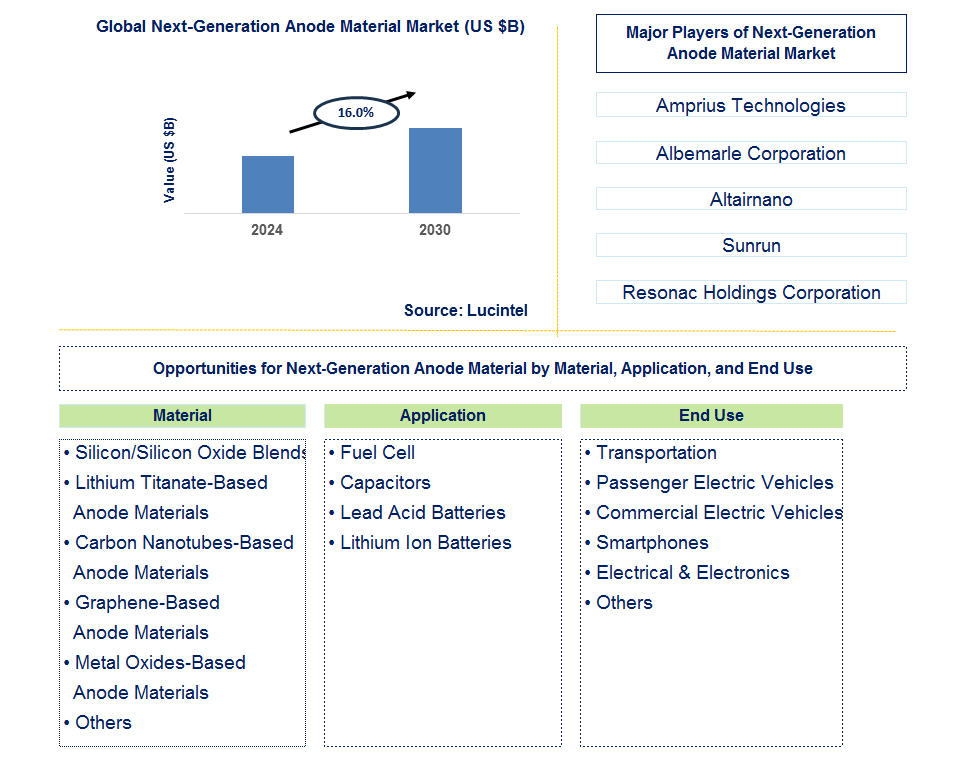
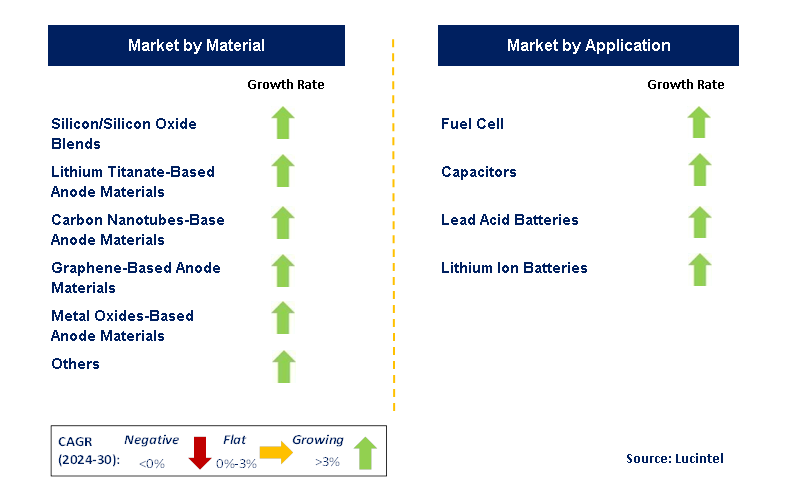
The future of the global next-generation anode material market looks promising with opportunities in the transportation, passenger electric vehicle, commercial electric vehicle, smartphone, and electrical & electronic markets. The global next-generation anode material market is expected to grow with a CAGR of 16.0% from 2024 to 2030. The major drivers for this market are growing need for high-energy-density batteries, especially for portable electronics and electric cars, rising demand for vehicles (EVs) across the globe, as well as, expanding funding for cutting-edge product research and development (R&D) and extensive product use in the aerospace and defense sectors.• Lucintel forecasts that, within the application category, fuel cell is expected to witness the highest growth over the forecast period.
• Within the end use category, transportation is expected to witness the highest growth.
• In terms of region, APAC is expected to witness the highest growth over the forecast period due to growing population and the rising adoption of smartphones, laptops, and other portable devices in the region. A more than 150-page report is developed to help in your business decisions.
Emerging Trends in the Next-Generation Anode Material Market
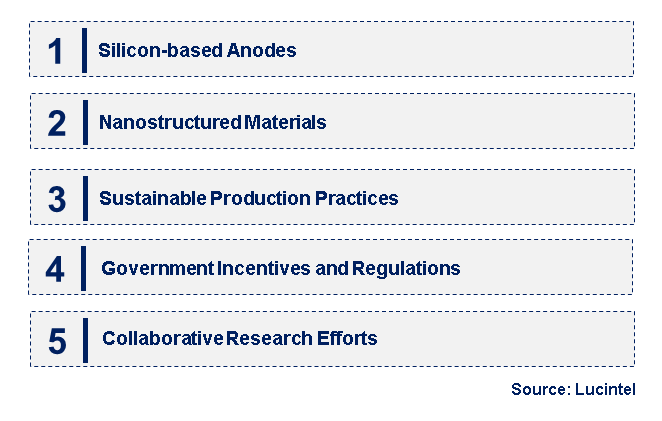
Emerging trends in the next generation anode materials market reflect the growing demand for efficient and sustainable energy storage solutions. Innovations in materials and production methods are reshaping the landscape, influenced by technological advancements and shifting consumer preferences. The following trends illustrate how the market is evolving.• Silicon-based Anodes: The transition from traditional graphite to silicon-based anodes is gaining traction. Silicon offers significantly higher capacity, enhancing battery performance and lifespan. This shift allows manufacturers to produce batteries with increased energy density, crucial for electric vehicles and portable electronics.
• Nanostructured Materials: Advances in nanotechnology are leading to the development of nanostructured anode materials. These materials improve conductivity and efficiency, reducing charging times. Their application in batteries enhances overall performance, addressing consumer demand for faster, longer-lasting power sources.
• Sustainable Production Practices: The push for environmentally friendly manufacturing is prompting companies to adopt sustainable practices. Innovations in recycling and waste reduction are becoming essential, aligning with global sustainability goals and appealing to eco-conscious consumers.
• Government Incentives and Regulations: Increased government support for clean energy technologies is driving research and development in anode materials. Policies promoting electric vehicles and renewable energy storage are encouraging investments in advanced battery technologies, shaping the competitive landscape.
• Collaborative Research Efforts: Partnerships between academia and industry are fostering innovation in anode material development. Collaborative research is crucial for advancing technologies and accelerating the commercialization of next generation anode materials, enhancing market dynamics. These trends collectively reshape the next generation anode materials market, driving growth and innovation across the sector.
Recent Developments in the Next-Generation Anode Material Market
Recent developments in the next generation anode materials market highlight significant advancements that are reshaping the industry. The focus on improving battery performance, sustainability, and innovative materials is driving change. Key players are investing in research and collaboration to enhance product offerings and meet growing global demand.• Advancements in Silicon Anodes: The introduction of silicon-based anodes is a game changer, as they significantly improve energy density compared to traditional materials. This innovation allows manufacturers to create lighter, more efficient batteries, making them ideal for electric vehicles and portable electronics.
• Development of Composite Materials: Companies are exploring composite anode materials that combine the benefits of different substances, such as silicon and graphite. This approach enhances battery stability and performance, addressing common issues like expansion and contraction during charge cycles.
• Focus on Recycling Technologies: As sustainability becomes a priority, advancements in recycling methods for battery materials are gaining attention. Innovations in recovering anode materials from used batteries help reduce waste and lower production costs, contributing to a circular economy.
• Emergence of New Startups: A surge of startups focused on next generation anode materials is transforming the market. These companies bring fresh perspectives and innovative solutions, driving competition and fostering rapid advancements in technology and production.
• International Collaborations: Global partnerships among researchers and companies are accelerating the development of advanced anode materials. Collaborative projects are enabling knowledge sharing and resource pooling, enhancing innovation and market responsiveness. These developments are significantly impacting the next generation anode materials market, fostering growth and innovation.
Strategic Growth Opportunities for Next-Generation Anode Material Market
Strategic growth opportunities in the next generation anode materials market are emerging across various applications. As demand for high-performance energy storage solutions increases, companies are identifying key areas for expansion and innovation. Understanding these opportunities is essential for stakeholders looking to capitalize on market trends.• Electric Vehicles: The rapid adoption of electric vehicles presents significant growth potential for advanced anode materials. As manufacturers seek higher energy density and faster charging capabilities, innovations in anode technology will be critical to meeting these demands.
• Consumer Electronics: The consumer electronics market is increasingly requiring compact, efficient batteries. The development of next generation anode materials that offer enhanced performance can help companies capture market share in this competitive sector.
• Renewable Energy Storage: With the rise of renewable energy sources, there is growing demand for effective energy storage solutions. Advanced anode materials can improve the efficiency and lifespan of batteries used in solar and wind energy systems, positioning manufacturers for growth.
• Grid Storage Solutions: Large-scale battery storage systems for grid applications are gaining traction. The need for reliable and efficient storage solutions is driving demand for next generation anode materials that can enhance performance and stability in these systems.
• Portable Power Applications: The demand for portable power sources is expanding, particularly in outdoor and emergency applications. Innovative anode materials can provide the necessary performance enhancements to meet these growing consumer needs. These growth opportunities are reshaping the next generation anode materials market, driving innovation and fostering competitive advantage.
Next-Generation Anode Material Market Driver and Challenges
The next-generation anode materials market is influenced by a variety of drivers and challenges that affect its growth trajectory. Key technological, economic, and regulatory factors play a significant role in shaping the market landscape, presenting both opportunities and obstacles for stakeholders. The factors driving the next-generation anode material market include:• Increasing demand for energy storage: The growing need for efficient energy storage solutions, particularly in electric vehicles and renewable energy systems, is driving the demand for advanced anode materials. This trend encourages innovation and investment in next-generation technologies.
• Technological advancements: Continuous research and development in materials science are leading to breakthroughs in anode technologies. Innovations in silicon and nanostructured materials enhance battery performance, creating a competitive edge for manufacturers.
• Government support for clean energy: Policymakers are promoting electric vehicle adoption and renewable energy initiatives, providing incentives for research and development in anode materials. This support helps drive investments and accelerates market growth.
• Focus on sustainability: Growing consumer awareness regarding environmental issues is pushing companies to adopt sustainable production practices. This trend encourages the development of eco-friendly materials and processes, aligning with global sustainability goals.
• Collaboration and partnerships: Strategic collaborations between industry players, researchers, and governments are fostering innovation in the anode materials sector. These partnerships enhance knowledge sharing and resource allocation, driving technological advancements. Challenges in the next-generation anode material market include:
• Raw material supply chain issues: Fluctuations in the availability and cost of raw materials can impact production capabilities and profit margins. Companies must develop strategies to secure reliable supply chains and mitigate risks associated with material sourcing.
• Regulatory compliance: Navigating complex regulations regarding materials and manufacturing processes can pose challenges for companies. Ensuring compliance requires resources and can impact operational efficiency, particularly for smaller firms.
• Competition from alternative technologies: The emergence of alternative battery technologies poses a threat to the growth of traditional anode materials. Companies need to continuously innovate to maintain their competitive advantage in the rapidly evolving market. These drivers and challenges collectively influence the next-generation anode materials market, shaping its development and impacting strategic decision-making.
List of Next-Generation Anode Material Companies
Companies in the market compete on the basis of product quality offered. Major players in this market focus on expanding their manufacturing facilities, R&D investments, infrastructural development, and leverage integration opportunities across the value chain. Through these strategies next-generation anode material companies cater increasing demand, ensure competitive effectiveness, develop innovative products & technologies, reduce production costs, and expand their customer base. Some of the next-generation anode material companies profiled in this report include-• Amprius Technologies
• Albemarle Corporation
• Altairnano
• Sunrun
• Resonac Holdings Corporation
• Leydenjar Technologies
• Nanograf Corporation
• Nexeon
• Shanghai Shanshan Technology
• Oned Battery Sciences c
Next-Generation Anode Material by Segment
The study includes a forecast for the global next-generation anode material by material, application, end use, and region.Next-Generation Anode Material Market by Material [Analysis by Value from 2018 to 2030]:
• Silicon/Silicon Oxide Blends
• Lithium Titanate-Based Anode Materials
• Carbon Nanotubes-Based Anode Materials
• Graphene-Based Anode Materials
• Metal Oxides-Based Anode Materials
• Others
Next-Generation Anode Material Market by Application [Analysis by Value from 2018 to 2030]:
• Fuel Cell
• Capacitors
• Lead Acid Batteries
• Lithium Ion Batteries
Next-Generation Anode Material Market by End Use [Analysis by Value from 2018 to 2030]:
• Transportation
• Passenger Electric Vehicles
• Commercial Electric Vehicles
• Smartphones
• Electrical & Electronics
• Others
Next-Generation Anode Material Market by Region [Analysis by Value from 2018 to 2030]:
• North America
• Europe
• Asia Pacific
• The Rest of the World
Country Wise Outlook for the Next-Generation Anode Material Market
The next generation anode materials market is evolving rapidly due to advancements in battery technology and growing demand for high-performance energy storage solutions. Key players across the globe are investing in innovative materials like silicon, lithium titanium oxide, and nanostructured carbon. This transformation is driven by the increasing need for electric vehicles (EVs) and renewable energy storage systems. Countries like the United States, China, Germany, India, and Japan are at the forefront, making strides in research, production, and application of these advanced materials.• United States: The U.S. market is witnessing significant advancements in silicon-based anode materials, driven by major investments from tech companies and startups. Partnerships between research institutions and manufacturers are fostering innovation. Additionally, federal support for clean energy initiatives is promoting the development of high-capacity batteries, particularly for electric vehicles, enhancing the market landscape.
• China: China remains a global leader in the production of next generation anode materials, particularly in silicon and composite anodes. Major battery manufacturers are scaling up production capabilities and investing heavily in R&D. Government policies promoting electric vehicle adoption are accelerating the demand for advanced anode technologies, positioning Chinese companies as key players in the global market.
• Germany: Germany’s focus on automotive innovation is driving advancements in anode materials for electric vehicles. Local companies are exploring new silicon-based composites and nanomaterials to enhance energy density and lifespan. Collaboration between automotive manufacturers and battery producers is pivotal, ensuring that Germany maintains its competitive edge in the European market.
• India: India is increasingly investing in research and development of next generation anode materials as part of its push for clean energy. Local startups are emerging in this space, focusing on affordable and efficient battery technologies. Government initiatives to support EV adoption are creating opportunities for innovative anode materials, encouraging domestic production and reducing reliance on imports.
• Japan: Japan’s advanced technological landscape is fostering innovation in next generation anode materials, particularly lithium titanium oxide and silicon anodes. Major corporations are investing in R&D to enhance battery performance and safety. Collaboration between industries and academia is driving progress, ensuring Japan remains competitive in the global battery market.

Features of the Global Next-Generation Anode Material Market
Market Size Estimates: Next-generation anode material market size estimation in terms of value ($B). Trend and Forecast Analysis: Market trends (2018 to 2023) and forecast (2024 to 2030) by various segments and regions. Segmentation Analysis: Next-generation anode material market size by material, application, end use, and region in terms of value ($B). Regional Analysis: Next-generation anode material market breakdown by North America, Europe, Asia Pacific, and Rest of the World. Growth Opportunities: Analysis of growth opportunities in different material, application, end use, and regions for the next-generation anode material market. Strategic Analysis: This includes M&A, new product development, and competitive landscape of the next-generation anode material market. Analysis of competitive intensity of the industry based on Porter’s Five Forces model.If you are looking to expand your business in this or adjacent markets, then contact us. We have done hundreds of strategic consulting projects in market entry, opportunity screening, due diligence, supply chain analysis, M & A, and more.

FAQ
Q1. What is the growth forecast for next-generation anode material market? Answer: The global next-generation anode material market is expected to grow with a CAGR of 16.0% from 2024 to 2030. Q2. What are the major drivers influencing the growth of the next-generation anode material market? Answer: The major drivers for this market are growing need for high-energy-density batteries, especially for portable electronics and electric cars, rising demand for vehicles (EVs) across the globe, as well as, expanding funding for cutting-edge product research and development (R&D) and extensive product use in the aerospace and defense sectors. Q3. What are the major segments for next-generation anode material market? Answer: The future of the global next-generation anode material market looks promising with opportunities in the transportation, passenger electric vehicle, commercial electric vehicle, smartphone, and electrical & electronic markets. Q4. Who are the key next-generation anode material market companies? Answer: Some of the key next-generation anode material companies are as follows:• Amprius Technologies
• Albemarle Corporation
• Altairnano
• Sunrun
• Resonac Holdings Corporation
• Leydenjar Technologies
• Nanograf Corporation
• Nexeon
• Shanghai Shanshan Technology
• Oned Battery Sciences c Q5. Which next-generation anode material market segment will be the largest in future? Answer: Lucintel forecasts that fuel cell is expected to witness the highest growth over the forecast period. Q6. In next-generation anode material market, which region is expected to be the largest in next 5 years? Answer: APAC is expected to witness highest growth over the forecast period due to growing population and the rising adoption of smartphones, laptops, and other portable devices in the region. Q.7 Do we receive customization in this report? Answer: Yes, Lucintel provides 10% customization without any additional cost.
Table of Contents
Methodology
- In-depth interviews of the major players in this market
- Detailed secondary research from competitors’ financial statements and published data
- Extensive searches of published works, market, and database information pertaining to industry news, company press releases, and customer intentions
- A compilation of the experiences, judgments, and insights of Lucintel’s professionals, who have analyzed and tracked this market over the years.


Buy Now
Choose a license that fits your team. Instant PDF delivery.
Prices exclude taxes. Instant delivery. Custom licensing available on request.
Key Questions
- • What are some of the most promising, high-growth opportunities for the next-generation anode material market by material (silicon/silicon oxide blends, lithium titanate-based anode materials, carbon nanotubes-based anode materials, graphene-based anode materials, metal oxides-based anode materials, and others), application (fuel cell, capacitors, lead acid batteries, and lithium ion batteries), end use (transportation, passenger electric vehicles, commercial electric vehicles, smartphones, electrical & electronics, and others), and region (North America, Europe, Asia Pacific, and the Rest of the World)?
- • Which segments will grow at a faster pace and why?
- • Which region will grow at a faster pace and why?
- • What are the key factors affecting market dynamics? What are the key challenges and business risks in this market?
- • What are the business risks and competitive threats in this market?
- • What are the emerging trends in this market and the reasons behind them?
- • What are some of the changing demands of customers in the market?
- • What are the new developments in the market? Which companies are leading these developments?
- • Who are the major players in this market? What strategic initiatives are key players pursuing for business growth?
- • What are some of the competing products in this market and how big of a threat do they pose for loss of market share by material or product substitution?
- • What M&A activity has occurred in the last 5 years and what has its impact been on the industry? For any questions related to Next-Generation Anode Material Market, Next-Generation Anode Material Market Size, Next-Generation Anode Material Market Growth, Next-Generation Anode Material Market Analysis, Next-Generation Anode Material Market Report, Next-Generation Anode Material Market Share, Next-Generation Anode Material Market Trends, Next-Generation Anode Material Market Forecast, Next-Generation Anode Material Companies, write Lucintel analyst at email: helpdesk@lucintel.com. We will be glad to get back to you soon.


