
Report Feature
Koi Trends and Forecast
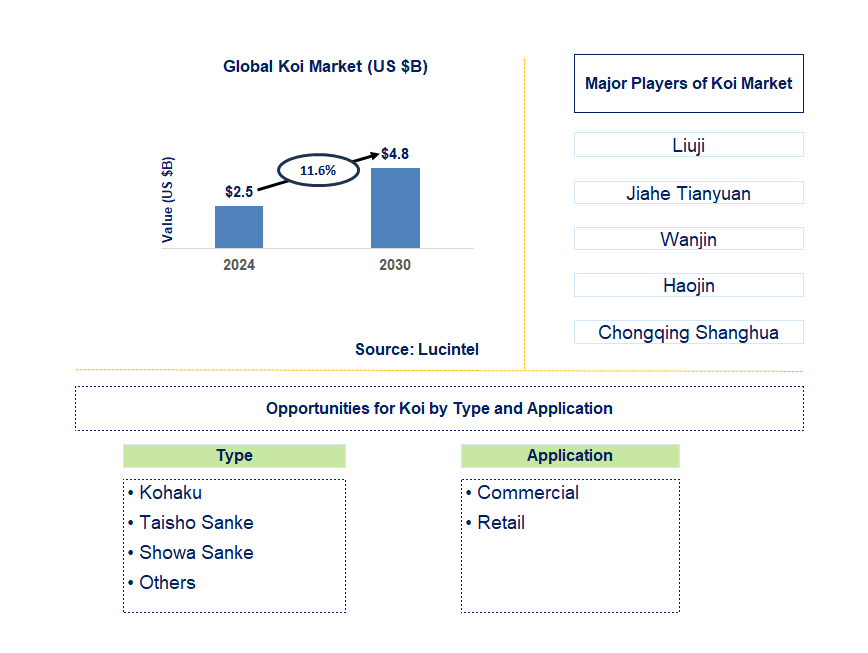
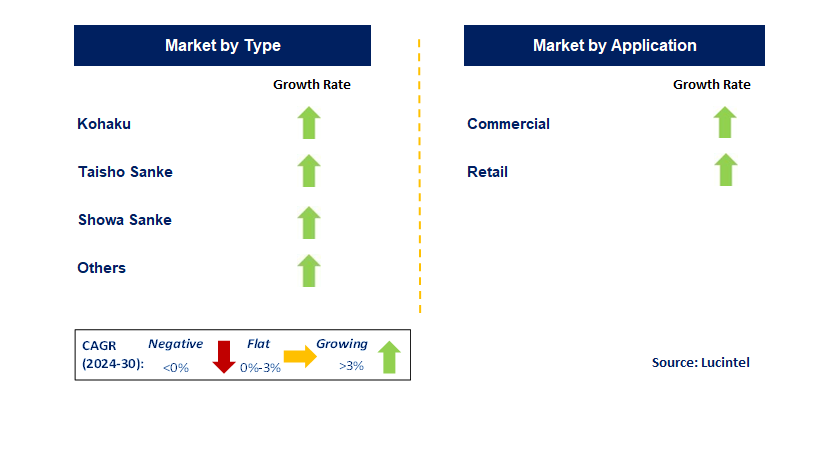
The future of the global koi market looks promising with opportunities in the commercial and retail markets. The global koi market is expected to reach an estimated $4.8 billion by 2030 with a CAGR of 11.6% from 2024 to 2030. The major drivers for this market are increasing interest in ornamental fishkeeping, growing levels of disposable income in developing countries, as well as, expansion of shipping convenience and logistical links.• Lucintel forecasts that kohaku is expected to witness the highest growth over the forecast period.
• Within this market, retail will remain larger segment because the koi retailing sector caters to experienced connoisseurs as well as newcomers, which means that fish can be enjoyed by a wide range of clients.
• APAC is expected to witness the highest growth over the forecast period due to the cultural importance of koi in Japan, China, and Korea, as well as, it offers a wide range of Koi varieties, including both imported and native species, to satisfy the tastes and passions of the area's Koi enthusiasts. A more than 150-page report is developed to help in your business decisions.
Emerging Trends in the Koi Market
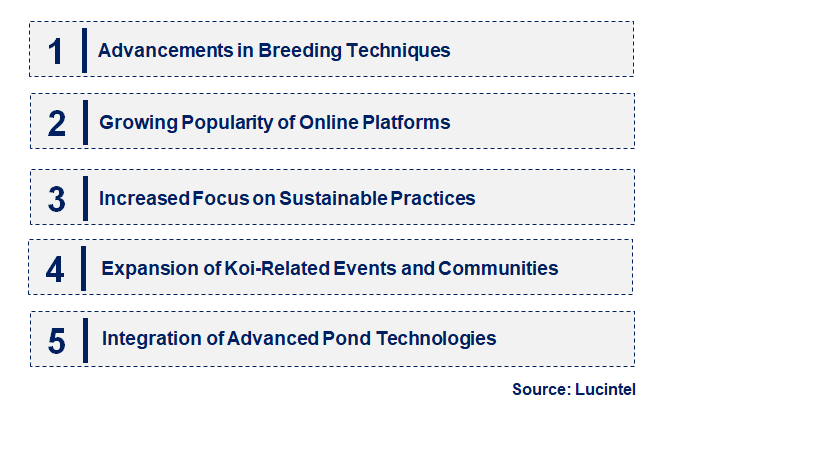
The Koi market is evolving with several key trends that are reshaping the industry. As the market grows, these trends reflect broader shifts in consumer behavior, technology, and environmental consciousness.• Advancements in Breeding Techniques: Breeding technology has significantly improved, resulting in higher-quality Koi with enhanced color patterns and health attributes. Innovations such as selective breeding and genetic analysis are enabling the creation of unique Koi varieties that fetch premium prices. These advancements are not only increasing the aesthetic appeal of Koi but also enhancing their resilience to diseases and environmental changes, leading to more robust and marketable fish.
• Growing Popularity of Online Platforms: The rise of e-commerce and digital platforms has transformed how Koi are bought and sold. Online auctions and marketplaces allow collectors to access a wider range of Koi, including rare and high-value specimens, from the comfort of their homes. This trend is democratizing access to Koi and expanding the market beyond traditional geographic and economic boundaries, facilitating global trade and increasing competition.
• Increased Focus on Sustainable Practices: There is a growing emphasis on sustainability within the Koi industry, driven by both consumer demand and environmental concerns. Practices such as eco-friendly pond management, reduced use of chemicals, and sustainable breeding methods are becoming more prevalent. This trend reflects a broader shift towards environmental responsibility, aligning with the values of increasingly eco-conscious consumers and contributing to the long-term viability of the Koi market.
• Expansion of Koi-Related Events and Communities: The proliferation of Koi exhibitions, competitions, and social media groups is fostering a vibrant and engaged community of enthusiasts. These events serve as platforms for sharing knowledge, showcasing prized Koi, and networking with other collectors and breeders. The growth of such communities is enhancing the visibility of the Koi market and promoting a culture of appreciation and expertise that drives further interest and investment.
• Integration of Advanced Pond Technologies: Advances in pond technology, such as automated filtration systems, water quality monitors, and smart controls, are improving the overall care and maintenance of Koi. These innovations are making it easier for hobbyists to create optimal living conditions for their fish, thereby enhancing their health and longevity. The integration of technology into pond management is also appealing to tech-savvy consumers, contributing to the market’s growth. These emerging trends are collectively driving a transformation in the Koi market. Advancements in breeding techniques and pond technology are enhancing the quality and care of Koi, making them more appealing to discerning collectors. The rise of online platforms and Koi-related events is expanding market reach and fostering a more connected community of enthusiasts. Meanwhile, the increased focus on sustainability aligns with broader environmental trends, ensuring the long-term viability of the industry. Together, these trends are reshaping the Koi market by elevating its profile, broadening its consumer base, and promoting responsible practices.
Recent Developments in the Koi Market
The Koi market has seen several significant developments in recent years, reflecting changes in technology, consumer preferences, and global dynamics. These developments are shaping the industry and influencing its future trajectory.• Innovations in Breeding Techniques: Recent advancements in breeding techniques have resulted in higher-quality Koi with improved color patterns and genetic health. Techniques such as selective breeding and genetic analysis are allowing breeders to produce unique and desirable Koi varieties. These innovations are driving up the value of premium Koi and attracting a broader range of collectors and investors, boosting the overall market.
• Growth of Digital Platforms: The rise of online platforms for buying and selling Koi has transformed the market landscape. E-commerce sites and online auctions have made it easier for enthusiasts to access a diverse range of Koi, including rare and high-value specimens. This digital shift is expanding market reach and increasing competition, benefiting both buyers and sellers and contributing to market growth.
• Focus on Environmental Sustainability: There is a growing emphasis on sustainability within the Koi industry. Practices such as eco-friendly pond management, reduced use of harmful chemicals, and sustainable breeding methods are becoming more common. This focus on environmental responsibility is appealing to eco-conscious consumers and ensuring the long-term health of the Koi population, aligning the industry with broader sustainability trends.
• Expansion of Koi-Related Events: The increase in Koi exhibitions, competitions, and community gatherings is fostering a more engaged and knowledgeable Koi enthusiast community. These events provide opportunities for networking, education, and showcasing prized Koi. The expansion of such events is enhancing the visibility and prestige of the Koi market, driving further interest and investment.
• Advancements in Pond Technology: Technological innovations in pond management, including automated filtration systems and water quality monitors, are improving the care and maintenance of Koi. These advancements make it easier for hobbyists to create optimal living conditions for their fish, enhancing their health and longevity. The integration of advanced technology is appealing to modern consumers and contributing to market growth. These recent developments are having a profound impact on the Koi market. Innovations in breeding and pond technology are elevating the quality and care of Koi, while digital platforms and Koi-related events are broadening market access and engagement. The focus on sustainability aligns the industry with environmental trends, ensuring long-term viability. Together, these developments are driving market growth, enhancing the appeal of Koi, and reshaping the industry’s landscape.
Strategic Growth Opportunities for Koi Market
The Koi market presents several strategic growth opportunities across various applications, driven by evolving consumer preferences, technological advancements, and increasing global interest in ornamental fish. These opportunities span residential, commercial, and leisure sectors, each offering unique avenues for expansion and development. By capitalizing on these growth areas, stakeholders can tap into emerging trends and cater to a broader audience, thus enhancing their market presence and profitability.• Luxury Residential Ponds: Luxury residential ponds are a burgeoning market as affluent homeowners seek to enhance their outdoor spaces with high-quality Koi. The integration of Koi into well-designed water features, such as ornamental ponds and gardens, adds aesthetic and recreational value. High-end residential projects are increasingly incorporating advanced pond systems that improve water quality and Koi health. This trend presents a significant opportunity for Koi breeders and suppliers to offer premium varieties and specialized pond equipment, catering to the growing demand for luxury home decor.
• Commercial Landscaping: The use of Koi in commercial landscaping is on the rise as businesses and institutions invest in aesthetically pleasing environments. Koi ponds are becoming popular features in corporate offices, hotels, and public spaces, providing a tranquil and visually appealing atmosphere. This growth opportunity involves creating customized Koi ponds and maintenance services tailored to commercial clients. By leveraging partnerships with landscaping firms and property developers, Koi suppliers can tap into this expanding market, enhancing their visibility and revenue potential.
• Koi Competitions and Exhibitions: Koi competitions and exhibitions are increasingly recognized as significant growth opportunities. These events attract enthusiasts, breeders, and collectors from around the world, showcasing high-quality Koi and fostering community engagement. Organizing or sponsoring such events can enhance brand visibility and credibility, while also creating new revenue streams through ticket sales, sponsorships, and promotional activities. The rising popularity of Koi shows and competitions reflects a robust market for high-value Koi and related products, offering a platform for networking and market expansion.
• Online Sales and E-commerce: The expansion of online sales and e-commerce platforms represents a crucial growth opportunity for the Koi market. Digital platforms enable breeders and retailers to reach a global audience, offering a wide range of Koi varieties and related products. By investing in user-friendly websites, secure payment systems, and effective marketing strategies, businesses can tap into new customer segments and increase their market share. The convenience and accessibility of online shopping are driving consumer preferences, making e-commerce a key driver of market growth.
• Sustainable and Eco-Friendly Practices: Sustainable and eco-friendly practices are becoming increasingly important in the Koi market. Consumers and businesses are seeking environmentally responsible solutions for pond management, such as organic water treatments and energy-efficient filtration systems. Emphasizing sustainability can differentiate brands and appeal to eco-conscious customers. This growth opportunity involves developing and promoting green products and practices, enhancing market appeal, and aligning with broader environmental trends. By adopting sustainable practices, businesses can contribute to long-term market viability and foster a positive brand image. These strategic growth opportunities are reshaping the Koi market by expanding its applications and enhancing market reach. Luxury residential ponds and commercial landscaping are driving demand for high-quality Koi and advanced pond systems. Koi competitions and online sales are increasing market visibility and accessibility, while sustainable practices are aligning the industry with environmental trends. Together, these opportunities are fostering market growth, attracting diverse customer segments, and creating new revenue streams, positioning the Koi market for continued expansion and innovation.
Koi Market Driver and Challenges
The Koi market is influenced by various drivers and challenges, shaped by technological advancements, economic factors, and regulatory considerations. These elements is crucial for stakeholders aiming to navigate the evolving landscape and capitalize on emerging opportunities. The factors responsible for driving the koi market include: 1. Technological Advancements: Technological advancements in breeding and pond management are major drivers of growth in the Koi market. Innovations such as selective breeding, genetic analysis, and automated pond systems enhance the quality and health of Koi. These technologies lead to the production of superior Koi varieties and improve pond maintenance, attracting more enthusiasts and boosting market demand. The integration of advanced technologies also supports the development of more efficient and user-friendly solutions, contributing to overall market expansion. 2. Growing Affluence and Disposable Income: Rising affluence and disposable income levels are driving demand for luxury ornamental fish, including Koi. As consumers in various regions experience increased financial stability, they are more willing to invest in high-quality Koi and premium pond setups. This trend is particularly evident in emerging markets and affluent urban areas, where luxury home decor and outdoor aesthetics are prioritized. The growth of the middle and upper classes is expanding the consumer base and fueling market growth. 3. Increased Awareness and Education: Greater awareness and education about Koi care and the benefits of Koi ponds are contributing to market growth. Educational programs, workshops, and online resources are helping enthusiasts and new buyers understand the value of investing in high-quality Koi and advanced pond systems. This increased knowledge leads to more informed purchasing decisions and higher demand for premium Koi products and services. As awareness grows, so does the market for specialized Koi and related offerings. 4. Rising Popularity of Outdoor Living Spaces: The growing trend of enhancing outdoor living spaces is driving demand for ornamental fish like Koi. Homeowners are investing in elaborate pond systems as part of their landscaping and garden design. This trend reflects a broader interest in creating relaxing and visually appealing outdoor environments, which boosts demand for high-quality Koi and related pond equipment. The emphasis on outdoor aesthetics and recreational spaces supports market growth and creates opportunities for new product developments. 5. Expansion of E-commerce and Online Platforms: The expansion of e-commerce and online platforms is transforming the Koi market by providing wider access to a global audience. Online sales channels allow breeders and retailers to reach new customers and offer a diverse range of Koi varieties. The convenience of online shopping and the ability to showcase high-value Koi through digital platforms enhance market visibility and accessibility. This trend supports market growth by enabling businesses to tap into previously underserved regions and customer segments. Challenges in the koi market are: 1. Regulatory and Compliance Issues: Regulatory and compliance issues can pose challenges for the Koi market, particularly concerning the import and export of live fish. Different countries have varying regulations related to quarantine, disease control, and environmental protection. Navigating these regulations can be complex and costly for businesses involved in international trade. Compliance with these regulations is essential to avoid legal issues and ensure the health and safety of Koi populations. 2. Disease and Health Management: Disease and health management are significant challenges in the Koi market. Koi are susceptible to various diseases and parasites, which can impact their health and value. Effective disease management requires investment in veterinary care, biosecurity measures, and high-quality pond management systems. Outbreaks of disease can lead to financial losses and damage to reputation, making it crucial for stakeholders to implement robust health management practices and maintain high standards of care. 3. Environmental and Sustainability Concerns: Environmental and sustainability concerns are increasingly influencing the Koi market. The impact of pond management practices on local ecosystems and water resources is under scrutiny. There is growing pressure to adopt eco-friendly practices, such as reducing chemical use and implementing sustainable breeding methods. Addressing these concerns is important for aligning with consumer values and regulatory requirements. Failure to adopt sustainable practices can lead to reputational risks and potential regulatory challenges. The major drivers of the Koi market, including technological advancements, rising affluence, increased awareness, outdoor living trends, and e-commerce growth, are collectively fueling market expansion and innovation. However, challenges related to regulatory issues, disease management, and environmental concerns must be carefully managed to ensure sustainable growth. Addressing these challenges while leveraging growth opportunities will be crucial for stakeholders aiming to capitalize on market potential and navigate the evolving landscape effectively. The overall impact is a dynamic and expanding Koi market that requires strategic adaptation to both opportunities and challenges.List of Koi Companies
Companies in the market compete on the basis of product quality offered. Major players in this market focus on expanding their manufacturing facilities, R&D investments, infrastructural development, and leverage integration opportunities across the value chain. through these strategies koi companies cater increasing demand, ensure competitive effectiveness, develop innovative products & technologies, reduce production costs, and expand their customer base. Some of the koi companies profiled in this report include-• Liuji
• Jiahe Tianyuan
• Wanjin
• Haojin
• Chongqing Shanghua
• Guangzhou Zhengda Aquatic
• Marusei Koi Farm
Koi by Segment
The study includes a forecast for the global koi by type, application, and region.Koi Market by Type [Analysis by Value from 2018 to 2030]:
• Kohaku
• Taisho Sanke
• Showa Sanke
• Others
Koi Market by Application [Analysis by Value from 2018 to 2030]:
• Commercial
• Retail
Koi Market by Region [Analysis by Value from 2018 to 2030]:
• North America
• Europe
• Asia Pacific
• The Rest of the World
Country Wise Outlook for the Koi Market
The Koi market has experienced notable growth and transformation in recent years, influenced by increasing global interest in ornamental fish and evolving consumer preferences. Koi, prized for their beauty and symbolism, are now a significant part of the luxury pet and home decor markets. This growth is driven by various factors, including advancements in breeding techniques, rising disposable incomes, and the expansion of hobbyist communities worldwide. As a result, the market dynamics in major countries like the United States, China, Germany, India, and Japan are undergoing significant shifts, reflecting broader trends in consumer behavior and economic conditions.• United States: In the United States, the Koi market has seen a rise in both demand and sophistication. Hobbyists and collectors are increasingly investing in high-quality, genetically superior Koi varieties. Advances in breeding and water filtration technology have enhanced the overall health and appearance of Koi, contributing to their growing popularity. Additionally, there is a marked increase in Koi-related events and exhibitions, which further stimulate interest and provide networking opportunities for enthusiasts. The expansion of online platforms has also facilitated easier access to rare and premium Koi varieties for American collectors.
• China: China Koi market is experiencing rapid growth driven by rising affluence and an increasing appreciation for luxury ornamental fish. Urbanization and improved living standards have led to a greater demand for Koi among the middle and upper classes. The market is characterized by a surge in high-end Koi farms and specialized breeding operations. Additionally, the government’s support for aquaculture practices and the promotion of traditional Chinese cultural values associated with Koi are contributing to this upward trend. High-profile Koi exhibitions and competitions are becoming more common, reflecting the growing interest and investment in the Koi industry.
• Germany: In Germany, the Koi market has seen a gradual yet steady increase in interest, primarily due to the country’s strong tradition of garden and pond culture. German hobbyists are particularly focused on the health and well-being of their Koi, leading to advancements in pond technology and water quality management. The market is also supported by a robust network of specialized retailers and breeders. Recent developments include a growing emphasis on sustainable practices and the use of environmentally friendly products. German Koi enthusiasts are increasingly engaged in international competitions, showcasing the country’s growing prominence in the global Koi community.
• India: India Koi market is expanding as a result of rising disposable incomes and a growing interest in luxury home decor. Urban areas are witnessing an increase in ornamental pond installations, driven by the desire for aesthetic enhancement and relaxation. Local breeders are beginning to invest in advanced breeding techniques, although the market is still in its nascent stages compared to more established regions. There is a growing presence of Koi-related events and workshops aimed at educating new enthusiasts. The development of more specialized Koi farms and import channels is expected to further boost the market in the coming years.
• Japan: Japan, the birthplace of Koi, continues to lead the market with its long-standing tradition and expertise in breeding these ornamental fish. Recent developments include the refinement of breeding techniques and the introduction of new Koi varieties that attract both domestic and international collectors. Japan remains the epicenter for high-quality Koi auctions and exhibitions, reinforcing its global influence. The market also sees an emphasis on the preservation of traditional Koi strains and enhancement of genetic diversity. Japanese Koi breeders are increasingly collaborating with international partners, contributing to a global exchange of knowledge and innovation in the Koi industry.

Features of the Global Koi Market
Market Size Estimates: Koi market size estimation in terms of value ($B). Trend and Forecast Analysis: Market trends (2018 to 2023) and forecast (2024 to 2030) by various segments and regions. Segmentation Analysis: Koi market size by type, application, and region in terms of value ($B). Regional Analysis: Koi market breakdown by North America, Europe, Asia Pacific, and Rest of the World. Growth Opportunities: Analysis of growth opportunities in different type, application, and regions for the koi market. Strategic Analysis: This includes M&A, new product development, and competitive landscape of the koi market. Analysis of competitive intensity of the industry based on Porter’s Five Forces model.If you are looking to expand your business in this market or adjacent markets, then contact us. We have done hundreds of strategic consulting projects in market entry, opportunity screening, due diligence, supply chain analysis, M & A, and more.

FAQ
Q1. What is the market size for koi market? Answer: The global koi market is expected to reach an estimated $4.8 billion by 2030. Q2. What is the growth forecast for koi market? Answer: The global koi market is expected to grow with a CAGR of 11.6% from 2024 to 2030. Q3. What are the major drivers influencing the growth of the koi market? Answer: The major drivers for this market are increasing interest in ornamental fishkeeping, growing levels of disposable income in developing countries, as well as, expansion of shipping convenience and logistical links. Q4. What are the major segments for koi market? Answer: The future of the global koi market looks promising with opportunities in the commercial and retail markets. Q5. Who are the key koi market companies? Answer: Some of the key koi companies are as follows:• Liuji
• Jiahe Tianyuan
• Wanjin
• Haojin
• Chongqing Shanghua
• Guangzhou Zhengda Aquatic
• Marusei Koi Farm Q6. Which koi market segment will be the largest in future? Answer: Lucintel forecasts that kohaku is expected to witness the highest growth over the forecast period. Q7. In koi market, which region is expected to be the largest in next 5 years? Answer: APAC is expected to witness the highest growth over the forecast period due to the cultural importance of koi in Japan, China, and Korea, as well as, it offers a wide range of Koi varieties, including both imported and native species, to satisfy the tastes and passions of the area's Koi enthusiasts. Q.8 Do we receive customization in this report? Answer: Yes, Lucintel provides 10% customization without any additional cost.
Table of Contents
Methodology
- In-depth interviews of the major players in this market
- Detailed secondary research from competitors’ financial statements and published data
- Extensive searches of published works, market, and database information pertaining to industry news, company press releases, and customer intentions
- A compilation of the experiences, judgments, and insights of Lucintel’s professionals, who have analyzed and tracked this market over the years.


Buy Now
Choose a license that fits your team. Instant PDF delivery.
Prices exclude taxes. Instant delivery. Custom licensing available on request.
Key Questions
- • What are some of the most promising, high-growth opportunities for the koi market by type (kohaku, taisho sanke, showa sanke, and others), application (commercial and retail), and region (North America, Europe, Asia Pacific, and the Rest of the World)?
- • Which segments will grow at a faster pace and why?
- • Which region will grow at a faster pace and why?
- • What are the key factors affecting market dynamics? What are the key challenges and business risks in this market?
- • What are the business risks and competitive threats in this market?
- • What are the emerging trends in this market and the reasons behind them?
- • What are some of the changing demands of customers in the market?
- • What are the new developments in the market? Which companies are leading these developments?
- • Who are the major players in this market? What strategic initiatives are key players pursuing for business growth?
- • What are some of the competing products in this market and how big of a threat do they pose for loss of market share by material or product substitution?
- • What M&A activity has occurred in the last 5 years and what has its impact been on the industry? For any questions related to Koi Market, Koi Market Size, Koi Market Growth, Koi Market Analysis, Koi Market Report, Koi Market Share, Koi Market Trends, Koi Market Forecast, Koi Companies, write Lucintel analyst at email: helpdesk@lucintel.com. We will be glad to get back to you soon.


