
Report Feature
Jute Bag Market Trends and Forecast
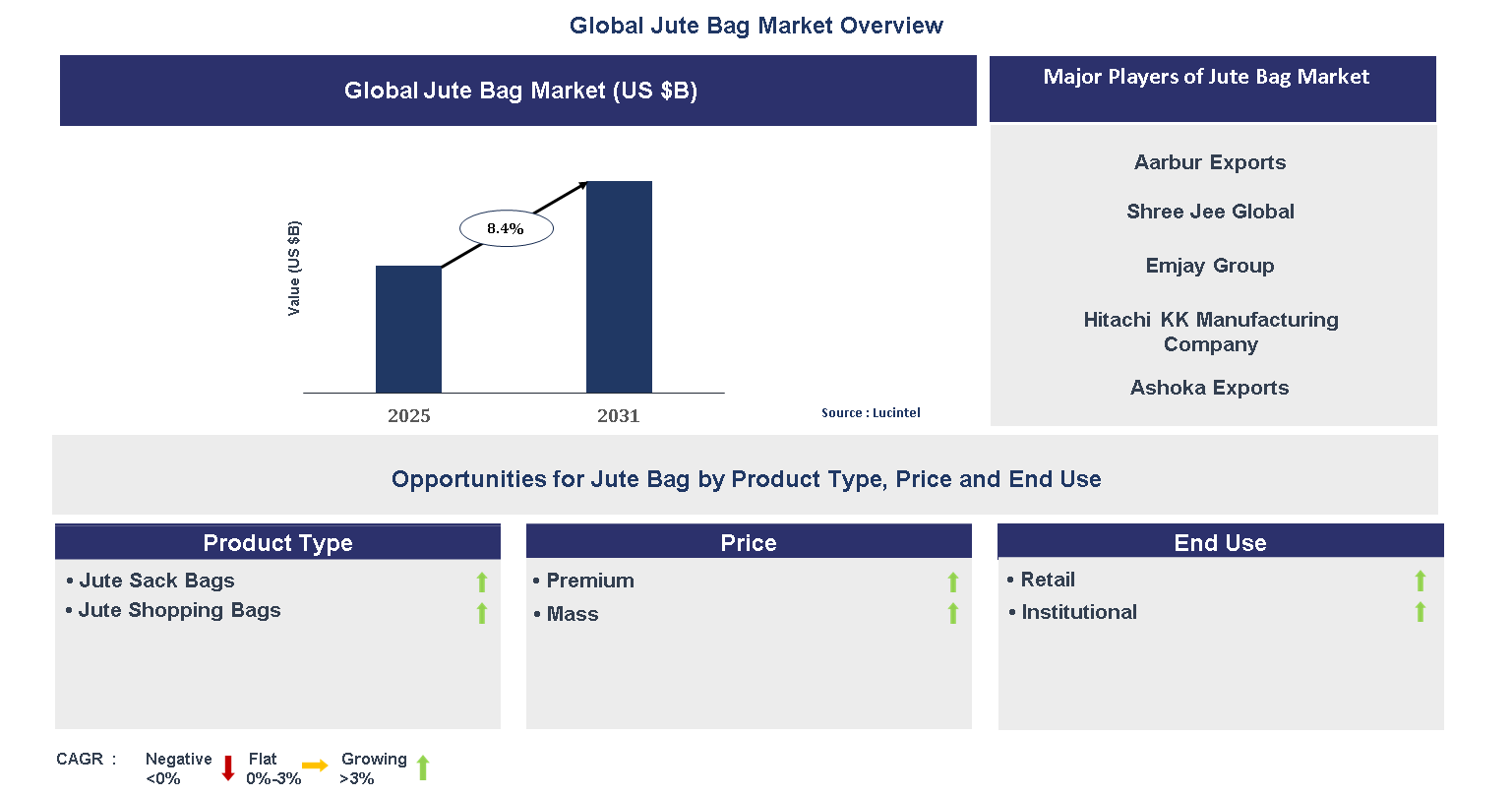
The future of the global jute bag market looks promising with opportunities in the retail and institutional markets. The global jute bag market is expected to grow with a CAGR of 8.4% from 2025 to 2031. The major drivers for this market are the increasing preference for eco-friendly packaging solutions, the rising awareness about environmental sustainability, and the growing demand for biodegradable alternatives.• Lucintel forecasts that, within the product type category, jute shopping bag is expected to witness higher growth over the forecast period.
• Within the end use category, retail is expected to witness higher growth.
• In terms of region, APAC is expected to witness the highest growth over the forecast period. Gain valuable insights for your business decisions with our comprehensive 150+ page report. Sample figures with some insights are shown below.
Emerging Trends in the Jute Bag Market
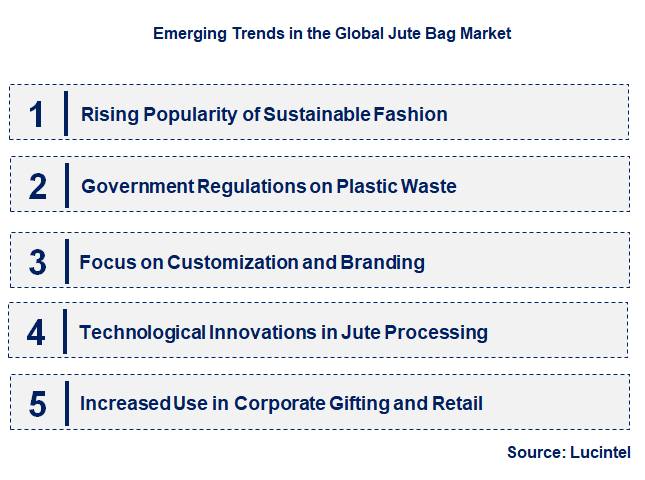
The Jute Bag market is evolving rapidly with several emerging trends, driven by sustainability concerns and shifting consumer preferences. These trends reflect a growing demand for eco-friendly alternatives, particularly in retail and fashion sectors.• Rising Popularity of Sustainable Fashion: The demand for jute bags as a sustainable fashion accessory is increasing. Fashion brands are using jute to create stylish, eco-friendly bags that appeal to eco-conscious consumers. This trend is expected to drive innovation in designs and further solidify jute’s role in the fashion industry.
• Government Regulations on Plastic Waste: Stringent regulations on plastic usage, particularly in countries like India and China, are driving the adoption of jute bags. As governments implement bans on plastic bags, manufacturers are stepping up to provide jute alternatives that are both biodegradable and reusable, promoting environmental sustainability.
• Focus on Customization and Branding: Customization has become a key trend in the jute bag market, with businesses seeking unique designs for branding purposes. Jute bags are being increasingly used as promotional items, with custom printing allowing brands to showcase their sustainability efforts and connect with eco-aware consumers.
• Technological Innovations in Jute Processing: Advances in jute bag manufacturing technology are helping improve the quality, durability, and aesthetic appeal of jute bags. Innovations like eco-friendly dyes, water-resistant coatings, and advanced weaving techniques are driving demand for jute bags in premium retail markets and eco-conscious brands.
• Increased Use in Corporate Gifting and Retail: Jute bags are gaining traction as eco-friendly corporate gifts and promotional items. Companies are opting for jute bags as part of their sustainability initiatives, offering them at trade shows, conferences, and corporate events. This trend is expanding the market beyond traditional retail. These trends are reshaping the Jute Bag market, with sustainability at the core of industry growth. The rising interest in eco-conscious consumer goods, along with regulatory support and technological advancements, is pushing the market toward greater adoption of jute bags. As demand increases across sectors like fashion, retail, and corporate gifting, jute bags will continue to thrive.
Recent Development in the Jute Bag Market
The Jute Bag market has seen a number of developments in key regions, particularly in response to environmental concerns, market demand, and regulatory changes. These developments have led to increased innovation in designs, materials, and production methods.• Growing Use in Corporate Branding: Companies are increasingly using jute bags as part of their corporate branding strategies. Custom jute bags are becoming a popular promotional item for businesses looking to enhance their sustainability image. This shift is driving growth in the jute bag market, particularly in the corporate sector.
• Technological Advancements in Jute Processing: Improvements in jute processing technology have led to the development of stronger, more durable jute bags. The ability to create water-resistant, lightweight, and more aesthetically appealing bags has contributed to increased consumer interest, particularly in the fashion and retail markets.
• Expansion of Retail and E-commerce Channels: Retailers and online marketplaces are increasingly selling jute bags as part of their sustainable product offerings. E-commerce platforms are expanding their selection of jute bags, providing consumers with a wider range of choices, including customizable and eco-friendly designs, further boosting the market.
• Government Initiatives Promoting Jute Bags: Several governments are promoting jute bags as part of their efforts to reduce plastic waste. In India, for example, the government has actively encouraged the use of jute products, particularly bags, to replace plastic alternatives. This has led to increased demand and production in the jute bag industry.
• Innovative Designs in Fashion: Fashion brands are increasingly integrating jute into their product lines. From high-end designer bags to casual totes, jute’s versatility is being embraced by the fashion industry. These new designs are positioning jute as a stylish, eco-friendly alternative to synthetic materials. Recent developments in the Jute Bag market are pushing the material to the forefront of sustainability trends. The growing use of jute in branding, advancements in processing technologies, and government initiatives are driving market growth. With increasing consumer demand for sustainable alternatives, jute bags are becoming a mainstream option across multiple industries.
Strategic Growth Opportunities in the Jute Bag Market
The Jute Bag market offers several strategic growth opportunities across various applications, from fashion to retail and corporate gifting. These opportunities are primarily driven by the rising demand for eco-friendly products and the shift toward sustainable consumer goods.• Sustainable Packaging Solutions: The demand for sustainable packaging solutions is driving growth in the jute bag market. Jute bags are increasingly being used in packaging for food, retail, and cosmetics. As consumer preference shifts toward eco-friendly packaging, jute is seen as a viable and sustainable alternative to plastic.
• Fashion and Accessories Market: Jute bags are becoming popular in the fashion and accessories market due to their eco-friendly appeal and durability. With rising interest in sustainable fashion, jute bags are positioned to see continued growth, particularly in high-end retail markets focused on sustainable materials and designs.
• Corporate and Promotional Use: Jute bags are gaining popularity as corporate gifts and promotional items. Businesses are opting for jute bags as part of their sustainability strategies, offering them at trade shows, corporate events, and as giveaways. This market is expected to grow as companies prioritize eco-friendly promotional products.
• Retail Expansion in E-commerce: With the rise of online shopping, the demand for jute bags as eco-friendly retail products is increasing. Retailers are now offering jute bags in various styles and sizes, making them easily accessible to eco-conscious consumers. The growing e-commerce presence of jute bags offers an excellent growth opportunity.
• Export Markets for Developing Countries: Jute bag manufacturers in developing countries like India and Bangladesh are increasingly exporting their products to Western markets, where the demand for sustainable goods is high. Exporting to eco-conscious regions like Europe and North America provides manufacturers with lucrative growth opportunities. The strategic growth opportunities in the jute bag market are abundant across various sectors, including fashion, retail, corporate gifting, and packaging. As sustainability continues to drive consumer behavior, the market for jute bags is poised for significant expansion. Manufacturers and brands that focus on eco-friendly, customizable, and stylish designs will capitalize on these opportunities.
Jute Bag Market Driver and Challenges
The Jute Bag market is influenced by several key drivers, including growing environmental awareness, technological advancements, and government policies. However, there are also challenges such as raw material availability and competition from synthetic alternatives. Understanding these drivers and challenges is crucial for stakeholders looking to capitalize on the growing demand for sustainable products. The factors responsible for driving the jute bag market include: 1. Environmental Concerns: Increased awareness about plastic pollution is driving the demand for eco-friendly alternatives like jute bags. Consumers are becoming more conscious of their environmental footprint, and jute bags are seen as a sustainable and biodegradable option, fueling their popularity. 2. Government Regulations on Plastic Use: Many governments have implemented policies to reduce plastic waste, such as plastic bag bans or taxes. These regulations are directly boosting the demand for alternative products, including jute bags, which are biodegradable and reusable. 3. Growing Interest in Sustainable Fashion: The rise in demand for sustainable fashion is contributing to the growth of the jute bag market. Fashion-conscious consumers are increasingly seeking eco-friendly accessories, and jute bags fit this demand perfectly, combining style with sustainability. 4. Technological Advancements in Production: Advancements in jute bag manufacturing techniques, such as improved weaving methods and water-resistant coatings, are enhancing the quality of jute bags. These innovations have made jute bags more durable, stylish, and practical, broadening their appeal to a wider market. 5. Rising Consumer Demand for Eco-Friendly Products: As sustainability becomes a key purchasing factor, more consumers are opting for eco-friendly alternatives in their everyday purchases. Jute bags, known for their biodegradability and recyclability, are becoming a preferred choice for consumers looking to reduce their environmental impact. Challenges in the jute bag market are: 1. Raw Material Price Fluctuations: Jute is a natural fiber, and its price is influenced by agricultural factors such as crop yields and weather conditions. Price fluctuations in raw jute can affect production costs, which can be passed on to consumers, potentially hindering demand. 2. Competition from Synthetic Bags: Despite the growing demand for eco-friendly products, synthetic bags, which are cheaper to produce and more readily available, continue to dominate the market. The lower cost and higher durability of synthetic bags present a significant challenge to the growth of jute bags. 3. Limited Awareness in Emerging Markets: While jute bags are well-established in eco-conscious markets, their awareness and adoption are still low in some emerging economies. Educating consumers and businesses in these regions about the environmental benefits of jute bags remains a significant challenge. The jute bag market is driven by environmental concerns, government policies, and rising consumer demand for sustainable products. However, challenges such as raw material cost fluctuations, competition from synthetic alternatives, and limited awareness in some markets need to be addressed. The continued focus on sustainability, along with innovation in production and education, will help mitigate these challenges and drive future growth.List of Jute Bag Companies
Companies in the market compete on the basis of product quality offered. Major players in this market focus on expanding their manufacturing facilities, R&D investments, infrastructural development, and leverage integration opportunities across the value chain. With these strategies jute bag companies cater increasing demand, ensure competitive effectiveness, develop innovative products & technologies, reduce production costs, and expand their customer base. Some of the jute bag companies profiled in this report include-• Aarbur Exports
• Shree Jee Global
• Emjay Group
• Hitachi KK Manufacturing Company
• Ashoka Exports
Jute Bag Market by Segment
The study includes a forecast for the global jute bag market by product type, price, end use, and region.Jute Bag Market by Product Type [Value from 2019 to 2031]:
• Jute Sack Bags
• Jute Shopping Bags
Jute Bag Market by Price [Value from 2019 to 2031]:
• Premium
• Mass
Jute Bag Market by End Use [Value from 2019 to 2031]:
• Retail
• Institutional
Jute Bag Market by Region [Value from 2019 to 2031]:
• North America
• Europe
• Asia Pacific
• The Rest of the World
Country Wise Outlook for the Jute Bag Market
The global Jute Bag market is experiencing notable growth, fueled by rising environmental awareness and a shift away from plastic products. In countries such as the United States, China, Germany, India, and Japan, demand for eco-friendly bags is on the rise, with increasing consumer preference for sustainable alternatives. This has spurred innovations in design, production, and marketing of jute bags.• United States: In the U.S., the market for jute bags is expanding due to the growing push for sustainability. More consumers are opting for eco-friendly, reusable bags over plastic. Retailers and brands are promoting jute bags as part of their green initiatives, with increased sales seen across supermarkets, grocery stores, and fashion retailers.
• China: China is increasingly adopting jute bags as part of its shift towards sustainable living. The government has imposed stricter regulations on plastic use, boosting demand for biodegradable alternatives like jute. Local manufacturers are ramping up production to cater to both domestic and international markets, particularly in the fashion and packaging sectors.
• Germany: Germany remains a key player in Europe’s jute bag market, driven by high environmental awareness. With strong regulations around plastic waste, consumers and businesses are prioritizing reusable bags. Jute bags are seen as a stylish and sustainable option, gaining popularity in retail and promotional products, and contributing to eco-conscious lifestyles.
• India: India, being a major producer of jute, has seen significant growth in the jute bag market. The country’s government is promoting the use of jute bags as part of a broader effort to reduce plastic waste. Local manufacturers are producing innovative jute products for both domestic use and export, especially in the fashion and retail sectors.
• Japan: Japan’s jute bag market is evolving with a focus on high-quality, durable bags for both functional and fashion purposes. As the country pushes for zero-waste initiatives, jute bags are becoming more prominent in retail and grocery stores. There is a rising interest in customizable jute bags, which appeal to eco-conscious consumers and businesses.

Features of the Global Jute Bag Market
Market Size Estimates: Jute bag market size estimation in terms of value ($B). Trend and Forecast Analysis: Market trends (2019 to 2024) and forecast (2025 to 2031) by various segments and regions. Segmentation Analysis: Jute bag market size by product type, price, end use, and region in terms of value ($B). Regional Analysis: Jute bag market breakdown by North America, Europe, Asia Pacific, and Rest of the World. Growth Opportunities: Analysis of growth opportunities in different product types, prices, end uses, and regions for the jute bag market. Strategic Analysis: This includes M&A, new product development, and competitive landscape of the jute bag market. Analysis of competitive intensity of the industry based on Porter’s Five Forces model.
FAQ
Q1. What is the growth forecast for jute bag market? Answer: The global jute bag market is expected to grow with a CAGR of 8.4% from 2025 to 2031. Q2. What are the major drivers influencing the growth of the jute bag market? Answer: The major drivers for this market are the increasing preference for eco-friendly packaging solutions, the rising awareness about environmental sustainability, and the growing demand for biodegradable alternatives. Q3. What are the major segments for jute bag market? Answer: The future of the jute bag market looks promising with opportunities in the retail and institutional markets. Q4. Who are the key jute bag market companies? Answer: Some of the key jute bag companies are as follows:• Aarbur Exports
• Shree Jee Global
• Emjay Group
• Hitachi KK Manufacturing Company
• Ashoka Exports Q5. Which jute bag market segment will be the largest in future? Answer: Lucintel forecasts that, within the product type category, jute shopping bag is expected to witness higher growth over the forecast period. Q6. In jute bag market, which region is expected to be the largest in next 5 years? Answer: In terms of region, APAC is expected to witness the highest growth over the forecast period. Q7. Do we receive customization in this report? Answer: Yes, Lucintel provides 10% customization without any additional cost.
Table of Contents
List of Figures
List of Tables
Methodology
- In-depth interviews of the major players in this market
- Detailed secondary research from competitors’ financial statements and published data
- Extensive searches of published works, market, and database information pertaining to industry news, company press releases, and customer intentions
- A compilation of the experiences, judgments, and insights of Lucintel’s professionals, who have analyzed and tracked this market over the years.


Buy Now
Choose a license that fits your team. Instant PDF delivery.
Prices exclude taxes. Instant delivery. Custom licensing available on request.
Key Questions
- • What are some of the most promising, high-growth opportunities for the jute bag market by product type (jute sack bags and jute shopping bags), price (premium and mass), end use (retail and institutional), and region (North America, Europe, Asia Pacific, and the Rest of the World)?
- • Which segments will grow at a faster pace and why?
- • Which region will grow at a faster pace and why?
- • What are the key factors affecting market dynamics? What are the key challenges and business risks in this market?
- • What are the business risks and competitive threats in this market?
- • What are the emerging trends in this market and the reasons behind them?
- • What are some of the changing demands of customers in the market?
- • What are the new developments in the market? Which companies are leading these developments?
- • Who are the major players in this market? What strategic initiatives are key players pursuing for business growth?
- • What are some of the competing products in this market and how big of a threat do they pose for loss of market share by material or product substitution?
- • What M&A activity has occurred in the last 5 years and what has its impact been on the industry? For any questions related to Jute Bag Market, Jute Bag Market Size, Jute Bag Market Growth, Jute Bag Market Analysis, Jute Bag Market Report, Jute Bag Market Share, Jute Bag Market Trends, Jute Bag Market Forecast, Jute Bag Companies, write Lucintel analyst at email: helpdesk@lucintel.com. We will be glad to get back to you soon.


