
Report Feature
Hydraulic Fixed Die Clamp Market Market Trends and Forecast
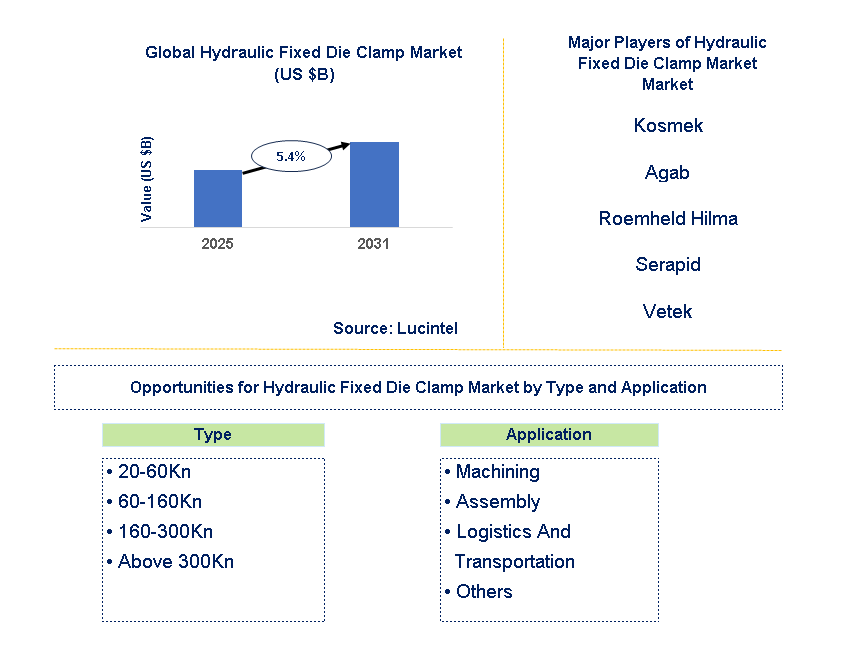
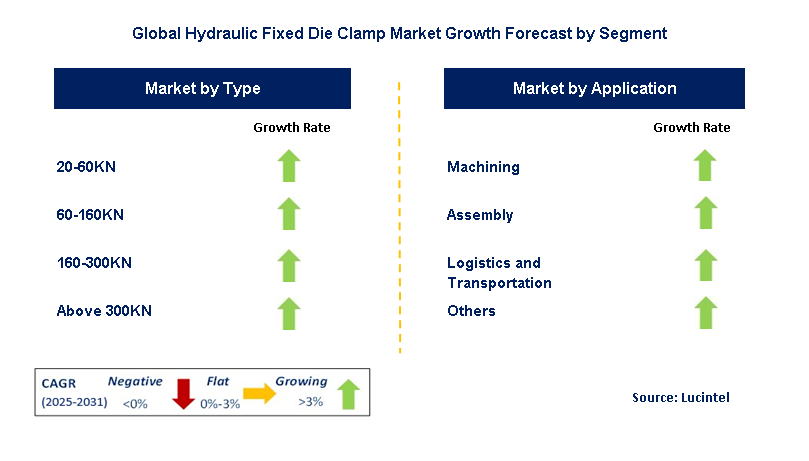
The future of the global hydraulic fixed die clamp market looks promising with opportunities in the machining, assembly, logistics and transportation and other markets. The global hydraulic fixed die clamp market is expected to grow with a CAGR of 5.4% from 2025 to 2031. The major drivers for this market are growing concerns about machine downtime are boosting, increasing focus on reducing operational cost, and rising precision requirements in automotive.Lucintel forecasts that, within the type category, above 300KN is expected to witness the highest growth over the forecast period.
Within the application category, machining is expected to witness the highest growth.
In terms of region, APAC is expected to witness the highest growth over the forecast period.
Gain valuable insights for your business decisions with our comprehensive 150+ page report. Sample figures with some insights are shown below.
Emerging Trends in the Hydraulic Fixed Die Clamp Market
The Hydraulic Fixed Die Clamp market is undergoing significant transformation, driven by technological advancements and evolving industry needs. Emerging trends reflect the demand for greater automation, energy efficiency, and precision in manufacturing processes. These trends are reshaping the market, creating new opportunities for manufacturers and end-users alike.• Integration of Smart Technologies: The use of smart technologies, such as IoT sensors and real-time monitoring systems, is another major trend in Hydraulic Fixed Die Clamp. This will allow manufacturers to monitor hydraulic clamp performance from remote locations, resulting in better predictive maintenance and less downtime. The smart systems improve precision and ensure that clamping forces are held to an exacting level, thereby improving the quality and consistency of the manufacturing process.
• Energy Efficiency and Sustainability: With rising environmental concerns and regulatory pressure, there is a growing focus on energy-efficient hydraulic systems. Manufacturers are increasingly designing clamping systems that reduce energy consumption without compromising on performance. This trend is particularly significant in industries like automotive and aerospace, where energy costs represent a substantial part of overall operational expenses. Energy-efficient models also contribute to sustainability goals by reducing the carbon footprint of manufacturing processes.
• Automation and Advanced Robotics: Automation is becoming a major trend in the Hydraulic Fixed Die Clamp market, driven by the need for higher efficiency and reduced labor costs. Hydraulic die clamps are being integrated into fully automated production lines, where they are used to secure dies with high precision during the manufacturing process. The use of robotics in conjunction with hydraulic systems allows for quicker and more reliable operation, improving production throughput and consistency.
• Customization and Flexibility: As industries demand more specialized equipment for diverse applications, there is an increasing trend toward customization and flexibility in hydraulic die clamps. Manufacturers are offering products with adjustable clamping forces, modular designs, and quick-change features to accommodate various dies and production environments. Customizable systems are helping manufacturers meet specific industry needs, particularly in sectors like aerospace and automotive, where precision and adaptability are critical.
• Focus on Safety and Reliability: Safety remains a top priority in the design and operation of hydraulic fixed die clamps. Manufacturers are incorporating advanced safety features, such as overload protection, emergency stop systems, and automatic clamping force adjustments, to ensure operator safety. These innovations are crucial in preventing accidents and enhancing the reliability of hydraulic systems in high-stress industrial environments.
The emerging trends in the Hydraulic Fixed Die Clamp market, including the integration of smart technologies, energy efficiency, automation, customization, and safety improvements, are transforming the industry. These trends are driving innovation, improving operational efficiency, and creating new growth opportunities for manufacturers and end-users. As these trends continue to evolve, they will play a key role in shaping the future of the market.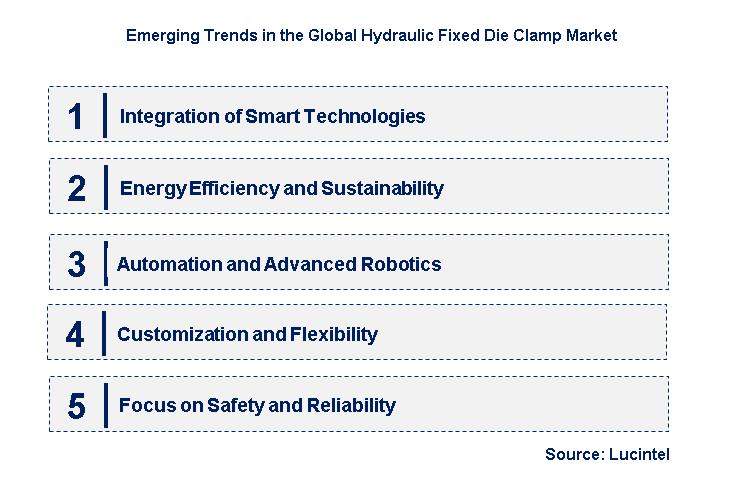
Recent Development in the Hydraulic Fixed Die Clamp Market
The Hydraulic Fixed Die Clamp market is witnessing a series of important developments that reflect advancements in technology, improved efficiency, and increased demand for customized solutions. These developments are enabling manufacturers to meet the evolving needs of various industries, including automotive, aerospace, and manufacturing. Below are five key developments shaping the market.• Introduction of Smart Hydraulic Systems: One of the most notable developments in the Hydraulic Fixed Die Clamp market is the introduction of smart hydraulic systems. These systems incorporate IoT-enabled sensors and real-time data analytics, allowing users to monitor and control the performance of die clamps remotely. The ability to perform predictive maintenance and track system health has enhanced the reliability and efficiency of hydraulic clamps, reducing downtime and maintenance costs.
• Energy-Efficient Design: Energy efficiency is one major aspect where most manufacturers are emphasizing when designing Hydraulic Fixed Die Clamps. Advanced hydraulic components minimize losses during operation. Therefore, such designs reduce the carbon footprint of an industrial process as well as their operational costs in the long term.
• Customization for Special Applications: This is one trend in the market, with more tailor-made solutions available from manufacturers in order to match specific application needs. Hydraulic die clamps, for instance, are being designed to have adjustable clamping forces and quick-change mechanisms, and these are enhanced durability to match industry requirements in automobile, aerospace, and heavy machinery. The optimized performance in varied manufacturing environments will be guaranteed with these customized solutions.
• Advanced Safety Features: Hydraulic die clamps are integrated with safety features that improve the safety of the operators and reduce the risk of accidents. New developments include overload protection, emergency stop functions, and automatic pressure adjustments. Such safety features are particularly critical in high-risk operations, like metalworking and aerospace, which involve heavy machinery and high-pressure die clamping.
• Technological Advancements in Automation: Automation in manufacturing creates a demand for advanced hydraulic die clamps, which can operate with automated systems. New hydraulic clamps are developed to work without much human interference, thus achieving faster and more precise results. This technological development is assisting manufacturers in saving labor costs, enhancing productivity, and achieving consistency in mass production settings.
Recent developments in the Hydraulic Fixed Die Clamp market, including smart systems, energy-efficient designs, customization, safety improvements, and automation advancements, are driving significant growth. These developments are improving the performance, reliability, and safety of hydraulic clamps, enabling manufacturers to meet the increasing demands of modern industrial applications.Strategic Growth Opportunities in the Hydraulic Fixed Die Clamp Market
The Hydraulic Fixed Die Clamp market presents numerous growth opportunities, driven by increasing demand for automation, energy efficiency, and customization across key applications. These opportunities span various sectors, including automotive, aerospace, manufacturing, and metalworking. Below are five key growth opportunities by application.• Automotive Industry: The automotive sector presents significant growth potential for hydraulic fixed die clamps, especially with the increasing focus on precision manufacturing. Hydraulic clamps are essential in the production of complex automotive parts, including body panels and engine components. As the automotive industry shifts toward more automated production lines, the demand for advanced, reliable hydraulic systems will continue to rise.
• Aerospace Industry: The aerospace sector requires high-precision hydraulic clamps for manufacturing critical components, such as turbine blades and fuselage parts. With the growing demand for lightweight, durable, and efficient aircraft, hydraulic die clamps offer a reliable solution for securing parts during manufacturing. As aerospace production increases globally, this application will remain a strong growth area for hydraulic clamp manufacturers.
• Metalworking and Heavy Machinery: In metalworking and heavy machinery, hydraulic fixed die clamps are crucial for securing heavy dies and molds during complex manufacturing processes. As these industries continue to grow, especially in emerging markets, the demand for high-performance, durable clamping systems will increase. Manufacturers are focusing on developing hydraulic clamps that can withstand extreme conditions while maintaining precision.
• Robotics and Automation: With the rise of robotics and automation in manufacturing, hydraulic fixed die clamps are being integrated into robotic systems for enhanced precision and speed. These automated systems require hydraulic clamps that can securely hold dies and molds without manual intervention, leading to improved productivity and reduced labor costs. The robotics and automation trend presents significant growth opportunities for the market.
• Consumer Electronics and 3D Printing: The increasing demand for precision manufacturing in consumer electronics and 3D printing applications is driving the need for specialized hydraulic die clamps. These clamps are essential for securing intricate molds and dies used in the production of electronic components and 3D-printed parts. As these industries expand, the need for high-precision clamping systems will continue to rise.
The Hydraulic Fixed Die Clamp market offers significant strategic growth opportunities across various applications, including automotive, aerospace, metalworking, robotics, and consumer electronics. As demand for precision, automation, and energy efficiency increases, manufacturers have the chance to innovate and capture new market share in these expanding sectors.Hydraulic Fixed Die Clamp Market Driver and Challenges
The Hydraulic Fixed Die Clamp market is influenced by several key drivers and challenges, including technological advancements, economic factors, and regulatory pressures. Understanding these drivers and challenges is crucial for manufacturers aiming to navigate the evolving market landscape and capitalize on emerging opportunities. Below are the key drivers and challenges.The factors responsible for driving the hydraulic fixed die clamp market include:
1. Technological Advancements: Advancements in hydraulic technology, such as smart systems, energy-efficient designs, and automation, are driving the growth of the Hydraulic Fixed Die Clamp market. These innovations enable manufacturers to offer more reliable, cost-effective, and high-performance products that meet the increasing demands of modern production lines.
2. Increased Demand for Automation: As industries push for greater efficiency and reduced labor costs, the demand for automation in manufacturing processes is rising. Hydraulic fixed die clamps play a key role in automating die handling and clamping, ensuring faster and more precise operations. This trend is particularly strong in sectors like automotive and aerospace.
3. Increased Industry Requirements for Higher Precision and Safety: Aerospace, automotive, and metalworking industries require higher precision and safety standards. Hydraulic fixed die clamps ensure the accurate positioning of dies and avoid accidents during the manufacturing process. As these industries expand, so will the demand for high-precision, reliable clamping systems.
4. Emerging Markets: Asia-Pacific and Latin American regions are rapidly developing their infrastructure and industrial base. This growing manufacture demand for hydraulic fixed die clamps as the number of manufacturing bases expands. Manufacturers in this region want to modernize their production lines and seek suppliers of hydraulic clamps.
5. Customization Needs Across Industries: As industries evolve, there is a growing need for customized solutions tailored to specific applications. Hydraulic fixed die clamps that offer flexible designs, adjustable clamping forces, and quick-change mechanisms are becoming increasingly popular. This trend allows manufacturers to meet the diverse needs of customers across sectors like aerospace, automotive, and heavy machinery.
Challenges in the hydraulic fixed die clamp market are:
1. High Initial Costs: The high upfront costs of hydraulic fixed die clamps, particularly advanced models with smart technologies, can be a barrier for some manufacturers. Small and medium-sized enterprises (SMEs) may struggle to invest in these systems, limiting their adoption in cost-sensitive markets.
2. Maintenance and Downtime: The complex nature of hydraulic systems means they require regular maintenance and repair, which can lead to downtime in production. Companies must invest in skilled technicians and maintenance programs to ensure system reliability and reduce the impact of potential failures on production efficiency.
3. Regulatory Compliance: Compliance with local and international regulatory standards presents a challenge for manufacturers, as the requirements can vary across regions. Ensuring that hydraulic die clamps meet safety and environmental regulations requires continuous investment in product testing and certification.
The Hydraulic Fixed Die Clamp market is driven by technological advancements, increased automation, and rising industry demands for precision and safety. However, challenges such as high initial costs, maintenance needs, and regulatory compliance must be addressed for manufacturers to remain competitive. By overcoming these challenges, the market is poised for continued growth and innovation.
List of Hydraulic Fixed Die Clamp Market Companies
Companies in the market compete on the basis of product quality offered. Major players in this market focus on expanding their manufacturing facilities, R&D investments, infrastructural development, and leverage integration opportunities across the value chain. With these strategies hydraulic fixed die clamp market companies cater increasing demand, ensure competitive effectiveness, develop innovative products & technologies, reduce production costs, and expand their customer base. Some of the hydraulic fixed die clamp market companies profiled in this report include-• Kosmek
• Agab
• Roemheld Hilma
• Serapid
• Vetek
• Optima
• Jit Automation Inc.
• Sandsun
• Forwell
• Suzhou Greefu
Hydraulic Fixed Die Clamp Market Market by Segment
The study includes a forecast for the global hydraulic fixed die clamp market market by type, application, and region.Hydraulic Fixed Die Clamp Market by Type [Value from 2019 to 2031]:
• 20-60KN
• 60-160KN
• 160-300KN
• Above 300KN
Hydraulic Fixed Die Clamp Market by Application [Value from 2019 to 2031]:
• Machining
• Assembly
• Logistics And Transportation
• Others
Hydraulic Fixed Die Clamp Market by Region [Value from 2019 to 2031]:
• North America
• Europe
• Asia Pacific
• The Rest of the World
Country Wise Outlook for the Hydraulic Fixed Die Clamp Market
The Hydraulic Fixed Die Clamp market is experiencing significant developments across key regions, driven by advancements in manufacturing technologies, increasing industrial demand, and the adoption of automation. Hydraulic Fixed Die Clamps are essential components used in various industries, including automotive, aerospace, and machinery, for holding and securing dies during production processes. The United States, China, Germany, India, and Japan are key players in this market, each contributing to its growth with unique technological, economic, and regulatory changes. These developments reflect the broader trends in industrial automation and efficiency, reshaping the dynamics of the Hydraulic Fixed Die Clamp market globally.• United States: The U.S. market for Hydraulic Fixed Die Clamps is seeing growth due to the increasing demand for precision in manufacturing processes. Companies are focusing on integrating advanced technologies such as automation, IoT-enabled monitoring, and improved hydraulic systems to enhance operational efficiency. Additionally, there has been a push for energy-efficient hydraulic systems and greater customization to cater to various industry needs. The U.S. also faces strong competition from international manufacturers, leading to continuous innovation in product features and applications.
• China: In China, the Hydraulic Fixed Die Clamp market is expanding rapidly, driven by the country's robust manufacturing sector. Chinese manufacturers are focusing on reducing production costs while enhancing the durability and performance of hydraulic clamps. The integration of smart technologies and automation systems in the manufacturing processes is becoming a key trend. Government policies supporting industrial growth and infrastructure development are contributing to a more favorable market environment. China is expected to lead in terms of volume growth, owing to its large-scale production facilities and increasing demand for industrial equipment.
• Germany: Germany's market for Hydraulic Fixed Die Clamps is characterized by its focus on quality and precision. German manufacturers are at the forefront of developing high-performance hydraulic clamps equipped with advanced features such as precise force control and quick-change mechanisms. Germany’s stringent regulatory environment ensures that only the highest-quality products are produced, leading to innovations in safety and energy efficiency. The demand for these systems has been driven through the automotive, aerospace, and heavy machinery segments, which requires clamping of high complexity and consistency in manufacturing process.
• India: The Hydraulic Fixed Die Clamp Market in India has been growing gradually, as automobile, aerospace, and textile are some of the industries that grow rapidly. With increasing investment from Indian manufacturers, the need for enhancing product quality as well as capacities has been there. The country's focus on infrastructure development and industrial automation is pushing the demand for more efficient hydraulic systems. While cost-effective solutions are in high demand, there is also an emphasis on adopting global quality standards to remain competitive in international markets.
• Japan: In Japan, the demand for Hydraulic Fixed Die Clamps is growing steadily, particularly in the automotive and robotics sectors. Japanese manufacturers are focusing on creating precision-engineered hydraulic systems with high operational efficiency and minimal downtime. Automation and advanced robotics are being integrated into manufacturing lines, leading to the adoption of smarter and more reliable clamping systems. Japan’s strong emphasis on research and development is driving the innovation of more advanced and energy-efficient hydraulic clamps.

Features of the Global Hydraulic Fixed Die Clamp Market
Market Size Estimates: Hydraulic fixed die clamp market size estimation in terms of value ($B).Trend and Forecast Analysis: Market trends (2019 to 2024) and forecast (2025 to 2031) by various segments and regions.
Segmentation Analysis: Hydraulic fixed die clamp market size by type, application, and region in terms of value ($B).
Regional Analysis: Hydraulic fixed die clamp market breakdown by North America, Europe, Asia Pacific, and Rest of the World.
Growth Opportunities: Analysis of growth opportunities in different type, application, and regions for the hydraulic fixed die clamp market.
Strategic Analysis: This includes M&A, new product development, and competitive landscape of the hydraulic fixed die clamp market.
Analysis of competitive intensity of the industry based on Porter’s Five Forces model.

FAQ
Q1. What is the growth forecast for hydraulic fixed die clamp market?Answer: The global hydraulic fixed die clamp market is expected to grow with a CAGR of 5.4% from 2025 to 2031.
Q2. What are the major drivers influencing the growth of the hydraulic fixed die clamp market?
Answer: The major drivers for this market are growing concerns about machine downtime are boosting, increasing focus on reducing operational cost, and rising precision requirements in automotive.
Q3. What are the major segments for hydraulic fixed die clamp market?
Answer: The future of the hydraulic fixed die clamp market looks promising with opportunities in the machining, assembly, logistics and transportation and other markets.
Q4. Who are the key hydraulic fixed die clamp market companies?
Answer: Some of the key hydraulic fixed die clamp market companies are as follows:
• Kosmek
• Agab
• Roemheld Hilma
• Serapid
• Vetek
• Optima
• Jit Automation Inc.
• Sandsun
• Forwell
• Suzhou Greefu
Q5. Which hydraulic fixed die clamp market segment will be the largest in future?Answer: Lucintel forecasts that above 300KN is expected to witness the highest growth over the forecast period.
Q6. In hydraulic fixed die clamp market, which region is expected to be the largest in next 5 years?
Answer: APAC is expected to witness the highest growth over the forecast period.
Q7. Do we receive customization in this report?
Answer: Yes, Lucintel provides 10% customization without any additional cost.
Table of Contents
Methodology
- In-depth interviews of the major players in this market
- Detailed secondary research from competitors’ financial statements and published data
- Extensive searches of published works, market, and database information pertaining to industry news, company press releases, and customer intentions
- A compilation of the experiences, judgments, and insights of Lucintel’s professionals, who have analyzed and tracked this market over the years.


Buy Now
Choose a license that fits your team. Instant PDF delivery.
Prices exclude taxes. Instant delivery. Custom licensing available on request.
Key Questions
- • What are some of the most promising, high-growth opportunities for the hydraulic fixed die clamp market by type (20-60KN, 60-160KN, 160-300KN, and above 300KN), application (machining, assembly, logistics and transportation, and others), and region (North America, Europe, Asia Pacific, and the Rest of the World)?
- • Which segments will grow at a faster pace and why?
- • Which region will grow at a faster pace and why?
- • What are the key factors affecting market dynamics? What are the key challenges and business risks in this market?
- • What are the business risks and competitive threats in this market?
- • What are the emerging trends in this market and the reasons behind them?
- • What are some of the changing demands of customers in the market?
- • What are the new developments in the market? Which companies are leading these developments?
- • Who are the major players in this market? What strategic initiatives are key players pursuing for business growth?
- • What are some of the competing products in this market and how big of a threat do they pose for loss of market share by material or product substitution?
- • What M&A activity has occurred in the last 5 years and what has its impact been on the industry? For any questions related to Hydraulic Fixed Die Clamp Market Market, Hydraulic Fixed Die Clamp Market Market Size, Hydraulic Fixed Die Clamp Market Market Growth, Hydraulic Fixed Die Clamp Market Market Analysis, Hydraulic Fixed Die Clamp Market Market Report, Hydraulic Fixed Die Clamp Market Market Share, Hydraulic Fixed Die Clamp Market Market Trends, Hydraulic Fixed Die Clamp Market Market Forecast, Hydraulic Fixed Die Clamp Market Companies, write Lucintel analyst at email: helpdesk@lucintel.com. We will be glad to get back to you soon.


