
Report Feature
Hand Glove Market Trends and Forecast
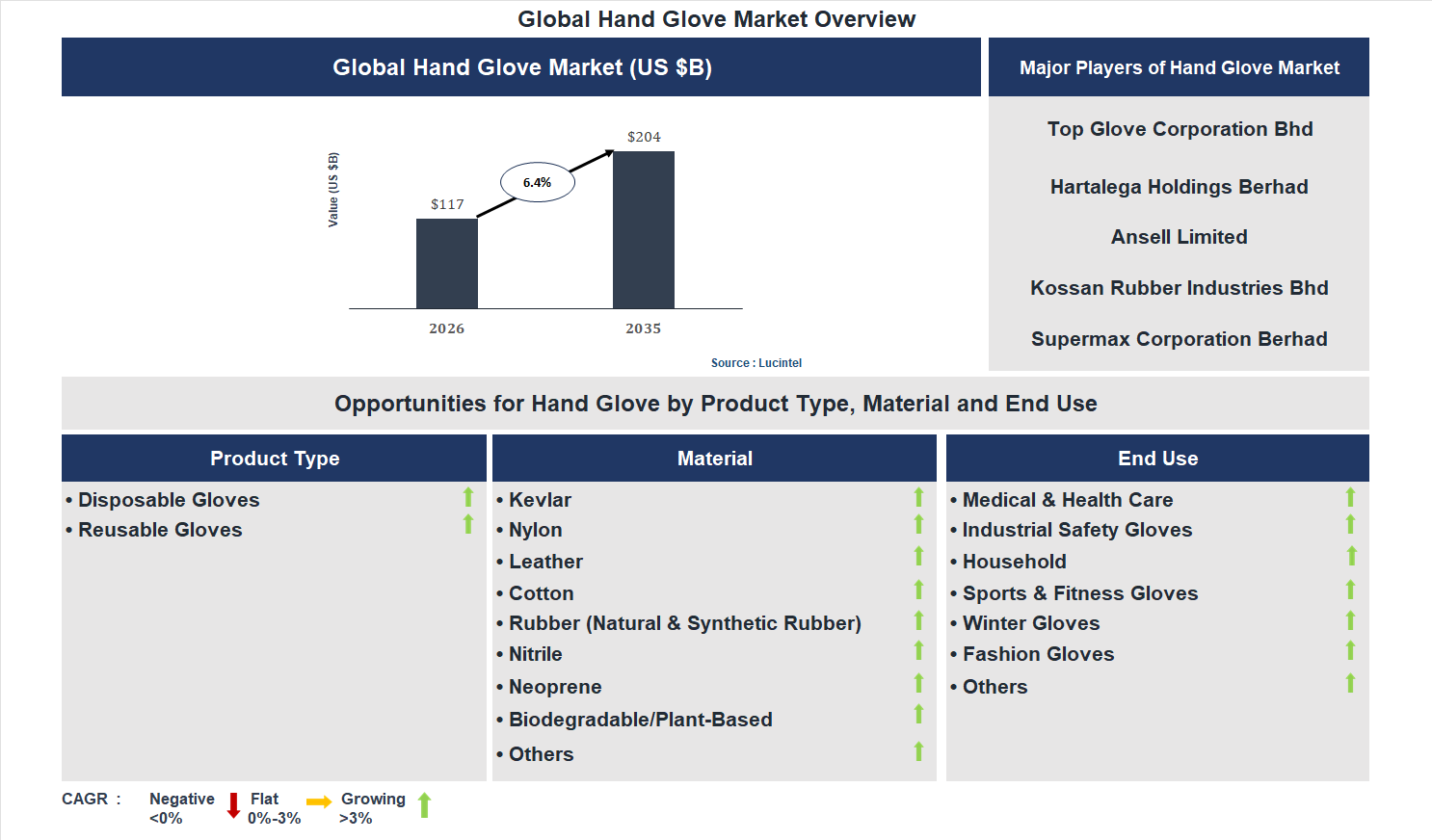
The future of the global hand glove market looks promising with opportunities in the medical & health care, industrial safety glove, household, sport & fitness glove, winter glove, and fashion glove markets. The global hand glove market is expected to reach an estimated $204 billion by 2035 with a CAGR of 6.4% from 2026 to 2035. The major drivers for this market are the increasing demand from healthcare & medical sectors, the rising adoption of disposable gloves in laboratories, and the growing construction & automotive industry glove requirements.• Lucintel forecasts that, within the product type category, disposable glove is expected to witness higher growth over the forecast period.
• Within the end use category, medical & health care is expected to witness the highest growth.
• In terms of region, APAC is expected to witness the highest growth over the forecast period. Gain valuable insights for your business decisions with our comprehensive 150+ page report. Sample figures with some insights are shown below.
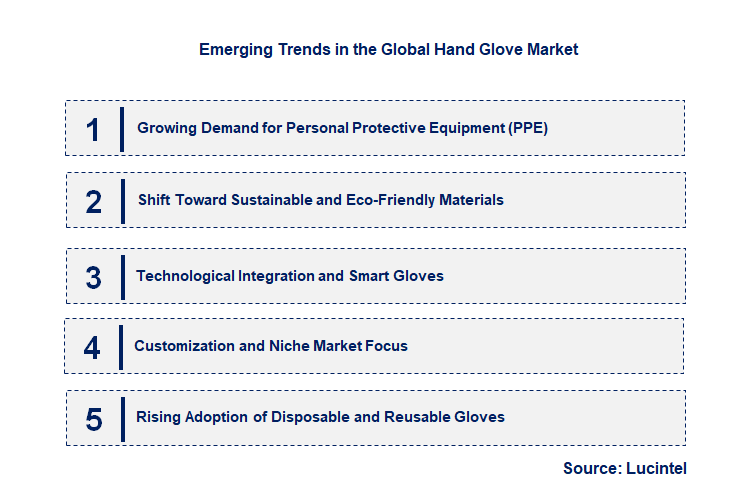
Emerging Trends in the Hand Glove Market
The hand glove market is experiencing rapid evolution driven by technological advancements, changing consumer preferences, and global health concerns. As industries such as healthcare, manufacturing, and sports demand more specialized and innovative products, market players are focusing on sustainability, customization, and smart glove technology. These developments are not only expanding the markets scope but also enhancing product performance and safety standards. The following key trends highlight the dynamic nature of this market and how it is adapting to meet future demands.• Growing Demand for Personal Protective Equipment (PPE): The COVID-19 pandemic significantly increased the need for protective gloves across healthcare, food processing, and industrial sectors. This surge has led to higher production volumes and innovations in glove materials to improve safety, comfort, and durability. The emphasis on PPE is expected to continue, driven by ongoing health concerns and stricter safety regulations, making PPE a core growth driver in the market.
• Shift Toward Sustainable and Eco-Friendly Materials: Consumers and regulators are increasingly prioritizing environmental sustainability. Manufacturers are adopting biodegradable, recyclable, and eco-friendly materials such as natural rubber, nitrile, and bio-based polymers. This shift reduces environmental impact and appeals to eco-conscious buyers, fostering innovation in sustainable glove production. The trend is reshaping supply chains and product development strategies, aligning market growth with environmental responsibility.
• Technological Integration and Smart Gloves: The integration of sensors, IoT connectivity, and wearable technology is transforming gloves into smart devices. These smart gloves enable real-time data collection, enhance safety monitoring, and improve user performance in sectors like healthcare, manufacturing, and sports. This technological leap offers new functionalities, increases efficiency, and opens avenues for personalized user experiences, positioning smart gloves as a significant future segment.
• Customization and Niche Market Focus: Increasing demand for specialized gloves tailored to specific applications—such as anti-vibration, heat-resistant, or chemical-resistant gloves—is driving customization. Manufacturers are offering bespoke solutions to meet unique industry needs, improving safety and performance. This trend allows companies to differentiate their products, target niche markets, and cater to evolving customer preferences, thereby expanding market opportunities.
• Rising Adoption of Disposable and Reusable Gloves: The market is witnessing a balance between disposable gloves for hygiene and reusable gloves for sustainability. Innovations in materials and manufacturing processes are enhancing the durability and comfort of reusable gloves, while disposable gloves continue to dominate healthcare and food sectors. This dual trend addresses diverse consumer needs, influences pricing strategies, and impacts supply chain dynamics, ultimately broadening the market scope. These trends are collectively reshaping the hand glove market by emphasizing safety, sustainability, technological innovation, and customization. They are driving market growth, expanding application areas, and fostering a competitive landscape focused on innovation and environmental responsibility. As these trends evolve, the market is poised for continued expansion and diversification, meeting the complex demands of modern industries and consumers.
Recent Development in the Hand Glove Market
The hand glove market is experiencing rapid growth driven by technological advancements, increasing safety regulations, and rising demand across various industries. Innovations in materials and design are expanding applications, while global health concerns are boosting protective glove sales. Market players are investing heavily in research and development to meet evolving consumer needs. This dynamic environment presents significant opportunities for expansion, diversification, and increased competitiveness, shaping the future landscape of the industry.• Growing Demand for Protective Gloves: The rise in industrial safety standards and health awareness has significantly increased the need for protective hand gloves across sectors such as healthcare, manufacturing, and construction, boosting market growth.
• Technological Advancements in Glove Materials: Innovations like nitrile, latex, and eco-friendly materials have improved durability, comfort, and safety, attracting more consumers and expanding application areas, thus driving market expansion.
• Increasing Adoption of Smart Gloves: Integration of sensors and wearable technology in gloves enhances functionality for sectors like healthcare, sports, and virtual reality, opening new revenue streams and market segments.
• Rising Demand in Healthcare Sector: The COVID-19 pandemic heightened awareness of hygiene and safety, leading to a surge in disposable and reusable gloves, especially in medical and laboratory settings, fueling industry growth.
• Expansion into Emerging Markets: Developing regions are witnessing increased industrialization and healthcare infrastructure, creating new opportunities for glove manufacturers to tap into untapped markets and diversify their portfolios. The hand glove market is evolving rapidly, driven by technological innovations, safety regulations, and expanding applications. These developments are fostering market growth, encouraging diversification, and enhancing competitiveness. As demand continues to rise globally, companies that innovate and adapt to changing needs will secure a stronger market position, ultimately shaping a more dynamic and resilient industry landscape.
Strategic Growth Opportunities in the Hand Glove Market
The hand glove market is experiencing significant growth driven by increasing safety regulations, rising awareness of hygiene, and expanding applications across industries such as healthcare, manufacturing, and food service. Technological advancements and material innovations are enhancing glove performance and comfort, further fueling demand. Market players are focusing on product diversification, sustainable materials, and geographic expansion to capitalize on emerging opportunities. This dynamic environment presents numerous avenues for strategic growth, enabling companies to meet evolving customer needs and regulatory standards effectively.• Expansion into Healthcare and Medical Sectors: The healthcare industry is a primary driver for glove demand, especially with heightened focus on hygiene and infection control. The increasing prevalence of infectious diseases and regulatory mandates for protective gear are prompting hospitals, clinics, and laboratories to procure high-quality gloves. Innovations such as nitrile and latex-free options cater to allergy concerns, expanding market reach. Strategic investments in R&D and partnerships with healthcare providers can enhance product offerings, ensuring compliance and safety standards are met while capturing a larger share of this lucrative segment.
• Adoption of Sustainable and Eco-Friendly Glove Materials: Growing environmental awareness and regulatory pressures are pushing manufacturers to develop sustainable glove options. Biodegradable materials, recycled polymers, and eco-friendly manufacturing processes are gaining traction. These innovations appeal to environmentally conscious consumers and corporate clients seeking sustainable procurement solutions. Investing in eco-friendly materials not only reduces environmental impact but also enhances brand reputation. Companies that lead in sustainable product development can differentiate themselves, access new markets, and meet increasing demand for environmentally responsible products across various industries.
• Technological Advancements in Glove Manufacturing: Innovations such as enhanced barrier protection, improved tactile sensitivity, and ergonomic designs are transforming glove performance. The integration of smart materials and coatings offers additional functionalities like antimicrobial properties and increased durability. Automation and advanced manufacturing techniques improve efficiency and reduce costs. These technological improvements enable companies to produce higher-quality gloves that meet stringent safety standards, attract new customers, and retain existing ones. Staying at the forefront of manufacturing technology is crucial for competitive advantage and market leadership.
• Expansion into Emerging Markets with Rising Industrialization: Rapid industrial growth in regions such as Asia-Pacific and Latin America presents substantial opportunities for glove manufacturers. Increasing infrastructure projects, manufacturing activities, and healthcare development drive demand for protective gloves. Localized manufacturing and distribution can reduce costs and improve supply chain efficiency. Tailoring products to regional needs, complying with local regulations, and establishing strategic partnerships can facilitate market entry. This expansion not only boosts sales volumes but also diversifies revenue streams and enhances global market presence.
• Diversification into Specialized Glove Applications: The market is witnessing growth in niche segments such as cleanroom gloves, chemical-resistant gloves, and high-performance industrial gloves. These specialized products cater to specific industry needs, including pharmaceuticals, electronics, and chemical processing. Developing customized solutions with advanced materials and coatings can command premium pricing and foster customer loyalty. Investing in R&D to innovate and meet stringent industry standards positions companies as leaders in specialized glove markets, opening new revenue channels and strengthening overall market share. The overall impact of these opportunities is a robust, innovative, and expanding hand glove market. Companies that strategically leverage these growth avenues can enhance their competitive edge, meet diverse customer needs, and adapt to evolving regulatory landscapes. This dynamic environment promises sustained growth, increased market penetration, and the development of advanced, sustainable, and specialized glove solutions that benefit industries and consumers worldwide.
Hand Glove Market Driver and Challenges
The hand glove market is influenced by a variety of technological, economic, and regulatory factors that shape its growth and development. Advances in material science and manufacturing processes have led to innovative glove designs, enhancing protection and comfort. Economic factors such as rising healthcare expenditures and industrial growth drive demand across sectors like healthcare, manufacturing, and agriculture. Regulatory standards for safety and quality assurance also play a crucial role in shaping market offerings and compliance requirements. Additionally, global health concerns and safety regulations have increased the need for specialized gloves, further impacting market dynamics. These drivers and challenges collectively determine the markets trajectory and competitive landscape. The factors responsible for driving the hand glove market include:• Technological Innovations: The development of advanced materials such as nitrile, latex, and neoprene has improved glove durability, flexibility, and protection. Innovations like powder-free and textured gloves enhance user comfort and safety, expanding their application scope. Automation in manufacturing has increased production efficiency, reducing costs and enabling rapid market expansion. These technological advancements meet evolving safety standards and customer preferences, fueling demand across healthcare, industrial, and consumer sectors.
• Rising Healthcare Expenditure: Increasing healthcare spending worldwide boosts demand for disposable and reusable gloves to prevent cross-contamination and ensure safety. The COVID-19 pandemic significantly accelerated this trend, highlighting the importance of protective gear. Hospitals, clinics, and laboratories require high-quality gloves for infection control, driving market growth. As healthcare infrastructure expands, especially in emerging economies, the need for reliable hand protection continues to rise, supporting sustained market expansion.
• Industrial Growth and Safety Regulations: The expansion of manufacturing, construction, and automotive industries necessitates protective gloves to ensure worker safety. Stringent safety regulations and standards, such as OSHA and EN standards, mandate the use of protective gloves, encouraging compliance and procurement. Companies are investing in high-performance gloves to meet these standards, which boosts demand. The focus on worker safety and regulatory compliance acts as a catalyst for market growth, especially in regions with strict safety laws.
• Increasing Awareness of Personal Safety: Growing awareness about occupational hazards and personal safety has led to higher glove adoption in various sectors. Campaigns and safety training programs emphasize the importance of protective gear, influencing purchasing decisions. Consumers and workers are increasingly opting for high-quality gloves to prevent injuries and infections. This heightened awareness supports market expansion, especially in emerging markets where safety practices are gaining prominence.
• Expansion of End-Use Industries: The rise of end-use industries such as food processing, electronics, and agriculture has created new opportunities for glove manufacturers. The demand for food-grade gloves, anti-static gloves, and chemical-resistant gloves is increasing. Market diversification into these sectors helps companies tap into new revenue streams. The growth of these industries, coupled with the need for specialized gloves, significantly contributes to overall market growth. The challenges facing the hand glove market include:
• Fluctuating Raw Material Prices: The hand glove market heavily depends on raw materials like latex, nitrile, and neoprene. Price volatility due to supply chain disruptions, environmental factors, and geopolitical issues can increase production costs. These fluctuations impact profit margins and pricing strategies, making it difficult for manufacturers to maintain consistent supply and competitive pricing. Managing raw material costs while ensuring quality remains a significant challenge, especially during periods of global economic instability.
• Stringent Regulatory Compliance: The market faces complex regulatory requirements related to safety, quality, and environmental standards. Compliance with diverse international standards can be costly and time-consuming, especially for small and medium-sized enterprises. Non-compliance risks product recalls, legal penalties, and damage to brand reputation. Navigating these regulations requires significant investment in testing, certification, and quality assurance processes, which can hinder market entry and expansion.
• Environmental Concerns and Sustainability: Growing environmental awareness demands sustainable manufacturing practices and eco-friendly materials. The disposal of single-use gloves contributes to plastic waste and pollution. Manufacturers face pressure to develop biodegradable gloves and reduce carbon footprints, which can involve high R&D costs and supply chain adjustments. Balancing environmental sustainability with product performance and cost-effectiveness remains a key challenge for industry players. The hand glove market is driven by technological advancements, increasing healthcare and industrial demand, safety regulations, and rising awareness of personal safety. However, it faces challenges such as raw material price fluctuations, regulatory complexities, and environmental sustainability concerns. These factors collectively influence market growth, requiring manufacturers to innovate and adapt to changing conditions. Overall, the markets future depends on balancing innovation with sustainability and regulatory compliance to meet evolving customer needs and global standards.
List of Hand Glove Companies
Companies in the market compete on the basis of product quality offered. Major players in this market focus on expanding their manufacturing facilities, R&D investments, infrastructural development, and leverage integration opportunities across the value chain. With these strategies hand glove companies cater increasing demand, ensure competitive effectiveness, develop innovative products & technologies, reduce production costs, and expand their customer base. Some of the hand glove companies profiled in this report include-• Top Glove Corporation Bhd
• Hartalega Holdings Berhad
• Ansell Limited
• Kossan Rubber Industries Bhd
• Supermax Corporation Berhad
• Kimberly-Clark Corporation
• 3M Company
• Semperit AG Holding
• Medline Industries LP
• Honeywell International Inc.
Hand Glove Market by Segment
The study includes a forecast for the global hand glove market by product type, material, end use, and region.Hand Glove Market by Product Type [Value from 2019 to 2035]:
• Disposable Gloves
• Reusable Gloves
Hand Glove Market by Material [Value from 2019 to 2035]:
• Kevlar
• Nylon
• Leather
• Cotton
• Rubber (Natural & Synthetic Rubber)
• Nitrile
• Neoprene
• Biodegradable/Plant-Based
• Others
Hand Glove Market by End Use [Value from 2019 to 2035]:
• Medical & Health Care
• Industrial Safety Gloves
• Household
• Sports & Fitness Gloves
• Winter Gloves
• Fashion Gloves
• Others
Hand Glove Market by Region [Value from 2019 to 2035]:
• North America
• Europe
• Asia Pacific
• The Rest of the World
Country Wise Outlook for the Hand Glove Market
The hand glove market has experienced significant shifts driven by technological innovations, changing consumer preferences, and evolving regulatory standards. The demand for specialized gloves in healthcare, industrial, and consumer sectors has surged, especially amid the ongoing emphasis on safety and hygiene. Countries are investing in sustainable materials and advanced manufacturing processes to meet environmental and quality standards. Market players are expanding their product portfolios and exploring new distribution channels to capture emerging opportunities. These developments reflect a dynamic landscape where innovation and compliance are key to maintaining competitiveness in the global hand glove industry.• United States: The US market has seen increased demand for medical and industrial gloves, driven by heightened health awareness and safety regulations. Innovations in nitrile and latex glove manufacturing have improved durability and comfort. Major companies are investing in sustainable materials to reduce environmental impact. E-commerce channels are expanding, making gloves more accessible to consumers. Regulatory standards, such as FDA approvals, are influencing product development and quality assurance. The US also witnesses a rise in private label brands, catering to both healthcare and consumer segments, boosting overall market growth.
• China: China remains the largest producer and consumer of hand gloves, with rapid industrialization fueling demand. The focus has shifted towards high-quality, medical-grade gloves amid stricter safety standards. Local manufacturers are adopting advanced automation to increase production efficiency and reduce costs. The government promotes sustainable manufacturing practices, encouraging the use of eco-friendly materials. Export markets are expanding, especially to North America and Europe, driven by competitive pricing and quality. The Chinese market also sees a growing trend in disposable gloves for food safety and hygiene, aligning with global health concerns.
• Germany: Germanys market emphasizes high-quality, durable gloves for industrial and healthcare applications. The country leads in integrating innovative materials like biodegradable and recycled options. Stringent EU regulations on safety and environmental impact influence product development. German companies focus on sustainable production processes and eco-friendly materials to meet consumer demand for environmentally responsible products. The adoption of automation and smart manufacturing enhances efficiency. The market also benefits from strong healthcare infrastructure, increasing demand for medical gloves. Additionally, Germanys emphasis on research and development fosters innovation in glove technology and materials.
• India: The Indian hand glove market is experiencing rapid growth due to expanding healthcare infrastructure and industrialization. The demand for affordable, high-quality gloves is rising across sectors such as healthcare, food processing, and manufacturing. Local manufacturers are investing in modern machinery to improve product quality and output. The government promotes domestic manufacturing through initiatives like Make in India, encouraging innovation and self-reliance. The market is also witnessing increased adoption of disposable gloves for hygiene and safety. Import restrictions and tariffs are supporting local production, making India a significant player in the global glove supply chain.
• Japan: Japans market is characterized by a focus on high-performance, specialized gloves for industrial and medical use. The country emphasizes advanced materials like silicone and antimicrobial coatings to enhance glove functionality. Regulatory standards for safety and environmental impact are strict, prompting innovation in eco-friendly and sustainable products. Japanese companies are investing in R&D to develop gloves with enhanced comfort, durability, and resistance. The market also sees a growing trend toward reusable gloves, driven by environmental concerns. Overall, Japans glove industry is marked by technological innovation and a commitment to quality and sustainability.

Features of the Global Hand Glove Market
Market Size Estimates: Hand glove market size estimation in terms of value ($B). Trend and Forecast Analysis: Market trends (2019 to 2025) and forecast (2026 to 2035) by various segments and regions. Segmentation Analysis: Hand glove market size by product type, material, end use, and region in terms of value ($B). Regional Analysis: Hand glove market breakdown by North America, Europe, Asia Pacific, and Rest of the World. Growth Opportunities: Analysis of growth opportunities in different product types, materials, end uses, and regions for the hand glove market. Strategic Analysis: This includes M&A, new product development, and competitive landscape of the hand glove market. Analysis of competitive intensity of the industry based on Porter’s Five Forces model.
FAQ
Q1. What is the hand glove market size? Answer: The global hand glove market is expected to reach an estimated $204 billion by 2035. Q2. What is the growth forecast for hand glove market? Answer: The global hand glove market is expected to grow with a CAGR of 6.4% from 2026 to 2035. Q3. What are the major drivers influencing the growth of the hand glove market? Answer: The major drivers for this market are the increasing demand from healthcare & medical sectors, the rising adoption of disposable gloves in laboratories, and the growing construction & automotive industry glove requirements. Q4. What are the major segments for hand glove market? Answer: The future of the hand glove market looks promising with opportunities in the medical & health care, industrial safety glove, household, sport & fitness glove, winter glove, and fashion glove markets. Q5. Who are the key hand glove market companies? Answer: Some of the key hand glove companies are as follows:• Top Glove Corporation Bhd
• Hartalega Holdings Berhad
• Ansell Limited
• Kossan Rubber Industries Bhd
• Supermax Corporation Berhad
• Kimberly-Clark Corporation
• 3M Company
• Semperit AG Holding
• Medline Industries LP
• Honeywell International Inc. Q6. Which hand glove market segment will be the largest in future? Answer: Lucintel forecasts that, within the product type category, disposable glove is expected to witness higher growth over the forecast period. Q7. In hand glove market, which region is expected to be the largest in next 5 years? Answer: In terms of region, APAC is expected to witness the highest growth over the forecast period. Q8. Do we receive customization in this report? Answer: Yes, Lucintel provides 10% customization without any additional cost.
Table of Contents
List of Figures
List of Tables
Methodology
- In-depth interviews of the major players in this market
- Detailed secondary research from competitors’ financial statements and published data
- Extensive searches of published works, market, and database information pertaining to industry news, company press releases, and customer intentions
- A compilation of the experiences, judgments, and insights of Lucintel’s professionals, who have analyzed and tracked this market over the years.


Buy Now
Choose a license that fits your team. Instant PDF delivery.
Prices exclude taxes. Instant delivery. Custom licensing available on request.
Key Questions
- • What are some of the most promising, high-growth opportunities for the hand glove market by product type (disposable gloves and reusable gloves), material (kevlar, nylon, leather, cotton, rubber (natural & synthetic rubber), nitrile, neoprene, biodegradable/plant-based, and others), end use (medical & health care, industrial safety gloves, household, sports & fitness gloves, winter gloves, fashion gloves, and others), and region (North America, Europe, Asia Pacific, and the Rest of the World)?
- • Which segments will grow at a faster pace and why?
- • Which region will grow at a faster pace and why?
- • What are the key factors affecting market dynamics? What are the key challenges and business risks in this market?
- • What are the business risks and competitive threats in this market?
- • What are the emerging trends in this market and the reasons behind them?
- • What are some of the changing demands of customers in the market?
- • What are the new developments in the market? Which companies are leading these developments?
- • Who are the major players in this market? What strategic initiatives are key players pursuing for business growth?
- • What are some of the competing products in this market and how big of a threat do they pose for loss of market share by material or product substitution?
- • What M&A activity has occurred in the last 7 years and what has its impact been on the industry? For any questions related to Hand Glove Market, Hand Glove Market Size, Hand Glove Market Growth, Hand Glove Market Analysis, Hand Glove Market Report, Hand Glove Market Share, Hand Glove Market Trends, Hand Glove Market Forecast, Hand Glove Companies, write Lucintel analyst at email: helpdesk@lucintel.com. We will be glad to get back to you soon.


