
Report Feature
Golf Bag Market Trends and Forecast
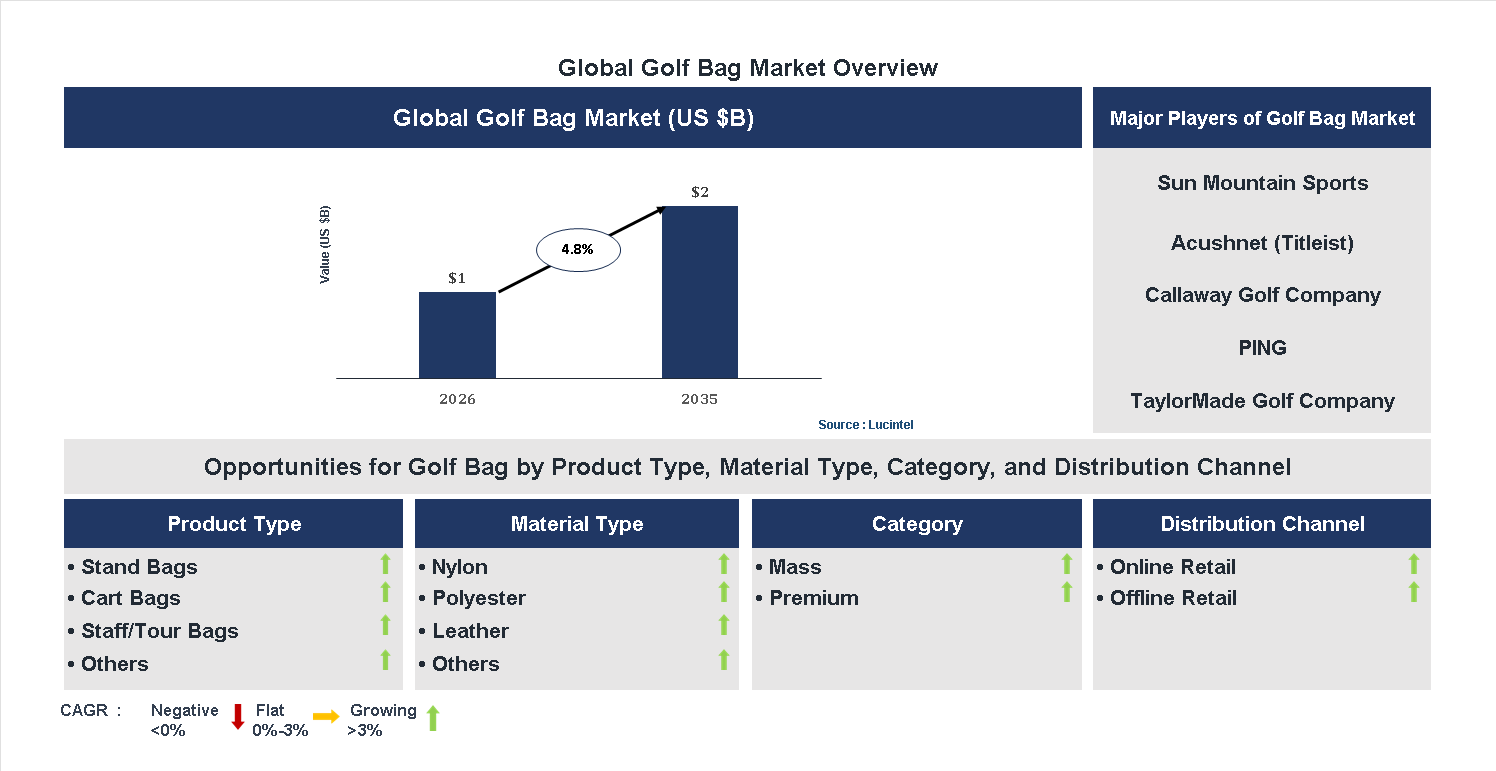
The future of the global golf bag market looks promising with opportunities in the online retail and offline retail markets. The global golf bag market is expected to reach an estimated $2 billion by 2035 with a CAGR of 4.8% from 2026 to 2035. The major drivers for this market are the increasing adoption of stylish & branded golf accessories, the rising demand for multifunctional & ergonomic golf bags, and the growing demand for lightweight & durable golf bags.• Lucintel forecasts that, within the product type category, cart bag is expected to witness higher growth over the forecast period.
• Within the distribution channel category, offline retail is expected to witness the highest growth.
• In terms of region, APAC is expected to witness the highest growth over the forecast period. Gain valuable insights for your business decisions with our comprehensive 150+ page report. Sample figures with some insights are shown below.
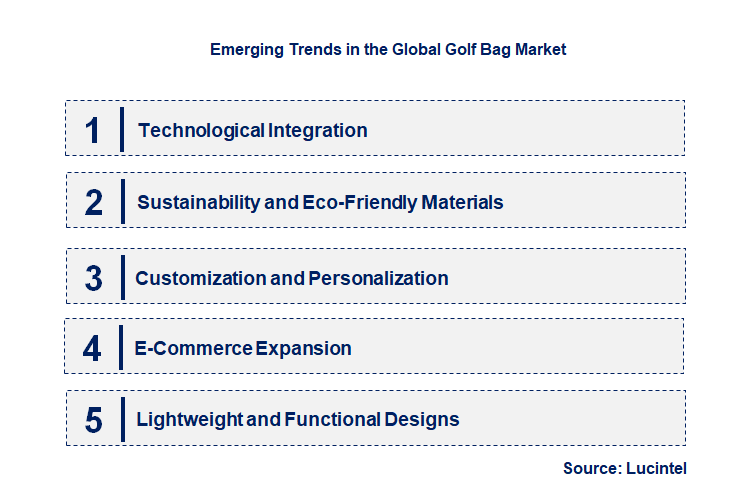
Emerging Trends in the Golf Bag Market
The golf bag market is experiencing significant transformation driven by technological advancements, changing consumer preferences, and sustainability concerns. As golf continues to grow globally, manufacturers are innovating to meet the evolving demands of players ranging from amateurs to professionals. The market is also influenced by the rise of e-commerce, customization options, and eco-friendly products. These trends are shaping the future landscape of golf bags, making them more functional, sustainable, and aligned with modern lifestyles. Understanding these key developments is essential for stakeholders aiming to capitalize on emerging opportunities and stay competitive in this dynamic market.• Technological Integration: Smart golf bags are gaining popularity as they incorporate features like built-in GPS, charging ports, and weight sensors. These innovations enhance convenience and improve the overall golfing experience by allowing players to carry essential tech gadgets seamlessly. The integration of technology is also driving product differentiation and attracting tech-savvy consumers, thereby expanding market reach and encouraging innovation within the industry.
• Sustainability and Eco-Friendly Materials: Increasing environmental awareness is prompting manufacturers to adopt sustainable materials such as recycled plastics, biodegradable fabrics, and eco-friendly dyes. These eco-conscious products appeal to environmentally aware consumers and help brands meet regulatory standards. The shift towards sustainability not only reduces the environmental footprint but also enhances brand reputation, fostering loyalty among eco-conscious customers and opening new market segments.
• Customization and Personalization: Consumers are seeking personalized golf bags that reflect their style and preferences. Manufacturers are offering customizable options such as monogramming, color choices, and modular designs. This trend enhances customer engagement and satisfaction by providing unique, tailored products. The rise of online customization tools further facilitates this trend, enabling brands to cater to individual tastes and increase sales through personalized offerings.
• E-Commerce Expansion: The growth of online retail channels is transforming how golf bags are marketed and sold. E-commerce platforms provide wider reach, easier access to a variety of products, and convenient purchasing options. Digital marketing strategies, virtual try-ons, and direct-to-consumer models are boosting sales and reducing reliance on traditional retail outlets. This shift is making golf bags more accessible to a global audience and fostering competitive pricing.
• Lightweight and Functional Designs: There is a rising demand for lightweight, ergonomic golf bags that do not compromise on storage and durability. Innovations in materials and design focus on reducing weight while maintaining strength, making it easier for players to carry their gear comfortably. These functional designs cater to both amateur and professional golfers, enhancing mobility and reducing fatigue, which ultimately improves overall performance and user satisfaction. These emerging trends are reshaping the golf bag market by fostering innovation, promoting sustainability, and enhancing customer experience. The integration of technology, eco-friendly practices, customization options, expansion of e-commerce, and focus on lightweight, functional designs are collectively driving growth and competitiveness. As these trends continue to evolve, they will define the future landscape of the market, offering new opportunities for brands and consumers alike.
Recent Development in the Golf Bag Market
The golf bag market has experienced significant innovation and expansion driven by technological advancements, changing consumer preferences, and increasing participation in golf worldwide. These developments are shaping the future landscape, offering new opportunities for manufacturers and retailers. As the sport gains popularity across diverse demographics, the market is poised for growth through enhanced product features, sustainability initiatives, and digital integration. Understanding these key developments is essential for stakeholders aiming to capitalize on emerging trends and stay competitive in this evolving industry.• Innovation in Material Technology: Advancements in lightweight, durable, and weather-resistant materials are transforming golf bags. These innovations improve portability, longevity, and user comfort, attracting both amateur and professional players. Manufacturers are now able to produce bags that are more functional and stylish, meeting diverse consumer needs. This development enhances customer satisfaction and boosts sales, ultimately expanding market share and encouraging new product lines.
• Sustainability and Eco-Friendly Products: Increasing environmental awareness is prompting brands to develop sustainable golf bags using recycled materials and eco-friendly manufacturing processes. These products appeal to environmentally conscious consumers and align with global sustainability goals. The shift towards eco-friendly options is driving market growth, encouraging companies to innovate and differentiate their offerings. This trend also fosters brand loyalty and opens new market segments focused on sustainability.
• Digital Integration and Smart Features: The integration of technology into golf bags, such as built-in GPS, charging ports, and app connectivity, is revolutionizing user experience. These smart features provide convenience, real-time data, and enhanced gameplay, appealing to tech-savvy golfers. The adoption of digital innovations is creating a new product category, increasing market competitiveness, and attracting a broader customer base. This development signifies a move towards more connected and personalized golfing experiences.
• Customization and Personalization Options: Consumers increasingly seek personalized golf bags with unique designs, branding, and adjustable features. Manufacturers are offering customizable options to meet individual preferences, boosting customer engagement and satisfaction. This trend allows brands to differentiate themselves and command premium pricing. The growing demand for personalized products is expanding market opportunities and fostering brand loyalty among diverse customer segments.
• E-commerce and Direct-to-Consumer Sales Growth: The rise of online retail channels is transforming how golf bags are marketed and sold. E-commerce platforms enable brands to reach a global audience, offer customized products, and provide seamless purchasing experiences. This shift reduces reliance on traditional retail outlets, lowers distribution costs, and accelerates market penetration. The growth of direct-to-consumer sales is significantly impacting market dynamics, fostering innovation, and increasing accessibility for consumers worldwide. These developments are collectively driving growth, innovation, and sustainability in the golf bag market. Enhanced product features, digital integration, and e-commerce expansion are broadening consumer choices and improving user experiences. The focus on eco-friendly materials aligns with global sustainability efforts, attracting environmentally conscious buyers. Overall, these trends are fostering a competitive, dynamic market landscape, encouraging brands to innovate continuously and meet evolving consumer demands, thereby ensuring sustained growth and market resilience.
Strategic Growth Opportunities in the Golf Bag Market
The golf bag market is experiencing significant growth driven by increasing participation in golf, technological advancements, and evolving consumer preferences. Innovations in design, materials, and functionality are expanding the markets reach across different regions and demographics. Strategic investments by key players and rising disposable incomes are further fueling demand. As the sport gains popularity worldwide, opportunities for market expansion and product diversification continue to emerge, creating a dynamic landscape for manufacturers and retailers alike.• Expansion into Emerging Markets: The golf bag market is poised for growth in developing regions such as Asia-Pacific and Latin America, where golf is gaining popularity. Rising disposable incomes, urbanization, and increased access to golf courses are driving demand. Local manufacturers are entering these markets, offering affordable and culturally tailored products. Strategic partnerships and distribution channels are essential for capturing market share. This expansion presents significant opportunities for growth, brand recognition, and revenue diversification in regions with untapped potential.
• Integration of Smart Technology in Golf Bags: The incorporation of smart features such as GPS tracking, built-in chargers, and app connectivity is transforming golf bags into high-tech accessories. These innovations enhance user experience by providing real-time data, improving convenience, and increasing engagement. Manufacturers investing in IoT-enabled products can differentiate themselves in a competitive market. The demand for technologically advanced golf bags is expected to rise, especially among younger, tech-savvy consumers, creating new revenue streams and strengthening brand loyalty.
• Focus on Lightweight and Ergonomic Designs: Consumers increasingly prefer lightweight, ergonomic golf bags that offer ease of transport and comfort. Advances in materials like carbon fiber and lightweight fabrics enable manufacturers to produce durable yet lightweight products. Features such as padded straps, multiple compartments, and adjustable straps improve user convenience. This trend caters to both amateur and professional golfers seeking mobility and comfort, opening opportunities for innovative product development and premium pricing strategies in the market.
• Rising Demand for Personalized and Customizable Golf Bags: Personalization options such as custom colors, logos, and unique designs are gaining popularity among consumers seeking individuality. Manufacturers offering customization services can attract a broader customer base and foster brand loyalty. The trend is driven by social media influence and a desire for unique sporting accessories. Investment in customization technology and flexible manufacturing processes can help brands meet this demand, creating a competitive edge and expanding market share in a growing segment.
• Sustainability and Eco-Friendly Product Development: Increasing environmental awareness is prompting manufacturers to develop sustainable golf bags using recycled materials and eco-friendly manufacturing processes. Consumers are more inclined to purchase products aligned with their values, boosting demand for green alternatives. Certifications and eco-labels can enhance brand reputation and appeal to environmentally conscious buyers. This opportunity encourages innovation in materials and supply chain practices, positioning brands as responsible market leaders and supporting long-term growth in the environmentally aware consumer segment. These strategic growth opportunities are set to significantly influence the golf bag market by expanding geographic reach, integrating advanced technology, enhancing product design, offering customization, and emphasizing sustainability. Embracing these trends will enable manufacturers to meet evolving consumer demands, differentiate their offerings, and capitalize on emerging markets. As a result, the market is expected to experience sustained growth, increased competitiveness, and innovation-driven development, shaping the future landscape of golf accessories worldwide.
Golf Bag Market Driver and Challenges
The golf bag market is influenced by a variety of technological, economic, and regulatory factors that shape its growth and development. Innovations in materials and design enhance product functionality and appeal to consumers seeking durability and style. Economic conditions, such as disposable income levels and sports participation rates, directly impact market demand. Regulatory standards concerning product safety and environmental sustainability also play a crucial role in shaping manufacturing practices and consumer choices. Additionally, evolving consumer preferences and the rise of e-commerce platforms influence distribution channels and marketing strategies. Understanding these drivers and challenges is essential for stakeholders aiming to capitalize on market opportunities and navigate potential obstacles effectively. The factors responsible for driving the golf bag market include:• Technological Innovation: The integration of advanced materials like lightweight composites and waterproof fabrics enhances durability and functionality. Manufacturers are investing in ergonomic designs, such as padded straps and multiple compartments, to improve user comfort and convenience. Smart golf bags with built-in charging ports and GPS tracking are emerging, appealing to tech-savvy consumers. These innovations not only improve product performance but also differentiate brands in a competitive market, driving sales and customer loyalty.
• Growing Golf Popularity: An increase in golf participation worldwide, driven by rising health consciousness and leisure trends, boosts demand for golf equipment, including bags. Countries with expanding middle-class populations and sports infrastructure investments see higher engagement levels. Golf tournaments and celebrity endorsements further stimulate interest, encouraging both amateur and professional players to upgrade their gear, including premium golf bags. This expanding customer base sustains market growth and encourages product diversification.
• E-commerce Expansion: The rise of online retail platforms has transformed how consumers purchase golf bags. E-commerce offers a wider product selection, competitive pricing, and convenient shopping experiences. Digital marketing strategies, including social media and influencer collaborations, enhance brand visibility and consumer engagement. The ability to access global markets through online channels allows manufacturers to reach niche segments and increase sales volume, fueling overall market expansion.
• Sustainability Trends: Increasing awareness of environmental issues prompts manufacturers to adopt eco-friendly materials and sustainable production practices. Recyclable fabrics, biodegradable components, and eco-conscious packaging appeal to environmentally aware consumers. Regulatory pressures and corporate social responsibility initiatives further incentivize sustainable innovations. These efforts not only reduce environmental impact but also enhance brand reputation, attracting a growing segment of eco-conscious buyers and supporting long-term market viability.
• Product Customization and Branding: Consumers seek personalized golf bags that reflect their style and preferences. Manufacturers offering customizable options, such as monogramming and color choices, cater to this demand. Strong branding and collaborations with professional golfers or sports brands enhance product appeal and market positioning. Customization and branding strategies foster customer loyalty and allow premium pricing, contributing to higher profit margins and market differentiation. The challenges in the golf bag market are:
• Price Competition and Market Saturation: The proliferation of brands and products leads to intense price competition, squeezing profit margins. Many manufacturers offer similar features at competitive prices, making it difficult for new entrants to establish a foothold. Market saturation results in limited differentiation, forcing companies to innovate continuously and invest heavily in marketing to maintain market share, which can strain financial resources.
• Regulatory and Environmental Compliance: Stringent regulations regarding product safety, material sourcing, and environmental impact pose compliance challenges. Manufacturers must invest in sustainable materials and adhere to standards that can increase production costs. Non-compliance risks legal penalties and damage to brand reputation. Navigating diverse regulatory landscapes across regions adds complexity and requires ongoing adaptation of manufacturing processes.
• Supply Chain Disruptions: Global supply chain issues, including shortages of raw materials and transportation delays, impact production timelines and costs. Dependence on international suppliers exposes the market to geopolitical tensions and economic fluctuations. Disruptions can lead to inventory shortages, delayed product launches, and increased logistics expenses, ultimately affecting sales and profitability. The golf bag market is shaped by technological advancements, rising popularity of golf, e-commerce growth, sustainability initiatives, and customization trends. However, it faces challenges such as intense price competition, regulatory compliance, and supply chain disruptions. These drivers and challenges collectively influence market dynamics, requiring stakeholders to innovate, adapt, and strategize effectively. Embracing technological and sustainable trends while managing competitive pressures and operational risks will be crucial for sustained growth and success in this evolving market landscape.
List of Golf Bag Companies
Companies in the market compete on the basis of product quality offered. Major players in this market focus on expanding their manufacturing facilities, R&D investments, infrastructural development, and leverage integration opportunities across the value chain. With these strategies golf bag companies cater increasing demand, ensure competitive effectiveness, develop innovative products & technologies, reduce production costs, and expand their customer base. Some of the golf bag companies profiled in this report include-• Sun Mountain Sports
• Acushnet (Titleist)
• Callaway Golf Company
• PING
• TaylorMade Golf Company
• Mizuno Corporation
• Cobra Golf
• PUMA SE
• Bridgestone Golf
• Wilson Sporting Goods
Golf Bag Market by Segment
The study includes a forecast for the global golf bag market by product type, material type, category, distribution channel, and region.Golf Bag Market by Product Type [Value from 2019 to 2035]:
• Stand Bags
• Cart Bags
• Staff/Tour Bags
• Others
Golf Bag Market by Material Type [Value from 2019 to 2035]:
• Nylon
• Polyester
• Leather
• Others
Golf Bag Market by Category [Value from 2019 to 2035]:
• Mass
• Premium
Golf Bag Market by Distribution Channel [Value from 2019 to 2035]:
• Online Retail
• Offline Retail
Golf Bag Market by Region [Value from 2019 to 2035]:
• North America
• Europe
• Asia Pacific
• The Rest of the World
Country Wise Outlook for the Golf Bag Market
The golf bag market has experienced significant shifts driven by technological innovations, changing consumer preferences, and expanding golf communities worldwide. As the sport gains popularity across different regions, manufacturers are focusing on sustainability, design enhancements, and smart features to attract a broader customer base. The United States, China, Germany, India, and Japan are key players in this evolving landscape, each contributing unique trends and developments that shape the markets future trajectory.• United States: The US market has seen a surge in premium and technologically advanced golf bags, with a focus on lightweight materials and smart features like GPS tracking. Major brands are investing in eco-friendly manufacturing processes, aligning with consumer demand for sustainability. The growth of golf tourism and increased participation among younger demographics are also driving market expansion.
• China: China’s golf bag market is rapidly growing due to rising disposable incomes and a burgeoning golf culture. Local brands are gaining ground by offering affordable yet innovative products, including customizable designs and enhanced storage options. The government’s initiatives to promote golf tourism and infrastructure development further bolster market prospects.
• Germany: In Germany, the market emphasizes high-quality, durable, and functional golf bags, catering to a mature golfing community. There is a notable trend toward eco-conscious products, with brands adopting sustainable materials. Technological integration, such as built-in cooling compartments and ergonomic designs, is also gaining popularity among consumers.
• India: The Indian golf bag market is expanding as golf gains popularity among the middle class and affluent segments. Manufacturers are introducing affordable, lightweight, and stylish options to attract new players. The rise of golf academies and tournaments is fueling demand, alongside increasing awareness of the sport’s health and leisure benefits.
• Japan: Japan’s market is characterized by a preference for compact, lightweight, and highly functional golf bags. Innovations include advanced waterproofing and ergonomic features tailored to local consumer preferences. The market also shows a growing interest in eco-friendly products, with brands emphasizing sustainability and minimal environmental impact.

Features of the Global Golf Bag Market
Market Size Estimates: Golf bag market size estimation in terms of value ($B). Trend and Forecast Analysis: Market trends (2019 to 2025) and forecast (2026 to 2035) by various segments and regions. Segmentation Analysis: Golf bag market size by various segments, such as by product type, material type, category, distribution channel, and region in terms of value ($B). Regional Analysis: Golf bag market breakdown by North America, Europe, Asia Pacific, and Rest of the World. Growth Opportunities: Analysis of growth opportunities in different product types, material types, category, distribution channels, and regions for the golf bag market. Strategic Analysis: This includes M&A, new product development, and competitive landscape of the golf bag market. Analysis of competitive intensity of the industry based on Porter’s Five Forces model.
FAQ
Q1. What is the golf bag market size? Answer: The global golf bag market is expected to reach an estimated $2 billion by 2035. Q2. What is the growth forecast for golf bag market? Answer: The global golf bag market is expected to grow with a CAGR of 4.8% from 2026 to 2035. Q3. What are the major drivers influencing the growth of the golf bag market? Answer: The major drivers for this market are the increasing adoption of stylish & branded golf accessories, the rising demand for multifunctional & ergonomic golf bags, and the growing demand for lightweight & durable golf bags. Q4. What are the major segments for golf bag market? Answer: The future of the golf bag market looks promising with opportunities in the online retail and offline retail markets. Q5. Who are the key golf bag market companies? Answer: Some of the key golf bag companies are as follows:• Sun Mountain Sports
• Acushnet (Titleist)
• Callaway Golf Company
• PING
• TaylorMade Golf Company
• Mizuno Corporation
• Cobra Golf
• PUMA SE
• Bridgestone Golf
• Wilson Sporting Goods Q6. Which golf bag market segment will be the largest in future? Answer: Lucintel forecasts that, within the product type category, cart bag is expected to witness higher growth over the forecast period. Q7. In golf bag market, which region is expected to be the largest in next 5 years? Answer: In terms of region, APAC is expected to witness the highest growth over the forecast period. Q8. Do we receive customization in this report? Answer: Yes, Lucintel provides 10% customization without any additional cost.
List of Figures
List of Tables
Methodology
- In-depth interviews of the major players in this market
- Detailed secondary research from competitors’ financial statements and published data
- Extensive searches of published works, market, and database information pertaining to industry news, company press releases, and customer intentions
- A compilation of the experiences, judgments, and insights of Lucintel’s professionals, who have analyzed and tracked this market over the years.


Buy Now
Choose a license that fits your team. Instant PDF delivery.
Prices exclude taxes. Instant delivery. Custom licensing available on request.
Key Questions
- • What are some of the most promising, high-growth opportunities for the golf bag market by product type (stand bags, cart bags, staff/tour bags, and others), material type (nylon, polyester, leather, and others), category (mass and premium), distribution channel (online retail and offline retail), and region (North America, Europe, Asia Pacific, and the Rest of the World)?
- • Which segments will grow at a faster pace and why?
- • Which region will grow at a faster pace and why?
- • What are the key factors affecting market dynamics? What are the key challenges and business risks in this market?
- • What are the business risks and competitive threats in this market?
- • What are the emerging trends in this market and the reasons behind them?
- • What are some of the changing demands of customers in the market?
- • What are the new developments in the market? Which companies are leading these developments?
- • Who are the major players in this market? What strategic initiatives are key players pursuing for business growth?
- • What are some of the competing products in this market and how big of a threat do they pose for loss of market share by material or product substitution?
- • What M&A activity has occurred in the last 7 years and what has its impact been on the industry? For any questions related to Golf Bag Market, Golf Bag Market Size, Golf Bag Market Growth, Golf Bag Market Analysis, Golf Bag Market Report, Golf Bag Market Share, Golf Bag Market Trends, Golf Bag Market Forecast, Golf Bag Companies, write Lucintel analyst at email: helpdesk@lucintel.com. We will be glad to get back to you soon.


