
Report Feature
Fermented Superfood Market Trends and Forecast
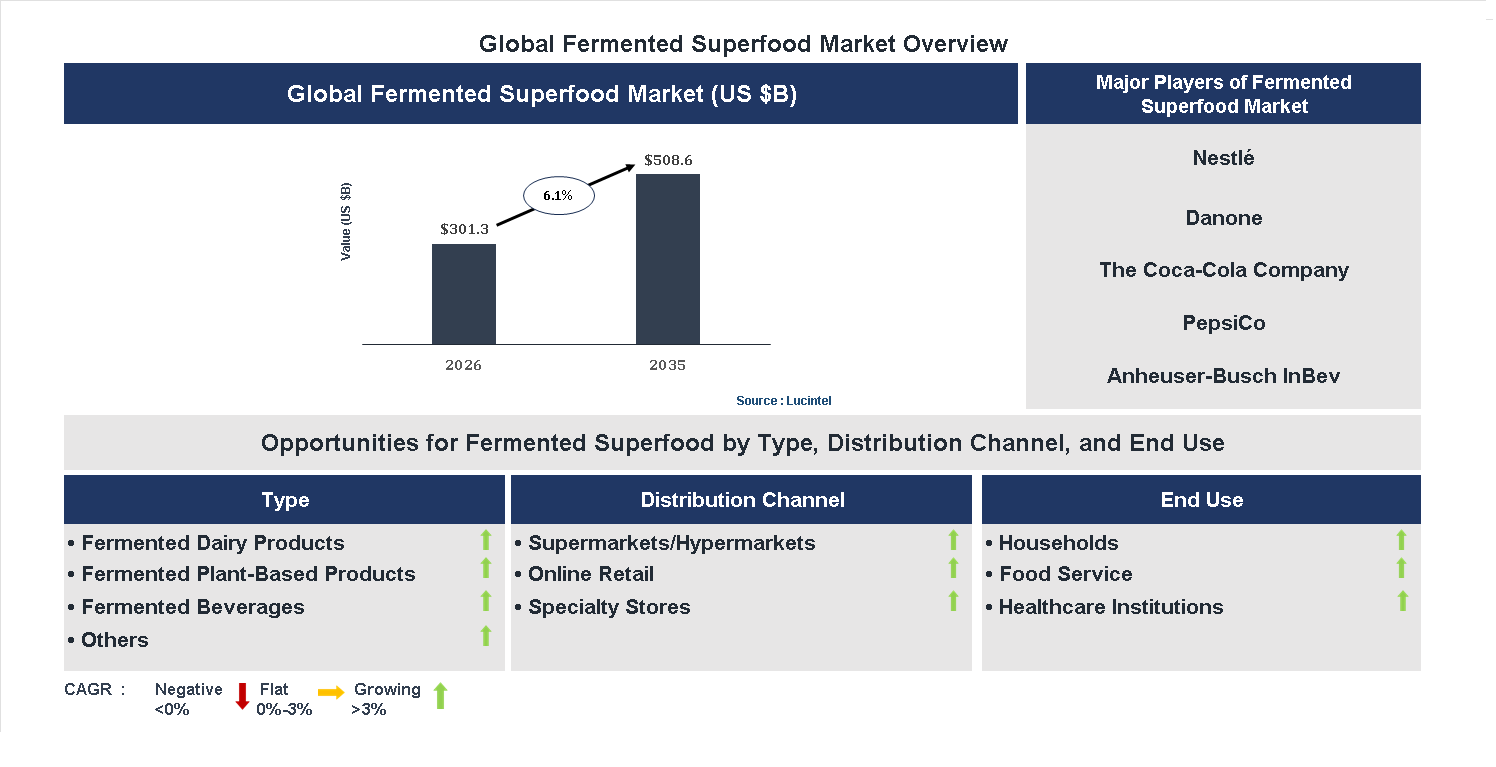
The future of the global fermented superfood market looks promising with opportunities in the household, food service, and healthcare institution markets. The global fermented superfood market is expected to reach an estimated $508.6 billion by 2035 with a CAGR of 6.1% from 2026 to 2035. The major drivers for this market are the increasing demand for premium food products, the rising consumer interest in artisanal offerings, and the growing preference for exclusive dining experiences.• Lucintel forecasts that, within the type category, fermented dairy product is expected to witness the highest growth over the forecast period.
• Within the end use category, household is expected to witness the highest growth.
• In terms of region, APAC is expected to witness the highest growth over the forecast period. Gain valuable insights for your business decisions with our comprehensive 150+ page report. Sample figures with some insights are shown below.
Emerging Trends in the Fermented Superfood Market
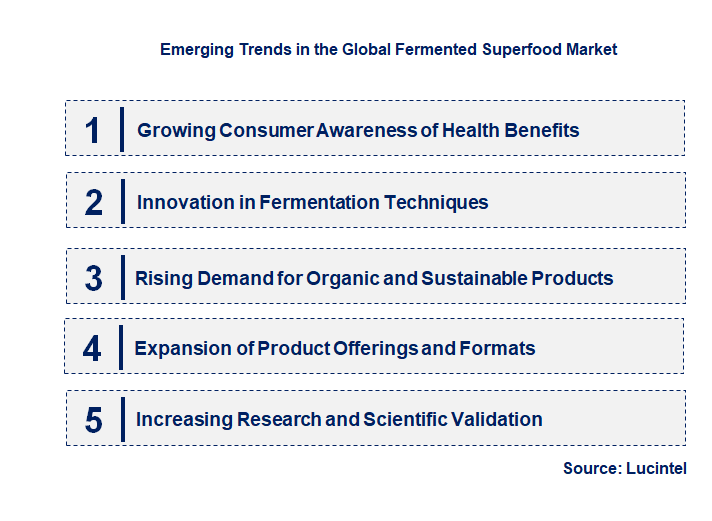
The fermented superfood market is experiencing rapid growth driven by increasing consumer awareness of health and wellness, the rising popularity of functional foods, and the demand for natural, minimally processed products. Innovations in fermentation techniques and a broader understanding of the health benefits associated with fermented foods are fueling market expansion. Consumers are seeking products that support gut health, boost immunity, and promote overall well-being. This evolving landscape is characterized by new product launches, increased research, and a shift towards sustainable and organic options. These developments are fundamentally transforming the way consumers approach nutrition and health, making fermented superfoods a key segment in the functional food industry.• Growing Consumer Awareness of Health Benefits: The increasing recognition of fermented superfoods health advantages, such as improved digestion, enhanced immunity, and better nutrient absorption, is driving demand. Consumers are actively seeking natural, probiotic-rich foods to support their health, leading to a surge in product popularity. This trend is supported by scientific research and health campaigns emphasizing gut health, which is central to overall wellness. As awareness spreads, more consumers incorporate fermented superfoods into their daily diets, fueling market growth and encouraging manufacturers to innovate with new formulations.
• Innovation in Fermentation Techniques: Advances in fermentation technology are enabling the development of more diverse and potent superfoods. Techniques such as controlled fermentation, use of specific probiotic strains, and fermentation of novel ingredients are enhancing flavor, texture, and nutritional profiles. These innovations allow producers to create unique products that cater to various consumer preferences, including plant-based, organic, and allergen-free options. Improved fermentation methods also extend shelf life and ensure product safety, making fermented superfoods more accessible and appealing to a broader audience, thus expanding market reach.
• Rising Demand for Organic and Sustainable Products: Consumers are increasingly prioritizing organic, non-GMO, and sustainably sourced fermented superfoods. This shift is driven by environmental concerns, health consciousness, and a desire for transparency in food sourcing. Brands that emphasize organic certification and sustainable practices are gaining a competitive edge. The demand for eco-friendly packaging and ethical production methods is also rising, influencing market offerings. This trend encourages producers to adopt sustainable practices, which not only appeal to eco-conscious consumers but also support the overall growth and credibility of the fermented superfood market.
• Expansion of Product Offerings and Formats: The market is witnessing a diversification of fermented superfood products, including beverages, snacks, powders, and supplements. This variety caters to different consumption occasions and preferences, making it easier for consumers to incorporate these foods into their lifestyles. Innovative formats such as ready-to-drink shots, probiotic yogurts, and functional powders are gaining popularity. This expansion enhances consumer choice, increases accessibility, and stimulates market growth. It also encourages brands to develop targeted products for specific health concerns, further broadening the market scope and consumer base.
• Increasing Research and Scientific Validation: Ongoing scientific studies are providing evidence of the health benefits associated with fermented superfoods, boosting consumer confidence and market credibility. Research on probiotics, gut microbiota, and nutrient bioavailability is supporting claims made by brands, leading to more informed purchasing decisions. This scientific validation is also driving product innovation and formulation improvements. As research continues to uncover new health benefits, the market is likely to see further growth, with consumers increasingly seeking evidence-based functional foods that align with their health goals. These trends are reshaping the fermented superfood market by fostering innovation, emphasizing health and sustainability, and expanding product diversity. As consumer awareness and scientific validation grow, the market is poised for sustained expansion, driven by a focus on natural, functional, and eco-friendly products that meet evolving health and lifestyle needs.
Recent Development in the Fermented Superfood Market
The fermented superfood market is experiencing rapid growth driven by increasing consumer awareness of health benefits, rising demand for functional foods, and innovations in fermentation technology. Consumers are seeking natural, nutrient-dense options to improve gut health and overall wellness. This shift is prompting manufacturers to develop diverse products, expanding market reach globally. As health trends continue to evolve, the markets expansion presents significant opportunities for innovation, investment, and strategic partnerships, shaping the future landscape of functional foods and dietary supplements.• Growing Consumer Awareness of Health Benefits: The increasing recognition of fermented superfoods health advantages, such as improved digestion and immune support, is driving consumer demand. This awareness is fueled by scientific research, social media influence, and health-conscious lifestyles. As consumers seek natural solutions for wellness, the market benefits from heightened interest, leading to increased sales and product diversification. This trend encourages brands to educate consumers and develop targeted marketing strategies, ultimately expanding the market and fostering innovation in product offerings.
• Rising Demand for Functional Foods and Dietary Supplements: The global shift towards preventive healthcare and wellness has boosted demand for functional foods, including fermented superfoods. Consumers are prioritizing gut health, immunity, and overall vitality, prompting manufacturers to develop innovative products that meet these needs. This demand is supported by a growing aging population and health-conscious younger demographics. The markets expansion is driven by product launches, strategic collaborations, and increased retail presence, making fermented superfoods a key segment in the functional food industry.
• Innovations in Fermentation Technology and Product Development: Advances in fermentation techniques have enabled the creation of more diverse, potent, and palatable fermented superfoods. Innovations such as probiotic strains, fermentation methods, and ingredient sourcing improve product efficacy and shelf life. These technological developments allow for customization to target specific health concerns, enhancing consumer appeal. As a result, companies are investing heavily in R&D, leading to a broader product portfolio and increased competitiveness in the market, ultimately fueling growth and consumer trust.
• Expansion into New Geographic Markets: The fermented superfood market is expanding rapidly into emerging regions, driven by rising health awareness and increasing disposable incomes. Countries in Asia-Pacific, Latin America, and Africa are witnessing growing adoption of functional foods, supported by local manufacturing and distribution channels. Market players are tailoring products to regional tastes and preferences, which enhances acceptance and sales. This geographic diversification reduces dependency on mature markets and opens new revenue streams, contributing to the overall global growth of the fermented superfood industry.
• Increasing Investment and Strategic Collaborations: Investment in research, product innovation, and marketing is accelerating within the fermented superfood sector. Strategic collaborations between startups, established food companies, and research institutions are fostering innovation and expanding product lines. Funding from venture capitalists and private equity firms supports scaling production and market penetration. These partnerships facilitate knowledge sharing, technology transfer, and brand development, strengthening market position. The influx of capital and collaboration is crucial for sustaining growth, driving innovation, and capturing emerging consumer segments. The recent developments in consumer awareness, demand for functional foods, technological innovations, geographic expansion, and strategic investments are significantly transforming the fermented superfood market. These opportunities are driving increased product diversity, market penetration, and consumer trust, leading to robust industry growth. As these trends continue, the market is poised for sustained expansion, attracting new players and fostering innovation. Overall, these developments are shaping a dynamic, health-focused landscape that benefits consumers and industry stakeholders alike.
Strategic Growth Opportunities in the Fermented Superfood Market
The fermented superfood market is experiencing rapid growth driven by increasing consumer awareness of health benefits, rising demand for functional foods, and a shift towards natural and organic products. Innovations in fermentation techniques and expanding product portfolios are further fueling market expansion. Key applications across food, beverages, and dietary supplements present significant opportunities for industry players to capitalize on health-conscious consumer trends and diversify their offerings, ensuring sustained growth and competitive advantage in this evolving landscape.• Expanding Consumer Awareness of Health Benefits: Growing knowledge about probiotics, gut health, and immune support is driving demand for fermented superfoods. Consumers are increasingly seeking natural, functional foods that promote overall wellness, leading to higher adoption rates. This trend encourages manufacturers to develop innovative products that highlight health benefits, thereby expanding market reach and consumer base. Education campaigns and transparent labeling further enhance consumer trust and interest in fermented superfoods.
• Innovation in Fermentation Techniques and Product Development: Advances in fermentation technology enable the creation of novel superfood products with enhanced nutritional profiles and unique flavors. Microbial strains and fermentation processes are being optimized to improve shelf life, taste, and health benefits. This innovation allows companies to diversify their product offerings, cater to niche markets, and meet evolving consumer preferences for clean-label, minimally processed foods, thus driving market growth.
• Rising Demand for Functional Beverages and Snacks: The increasing popularity of functional beverages and snack foods incorporating fermented superfoods presents significant growth opportunities. Consumers seek convenient, on-the-go options that deliver health benefits like improved digestion and immunity. Companies are developing fermented drinks, bars, and snacks that combine taste with functionality, expanding the application scope and capturing a broader consumer segment, which accelerates overall market expansion.
• Growing Preference for Organic and Natural Products: Consumers are prioritizing organic, non-GMO, and natural ingredients, fueling demand for fermented superfoods produced without synthetic additives. This preference encourages brands to adopt organic fermentation processes and transparent sourcing, appealing to health-conscious buyers. The shift towards clean-label products enhances market credibility and attracts premium pricing, thereby supporting sustained growth and increased market penetration.
• Strategic Collaborations and Market Expansion Initiatives: Partnerships between fermentation technology providers, food manufacturers, and health brands facilitate product innovation and market entry. Geographic expansion into emerging markets with rising health awareness offers new revenue streams. These collaborations enable access to advanced fermentation techniques, distribution channels, and consumer bases, strengthening market presence. Such strategic initiatives are crucial for capturing growth opportunities and maintaining competitive advantage in the dynamic fermented superfood landscape. These growth opportunities collectively drive the expansion of the fermented superfood market by aligning with consumer health trends, technological advancements, and strategic market approaches. Emphasizing innovation, transparency, and health benefits will enable industry players to capitalize on emerging demand, ensuring sustained growth and a competitive edge in this evolving sector.
Fermented Superfood Market Driver and Challenges
The fermented superfood market is influenced by a variety of technological, economic, and regulatory factors that shape its growth trajectory. Advances in fermentation technology and increasing consumer awareness about health benefits are key drivers. Economic factors such as rising disposable incomes and the growing trend towards organic and functional foods further propel market expansion. Regulatory frameworks around food safety and labeling standards also impact product development and marketing strategies. However, challenges such as supply chain complexities, regulatory hurdles, and consumer skepticism about new products pose significant barriers. Understanding these drivers and challenges is essential for stakeholders aiming to capitalize on the markets potential and navigate its complexities effectively. The factors responsible for driving the fermented superfood market include:• Increasing Consumer Awareness of Health Benefits: The rising awareness of the health advantages associated with fermented superfoods, such as improved digestion, enhanced immunity, and gut health, is a major driver. Consumers are actively seeking functional foods that support overall wellness, leading to increased demand. This trend is fueled by scientific research, health influencers, and media coverage, which highlight the benefits of probiotics and fermented products. As a result, food companies are innovating and expanding their product lines to meet this demand, fostering market growth.
• Technological Advancements in Fermentation Processes: Innovations in fermentation technology have enabled the production of more diverse, high-quality, and shelf-stable fermented superfoods. Improved fermentation techniques ensure better nutrient retention, flavor, and safety, making products more appealing to consumers. These advancements also allow for scalable manufacturing, reducing costs and increasing accessibility. As technology continues to evolve, producers can develop novel products, thereby expanding the market and catering to a broader consumer base.
• Growing Preference for Organic and Natural Foods: Consumers are increasingly prioritizing organic, non-GMO, and natural products, which aligns with the ethos of fermented superfoods. This preference drives demand for products that are minimally processed and free from artificial additives. The organic certification and clean-label trends further boost consumer confidence and willingness to pay premium prices. This shift in consumer behavior encourages producers to adopt organic fermentation practices, thereby expanding the market and encouraging innovation.
• Expansion of E-commerce and Retail Channels: The proliferation of online retail platforms and health-focused stores has made fermented superfoods more accessible to a wider audience. E-commerce provides convenience, detailed product information, and a broader selection, attracting health-conscious consumers. Retail partnerships with supermarkets and specialty stores also enhance visibility and availability. This channel expansion facilitates market penetration, especially in emerging regions, and supports brand growth through targeted marketing and consumer engagement.
• Increasing Investment and R&D Activities: Significant investments by food companies and startups in research and development are driving product innovation in the fermented superfood sector. R&D efforts focus on developing new strains, improving fermentation techniques, and creating novel formulations to enhance health benefits and sensory attributes. These innovations help differentiate products in a competitive market and meet evolving consumer preferences. Increased funding also supports scaling production and ensuring quality standards, thereby fostering market expansion and consumer trust. The challenges facing the fermented superfood market include:
• Supply Chain Complexities and Raw Material Availability: The production of fermented superfoods relies heavily on high-quality raw materials, such as specific grains, vegetables, and probiotic cultures. Disruptions in supply chains, seasonal variations, and sourcing difficulties can hinder production continuity. Additionally, maintaining consistent quality and safety standards across batches is challenging, impacting consumer trust. These complexities can lead to increased costs and limit scalability, posing significant hurdles for manufacturers aiming for widespread distribution.
• Regulatory and Labeling Challenges: The fermented superfood market faces stringent regulatory frameworks concerning health claims, ingredient disclosures, and safety standards. Navigating diverse regional regulations can be complex and costly, especially for international companies. Mislabeling or non-compliance risks legal penalties and damage to brand reputation. Moreover, the lack of standardized definitions for fermented superfoods complicates marketing and consumer education efforts, potentially hindering market growth and innovation.
• Consumer Skepticism and Lack of Awareness: Despite growing interest, some consumers remain skeptical about the efficacy and safety of fermented superfoods. Misinformation, misconceptions, and unfamiliarity with fermentation processes can impede adoption. Educating consumers about the benefits and proper usage is essential but challenging, especially in markets with low awareness levels. Overcoming skepticism requires targeted marketing, transparent communication, and evidence-based claims, which can be resource-intensive and time-consuming. The fermented superfood market is driven by technological innovations, health-conscious consumer trends, and expanding distribution channels. However, supply chain issues, regulatory hurdles, and consumer skepticism present notable challenges. These factors collectively influence market dynamics, requiring stakeholders to innovate, educate, and adapt strategies to sustain growth. Overall, the market holds significant potential, but success depends on effectively managing these drivers and overcoming the challenges to meet evolving consumer demands and regulatory standards.
List of Fermented Superfood Companies
Companies in the market compete on the basis of product quality offered. Major players in this market focus on expanding their manufacturing facilities, R&D investments, infrastructural development, and leverage integration opportunities across the value chain. With these strategies fermented superfood companies cater increasing demand, ensure competitive effectiveness, develop innovative products & technologies, reduce production costs, and expand their customer base. Some of the fermented superfood companies profiled in this report include-• Nestlé
• Danone
• The Coca-Cola Company
• PepsiCo
• Anheuser-Busch InBev
• Heineken
• Mondelez International
• Kraft Heinz
• Unilever
• Fonterra Co-operative Group
Fermented Superfood Market by Segment
The study includes a forecast for the global fermented superfood market by type, distribution channel, end use, and region.Fermented Superfood Market by Type [Value from 2019 to 2035]:
• Fermented Dairy Products
• Fermented Plant-Based Products
• Fermented Beverages
• Others
Fermented Superfood Market by Distribution Channel [Value from 2019 to 2035]:
• Supermarkets/Hypermarkets
• Online Retail
• Specialty Stores
Fermented Superfood Market by End Use [Value from 2019 to 2035]:
• Households
• Food Service
• Healthcare Institutions
Fermented Superfood Market by Region [Value from 2019 to 2035]:
• North America
• Europe
• Asia Pacific
• The Rest of the World
Country Wise Outlook for the Fermented Superfood Market
The fermented superfood market has experienced significant growth globally, driven by increasing consumer awareness of health benefits, rising demand for functional foods, and innovations in food processing technologies. Countries are adopting new products and expanding their offerings to meet diverse dietary preferences. This dynamic landscape reflects a shift towards healthier lifestyles and a focus on natural, probiotic-rich foods. The following summaries highlight recent developments in the United States, China, Germany, India, and Japan, illustrating how each country is contributing to the evolving fermented superfood market.• United States: The US market has seen a surge in probiotic yogurt, kombucha, and fermented vegetables, with major brands investing in R&D to develop innovative products. There is a growing consumer interest in plant-based and organic options, leading to increased sales of vegan fermented superfoods. Retailers are expanding shelf space for fermented products, and startups are introducing functional superfoods targeting gut health and immunity. Regulatory agencies are also working to establish standards for probiotic claims, boosting consumer confidence.
• China: China’s fermented superfood market is expanding rapidly, driven by traditional consumption of fermented foods like kimchi and fermented soy products. Recent innovations include probiotic drinks and fermented teas tailored to local tastes. The government is promoting fermentation techniques as part of health and wellness initiatives, encouraging local production. E-commerce platforms are playing a vital role in increasing accessibility, and international brands are entering the market, offering a wider variety of fermented superfoods to Chinese consumers.
• Germany: Germany has a strong tradition of fermented foods such as sauerkraut and kefir, and recent developments focus on organic and bio-certified products. The market is witnessing increased interest in fermented plant-based superfoods, with startups developing novel probiotic snacks and beverages. Consumer awareness campaigns about gut health are boosting demand. Additionally, Germany is investing in research collaborations to explore the health benefits of various fermented ingredients, further strengthening its position in the European fermented superfood market.
• India: The Indian market is experiencing rapid growth in fermented superfoods, driven by rising health consciousness and traditional dietary practices. Innovations include fermented millet and probiotic-rich dairy alternatives. Local startups are introducing fermented superfoods targeting urban consumers seeking immunity-boosting products. Government initiatives promoting traditional fermentation techniques are supporting market expansion. E-commerce and retail outlets are increasingly stocking fermented superfoods, and awareness campaigns are educating consumers about their health benefits.
• Japan: Japan’s fermented superfood market is characterized by a focus on traditional products like miso, natto, and fermented soybeans. Recent developments include functional fermented beverages and probiotic supplements tailored to modern lifestyles. The aging population is driving demand for products that support digestive health and longevity. Japanese companies are investing in research to develop new fermented products with enhanced health benefits. The market also sees a rise in premium and organic fermented superfoods, catering to health-conscious consumers seeking high-quality options.

Features of the Global Fermented Superfood Market
Market Size Estimates: Fermented superfood market size estimation in terms of value ($B). Trend and Forecast Analysis: Market trends (2019 to 2025) and forecast (2026 to 2035) by various segments and regions. Segmentation Analysis: Fermented superfood market size by type, distribution channel, end use, and region in terms of value ($B). Regional Analysis: Fermented superfood market breakdown by North America, Europe, Asia Pacific, and Rest of the World. Growth Opportunities: Analysis of growth opportunities in different types, distribution channels, end uses, and regions for the fermented superfood market. Strategic Analysis: This includes M&A, new product development, and competitive landscape of the fermented superfood market. Analysis of competitive intensity of the industry based on Porter’s Five Forces model.
FAQ
Q1. What is the fermented superfood market size? Answer: The global fermented superfood market is expected to reach an estimated $508.6 billion by 2035. Q2. What is the growth forecast for fermented superfood market? Answer: The global fermented superfood market is expected to grow with a CAGR of 6.1% from 2026 to 2035. Q3. What are the major drivers influencing the growth of the fermented superfood market? Answer: The major drivers for this market are the increasing demand for premium food products, the rising consumer interest in artisanal offerings, and the growing preference for exclusive dining experiences. Q4. What are the major segments for fermented superfood market? Answer: The future of the fermented superfood market looks promising with opportunities in the household, food service, and healthcare institution markets. Q5. Who are the key fermented superfood market companies? Answer: Some of the key fermented superfood companies are as follows:• Nestlé
• Danone
• The Coca-Cola Company
• PepsiCo
• Anheuser-Busch InBev
• Heineken
• Mondelez International
• Kraft Heinz
• Unilever
• Fonterra Co-operative Group Q6. Which fermented superfood market segment will be the largest in future? Answer: Lucintel forecasts that, within the type category, fermented dairy product is expected to witness the highest growth over the forecast period. Q7. In fermented superfood market, which region is expected to be the largest in next 5 years? Answer: In terms of region, APAC is expected to witness the highest growth over the forecast period. Q8. Do we receive customization in this report? Answer: Yes, Lucintel provides 10% customization without any additional cost.
Table of Contents
List of Figures
List of Tables
Methodology
- In-depth interviews of the major players in this market
- Detailed secondary research from competitors’ financial statements and published data
- Extensive searches of published works, market, and database information pertaining to industry news, company press releases, and customer intentions
- A compilation of the experiences, judgments, and insights of Lucintel’s professionals, who have analyzed and tracked this market over the years.


Buy Now
Choose a license that fits your team. Instant PDF delivery.
Prices exclude taxes. Instant delivery. Custom licensing available on request.
Key Questions
- • What are some of the most promising, high-growth opportunities for the fermented superfood market by type (fermented dairy products, fermented plant-based products, fermented beverages, and others), distribution channel (supermarkets/hypermarkets, online retail, and specialty stores), end use (households, food service, and healthcare institutions), and region (North America, Europe, Asia Pacific, and the Rest of the World)?
- • Which segments will grow at a faster pace and why?
- • Which region will grow at a faster pace and why?
- • What are the key factors affecting market dynamics? What are the key challenges and business risks in this market?
- • What are the business risks and competitive threats in this market?
- • What are the emerging trends in this market and the reasons behind them?
- • What are some of the changing demands of customers in the market?
- • What are the new developments in the market? Which companies are leading these developments?
- • Who are the major players in this market? What strategic initiatives are key players pursuing for business growth?
- • What are some of the competing products in this market and how big of a threat do they pose for loss of market share by material or product substitution?
- • What M&A activity has occurred in the last 7 years and what has its impact been on the industry? For any questions related to Fermented Superfood Market, Fermented Superfood Market Size, Fermented Superfood Market Growth, Fermented Superfood Market Analysis, Fermented Superfood Market Report, Fermented Superfood Market Share, Fermented Superfood Market Trends, Fermented Superfood Market Forecast, Fermented Superfood Companies, write Lucintel analyst at email: helpdesk@lucintel.com. We will be glad to get back to you soon.


