
Report Feature
Desuperheaters Market Trends and Forecast
The technologies in the desuperheaters market have undergone significant changes in recent years, with the transition from traditional shell-and-tube designs to advanced spray-based technologies that offer improved precision and efficiency.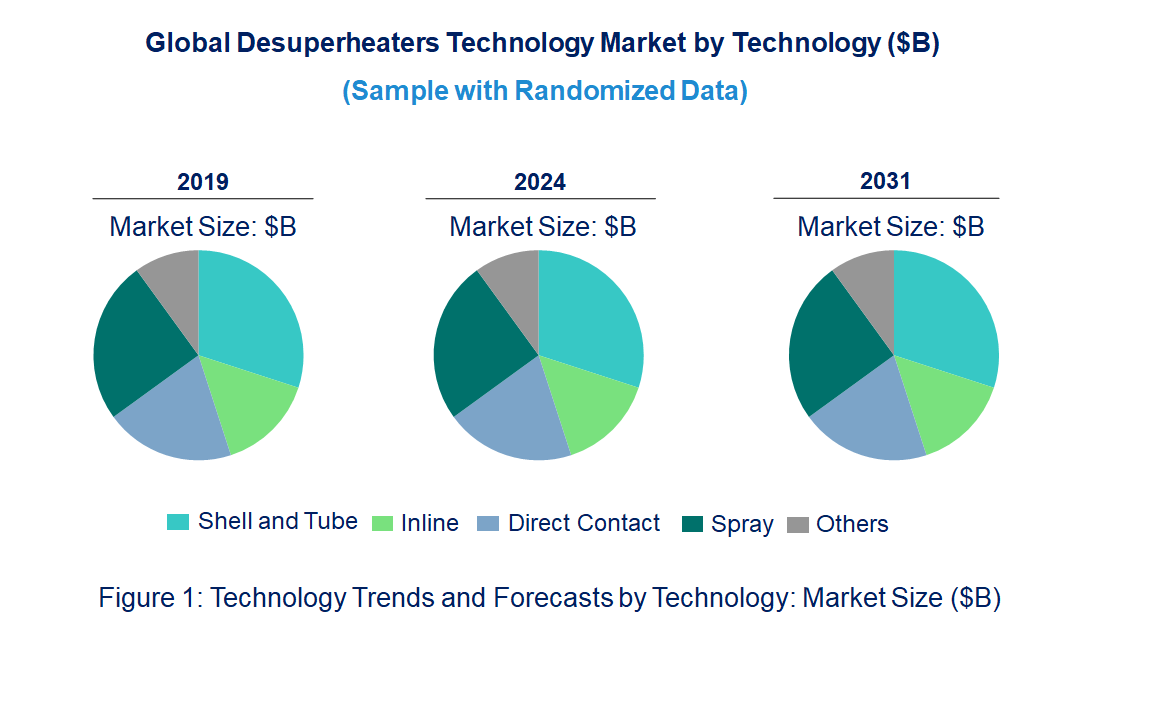

Emerging Trends in the Desuperheaters Market
The desuperheaters market is evolving as industries seek energy-efficient and cost-effective solutions for controlling superheated steam. Below are five key trends driving this transformation:• Adoption of Spray-based Technologies: Spray desuperheaters are gaining traction due to their ability to provide precise temperature control and reduce energy wastage, especially in high-demand sectors like petrochemicals and oil & gas.
• Integration of Automation and IoT: Smart desuperheaters equipped with IoT-enabled sensors and automation are improving real-time monitoring and operational efficiency in industrial setups.
• Focus on Compact Designs: Inline desuperheaters are increasingly preferred for their space-saving designs and seamless integration into existing piping systems, especially in food & beverage and chemical industries.
• Sustainability Initiatives: Direct contact desuperheaters, which minimize water and energy wastage, are being adopted as part of sustainability goals in industries like mining and petrochemicals.
• Customization for Niche Applications: Customized solutions tailored to unique operational conditions, such as extreme temperatures or corrosive environments, are becoming a competitive advantage for manufacturers. These trends underline the shift towards advanced, efficient, and sustainable desuperheaters that cater to diverse industrial requirements.

Desuperheaters Market : Industry Potential, Technological Development, and Compliance Considerations
• Technology Potential: The technology potential in desuperheaters is high, driven by the demand for precision and efficiency across end-use industries. Spray-based and inline designs are especially promising due to their ability to optimize resource use and ensure process reliability.
• Degree of Distruption: The degree of disruption is moderate, with automation and IoT driving transformative changes in monitoring and control. These advances are making desuperheaters smarter and more responsive to dynamic operational needs.
• Technology Maturity: The technology is moderately mature, with spray and inline systems widely adopted, but continuous innovations in automation and material durability are expanding their capabilities.
• Regulatory Compliance: Regulatory compliance is stringent, especially for food & beverage and petrochemical industries, requiring adherence to safety, environmental, and performance standards, such as ASME and ISO certifications. These regulations ensure consistent quality and reliability.
Recent Technological development in Desuperheaters Market by Key Players
The desuperheaters market has seen considerable advancements as industries strive for energy efficiency and improved process control. Key players such as Chemtrols Industries Pvt. Ltd., CIRCOR, Fisher/Emerson, Graham Corporation, and IMI Critical Engineering are leading the market with product innovations and strategic initiatives aimed at addressing evolving industry demands.• Chemtrols Industries Pvt. Ltd.: Chemtrols introduced an advanced desuperheater with improved spray atomization technology for steam temperature control. The product enhances energy efficiency and operational precision, making it ideal for power and chemical plants. This innovation strengthens Chemtrols’ position in markets focusing on sustainable energy practices.
• CIRCOR: CIRCOR unveiled a compact desuperheater designed for industrial applications requiring precise temperature regulation. Its user-friendly design and low maintenance needs cater to industries aiming for cost-effective and efficient operations, bolstering CIRCOR’s appeal to a broader industrial customer base.
• Fisher/Emerson: Fisher, a division of Emerson, launched an intelligent desuperheater equipped with advanced sensors and IoT connectivity for real-time monitoring. This innovation supports Industry 4.0 initiatives, enabling predictive maintenance and enhanced system reliability, positioning Emerson as a technology leader in the market.
• Graham Corporation: Graham developed a high-performance desuperheater optimized for heat recovery applications in the energy and petrochemical sectors. The product enhances system efficiency, aligning with global trends toward energy conservation and sustainability, thereby reinforcing Graham’s reputation for engineering excellence.
• IMI Critical Engineering: IMI introduced a desuperheater with high corrosion resistance tailored for harsh environments in the oil and gas industries. The design ensures durability and performance in extreme conditions, expanding IMI’s footprint in critical engineering markets.
Desuperheaters Market Driver and Challenges
The desuperheaters market is shaped by the increasing demand for precise steam temperature control, the drive for energy-efficient solutions, and advancements in industrial automation. However, the market faces challenges such as high installation costs, operational complexities, and competition from alternative technologies. Major factors responsible for driving the desuperheaters market include:• Rising Demand for Energy Efficiency: Industries are prioritizing energy-saving solutions, driving the adoption of desuperheaters that optimize steam systems and reduce wastage, aligning with sustainability goals.
• Expansion of Power and Process Industries: Growth in power generation, petrochemical, and chemical sectors has increased the need for precise steam temperature control, boosting desuperheater adoption for efficient system performance.
• Integration with Industry 4.0: IoT-enabled desuperheaters provide real-time monitoring and predictive maintenance capabilities, enhancing operational efficiency and supporting the global shift towards industrial automation.
• Shift Towards Renewable Energy: Desuperheaters are integral in optimizing steam systems in renewable energy plants, such as biomass and geothermal facilities, aiding the transition to clean energy.
• Advancements in Design and Material Technology: Innovations in high-performance, corrosion-resistant materials and compact designs cater to specialized industrial applications, expanding the product’s usability. Challenges in the desuperheaters market are:
• High Installation and Maintenance Costs: The initial investment and maintenance costs associated with desuperheaters can deter adoption, particularly in cost-sensitive industries.
• Technical Complexities: Designing and operating desuperheaters that meet diverse industrial requirements while ensuring reliability and efficiency poses significant challenges.
• Market Competition: The availability of alternative temperature control technologies increases competitive pressure, requiring manufacturers to differentiate through innovation and value-added features.
• Economic Uncertainty: Fluctuations in industrial activity, driven by economic downturns or geopolitical factors, can impact demand for desuperheaters, particularly in key industries like energy and manufacturing. The drivers and challenges in the desuperheaters market highlight a dynamic environment where technological advancements and energy efficiency goals propel growth, while cost and complexity present hurdles. Addressing these challenges through innovation and strategic focus will be pivotal in sustaining market momentum and meeting evolving industrial needs.
List of Desuperheaters Companies
Companies in the market compete on the basis of product quality offered. Major players in this market focus on expanding their manufacturing facilities, R&D investments, infrastructural development, and leverage integration opportunities across the value chain. With these strategies desuperheaters companies cater increasing demand, ensure competitive effectiveness, develop innovative products & technologies, reduce production costs, and expand their customer base. Some of the desuperheaters companies profiled in this report includes.• Chemtrols Industries Pvt. Ltd.
• Circor
• Fisher/ Emerson
• Graham Corporation
• Imi Critical Engineering
Desuperheaters Market by Technology
• Technology Readiness by Technology Type: Shell and tube desuperheaters demonstrate high readiness for heavy-duty applications but face challenges in energy efficiency. Inline models are highly competitive with excellent readiness in compact and precise operations, such as power plants. Direct contact desuperheaters exhibit moderate readiness, excelling in cost-sensitive markets with minimal regulatory burdens. Spray desuperheaters are highly advanced, offering superior temperature control for critical industrial and energy applications while adhering to stringent regulations. Emerging technologies show potential but remain in the developmental stage. Each technology’s readiness is shaped by its compliance level, competitive strengths, and suitability for specific industrial requirements.
• Competitive Intensity and Regulatory Compliance: The competitive intensity in the desuperheaters market is driven by technological advancements, with inline and spray desuperheaters vying for dominance due to their precision and adaptability. Shell and tube models maintain a stronghold in legacy applications. Regulatory compliance is critical, particularly in the energy and environmental sectors, where performance and emissions standards are rigorous. Direct contact designs cater to cost-sensitive industries with fewer compliance demands, while spray technologies lead in adhering to stringent requirements. The interplay of innovation, cost, and compliance fosters a competitive market environment that continually pushes technological boundaries.
• Disruption Potential: Technologies such as shell and tube, inline, direct contact, spray, and others are transforming the desuperheaters market. Shell and tube designs offer durability and high capacity, making them ideal for industrial-scale operations. Inline desuperheaters disrupt compact systems with precise temperature control and energy efficiency. Direct contact technology excels in simplicity and cost-effectiveness, targeting applications with less stringent performance requirements. Spray desuperheaters offer advanced flexibility and accuracy, dominating high-performance markets. Emerging technologies focus on enhanced material efficiency and environmental compliance, driving innovation across sectors. Together, these advancements redefine operational efficiency, enhancing the market’s versatility and appeal.
Desuperheaters Market Trend and Forecast by Technology [Value from 2019 to 2031]:
• Shell and Tube
• Inline
• Direct Contact
• Spray
• Others
Desuperheaters Market Trend and Forecast by End Use Industry [Value from 2019 to 2031]:
• Chemicals
• Food & Beverage
• Mining
• Oil & Gas
• Petrochemicals
Desuperheaters Market by Region [Value from 2019 to 2031]:
• North America
• Europe
• Asia Pacific
• The Rest of the World
• Latest Developments and Innovations in the Desuperheaters Technologies
• Companies / Ecosystems
• Strategic Opportunities by Technology Type
Features of the Global Desuperheaters Market
Market Size Estimates: Desuperheaters market size estimation in terms of ($B). Trend and Forecast Analysis: Market trends (2019 to 2024) and forecast (2025 to 2031) by various segments and regions. Segmentation Analysis: Technology trends in the global desuperheaters market size by various segments, such as end use industry and technology in terms of value and volume shipments. Regional Analysis: Technology trends in the global desuperheaters market breakdown by North America, Europe, Asia Pacific, and the Rest of the World. Growth Opportunities: Analysis of growth opportunities in different end use industries, technologies, and regions for technology trends in the global desuperheaters market. Strategic Analysis: This includes M&A, new product development, and competitive landscape for technology trends in the global desuperheaters market. Analysis of competitive intensity of the industry based on Porter’s Five Forces model.Table of Contents
Methodology
- In-depth interviews of the major players in this market
- Detailed secondary research from competitors’ financial statements and published data
- Extensive searches of published works, market, and database information pertaining to industry news, company press releases, and customer intentions
- A compilation of the experiences, judgments, and insights of Lucintel’s professionals, who have analyzed and tracked this market over the years.


Buy Now
Choose a license that fits your team. Instant PDF delivery.
Prices exclude taxes. Instant delivery. Custom licensing available on request.
Key Questions
- • What are some of the most promising potential, high-growth opportunities for the technology trends in the global desuperheaters market by technology (shell and tube, inline, direct contact, spray, and others), end use industry (chemicals, food & beverage, mining, oil & gas, and petrochemicals), and region (North America, Europe, Asia Pacific, and the Rest of the World)?
- • Which technology segments will grow at a faster pace and why?
- • Which regions will grow at a faster pace and why?
- • What are the key factors affecting dynamics of different technology? What are the drivers and challenges of these technologies in the global desuperheaters market?
- • What are the business risks and threats to the technology trends in the global desuperheaters market?
- • What are the emerging trends in these material technologies in the global desuperheaters market and the reasons behind them?
- • Which technologies have potential of disruption in this market?
- • What are the new developments in the technology trends in the global desuperheaters market? Which companies are leading these developments?
- • Who are the major players in technology trends in the global desuperheaters market? What strategic initiatives are being implemented by key players for business growth?
- • What are strategic growth opportunities in this desuperheaters technology space?
- • What M & A activities did take place in the last five years in technology trends in the global desuperheaters market?


