
Report Feature
Aptamer Trends and Forecast
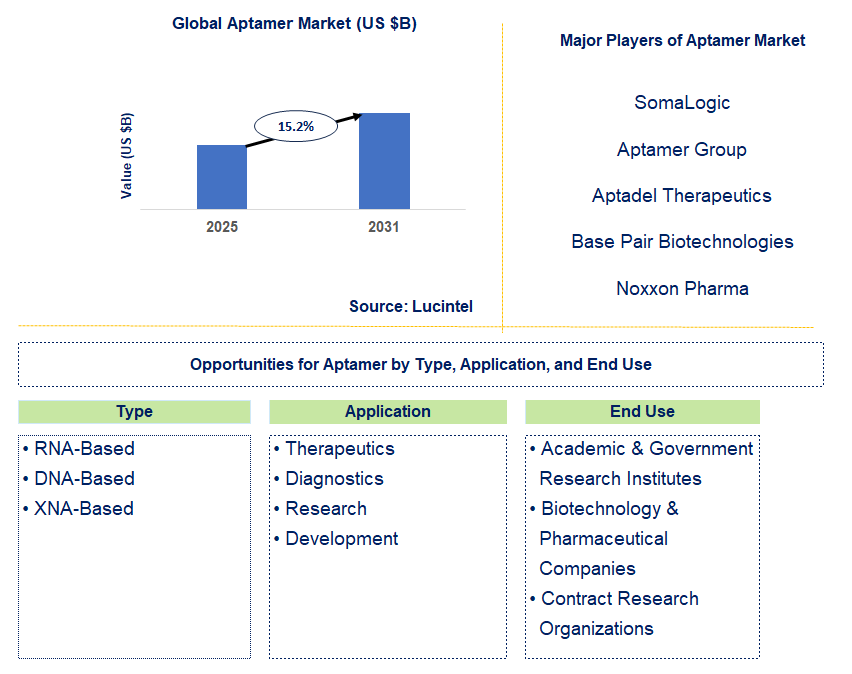
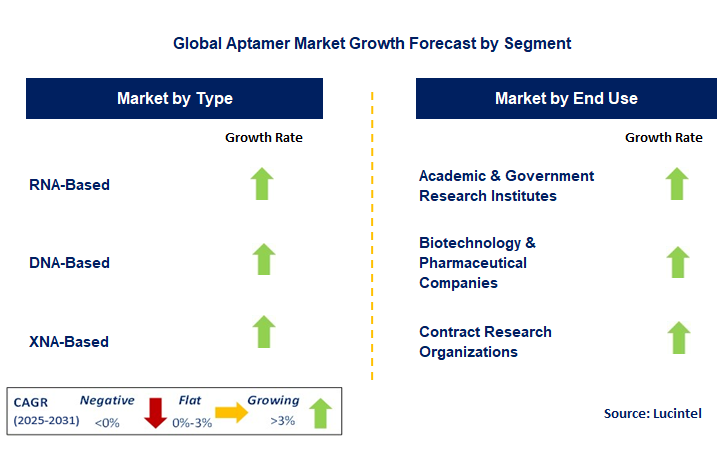
The future of the global aptamer market looks promising with opportunities in the diagnostic, therapeutics, and research & development markets. The global aptamer market is expected to grow with a CAGR of 18.7% from 2024 to 2030. The major drivers for this market are the rising number of clinical trials for the development of aptamete- based therapeutics, growing awareness towards the benefits of aptameter over antibodies, and surging investment in pharmaceutical R&D.• Lucintel forecasts that, within the type category, the nucleic acid is expected to witness the higher growth over the forecast period.
• Within the application category, the research & development is expected to witness the highest growth due to growing interest in aptamers alongside a surge in research efforts in this domain.
• In terms of region, North America is expected to witness highest growth over the forecast period. A more than 150-page report is developed to help in your business decisions.
Emerging Trends in the Aptamer Market
The aptamer market is changing due to various emerging trends, including developments in technology, regulatory issues, and expanded applications across many sectors. The following are five crucial trends shaping the market landscape.• Increased Investment in R&D: Increasing investment in research and development of aptamer technologies is boosting the search for new solutions. Attention is directed toward the development of more flexible and efficient aptamers for therapeutic and diagnostic purposes, which may trigger a revolution in personalized medicine and disease identification.
• Expanded Scope of Applications: The scope of applications for aptamers extends to monitoring the biosphere, food safety, and drug delivery, in addition to the well-known fields of diagnostics and therapeutics. This diversification opens new avenues for market growth and meets different global needs, thereby increasing the overall market scope.
• Synergy with Nanotechnology: The combination of aptamers and nanotechnology is opening new avenues in biosensors and targeted therapeutics. These nanoparticle-aptamer conjugates are important from a diagnostic perspective, as they enhance the selectivity and sensitivity of diagnoses, which is critical in the prevention and initiation of treatment for diseases.
• Growth in Regulation: With changes in the regulatory scenario, there has also been simplification of approval procedures for aptamer-based products. More comprehensible regulations, together with encouragement from regulatory authorities, are attracting investment and innovation, promising reductions in the time necessary for new therapies and diagnostics to reach the market. The trends outlined above are transforming the aptamer market through enhanced innovation, application, and ease of use. As investment and collaboration are poised for aggressive upscaling in research, the market will likely witness positive developments resulting in enhanced and innovative products in healthcare and environmental monitoring.

Recent Developments in the Aptamer Market
The recent changes in the aptamer market are marked by new developments, partnerships, and applications that are reshaping various industries.• New Therapeutic Chemicals: The advent of new-generation aptamer therapeutics for cancer therapy is timely, as many companies have reported optimistic clinical trial results. These developments demonstrate the ability of aptamers to selectively bind to cancerous cells, thereby limiting the side effects associated with traditional drug treatments.
• The Use of POC Devices: The introduction of aptamer-based point-of-care diagnostic devices is a significant game changer in rapid testing. These devices are being developed for low-resource settings, increasing access to rapid tests for diseases such as COVID-19 and other infectious conditions.
• The Development of Related Applications: There are diversifying uses of aptamers in environmental monitoring, where they are incorporated into systems that monitor water and soil quality as indicators of pollution. This application aligns with the growing concern for environmental issues and public health, where the high sensitivity and selectivity of aptamer sensors are beneficial.
• The Market Structure: Biotech companies and universities are forming partnerships to boost research in the field of aptamers. This collaborative approach bridges the gap in knowledge transfer and accelerates the development of new aptamer-based solutions.
• Advancements in Drug Delivery: New ways of using aptamers for drug delivery allow for targeted therapies with reduced off-target effects. This approach enhances the safety and efficacy of treatments, particularly in oncology and chronic diseases. The highlighted developments are significantly advancing the aptamer industry, opening new avenues for diversification and increasing the efficiency of available diagnostics and therapeutics. Looking to the future, the market is expected to show faster development, and the scope of its application will broaden.
Strategic Growth Opportunities for Aptamer Market
Within the various key applications of the aptamer market, several strategic expansion areas are supported by factors such as technological developments and growing concerns over health and environmental sustainability.• Diagnostic Kits: Rapid and precise diagnoses provided by diagnostic kits are in great demand, presenting an opportunity for growth in the use of aptamer-based solutions. These kits can make a difference in clinical settings regarding early disease detection and provide low-cost diagnostics in resource-poor countries, thereby improving global health.
• Targeted Therapeutics: The targeted development of therapeutics in the form of aptamers for disease conditions, such as cancer and autoimmune diseases, represents a high-growth potential market. These cutting-edge therapies increase treatment precision while decreasing adverse side effects, making them promising options in modern medicine.
• Monitoring Food Safety: The use of aptamers for monitoring food safety is gaining importance. There is a potential market for detecting undesirable or harmful substances in food products due to the increasing consumer demand for food safety and quality.
• Environmental Applications: The use of aptamers in environmental applications offers growth prospects for pollution and contamination control. Aptamer sensors can measure harmful materials within minutes, assisting green commercialization and regulatory compliance with environmental policies.
• Research and Development Services: The rising popularity of aptamer technologies is leading to the rapid expansion of a new niche in R&D services. Companies providing aptamer production alongside aptamer selection and optimization services are finding significant market opportunities. The identified growth opportunities underscore that aptamers are set to grow rapidly in multiple industry verticals. By leveraging these applications, stakeholders can foster innovations and enhance public health while addressing global needs.
Aptamer Market Driver and Challenges
The aptamer market is influenced by various technological, economic, and regulatory factors that present opportunities and challenges to stakeholders. The factors driving the aptamer market include:• Technological Development: Burgeoning technologies in biomedicine and molecular biology are pushing the evolution of aptamers toward higher efficiency and broader applications, making them more relevant for diagnostics and therapeutics.
• Higher Healthcare Requirements: Rising demand for effective and affordable healthcare solutions has increased interest in aptamer technologies. They can offer focused therapies and diagnostics that meet industry and patient needs.
• Favorable Regulatory Environment: Favorable regulatory developments surrounding the design and commercialization of aptamer-based products enhance capital investments and innovation. The establishment of market entry guidelines facilitates quicker and easier commercialization for corporations and consumers.
• Global Health Initiatives: Health initiatives aimed at disease prevention and treatment are driving the adoption of aptamer technologies, expanding the market in various regions.
• Environmental Concerns: Increased concern about environmental issues is encouraging the use of aptamers for detecting pollutants and controlling their levels in biosystems. This aligns with current trends toward regulation and the promotion of sustainable development solutions. Challenges in the aptamer market include:
• Market Competition: The aptamer industry is becoming more crowded and competitive, with many new entrants emerging daily. This rivalry can negatively impact prices, necessitating constant improvement to remain relevant.
• Policy Barriers: Although progress has been made, policy requirements remain complicated and time-consuming for aptamer-based product developers, adversely affecting product release timelines and market accessibility.
List of Aptamer Companies
Companies in the market compete on the basis of product quality offered. Major players in this market focus on expanding their manufacturing facilities, R&D investments, infrastructural development, and leverage integration opportunities across the value chain. Through these strategies aptamer companies cater increasing demand, ensure competitive effectiveness, develop innovative products & technologies, reduce production costs, and expand their customer base. Some of the aptamer companies profiled in this report include-• SomaLogic
• Aptamer Group
• Aptadel Therapeutics
• Base Pair Biotechnologies
• Noxxon Pharma
• Vivonics
• Aptagen
• TriLink
• Biotechnologies
• Altermune
Aptamer by Segment
The study includes a forecast for the global aptamer by type, application, and region.Aptamer Market by Type [Analysis by Value from 2018 to 2030]:
• Nucleic Acid Aptamers
• Peptide Aptamers
Aptamer Market by Application [Analysis by Value from 2018 to 2030]:
• Diagnostics
• Therapeutics
• Research & Development
• Others
Aptamer Market by Region [Analysis by Value from 2018 to 2030]:
• North America
• Europe
• Asia Pacific
• The Rest of the World
Country Wise Outlook for the Aptamer Market
The current trends in the regional growth of the aptamer market are favorable due to progress in biotechnology and the expanding use of aptamers for diagnostics and therapeutics. Aptamers are short single-stranded nucleic acids developed for small targets, known for their effective working capabilities and low cost. This section highlights the specifics of the aptamer market’s evolution in the United States, China, Germany, India, and Japan.• United States: There is an increase in investment in aptamer therapeutics and diagnostic products containing aptamers. Partnerships between academic institutions and biotech companies are driving significant innovations in detecting and treating cancers, thus making aptamer technologies more commercial.
• China: Research activities on aptamers in China are rapidly expanding, with a special emphasis on developing diagnostic kits and targeted treatments. Policies promoting biotechnology are fostering active collaboration between private businesses and universities, advancing the use of aptamers in infectious diseases and precision medicine.
• Germany: Germany is the largest market for aptamers in Europe. Innovative technologies for monitoring and the use of opto-electrodes for vapor deodorization are being developed. Collaborative efforts between universities and industry are facilitating the creation of aptamer-based sensors, such as interleukin-8 sensors, which benefit society and the environment.
• India: In India, the aptamer market is gradually gaining momentum, focusing on economical diagnostic products. Start-ups are utilizing aptamer technology to develop rapid tests, particularly in agriculture and healthcare, aiming to enhance the availability of reliable diagnostics for the rural population and improve food safety.
• Japan: The aptamer market in Japan is notably advancing in drug delivery systems. Clinical practices, particularly in oncology, are collaborating with research institutions to adopt targeted aptamer conjugates. Projects arising from this partnership are proving productive and align with Japan's interests in progressing precision medicine.

Features of the Global Aptamer Market
Market Size Estimates: Aptamer market size estimation in terms of value ($B). Trend and Forecast Analysis: Market trends (2018 to 2023) and forecast (2024 to 2030) by various segments and regions. Segmentation Analysis: Aptamer market size by type, application, and region in terms of value ($B). Regional Analysis: Aptamer market breakdown by North America, Europe, Asia Pacific, and Rest of the World. Growth Opportunities: Analysis of growth opportunities in different types, applications, and regions for the aptamer market. Strategic Analysis: This includes M&A, new product development, and competitive landscape of the aptamer market. Analysis of competitive intensity of the industry based on Porter’s Five Forces model.If you are looking to expand your business in this or adjacent markets, then contact us. We have done hundreds of strategic consulting projects in market entry, opportunity screening, due diligence, supply chain analysis, M & A, and more.

FAQ
Q1. What is the growth forecast for the aptamer market? Answer: The global aptamer market is expected to grow with a CAGR of 18.7% from 2024 to 2030. Q2. What are the major drivers influencing the growth of the aptamer market? Answer: The major drivers for this market are the rising number of clinical trials for the development of aptamete- based therapeutics, growing awareness towards the benefits of aptameter over antibodies, and surging investment in pharmaceutical R&D. Q3. What are the major segments of aptamer market? Answer: The future of the aptamer market looks promising with opportunities in the diagnostic, therapeutics, and research & development markets. Q4. Who are the key aptamer market companies? Answer: Some of the key aptamer companies are as follows:• SomaLogic
• Aptamer Group
• Aptadel Therapeutics
• Base Pair Biotechnologies
• Noxxon Pharma
• Vivonics
• Aptagen
• TriLink
• Biotechnologies
• Altermune Q5. Which aptamer market segment will be the largest in the future? Answer: Lucintel forecasts that nucleic acid is expected to witness higher growth over the forecast period. Q6. In aptamer market, which region is expected to be the largest in the next 5 years? Answer: North America is expected to witness the highest growth over the forecast period. Q.7 Do we receive customization in this report? Answer: Yes, Lucintel provides 10% customization without any additional cost.
Table of Contents
Methodology
- In-depth interviews of the major players in this market
- Detailed secondary research from competitors’ financial statements and published data
- Extensive searches of published works, market, and database information pertaining to industry news, company press releases, and customer intentions
- A compilation of the experiences, judgments, and insights of Lucintel’s professionals, who have analyzed and tracked this market over the years.


Key Questions
- • What are some of the most promising, high-growth opportunities for the aptamer market by type (nucleic acid aptamer and peptide aptamer), application (diagnostics, therapeutics, research & development, and others), and region (North America, Europe, Asia Pacific, and the Rest of the World)?
- • Which segments will grow at a faster pace and why?
- • Which region will grow at a faster pace and why?
- • What are the key factors affecting market dynamics? What are the key challenges and business risks in this market?
- • What are the business risks and competitive threats in this market?
- • What are the emerging trends in this market and the reasons behind them?
- • What are some of the changing demands of customers in the market?
- • What are the new developments in the market? Which companies are leading these developments?
- • Who are the major players in this market? What strategic initiatives are key players pursuing for business growth?
- • What are some of the competing products in this market and how big of a threat do they pose for loss of market share by material or product substitution?
- • What M&A activity has occurred in the last 5 years and what has its impact been on the industry? For any questions related to Aptamer Market, Aptamer Market Size, Aptamer Market Growth, Aptamer Market Analysis, Aptamer Market Report, Aptamer Market Share, Aptamer Market Trends, Aptamer Market Forecast, Aptamer Companies, write Lucintel analyst at email: helpdesk@lucintel.com. We will be glad to get back to you soon.


