
Market Report · July 31, 2026

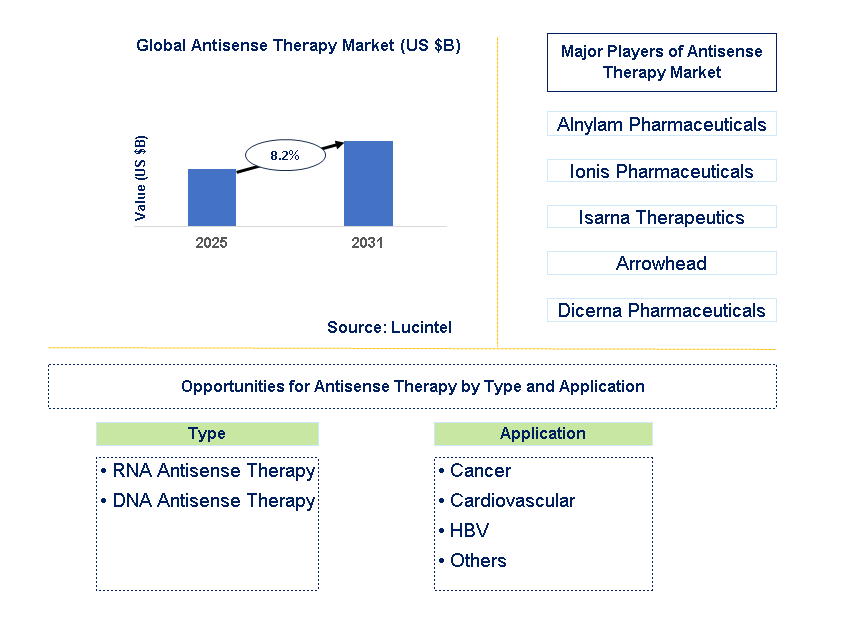
Key data points: The growth forecast = 8.2% annually for the next 7 years. Scroll below to get more insights. This market report covers Trends, opportunity and forecast in antisense therapy market to 2031 by type (RNA Antisense therapy and DNA Antisense therapy), application (cancer, cardiovascular, hbv, and others), and region (North America, Europe, Asia Pacific, and the Rest of the World)
We'll send your sample report shortly.
• Personalized Medicine and Precision Therapies: The growing emphasis on personalized medicine is a major trend in the antisense therapy market. Advances in genetic sequencing and biomarker identification are enabling the development of therapies tailored to individual genetic profiles. Antisense therapies, being highly specific in targeting genetic mutations, are ideally suited to this approach. As precision medicine becomes more mainstream, the demand for antisense drugs that target specific gene expressions and mutations will increase, offering better efficacy and reduced side effects compared to traditional treatments.
• Focus on Rare Diseases and Genetic Disorders: Antisense therapies are increasingly being explored as treatments for rare genetic disorders that have few or no existing treatment options. This includes conditions like Duchenne muscular dystrophy (DMD), Huntington’s disease, and various forms of hereditary neuropathies. As regulatory agencies such as the FDA and EMA expedite approval processes for rare disease treatments, antisense drugs are gaining traction for these niche markets. This trend is providing patients with hope for effective treatments and driving increased investment in research and development for rare genetic diseases.
• Increased Investment in Antisense Technologies: With the success of antisense oligonucleotides in clinical trials, investment in antisense technologies has increased significantly. Venture capital, government grants, and private sector funding are being directed towards companies developing antisense therapies. As antisense oligonucleotides continue to show potential in treating a variety of diseases, including cancer, neurodegenerative conditions, and viral infections, financial support is expected to grow. This influx of investment is accelerating the development of next-generation antisense therapies with better efficacy and fewer side effects.
• Combination Therapies with Antisense Oligonucleotides: The combination of antisense oligonucleotides with other therapies, such as chemotherapy, immunotherapy, or gene editing technologies like CRISPR, is emerging as a promising trend. Combining antisense therapy with other treatments could enhance efficacy by targeting multiple disease pathways simultaneously. This approach is particularly relevant in treating complex diseases like cancer, where multiple genetic mutations contribute to disease progression. As research in combination therapies grows, antisense oligonucleotides may play an integral role in multi-modal therapeutic regimens. The antisense therapy market is rapidly evolving with technological advancements, a focus on precision medicine, and increasing investment. These emerging trends are expanding the potential applications of antisense therapies and improving outcomes for patients with genetic disorders, cancers, and other complex diseases." src="Emerging Trends in the Antisense Therapy Market" style="height: auto;width: auto;" title="The antisense therapy market is undergoing rapid transformation, driven by emerging trends in technology, research, and patient care. These trends are influencing the development and application of antisense therapies across a wide range of diseases, including genetic disorders, cancers, and viral infections. The following are five key trends reshaping the market.
• Advances in RNA-Based Therapeutics: RNA-based therapeutics, particularly antisense oligonucleotides (ASOs), are experiencing significant advancements. These therapies are designed to specifically target and modulate RNA to control gene expression. This trend is revolutionizing the treatment of genetic diseases, such as spinal muscular atrophy (SMA), where ASOs have already shown significant clinical success. As RNA-based drugs continue to evolve, they are becoming more precise, effective, and less toxic, leading to better outcomes for patients with previously untreatable conditions.
• Personalized Medicine and Precision Therapies: The growing emphasis on personalized medicine is a major trend in the antisense therapy market. Advances in genetic sequencing and biomarker identification are enabling the development of therapies tailored to individual genetic profiles. Antisense therapies, being highly specific in targeting genetic mutations, are ideally suited to this approach. As precision medicine becomes more mainstream, the demand for antisense drugs that target specific gene expressions and mutations will increase, offering better efficacy and reduced side effects compared to traditional treatments.
• Focus on Rare Diseases and Genetic Disorders: Antisense therapies are increasingly being explored as treatments for rare genetic disorders that have few or no existing treatment options. This includes conditions like Duchenne muscular dystrophy (DMD), Huntington’s disease, and various forms of hereditary neuropathies. As regulatory agencies such as the FDA and EMA expedite approval processes for rare disease treatments, antisense drugs are gaining traction for these niche markets. This trend is providing patients with hope for effective treatments and driving increased investment in research and development for rare genetic diseases.
• Increased Investment in Antisense Technologies: With the success of antisense oligonucleotides in clinical trials, investment in antisense technologies has increased significantly. Venture capital, government grants, and private sector funding are being directed towards companies developing antisense therapies. As antisense oligonucleotides continue to show potential in treating a variety of diseases, including cancer, neurodegenerative conditions, and viral infections, financial support is expected to grow. This influx of investment is accelerating the development of next-generation antisense therapies with better efficacy and fewer side effects.
• Combination Therapies with Antisense Oligonucleotides: The combination of antisense oligonucleotides with other therapies, such as chemotherapy, immunotherapy, or gene editing technologies like CRISPR, is emerging as a promising trend. Combining antisense therapy with other treatments could enhance efficacy by targeting multiple disease pathways simultaneously. This approach is particularly relevant in treating complex diseases like cancer, where multiple genetic mutations contribute to disease progression. As research in combination therapies grows, antisense oligonucleotides may play an integral role in multi-modal therapeutic regimens. The antisense therapy market is rapidly evolving with technological advancements, a focus on precision medicine, and increasing investment. These emerging trends are expanding the potential applications of antisense therapies and improving outcomes for patients with genetic disorders, cancers, and other complex diseases." />
• Approval of New Antisense Therapies: One of the most significant recent developments in the antisense therapy market is the approval of new drugs, particularly for rare diseases. For instance, the FDA approval of Spinraza (nusinersen) for the treatment of spinal muscular atrophy (SMA) has set a precedent for antisense therapies. These approvals are validating antisense oligonucleotides as a viable treatment option for genetic disorders and paving the way for future approvals in areas such as Duchenne muscular dystrophy (DMD) and Huntington’s disease.
• Progress in Cancer Treatment: Antisense therapies are making headway in the treatment of cancers, particularly those driven by specific genetic mutations. Researchers are developing ASOs to target oncogenes and other cancer-related RNA targets. This progress is accelerating the use of antisense oligonucleotides in combination with other therapies, such as chemotherapy or immunotherapy. The success of early-phase clinical trials and the potential for targeting hard-to-treat cancers are driving optimism in this area.
• Advancements in Delivery Systems: One of the challenges of antisense oligonucleotides is their delivery to the target cells. Recent developments in delivery systems, such as lipid nanoparticles and other carrier molecules, have improved the efficiency and specificity of antisense therapies. These innovations are reducing the side effects of antisense drugs while enhancing their therapeutic potential. As delivery mechanisms continue to improve, the clinical success and market adoption of antisense therapies are expected to increase.
• Increased Industry Collaborations: There has been a rise in collaborations between biotech companies, pharmaceutical firms, and academic institutions to advance antisense therapy research. These partnerships are crucial for the discovery of new drug candidates and the development of innovative delivery systems. Notable collaborations, such as those between Ionis Pharmaceuticals and major pharma companies, are accelerating the pace of antisense therapy development and expanding the pipeline of potential treatments for various diseases.
• Expansion of Clinical Indications: The clinical applications of antisense therapies are expanding beyond genetic disorders. Companies are investigating ASOs for a wide range of diseases, including viral infections, cardiovascular diseases, and neurodegenerative disorders. Clinical trials are underway to assess the effectiveness of antisense oligonucleotides in treating conditions like Alzheimer’s disease, HIV, and even COVID-19. The broadening of indications is helping to diversify the market and create new opportunities for antisense therapies. Recent developments in antisense therapy, from regulatory approvals to advancements in delivery systems and industry collaborations, are significantly impacting the market. These innovations are paving the way for antisense oligonucleotides to be used more widely across a variety of therapeutic areas, improving patient outcomes and creating new business opportunities for stakeholders in the market.
• Genetic Disorders Treatment: The treatment of genetic disorders, particularly rare diseases like Duchenne muscular dystrophy (DMD) and spinal muscular atrophy (SMA), presents a major growth opportunity for antisense therapies. ASOs are being developed to address the underlying genetic causes of these diseases, offering new hope for patients who have limited treatment options. As more genetic disorders are identified as potential targets, the market for antisense therapies in rare diseases is expected to expand rapidly.
• Cancer Therapeutics: Cancer treatment is another area with significant growth potential for antisense therapies. ASOs can target specific genes involved in tumor growth, offering a more targeted approach to cancer therapy. The use of antisense oligonucleotides in combination with other treatments, such as chemotherapy or immunotherapy, is also a promising strategy. As clinical trials continue to show positive results, antisense therapies will play an increasingly important role in cancer treatment.
• Neurodegenerative Diseases: The application of antisense therapies to treat neurodegenerative diseases, such as Alzheimer’s disease, Huntington’s disease, and amyotrophic lateral sclerosis (ALS), represents a promising area of growth. ASOs are being developed to target specific genes associated with the progression of these diseases. With the aging global population and the increasing burden of neurodegenerative diseases, the demand for effective treatments in this area is expected to rise.
• Viral Infections: Antisense therapies have the potential to treat viral infections, including HIV, hepatitis, and COVID-19. By targeting the viral genome, ASOs can prevent the replication of viruses, offering a more precise and effective treatment approach. As researchers explore the efficacy of antisense oligonucleotides against a broader range of viral infections, this application is expected to become a significant driver of market growth.
• Cardiovascular Diseases: Cardiovascular diseases, particularly those caused by genetic mutations, are another promising application for antisense therapies. ASOs are being developed to target genes responsible for conditions like familial hypercholesterolemia and other lipid disorders. With the rising prevalence of cardiovascular diseases globally, antisense therapies offer a targeted approach to managing these conditions and preventing related complications. Strategic growth opportunities for antisense therapies are abundant across several applications, including genetic disorders, cancer, neurodegenerative diseases, viral infections, and cardiovascular diseases. By capitalizing on these opportunities, companies can expand their market presence and contribute to the development of more effective, targeted therapies for a wide range of medical conditions.
• Alnylam Pharmaceuticals
• Ionis Pharmaceuticals
• Isarna Therapeutics
• Arrowhead
• Dicerna Pharmaceuticals
• Quark Pharmaceuticals
• Benitec Biopharma
• RNA Antisense Therapy
• DNA Antisense Therapy
• Cancer
• Cardiovascular
• Hbv
• Others
• North America
• Europe
• Asia Pacific
• The Rest of the World
• United States: In the United States, the antisense therapy market has seen significant advancements, with the approval of several antisense drugs for various genetic disorders. The U.S. Food and Drug Administration (FDA) has approved antisense oligonucleotides (ASOs) for conditions like spinal muscular atrophy (SMA), leading to a surge in research and development activities. Companies like Ionis Pharmaceuticals are at the forefront of this sector, working on pipeline therapies targeting rare diseases and cancers. Additionally, there has been a growing collaboration between academia and industry, accelerating innovations and enabling the development of more precise and effective treatments for previously unmet medical needs.
• China: In China, the antisense therapy market is emerging rapidly, spurred by government support for biotechnology and healthcare innovations. China’s National Medical Products Administration (NMPA) is working to streamline regulatory pathways for new therapies, which has attracted global and local companies to develop antisense drugs. The Chinese government has also been increasingly investing in the biotech sector, with a focus on developing therapies for rare genetic diseases and cancers. There has been growing interest in the use of antisense therapies to treat hepatitis B and other viral infections, where antisense approaches are showing early promise in clinical trials.
• Germany: Germany’s antisense therapy market is one of the most mature in Europe, benefiting from a strong biotech ecosystem, cutting-edge research, and a robust healthcare system. The German market is particularly focused on precision medicine, with antisense oligonucleotides being explored as potential treatments for various cancers, neurodegenerative disorders, and genetic conditions. Companies like BioNTech and CureVac are increasingly turning their attention to antisense therapies as part of their broader mRNA and gene-editing research portfolios. Additionally, Germany’s healthcare system supports high levels of investment in biopharmaceuticals, enabling the country to stay at the forefront of antisense therapeutic development in Europe.
• India: In India, the antisense therapy market is still in its nascent stages but is showing signs of growth, especially due to increased government support for biotechnology and healthcare infrastructure. India’s large population with diverse genetic backgrounds presents both challenges and opportunities for the development of antisense therapies. Local pharmaceutical companies are beginning to explore antisense oligonucleotide platforms, especially for addressing genetic disorders such as Duchenne muscular dystrophy (DMD). Furthermore, there is increasing interest in the development of affordable antisense-based treatments for conditions like HIV and various cancers, driven by the high burden of these diseases in the country.
• Japan: Japan has been a leader in adopting cutting-edge biotechnological treatments, and the antisense therapy market is no exception. Japan’s highly advanced healthcare system, coupled with its strong pharmaceutical sector, supports significant investment in genetic and molecular research. Antisense therapies are being explored in Japan for treating rare genetic diseases, cancers, and neurodegenerative conditions. Companies like Takeda Pharmaceutical and Astellas are increasingly focusing on antisense oligonucleotides in their research pipelines. Japan’s emphasis on precision medicine and personalized healthcare also creates a favorable environment for antisense therapy development, with the government encouraging innovation in biotechnology and drug development.


• Alnylam Pharmaceuticals
• Ionis Pharmaceuticals
• Isarna Therapeutics
• Arrowhead
• Dicerna Pharmaceuticals
• Quark Pharmaceuticals
• Benitec Biopharma Q5. Which antisense therapy market segment will be the largest in future? Answer: Lucintel forecasts that RNA Antisense therapy is expected to witness higher growth over the forecast period. Q6. In antisense therapy market, which region is expected to be the largest in next 5 years? Answer: APAC is expected to witness the highest growth over the forecast period. Q7. Do we receive customization in this report? Answer: Yes, Lucintel provides 10% customization without any additional cost.


Choose a license that fits your team. Instant PDF delivery.
Prices exclude taxes. Instant delivery. Custom licensing available on request.
Market Report · July 31, 2026
Market Report · July 31, 2026
Market Report · July 31, 2026
Trusted partner for strategic intelligence and business growth


Receive a complimentary market analysis tailored to your industry. Our analysts will identify key growth opportunities and competitive dynamics specific to your business.

Market size, growth rate, and key trend analysis for your specific sector.

Top competitor positioning and market share analysis.

Strategic recommendations backed by data-driven insights.
Get curated market intelligence and competitive moves straight to your inbox.
By subscribing, you agree to receive our monthly insights. Unsubscribe anytime.
Receive a complimentary market analysis tailored to your industry. Our analysts will identify key growth opportunities and competitive dynamics specific to your business.
Market size, growth rate, and key trend analysis for your specific sector.
Top competitor positioning and market share analysis.
Strategic recommendations backed by data-driven insights.
Get curated market intelligence, emerging trends, and competitive moves straight to your inbox each month.
By subscribing, you agree to receive our monthly insights. Unsubscribe anytime.
We'll send your sample report shortly.