
Market Report · July 22, 2026

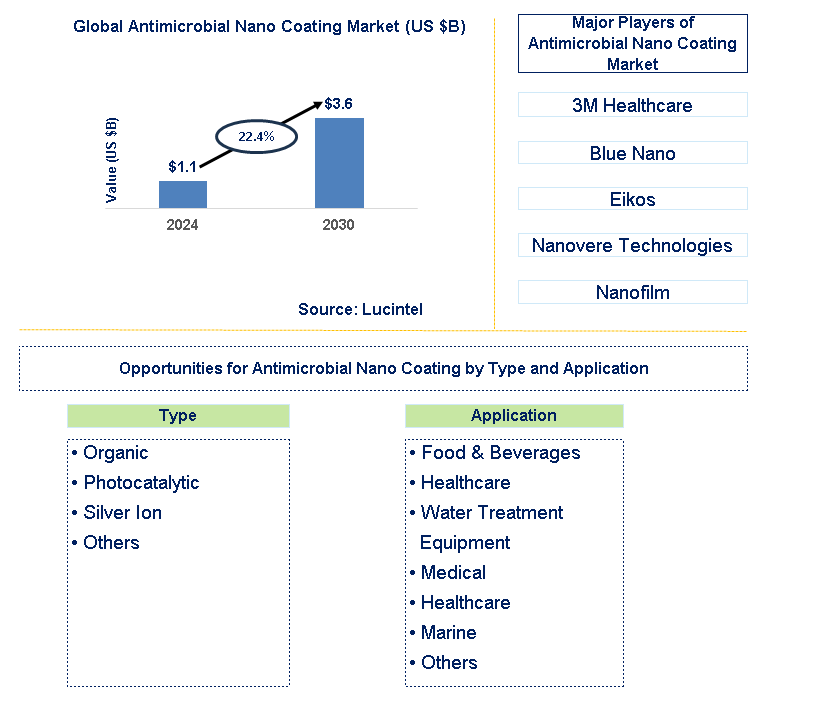
Key data points: The market size in 2030 = $3.6 billion, growth forecast = 22.4% annually for the next 6 years. Scroll below to get more insights. This market report covers trends, opportunities, and forecasts in the global antimicrobial nano coating market to 2030 by type (organic, photocatalytic, silver ion, and others), application (food & beverages, healthcare, water treatment equipment, medical, healthcare, marine, and others), and region (North America, Europe, Asia Pacific, and the Rest of the World)
We'll send your sample report shortly.
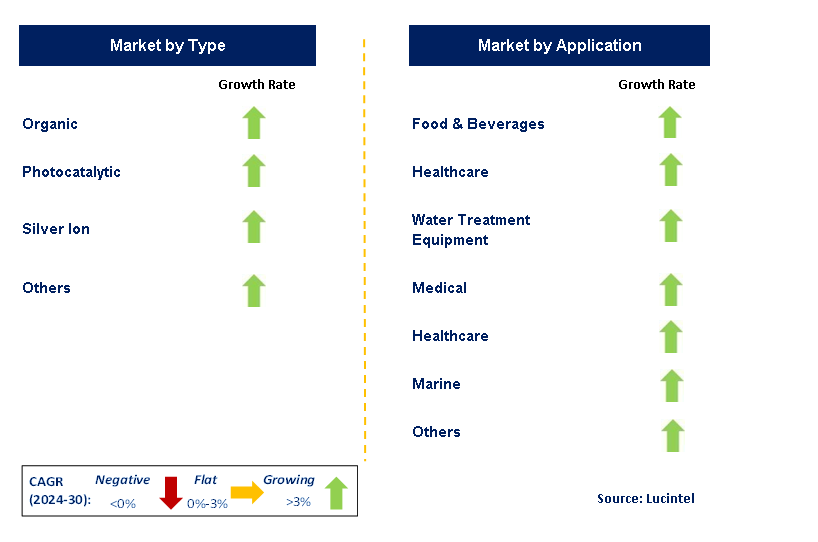
• Lucintel forecasts that, within the type category, organic is expected to witness the highest growth over the forecast period.
• Within the application category, food and beverage will remain the largest segment.
• In terms of regions, APAC is expected to witness the highest growth over the forecast period. Gain valuable insights for your business decisions with our comprehensive 150+ page report.
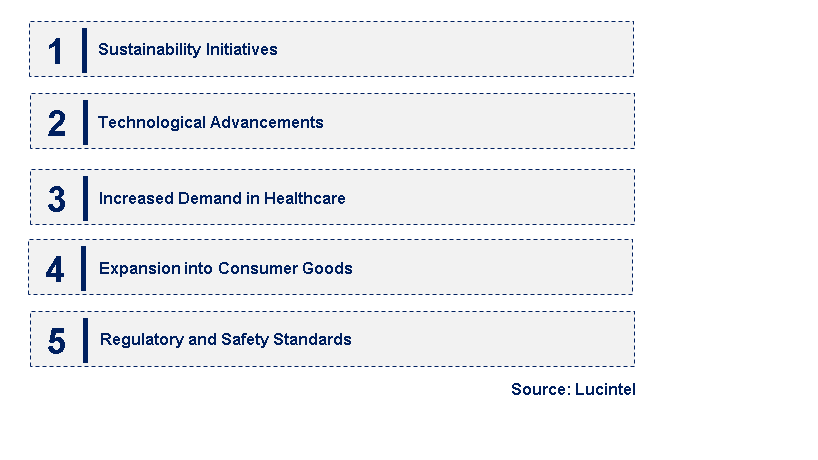
• Sustainability Initiatives: There is a growing focus on developing eco-friendly antimicrobial nano coatings. This trend is driven by increased awareness of environmental issues and regulations. Manufacturers are exploring sustainable materials and processes to minimize environmental impact while maintaining coating effectiveness.
• Technological Advancements: Innovations in nanoparticle technology are enhancing the performance and durability of antimicrobial coatings. Advances include the development of coatings with higher efficacy against a broader range of microorganisms and improved longevity, leading to better protection and longer-lasting applications.
• Increased Demand in Healthcare: The healthcare sector is a major driver of growth for antimicrobial nano coatings. There is heightened demand for coatings that offer enhanced protection against pathogens in hospitals and clinics. This trend is spurred by increased awareness of infection control and the need for advanced antimicrobial solutions in healthcare environments.
• Expansion into Consumer Goods: Antimicrobial nano coatings are increasingly being integrated into consumer products such as textiles, electronics, and home appliances. This trend is driven by rising consumer awareness of hygiene and the desire for products that offer added protection against microbes.
• Regulatory and Safety Standards: Stricter regulations and safety standards are shaping the development and application of antimicrobial nano coatings. Compliance with these regulations is essential for market entry and acceptance, driving manufacturers to innovate and ensure their products meet required safety and performance benchmarks. These trends are reshaping the antimicrobial nano coating market by driving innovation, expanding applications, and addressing sustainability and regulatory concerns. The focus on advanced technology, increased demand in healthcare, and integration into consumer goods are key factors influencing the market’s growth and evolution.
• Advanced Nanoparticle Formulations: New formulations of nanoparticles are enhancing the effectiveness of antimicrobial coatings. Innovations include using combinations of silver, copper, and zinc nanoparticles to create coatings with broad-spectrum antimicrobial properties and improved durability.
• Integration in Building Materials: Antimicrobial nano coatings are increasingly being incorporated into building materials such as paints and surface coatings. This development is aimed at improving hygiene in public spaces and reducing the spread of pathogens in high-traffic areas.
• Enhanced Regulatory Compliance: The market is seeing improved compliance with regulatory standards and safety guidelines. Advances in testing and certification processes are ensuring that antimicrobial coatings meet stringent requirements, facilitating their adoption in various industries.
• Local Production Capabilities: Expansion of local production facilities, especially in emerging markets like India, is making antimicrobial nano coatings more accessible and cost-effective. This development supports market growth by reducing production costs and increasing availability.
• Innovative Application Techniques: New application techniques are improving the efficiency and performance of antimicrobial coatings. Innovations such as spray-on and dip-coating methods are enhancing versatility and ease of application, making these coatings suitable for a wider range of products and surfaces. These developments are advancing the antimicrobial nano coating market by improving technology, expanding applications, and enhancing regulatory compliance. Local production and innovative application techniques are further driving market growth and making antimicrobial coatings more accessible across various industries.
• Healthcare Sector: There is significant growth potential in the healthcare sector, where antimicrobial nano coatings can be applied to medical devices, hospital surfaces, and equipment. This application addresses the need for enhanced infection control and safety, driving demand for advanced coatings.
• Consumer Electronics: The integration of antimicrobial coatings in consumer electronics such as smartphones, tablets, and laptops presents a growth opportunity. These coatings can help reduce the spread of germs on frequently touched surfaces, catering to consumer demand for cleaner, safer products.
• Food Packaging: Antimicrobial coatings for food packaging are an emerging growth area. Coatings that extend shelf life and reduce contamination can meet the increasing demand for safer and longer-lasting food products, opening up new market segments.
• Textiles and Apparel: The application of antimicrobial coatings in textiles and apparel offers growth potential. These coatings can enhance the hygiene and durability of clothing, sportswear, and home textiles, responding to consumer preferences for antimicrobial and easy-care fabrics.
• Construction Materials: The use of antimicrobial coatings in construction materials such as paints and surface coatings presents an opportunity for market expansion. These coatings can improve hygiene in residential and commercial buildings, addressing health and safety concerns. These growth opportunities highlight the diverse applications of antimicrobial nano coatings across healthcare, consumer electronics, food packaging, textiles, and construction. By targeting these sectors, companies can capitalize on increasing demand for advanced antimicrobial solutions and drive market expansion.
• Sustainability and Environmental Awareness: A growing focus on sustainability and environmental concerns is driving the demand for eco-friendly antimicrobial coatings. Consumers and industries seek solutions that minimize environmental impact while providing effective microbial protection.
• Technological Advancements: Innovations in nanoparticle technology are enhancing the performance and applicability of antimicrobial coatings. These advances include improved formulations and manufacturing techniques that increase effectiveness and extend the life of the coatings.
• Rising Health and Hygiene Standards: Increased awareness of health and hygiene is fueling demand for antimicrobial coatings in sectors like healthcare, food packaging, and consumer products. The need for enhanced protection against pathogens is driving market growth.
• Regulatory Support: Supportive regulatory frameworks and standards for antimicrobial coatings are aiding market growth. Compliance with safety and performance regulations is essential for market entry, driving innovation and quality improvements.
• Increased Investment in R&D: Significant investments in research and development are advancing antimicrobial coating technologies. Ongoing R&D efforts are leading to new materials, formulations, and applications, driving market expansion. Challenges in the antimicrobial nano coating market include:
• Cost and Production Complexity: The high cost and complexity of producing advanced antimicrobial nano coatings can be a barrier to adoption. Companies must manage production expenses and provide cost-effective solutions to remain competitive.
• Regulatory Hurdles: Navigating complex regulatory requirements and obtaining certifications for antimicrobial coatings can be challenging. Compliance with diverse regulations across different regions requires significant effort and resources.
• Market Education and Awareness: Educating the market about the benefits and applications of antimicrobial coatings can be difficult. Increasing awareness and demonstrating the value of these coatings are essential for broader adoption. The drivers and challenges outlined above significantly affect the antimicrobial nano coating market. While sustainability, technological advancements, and rising health standards drive growth, cost, regulatory hurdles, and market education remain challenges. Addressing these factors will be crucial for companies seeking to capitalize on market opportunities.
• 3M Healthcare
• Blue Nano
• Eikos
• Nanovere Technologies
• Nanofilm
• Smith and Nephew
• Nanocare Tech
• Organic
• Photocatalytic
• Silver Ion
• Others
• Food & Beverages
• Healthcare
• Water Treatment Equipment
• Medical
• Healthcare
• Marine
• Others
• North America
• Europe
• Asia Pacific
• The Rest of the World
• United States: In the U.S., advancements in antimicrobial nano coatings are driven by growing demand in healthcare and consumer products. Innovations include coatings with improved efficacy and longer-lasting protection. The market is also growing due to stringent hygiene regulations and increased awareness of antimicrobial solutions in public spaces and healthcare facilities.
• China: China is rapidly expanding its antimicrobial nano coating capabilities, focusing on technological advancements and large-scale production. Recent developments include the integration of nano coatings into construction materials and electronics. The market is supported by government initiatives aimed at improving public health and safety through advanced coating technologies.
• Germany: Germany is a leader in adopting antimicrobial nano coatings, emphasizing sustainability and innovation. Recent advancements include eco-friendly nanoparticles and integrating these coatings into industrial applications, such as automotive and healthcare. Germany’s focus on environmental regulations is driving the development of more sustainable coating solutions.
• India: In India, the antimicrobial nano coating market is emerging with a focus on cost-effective and scalable solutions. Recent developments include local production initiatives and the adaptation of coatings for diverse applications like textiles and packaging. The market is expanding as awareness of hygiene and safety increases, supported by growing investments in research and development.
• Japan: Japan is advancing in the antimicrobial nano coating market with innovations targeting high-performance applications in electronics and healthcare. Recent developments include nano coatings offering enhanced durability and antimicrobial properties. Japan’s market growth is driven by technological advancements and a strong emphasis on maintaining high hygiene standards across sectors.


• 3M Healthcare
• Blue Nano
• Eikos
• Nanovere Technologies
• Nanofilm
• Smith and Nephew
• Nanocare Tech Q6. Which antimicrobial nano coating market segment will be the largest in future? Answer: Lucintel forecasts that, within the type category, organic is expected to witness the highest growth over the forecast period. Q7. In antimicrobial nano coating market, which region is expected to be the largest in next 5 years? Answer: In terms of regions, APAC is expected to witness the highest growth over the forecast period. Q8. Do we receive customization in this report? Answer: Yes, Lucintel provides 10% customization without any additional cost.


Choose a license that fits your team. Instant PDF delivery.
Prices exclude taxes. Instant delivery. Custom licensing available on request.
Market Report · July 22, 2026
Market Report · July 22, 2026
Market Report · July 22, 2026
Trusted partner for strategic intelligence and business growth


Receive a complimentary market analysis tailored to your industry. Our analysts will identify key growth opportunities and competitive dynamics specific to your business.

Market size, growth rate, and key trend analysis for your specific sector.

Top competitor positioning and market share analysis.

Strategic recommendations backed by data-driven insights.
Get curated market intelligence and competitive moves straight to your inbox.
By subscribing, you agree to receive our monthly insights. Unsubscribe anytime.
Receive a complimentary market analysis tailored to your industry. Our analysts will identify key growth opportunities and competitive dynamics specific to your business.
Market size, growth rate, and key trend analysis for your specific sector.
Top competitor positioning and market share analysis.
Strategic recommendations backed by data-driven insights.
Get curated market intelligence, emerging trends, and competitive moves straight to your inbox each month.
By subscribing, you agree to receive our monthly insights. Unsubscribe anytime.
We'll send your sample report shortly.