
Market Report · July 22, 2026

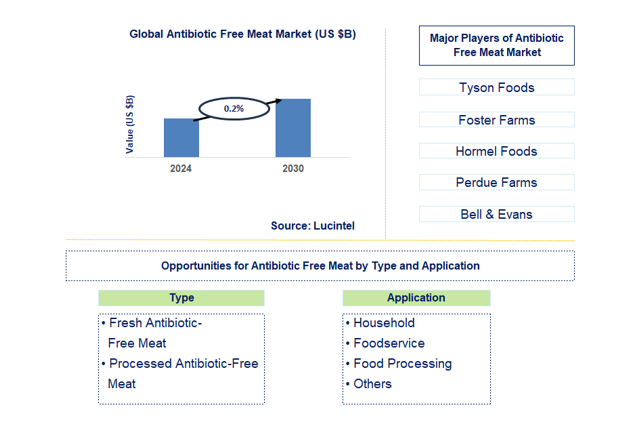
Key data points: The market size in 2030 = $262.53 billion, growth forecasts = 0.2% annually for the next 6 years. Scroll below to get more insights. This market report covers trends, opportunities, and forecasts in the global antibiotic free meat market to 2030 by type (fresh antibiotic-free meat and processed antibiotic-free meat), application (household, foodservice, food processing, and others), and region (North America, Europe, Asia Pacific, and the Rest of the World)
We'll send your sample report shortly.
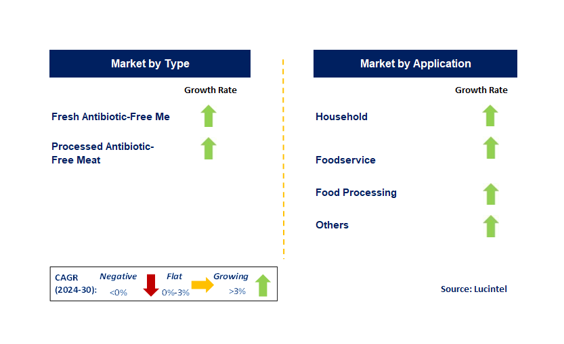
• Lucintel forecasts that, within the type category, fresh antibiotic-free meat is expected to witness a higher growth over the forecast period.
• Within the application category, household is expected to witness the highest growth.
• In terms of regions, APAC will remain the largest region over the forecast period due to rapid urbanization and increasing public awareness towards the health benefits of antibiotic free meat products. Gain Valuable insights for your business decisions with our comprehensive 150+ page report.
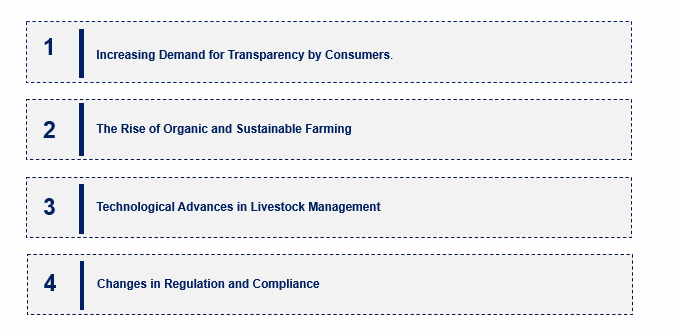
• Increasing Demand for Transparency by Consumers: Demand from customers for transparency in meat production, including details about use of antibiotics, is increasing. Moreover, this trend has been motivated by the fact that people are now more aware of the health effects related to antibiotics and also desire sustainable food choices. Furthermore, transparent labeling and sourcing also help to build trust among consumers hence contributing to increased demand for antibiotic-free meat. To address these concerns, companies have responded by sharing detailed information on their farming practices and certification processes.
• The Rise of Organic and Sustainable Farming: There is a growing concern towards reducing the use of antibiotics through organic and sustainable farming practices. In addition, this has been influenced by consumer preferences for healthier choices when it comes to food that they consume as well as environmental conservation issues. Further, organic and sustainable farming also goes beyond minimizing antibiotic usage but focuses on animal rights as well as good order in ecosystems. This change has led to increased sales of antibiotic-free meat thus encouraging new forms of farming investments.
• Technological Advances in Livestock Management: Antibiotics can be avoided through improved technologies that have resulted into better management of livestock. Additionally, healthier animals with reduced disease incidents are achieved through technological advancements such as precision agriculture, better feed formulation methods and enhanced monitoring systems among others. This does not only enable less reliance on antibiotics but also helps to improve overall healthiness of animals thereby promoting the production of antibiotic-free meat.
• Changes in Regulation and Compliance: Changing policies on livestock antibiotic usage and increasing regulatory scrutiny result in a rise in the market for meat without any antibiotics. Consequently, governments are coming up with stricter rules and guidelines aiming at checking resistance against antimicrobials which pushes firms dealing with meat into adopting practices without the use of anti-bacterial substances. Responding to these regulations is now a major factor driving growth in this market since producers have to adopt new standards or get certifications in order to supply meat that meets these criteria. These emerging trends—transparency demand, organic and sustainable farming, technological innovations, regulatory changes, and expanded availability—are reshaping the antibiotic-free meat market. They reflect shifts in consumer preferences, regulatory environments, and technological advancements, driving growth and innovation in the sector. As these trends continue to evolve, they will influence the market dynamics and shape the future of antibiotic-free meat production and consumption.
• Enhanced Regulation: There have been recent changes in regulations that tightened the restrictions on antibiotics use in animals leading to a change towards antibiotic-free meat. For instance, there are stricter guidelines and certification processes which the governments of many countries have implemented such as US and Germany. As a result, they force farmers to turn to antibiotic-free practices and adopt alternative health management approaches. These improved regulatory frameworks ensure better food safety standards hence driving market growth.
• Boosted Investment on Research and Technology: Rapid investments in research and technology have seen antibiotic-free meat become a reality. For example, firms invest money into innovative animal health management including, among other things, high-quality feed additives and disease prevention strategies thereby minimizing the need for antibiotics. It will also increase efficiency and sustainability of antibiotic-free meat production through these investments. Besides improving quality and safety of meat products due to technological advancement has led to market expansion.
• Growing Consumer Awareness and Demand: Increasing consumer awareness about the risks associated with using antibiotics in livestock is spurring demand for animal protein that is free from them (antibiotic). In addition, different campaigns aimed at educating people on dangers arising from antibiotic resistance have increased media coverage regarding it hence raising the concerns over this issue which affects human public health as well. Thus, consumers now look for such type of meat more often as their choice has been influenced by it too much. This has forced retailers in response to growing demand for anti-biotic free products being offered by hotels.
• Medication-Free Meats: A Global Perspective: The markets for medication-free meats are moving away from traditional localities into emerging economies such as China or India where they become available worldwide. The escalation of global markets is based on increasing awareness levels about healthy food choices among customers who want healthier options due to numerous reasons especially related to human health conditions caused by dangerous lifestyles or habits like eating fast foods containing harmful substances like preservatives etc. Producers have to adopt their procedures to comply with international standards and cater for new markets. The global expansion of medication-free meats is driving the growth and diversification of the overall market. Recent developments in the antibiotic-free meat market—including enhanced regulations, increased investment, growing consumer demand, global market expansion, and industry collaborations—are shaping the sector's future. These developments reflect a broader shift towards healthier and more sustainable food production practices, driving market growth and innovation. As these trends continue to evolve, they will influence the dynamics of the antibiotic-free meat market and contribute to its ongoing transformation.
• Expansion into Retail and Foodservice Channel: Impact: Increasing the availability of antibiotic-free meat in retail and foodservice channels is a significant growth opportunity for you. Several major retailers and restaurants are currently providing antibiotic-free choices as they try to keep up with healthier, more sustainable food demands from their customers. The expansion will not only enable companies to reach out to more buyers but also provide greater access to antibiotic-free meats, thereby driving the overall market growth.
• Development of Premium and Niche Products: There are growth opportunities through developing premium and niche products of this kind. Consumers are willing to pay a higher price for good quality antibiotics free such as organic or grass-fed meat, this is what happens with specialized products that target health conscious and ecologically aware consumers. Companies can exploit this opportunity by providing unique, high-value items that capture part of the market share.
• Investment in Sustainable and Organic Farming Practices: Investing in sustainable organic farming practices is a leading growth opportunistic move within the anti-biotic meat industry. These methods reduce antibiotic use while appealing to environmentally friendly consumers who wish for ethically grown foods. By incorporating sustainable techniques and attaining organic certifications, producers can set apart their goods from those of their competitors while targeting an emerging section of green-minded clients.
• Growing consumer awareness: The increasing knowledge of consumers on the risks of using antibiotics in animals is the main driver behind antibiotic-free meat. In order to fight against antibiotic resistance which threatens human life, people are looking for non-medicated animals’ products. This higher consciousness pushes them to demand for meat that does not contain antibiotics, thus prompting sellers and producers start up supplying this kind of products.
• More stringent regulatory frameworks: Governments across the globe are putting in place stricter rules and regulations on the use of antibiotics in livestock. These measures are mainly intended to prevent antibiotic resistance and enhance food safety. Consequently, these measures often force producers to adopt antibiotic-free practices as a result driving the market for such meat products. This imposes regulatory pressures on the industry towards more sustainable and responsible farming methods.
• Technological advancements in animal husbandry: Such advances as improved feed formulations and precision farming techniques have helped reduce dependency on antibiotics by breeders. It helps improve animal health without using drugs while at the same time supporting growth of no-antibiotic meat market through better productivity rates among animals due to improved feeds formulations as well as development of disease control mechanisms that enable production of high quality, antibiotic free meats. Challenges in the antibiotic free meat market are:
• High Production Costs: There are usually higher costs involved in producing antibiotic-free meat than the production of normal meat. These costs consist of investment in alternative health management practices, certifications and costlier feeds. Therefore, these increased production costs may hinder entry into the market for some producers and can lead to increased prices for consumers, which could restrict market growth and consumer acceptance.
• Regulatory Compliance and Certification : It can be difficult to navigate regulatory requirements as well as acquire certification for antibiotic free meats. For instance, compliance with regulations by farmers becomes complicated due to different standards across regions and different certification processes. Producers have to meet these regulation and certification requirement that is time-consuming and costly; hence it affects their ability to timely bring antibiotic free products into the market.
• Market Competition: More players including producers’ brands have come up with different producer brands making competition tougher in the antibiotic free meat market today. Apart from other producers of antibiotic free meats, there are also companies specializing in alternative protein sources thus constituting competition. This strong competition can lead to price wars which makes it difficult for new entrants to penetrate the market or maintain their current position by existing participants. The antibiotic-free meat market is influenced by drivers such as increasing consumer awareness, stricter regulations, technological advancements, demand for sustainable products, and investment in research and development. However, challenges like high production costs, regulatory compliance, and market competition also impact the market. Balancing these drivers and challenges is crucial for stakeholders to navigate the market effectively, capitalize on growth opportunities, and address the evolving demands of consumers and regulatory bodies.
• Tyson Foods
• Foster Farms
• Hormel Foods
• Perdue Farms
• Bell & Evans
• Meyer Natural Angus
• Pine Manor
• Mom Made Foods
• DaBecca Natural Foods
• Saffron Road
• Fresh Antibiotic-Free Meat
• Processed Antibiotic-Free Meat
• Household
• Foodservice
• Food Processing
• Others
• North America
• Europe
• Asia Pacific
• The Rest of the World
• United States: The antibiotic-free meat market is growing rapidly in the United States due to a rise in consumers who want healthier and more sustainable food. Regulatory pressures and customer preferences are driving this trend, with major retailers and food companies now providing antibiotic-free options. These trends have been fostered by USDA’s guidelines on antibiotic use in livestock thereby leading to a significant growth of antibiotic-free meat availability and variety. Besides, industry initiatives that promote transparent labeling as well as responsible farming practices also support this change.
• China: As part of the safe food supply initiative and improvement of public health status, China is moving towards using antibiotics free meat production. The recent developments have included increased government support for non-antibiotic farming methods, as well as consumer preference for healthier foods. In order to meet these demands, Chinese meat producers are investing in alternative health management strategies and improving supply chain transparency. As such, the country’s resolve to improve its food safety norms and concern over resistance to antibiotics has resulted in wider ranges of antibiotic-free retail outlets and foodservice products.
• Germany: Strong regulatory frameworks coupled with consumer demand make Germany a top leader in the antibiotics free meat market. A few examples include: increasingly stringent regulations on antibiotics use for animals reared for human consumption; and elevation of certification levels required before a product can be described as anti-biotics free. This has led to an increase in German consumers’ awareness about the environmental impacts associated with product use. The organic and sustainable farming focus which Germany has adopted is increasing its market size based on investment in research & technology.
• India: A bigger picture where people are becoming more conscious about their health has contributed to the development of Antibiotic Free Meat Market in India . There is increased consumer knowledge concerning concerns about using antibiotics on livestock through various means such as media campaigns . Indian poultry producers are adopting new practices aimed at reducing their dependence upon antibiotics while still improving meat quality. Reflecting changing tastes among Indian consumers , antibiotic-free meat is now found in many places including urban centers and retail outlets.
• Japan: In Japan, consumers are increasingly demanding high-quality and safer foodstuffs, which has led to the rise of antibiotics free meat market. Some of the recent developments include the shift towards more extensive farming methods that do not rely on antibiotics and a wider availability of antibiotic-free meat in grocery stores and restaurants. Japanese people are getting more health aware, and they have started appreciating benefits of denatured protein meat products. This trend is also supported by Japanese government through its various actions as it seeks to improve food safety while promoting sustainable agricultural practices thereby supporting this growing market segment.


• Tyson Foods
• Foster Farms
• Hormel Foods
• Perdue Farms
• Bell & Evans
• Meyer Natural Angus
• Pine Manor
• Mom Made Foods
• DaBecca Natural Foods
• Saffron Road Q6. Which antibiotic free meat market segment will be the largest in future? Answer: Lucintel forecasts that fresh antibiotic-free meat is expected to witness the higher growth over the forecast period. Q7. In antibiotic free meat market, which region is expected to be the largest in next 5 years? Answer: APAC will remain the largest region over the forecast period due to rapid urbanization and increasing public awareness towards the health benefits of antibiotic free meat products. Q.8 Do we receive customization in this report? Answer: Yes, Lucintel provides 10% customization without any additional cost.


Choose a license that fits your team. Instant PDF delivery.
Prices exclude taxes. Instant delivery. Custom licensing available on request.
Market Report · July 22, 2026
Market Report · July 22, 2026
Market Report · July 22, 2026
Trusted partner for strategic intelligence and business growth


Receive a complimentary market analysis tailored to your industry. Our analysts will identify key growth opportunities and competitive dynamics specific to your business.

Market size, growth rate, and key trend analysis for your specific sector.

Top competitor positioning and market share analysis.

Strategic recommendations backed by data-driven insights.
Get curated market intelligence and competitive moves straight to your inbox.
By subscribing, you agree to receive our monthly insights. Unsubscribe anytime.
Receive a complimentary market analysis tailored to your industry. Our analysts will identify key growth opportunities and competitive dynamics specific to your business.
Market size, growth rate, and key trend analysis for your specific sector.
Top competitor positioning and market share analysis.
Strategic recommendations backed by data-driven insights.
Get curated market intelligence, emerging trends, and competitive moves straight to your inbox each month.
By subscribing, you agree to receive our monthly insights. Unsubscribe anytime.
We'll send your sample report shortly.