
Report Feature
Anti-venom Market Trends and Forecast
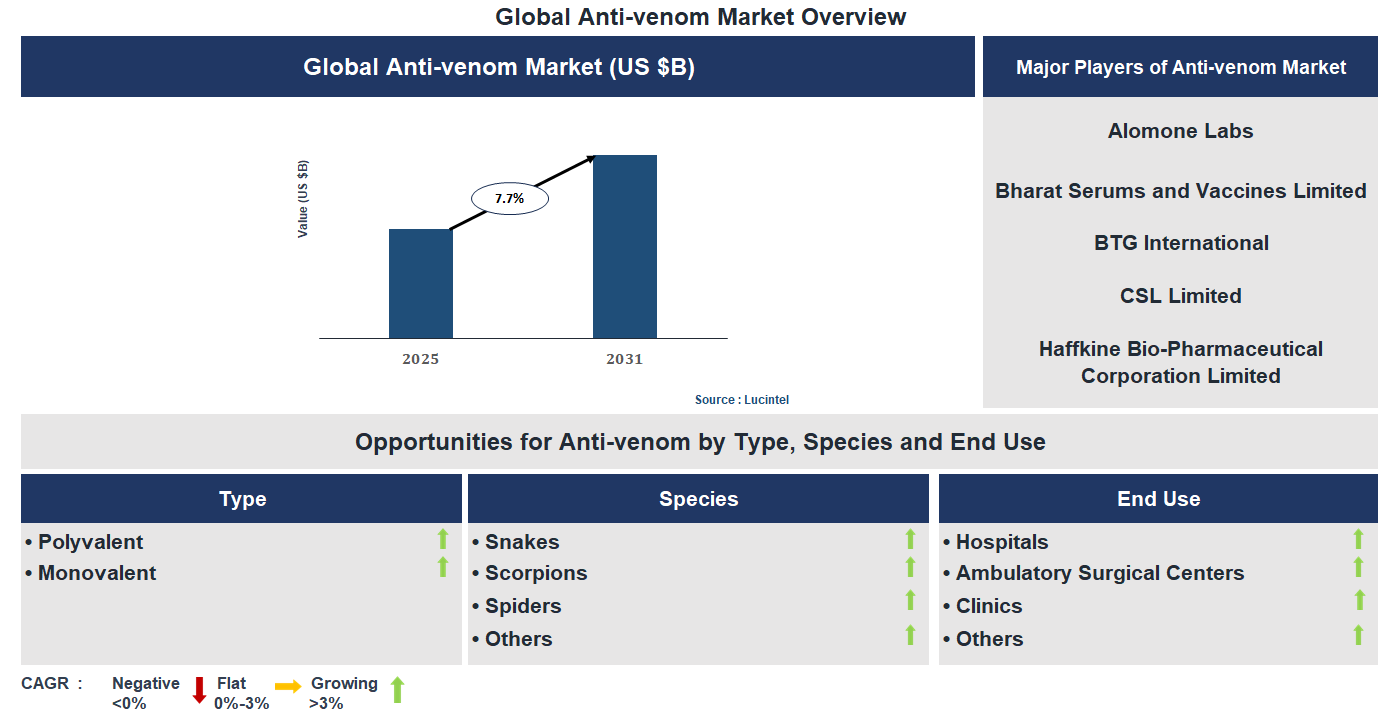
The future of the global anti-venom market looks promising with opportunities in the hospital, ambulatory surgical center, and clinic markets. The global anti-venom market is expected to grow with a CAGR of 7.7% from 2025 to 2031. The major drivers for this market are the increasing incidence of snakebite cases, the rising awareness about venomous animal threats, and the growing demand for effective emergency treatments.• Lucintel forecasts that, within the type category, polyvalent is expected to witness higher growth over the forecast period.
• Within the end use category, hospital is expected to witness the highest growth.
• In terms of region, North America is expected to witness the highest growth over the forecast period. Gain valuable insights for your business decisions with our comprehensive 150+ page report. Sample figures with some insights are shown below.
Emerging Trends in the Anti-venom Market
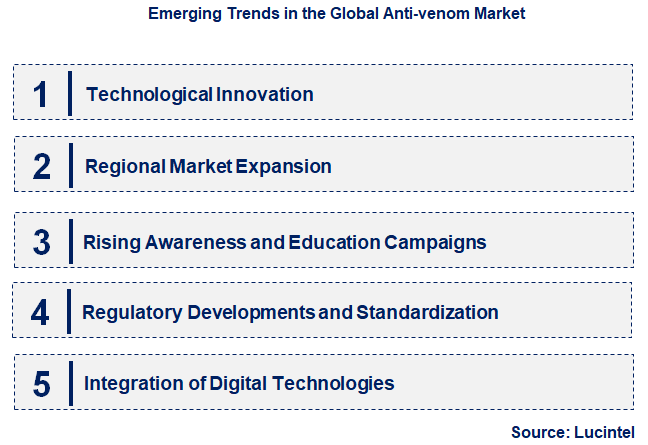
The anti-venom market is experiencing a significant transformation driven by technological advancements, increasing awareness, and evolving healthcare needs. As snakebite incidents remain prevalent in many regions, the demand for effective and rapid treatment options is rising. Market players are focusing on innovation, expanding distribution channels, and addressing regional disparities to meet the growing demand. These developments are not only improving treatment outcomes but also reshaping the competitive landscape. Understanding these emerging trends is crucial for stakeholders aiming to capitalize on opportunities and address challenges in this vital healthcare sector.• Technological Innovation: Development of Next-Generation Anti-venoms: Advances in biotechnology and immunology are enabling the creation of more effective, safer, and broader-spectrum anti-venoms. Recombinant DNA technology and monoclonal antibodies are being explored to improve efficacy and reduce adverse reactions. These innovations promise faster, more reliable treatments, especially in regions with diverse snake species. The impact includes enhanced patient outcomes, reduced treatment costs, and increased market competitiveness as companies adopt cutting-edge solutions.
• Regional Market Expansion: Focus on Underdeveloped and High-Risk Areas: Companies are increasingly targeting regions with high snakebite incidences, such as Africa, Southeast Asia, and Latin America. Efforts include establishing local manufacturing units, improving distribution networks, and collaborating with governments and NGOs. This expansion addresses unmet needs, reduces mortality rates, and boosts market growth. It also encourages tailored formulations suitable for regional snake species, thereby broadening the market scope and fostering local healthcare improvements.
• Rising Awareness and Education Campaigns: Public Health Initiatives and Awareness Programs: Governments, NGOs, and private firms are investing in awareness campaigns to educate populations about snakebite prevention and the importance of timely treatment. These initiatives help reduce mortality and morbidity by encouraging early medical intervention. Increased awareness drives demand for anti-venoms and supports market growth, while also fostering community engagement and better healthcare practices, especially in rural and underserved areas.
• Regulatory Developments and Standardization: Enhanced Approval Processes and Quality Standards: Regulatory agencies are implementing stricter standards for anti-venom production, quality control, and safety. Harmonization of regulations across regions facilitates smoother approval processes and international trade. These developments ensure higher product quality, build consumer trust, and encourage innovation. They also pose challenges for manufacturers to meet evolving compliance requirements, but ultimately contribute to a safer, more reliable market environment.
• Integration of Digital Technologies: Telemedicine, Data Analytics, and Supply Chain Optimization: Digital tools are transforming the anti-venom landscape by enabling remote diagnosis, real-time data collection, and efficient inventory management. Telemedicine platforms facilitate quick consultation and treatment decisions, especially in remote areas. Data analytics help forecast demand and optimize supply chains, reducing wastage and shortages. These technologies improve access, reduce costs, and enhance overall treatment efficacy, positioning the market for smarter, more responsive healthcare delivery. In summary, these emerging trends are collectively reshaping the anti-venom market by fostering innovation, expanding reach, improving safety standards, and leveraging digital solutions. They are driving growth, enhancing treatment outcomes, and addressing regional disparities, ultimately making anti-venom therapies more accessible, effective, and reliable worldwide.
Recent Development in the Anti-venom Market
The anti-venom market has experienced significant growth driven by increasing snakebite incidents, advancements in biotechnology, and rising awareness about snakebite treatment. As tropical and subtropical regions face higher risks, the demand for effective anti-venoms has surged. Innovations in production techniques and expanding healthcare infrastructure are also contributing to market expansion. Additionally, regulatory approvals and collaborations between pharmaceutical companies are enhancing product availability. These developments are shaping the future landscape of anti-venom therapy, making treatments more accessible and effective. The following key developments highlight the recent trends and their implications for the market.• Technological advancements in anti-venom production: New biotechnological methods, such as recombinant DNA technology, have improved the safety and efficacy of anti-venoms, reducing adverse reactions and increasing shelf life. This innovation enhances treatment outcomes and broadens market potential.
• Expansion of regional markets: Countries in Africa, Asia, and Latin America are witnessing increased investments in healthcare infrastructure, leading to higher demand for anti-venoms. This regional growth diversifies the market and opens new opportunities for manufacturers.
• Regulatory approvals and quality standards: Governments and health organizations are establishing stricter regulations and quality standards for anti-venom products. These measures ensure safer, more reliable treatments, boosting consumer confidence and market stability.
• Strategic collaborations and partnerships: Pharmaceutical companies are forming alliances with research institutions to develop more effective and broad-spectrum anti-venoms. These collaborations accelerate innovation and expand product portfolios, strengthening market competitiveness.
• Rising awareness and preventive measures: Public health campaigns and education initiatives are increasing awareness about snakebite prevention and treatment. This heightened awareness drives demand for anti-venoms and encourages early intervention, positively impacting market growth. In summary, recent developments such as technological innovations, regional market expansion, regulatory enhancements, strategic collaborations, and increased awareness are collectively propelling the anti-venom market forward. These trends are leading to safer, more accessible, and more effective treatments, ultimately improving patient outcomes and fostering sustainable market growth.
Strategic Growth Opportunities in the Anti-venom Market
The anti-venom market is experiencing significant growth driven by increasing snakebite incidents, rising awareness, and advancements in biotechnology. As the demand for effective treatment options grows globally, key applications are emerging as vital areas for expansion. These opportunities are shaping the future landscape of anti-venom production and distribution, offering potential for improved healthcare outcomes and market competitiveness. Companies and stakeholders are focusing on innovative solutions to address regional needs, enhance product efficacy, and expand access. Understanding these growth opportunities is essential for strategic planning and investment in this evolving market.• Emergency Medical Services: Rapid response and treatment efficiency are critical in snakebite cases. Developing specialized anti-venoms tailored for emergency use can significantly reduce mortality rates and improve patient outcomes. This growth opportunity emphasizes the need for fast-acting formulations and widespread availability in high-risk regions, ultimately strengthening emergency healthcare infrastructure.
• Rural Healthcare Development: Many snakebite incidents occur in rural areas with limited healthcare access. Expanding anti-venom distribution and establishing local treatment centers can bridge this gap. This opportunity enhances healthcare equity, reduces mortality, and promotes regional health system strengthening, making anti-venom more accessible to underserved populations.
• Veterinary Applications: Snakebites also affect livestock and pets, impacting agricultural productivity and pet health. Developing veterinary-specific anti-venoms can mitigate economic losses and improve animal welfare. This application broadens market scope and encourages innovation in veterinary medicine, supporting sustainable farming and pet care industries.
• Biotechnological Innovations: Advances in recombinant DNA technology and monoclonal antibodies are revolutionizing anti-venom development. These innovations promise safer, more effective, and customizable treatments. Investing in biotech research can lead to next-generation anti-venoms, reducing adverse reactions and increasing efficacy, thus transforming the market landscape.
• Regional Market Expansion: Emerging markets in Asia, Africa, and Latin America present substantial growth potential due to high snakebite prevalence. Tailoring anti-venom products to regional venom profiles and establishing local manufacturing can boost market penetration. This expansion enhances regional healthcare capabilities and drives global market growth. In summary, these key growth opportunities are significantly impacting the anti-venom market by expanding application areas, improving treatment efficacy, and increasing accessibility. They foster innovation, address regional needs, and promote sustainable growth, positioning the market for continued development and improved global health outcomes.
Anti-venom Market Driver and Challenges
The anti-venom market is influenced by a variety of technological, economic, and regulatory factors that shape its growth and development. Advances in biotechnology and medical research have led to improved production techniques and more effective formulations. Economic factors such as increasing healthcare expenditure and rising awareness about snakebite management contribute to market expansion. Regulatory policies and approvals also play a crucial role in ensuring safety and efficacy, impacting market accessibility. However, challenges such as high production costs, limited availability in rural areas, and stringent regulatory requirements pose significant hurdles. Understanding these drivers and challenges is essential for stakeholders aiming to capitalize on market opportunities and address existing barriers effectively. The factors responsible for driving the anti-venom market include:-• Technological Advancements: The development of recombinant DNA technology and monoclonal antibodies has revolutionized anti-venom production, making it more efficient and safer. These innovations enable the creation of more specific and potent formulations, reducing adverse reactions and improving patient outcomes. Additionally, advancements in purification and stabilization techniques have enhanced the shelf life and efficacy of anti-venoms. As research continues, newer technologies are expected to further improve the availability and effectiveness of anti-venoms, driving market growth significantly.
• Increasing Incidence of Snakebites: Rising snakebite cases, especially in tropical and subtropical regions, are a major driver. Factors such as expanding rural populations, agricultural activities, and climate change contribute to higher exposure to venomous snakes. Governments and health organizations are prioritizing snakebite management, leading to increased demand for effective anti-venoms. This growing incidence underscores the need for improved treatment options, fueling research, production, and distribution efforts within the market.
• Growing Healthcare Expenditure: An increase in healthcare spending globally, particularly in emerging economies, supports the anti-venom market. Investments in healthcare infrastructure, training, and awareness campaigns improve diagnosis and treatment of snakebites. Enhanced funding facilitates the development of new anti-venom formulations and expands distribution networks, especially in underserved areas. As healthcare systems strengthen, the demand for reliable anti-venom therapies is expected to rise, further propelling market growth.
• Regulatory Approvals and Support: Stringent regulatory frameworks ensure the safety, efficacy, and quality of anti-venoms, fostering consumer confidence. Regulatory agencies like the FDA and EMA provide approvals that facilitate market entry and expansion. Additionally, government initiatives and policies promoting snakebite management and anti-venom production support market growth. These regulatory measures also encourage innovation and standardization, which are crucial for market stability and global acceptance. The challenges facing this anti-venom market include:-
• High Production Costs: Manufacturing anti-venoms involves complex processes, including venom extraction, immunization, and purification, which are costly. Limited availability of venom sources and the need for specialized facilities further increase expenses. High production costs translate into expensive end products, restricting access in low-income regions and limiting market growth. Overcoming these financial barriers requires technological innovations and strategic collaborations to reduce costs without compromising quality.
• Limited Availability in Rural Areas: Despite increasing demand, anti-venoms are often scarce in remote and rural regions where snakebites are most prevalent. Distribution challenges, inadequate healthcare infrastructure, and lack of trained personnel hinder access. This disparity results in higher mortality and morbidity rates in underserved populations. Addressing logistical issues and establishing efficient supply chains are critical to improving availability and ensuring timely treatment.
• Stringent Regulatory Requirements: While regulations ensure safety, they also pose barriers to market entry and product development. Lengthy approval processes, high compliance costs, and varying standards across countries can delay the availability of new anti-venoms. Small manufacturers may struggle to meet these requirements, limiting innovation and competition. Harmonizing regulatory standards and streamlining approval procedures are essential to foster market growth and ensure access to effective treatments. In summary, the anti-venom market is driven by technological innovations, rising snakebite incidences, increased healthcare investments, and supportive regulatory frameworks. However, high production costs, limited rural availability, and regulatory hurdles present significant challenges. These factors collectively influence market dynamics, requiring strategic efforts to enhance production efficiency, improve distribution, and streamline regulatory processes. Addressing these drivers and challenges will be crucial for expanding access to effective anti-venom therapies and improving patient outcomes worldwide.
List of Anti-venom Companies
Companies in the market compete on the basis of product quality offered. Major players in this market focus on expanding their manufacturing facilities, R&D investments, infrastructural development, and leverage integration opportunities across the value chain. With these strategies anti-venom companies cater increasing demand, ensure competitive effectiveness, develop innovative products & technologies, reduce production costs, and expand their customer base. Some of the anti-venom companies profiled in this report include-• Alomone Labs
• Bharat Serums and Vaccines Limited
• BTG International
• CSL Limited
• Haffkine Bio-Pharmaceutical Corporation Limited
• Incepta Pharmaceuticals Limited
• Instituto Butantan
• Inosan Biopharma
• Merck
• MicroPharm
Anti-venom Market by Segment
The study includes a forecast for the global anti-venom market by type, species, end use, and region.Anti-venom Market by Type [Value from 2019 to 2031]:
• Polyvalent
• Monovalent
Anti-venom Market by Species [Value from 2019 to 2031]:
• Snakes
• Scorpions
• Spiders
• Others
Anti-venom Market by End Use [Value from 2019 to 2031]:
• Hospitals
• Ambulatory Surgical Centers
• Clinics
• Others
Anti-venom Market by Region [Value from 2019 to 2031]:
• North America
• Europe
• Asia Pacific
• The Rest of the World
Country Wise Outlook for the Anti-venom Market
The anti-venom market has experienced significant growth driven by increasing snakebite incidents, advancements in biotechnology, and rising awareness of venomous bites health impacts. Countries are investing in research and development to improve the efficacy and availability of anti-venoms. Regulatory approvals and collaborations between public and private sectors are also shaping the market landscape. The demand for more effective, safer, and affordable anti-venoms is prompting innovation and expansion across regions. This evolving market reflects a global effort to reduce mortality and morbidity associated with venomous bites, with particular focus on emerging economies and developed nations alike.• United States: The US anti-venom market has seen steady growth due to increased snakebite cases and technological advancements. Major players are developing next-generation anti-venoms with improved safety profiles and broader efficacy. Regulatory agencies like the FDA are streamlining approval processes, encouraging innovation. The market benefits from strong healthcare infrastructure and research funding, leading to the development of recombinant anti-venoms. Additionally, awareness campaigns and improved diagnostics are enhancing treatment outcomes. The US also focuses on manufacturing anti-venoms for a variety of venomous species, expanding its product portfolio to meet diverse needs.
• China: China’s anti-venom market is rapidly expanding, driven by rising snakebite incidents in rural areas and government initiatives to improve healthcare access. The country is investing heavily in research to develop more effective and affordable anti-venoms. Local manufacturers are increasing production capacity, and collaborations with international firms are enhancing product quality. Traditional medicine integration and innovative biotechnologies are also being explored to complement conventional anti-venoms. The Chinese government’s focus on rural healthcare and epidemic preparedness is further boosting market growth. Efforts are underway to standardize anti-venom production and distribution across the country.
• Germany: Germany’s anti-venom market is characterized by high-quality products and advanced research capabilities. The country primarily imports anti-venoms but is also involved in clinical research to improve existing formulations. Germany’s focus on safety, efficacy, and regulatory compliance ensures high standards. The market benefits from a well-developed healthcare system and strong pharmaceutical industry collaborations. Innovations include recombinant and monoclonal antibody-based anti-venoms. Germany also emphasizes sustainable manufacturing practices and global distribution partnerships. The country’s role as a research hub supports the ongoing development of novel therapies for venomous bites, catering to both domestic and international markets.
• India: India’s anti-venom market is among the largest globally, driven by high snakebite prevalence and a large rural population. The government has launched initiatives to improve anti-venom accessibility and affordability. Local manufacturers dominate the market, producing polyvalent anti-venoms effective against multiple snake species. Efforts are underway to enhance production standards and reduce adverse reactions. The market is also witnessing innovations in formulation and storage to improve shelf life and ease of use. Public awareness campaigns and training programs for healthcare providers are improving treatment outcomes. India continues to focus on scaling up manufacturing capacity to meet domestic demand and reduce dependence on imports.
• Japan: Japan’s anti-venom market is relatively small but technologically advanced. The country emphasizes research and development to create highly specific and safe anti-venoms, often utilizing recombinant DNA technology. Japan’s healthcare system ensures rapid diagnosis and treatment, supporting market stability. The country invests in innovative therapies and improved delivery methods to enhance patient safety. Regulatory frameworks are strict, ensuring high-quality standards. Japan also collaborates internationally to develop global solutions for venomous bites. The focus remains on precision medicine, reducing side effects, and improving efficacy, with ongoing research into novel anti-venom formulations and biotechnologies.

Features of the Global Anti-venom Market
Market Size Estimates: Anti-venom market size estimation in terms of value ($B). Trend and Forecast Analysis: Market trends (2019 to 2024) and forecast (2025 to 2031) by various segments and regions. Segmentation Analysis: Anti-venom market size by type, species, end use, and region in terms of value ($B). Regional Analysis: Anti-venom market breakdown by North America, Europe, Asia Pacific, and Rest of the World. Growth Opportunities: Analysis of growth opportunities in different types, species, end uses, and regions for the anti-venom market. Strategic Analysis: This includes M&A, new product development, and competitive landscape of the anti-venom market. Analysis of competitive intensity of the industry based on Porter’s Five Forces model.
FAQ
Q1. What is the growth forecast for anti-venom market? Answer: The global anti-venom market is expected to grow with a CAGR of 7.7% from 2025 to 2031. Q2. What are the major drivers influencing the growth of the anti-venom market? Answer: The major drivers for this market are the increasing incidence of snakebite cases, the rising awareness about venomous animal threats, and the growing demand for effective emergency treatments. Q3. What are the major segments for anti-venom market? Answer: The future of the anti-venom market looks promising with opportunities in the hospital, ambulatory surgical center, and clinic markets. Q4. Who are the key anti-venom market companies? Answer: Some of the key anti-venom companies are as follows:• Alomone Labs
• Bharat Serums and Vaccines Limited
• BTG International
• CSL Limited
• Haffkine Bio-Pharmaceutical Corporation Limited
• Incepta Pharmaceuticals Limited
• Instituto Butantan
• Inosan Biopharma
• Merck
• MicroPharm Q5. Which anti-venom market segment will be the largest in future? Answer: Lucintel forecasts that, within the type category, polyvalent is expected to witness higher growth over the forecast period. Q6. In anti-venom market, which region is expected to be the largest in next 5 years? Answer: In terms of region, North America is expected to witness the highest growth over the forecast period. Q7. Do we receive customization in this report? Answer: Yes, Lucintel provides 10% customization without any additional cost.
Table of Contents
List of Figures
List of Tables
Methodology
- In-depth interviews of the major players in this market
- Detailed secondary research from competitors’ financial statements and published data
- Extensive searches of published works, market, and database information pertaining to industry news, company press releases, and customer intentions
- A compilation of the experiences, judgments, and insights of Lucintel’s professionals, who have analyzed and tracked this market over the years.


Buy Now
Choose a license that fits your team. Instant PDF delivery.
Prices exclude taxes. Instant delivery. Custom licensing available on request.
Key Questions
- • What are some of the most promising, high-growth opportunities for the anti-venom market by type (polyvalent and monovalent), species (snakes, scorpions, spiders, and others), end use (hospitals, ambulatory surgical centers, clinics, and others), and region (North America, Europe, Asia Pacific, and the Rest of the World)?
- • Which segments will grow at a faster pace and why?
- • Which region will grow at a faster pace and why?
- • What are the key factors affecting market dynamics? What are the key challenges and business risks in this market?
- • What are the business risks and competitive threats in this market?
- • What are the emerging trends in this market and the reasons behind them?
- • What are some of the changing demands of customers in the market?
- • What are the new developments in the market? Which companies are leading these developments?
- • Who are the major players in this market? What strategic initiatives are key players pursuing for business growth?
- • What are some of the competing products in this market and how big of a threat do they pose for loss of market share by material or product substitution?
- • What M&A activity has occurred in the last 5 years and what has its impact been on the industry? For any questions related to Anti-venom Market, Anti-venom Market Size, Anti-venom Market Growth, Anti-venom Market Analysis, Anti-venom Market Report, Anti-venom Market Share, Anti-venom Market Trends, Anti-venom Market Forecast, Anti-venom Companies, write Lucintel analyst at email: helpdesk@lucintel.com. We will be glad to get back to you soon.


