
Market Report · July 31, 2026

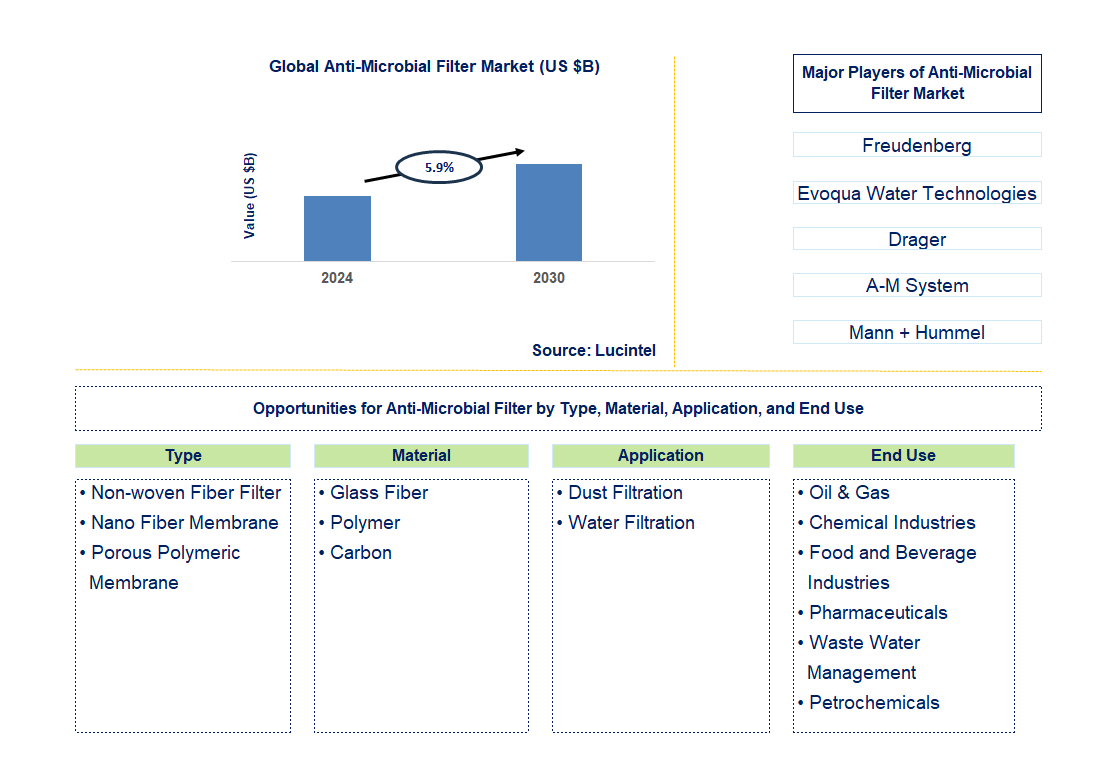
Key data points: The growth forecast = 5.9% annually for the next 6 years. Scroll below to get more insights. This market report covers trends, opportunities, and forecasts in the global anti-microbial filter market to 2030 by type (non-woven fiber filter, nano fiber membrane, porous polymeric membrane, , and), material (glass fiber, polymer, carbon, , and), application (dust filtration, water filtration, , and), end use (oil & gas, chemical industries, food and beverage industries, pharmaceuticals, waste water management, petrochemicals, , and), and region (North America, Europe, Asia Pacific, and the Rest of the World)
We'll send your sample report shortly.
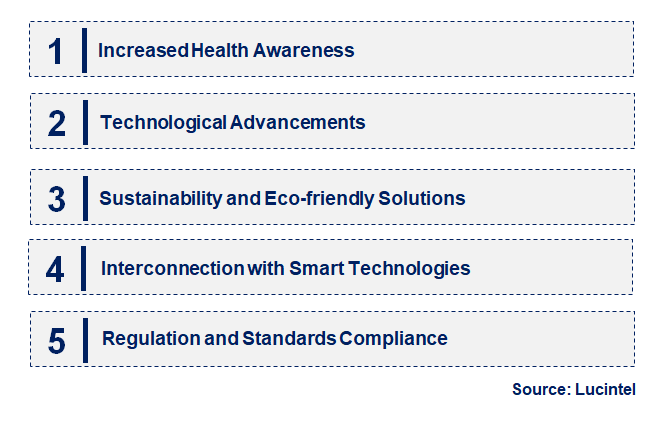
• Increased Health Awareness: The COVID-19 pandemic has made people more aware of health and hygiene, increasing the demand for antimicrobial filters across various applications. Consumers are now looking for products that ensure clean air and reduce the spread of pathogens. This shift has led manufacturers to design filters that are more robustly antimicrobial, positioning their products as essential for health and safety in homes, offices, and public places.
• Technological Advancements: Constant improvements in filtration technologies are enhancing the efficiency of antimicrobial filters. Nanotechnology and advanced materials, such as graphene, are making filters more effective. Manufacturers are focusing on improving these technologies to provide long-lasting and efficient filters, which are critical for HVAC and medical environments.
• Sustainability and Eco-friendly Solutions: A key trend in the antimicrobial filter industry is the shift toward sustainability. To respond to regulatory pressure and meet consumers' demand for environmentally responsible products, companies are seeking eco-friendly materials and production processes. Manufacturers are working on biodegradable and recyclable materials as a way to minimize their ecological footprint, driven by the increasing market demand for efficient antimicrobial solutions.
• Interconnection with Smart Technologies: The integration of antimicrobial filters with smart technologies is becoming increasingly popular. Smart air purifiers, which constantly monitor air quality and filter efficiency, are now in vogue. These systems provide instant information and alerts for maintenance, significantly improving customer experience and positioning manufacturers to capitalize on the growing market for smart home technologies.
• Regulation and Standards Compliance: Stricter regulatory requirements regarding air quality and public health are compelling manufacturers to enhance the performance of their products. Regulation is not only driving innovation but also boosting consumer confidence in antimicrobial filters. As regulations evolve, companies are developing products that comply with the latest standards, thus improving their competitiveness. These trends are currently reshaping the antimicrobial filter market, bringing about product innovations, sustainability efforts, and increased health awareness among consumers. As manufacturers adapt to these developments, they are expected to strengthen their market positions and drive future growth.
• Emergence of High-Tech Antimicrobial Materials: More advanced antimicrobial materials, such as silver nanoparticles and copper-infused fibers, are being employed by manufacturers in filter designs. These materials enhance the filter’s ability to exhibit additional antimicrobial properties by maximizing the inhibition of microbial growth and improving air quality. This is an important development, especially where air purity is paramount, such as in healthcare and HVAC applications, in terms of safety and compliance.
• Smart Filter Technologies: Smart filter technology, with its advancements, is transforming the market for antimicrobial filters. Sensors embedded in filters monitor air quality and report in real-time on the effectiveness of the filter. This development enhances convenience for users by enabling timely maintenance of filtration systems, which helps them run at optimal levels for longer periods.
• Research Partnerships: Strategic partnerships between manufacturers and research institutions are fostering new innovations in the antimicrobial filter market. Several collaborations are working toward developing next-generation filters that will meet evolving health-related standards and consumer demands. These partnerships enrich knowledge and improve product performance. Such improvements can provide companies with a competitive edge in the marketplace, representing a valuable source of advantage.
• Focus on Regulatory Compliance: Companies are placing increasing importance on meeting stringent regulatory requirements for air quality and efficacy against antimicrobial microbes. This leads to filters that not only comply with regulations but exceed the minimum requirements. Meeting compliance helps companies build stronger market credibility by offering reliable products.
• Entry into Emerging Markets: Antimicrobial filter manufacturers are expanding into emerging markets, where growing urbanization and healthcare issues have driven higher investments in infrastructure and public health initiatives, as seen in countries like India and China. Products are being tailored and adjusted to fit the specific needs of these markets, making them more competitive. the developments outlined above are significantly changing the dynamics of the antimicrobial filter market. These changes highlight the ability to innovate, improve product offerings, and access new markets. Companies that respond to these trends will likely strengthen their position and capitalize on new opportunities.
• Health Care Sector: The application areas for antimicrobial filters in the healthcare sector present significant growth opportunities, particularly in medical institutions such as hospitals and clinics. There is an increasing demand for filters that ensure clean air and limit the spread of pathogens. This presents an opportunity for manufacturers to develop specialized filters for surgical and patient care environments, ensuring maximum safety and compliance.
• HVAC Systems: The HVAC industry is increasingly adopting antimicrobial filters to improve indoor air quality. With stricter building codes and regulations on air quality, there is a growing need for effective filtration solutions. Companies can expand their product lines to include high-efficiency filters with superior antimicrobial properties to cater to both residential and commercial markets.
• Automotive Applications: Air quality within automobiles is a critical issue, and the automobile sector is becoming more aware of this. Antimicrobial filters could help address this problem by removing bacteria and allergens, thus providing a more comfortable and safer ride for passengers. Manufacturers can collaborate with auto manufacturers to create unique filter technologies that serve the needs of automobile owners.
• Consumer Electronics: The health-conscious consumer is increasingly driving demand for antimicrobial filters in consumer electronics, particularly for air purifiers and other portable equipment. Manufacturers can take advantage of this trend by incorporating advanced antimicrobial technologies, appealing to consumers who want their homes protected from airborne pathogens.
• Food and Beverage Industry: The food and beverage industry offers exciting growth potential for antimicrobial filters to enhance food safety and shelf life. In packaging and processing environments, these filters can help prevent microbial contamination. Companies that align with the extremely high standards of hygiene in this sector can develop filtering solutions that meet these needs, creating vast market opportunities. The antimicrobial filter market offers tremendous diversity in growth opportunities across various applications. By targeting these areas strategically, market participants can significantly increase their market position and drive further industry expansion.
• Increasing Health and Hygiene Consciousness: Concerns over health and hygiene have been increasing among the public and have been amplified by the pandemic, which means that antimicrobial filters are in strong demand. People and companies are focusing more on air quality and the reduced risks of pathogen transmission, resulting in a sound market for effective filtration solutions.
• Technology: Continued innovation in filtration technologies remains one of the drivers of growth in this market. Recent advances in nanotechnology, smart sensors, and improved antimicrobial materials enable the development of more effective filters. These improved products are able to maximize performance and genuinely interest both commercial and residential consumers seeking reliable filtration solutions.
• Air Quality Supportive Policies: Stringent rules on air quality and public health are compelling manufacturers to produce higher-performance antimicrobial filters. Compliance is not only a gateway to new market opportunities but also builds trust with consumers that products adhere to stringent safety standards.
• Sustainability: Increasing demand for sustainability is boosting the demand for green antimicrobial filters. Consumers are increasingly seeking products that are biodegradable and recyclable. Manufacturers have responded to this movement through investments in sustainable practices and are aligning their product offerings with consumer demands and regulations.
• Growing Urbanization and Pollution: The effects of urbanization and the rise in pollution rates, coupled with increasing awareness and a rising population in cities, have made many households recognize the need to upgrade HVAC systems with innovative antimicrobial filters. This has presented a significant growth opportunity for manufacturers in urban markets. Challenges in the antimicrobial filter market include:
• Volatile Raw Material Costs: The cost of raw materials for antimicrobial filters can be volatile, which can have a direct impact on production costs and profit margins. It is essential that organizations develop effective sourcing strategies to mitigate such risks.
• Competition from Alternative Solutions: New air purification technologies, such as UV light systems and electrostatic filters, pose serious challenges for traditional antimicrobial filters. Manufacturers need to continue innovating, as the competition in this marketplace is fierce.
• Adherence to Stringent Regulations: The complex regulatory landscape through which manufacturers must navigate requires constant investment in research and development, as well as quality assurance. This can strain company resources, especially for smaller market players. The antimicrobial filter market is driven by a host of factors and challenges that control its direction. On the positive side, increased awareness of health and technological improvements will catalyze significant growth opportunities. However, volatility in raw materials and stricter regulatory compliance have made competition tougher for manufacturers. As such, understanding these dynamics is crucial for strategic planning and effective market positioning in this fast-evolving industry.
• Freudenberg
• Evoqua Water Technologies
• Drager
• A-M System
• Mann + Hummel
• Pharma System AB
• Armstrong Medical
• Non-woven fiber filter
• Nano fiber membrane
• Porous polymeric membrane
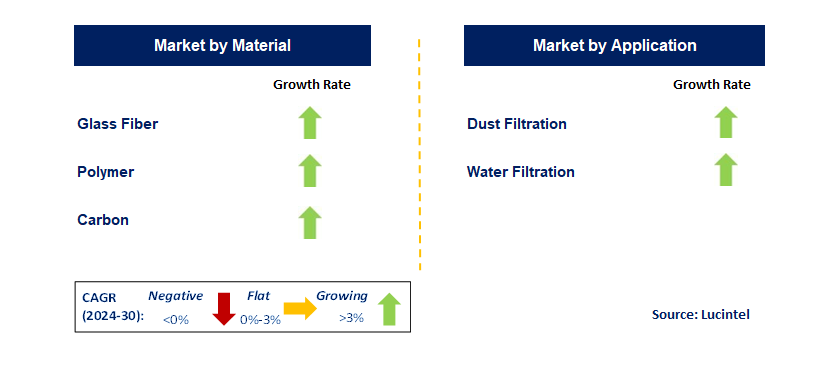
• Glass fiber
• Polymer
• Carbon
• Dust filtration
• Water filtration
• Oil & Gas
• Chemical industries
• Food and Beverage industries
• Pharmaceuticals
• Waste Water Management
• Petrochemicals
• North America
• Europe
• Asia Pacific
• The Rest of the World
• United States: The American antimicrobial filter market has grown rapidly due to health issues caused by the COVID-19 outbreak. Companies have employed new materials, such as silver and copper, to create advanced antimicrobial filters that optimize bactericidal and virucidal efficiency. The market for such filters in residential and commercial areas is also growing. Furthermore, regulations are encouraging higher air quality standards, creating demand for better filtration products. Technology companies are collaborating with filter manufacturers to enable better product designs and increase competition in the market.
• China: The antimicrobial filter market in China is growing rapidly due to government incentives aimed at improving air quality and preventing public health degradation. Increased demand has been observed for advanced filtration systems in urban centers, which are plagued by high levels of pollution. In response, manufacturers are innovating in R&D to create filters with advanced antimicrobial technologies. This has led to the widespread adoption of these filters by health services, particularly in hospitals and clinics. The movement toward sustainable practices has also pushed the market toward greener filtration materials, helping to fulfill broader environmental targets.
• Germany: Germany leads the antimicrobial filter market and, based on previous trends, will continue to drive innovation and sustainability. German manufacturers are focused on producing high-quality filtration solutions by incorporating advanced materials with excellent antimicrobial properties. Air quality and health safety requirements are driving companies to improve their product offerings. Antimicrobial filters are also being used in vehicles to enhance passenger safety. Industry and research institutions collaborate to fuel innovation in next-generation filters, ensuring Germany remains technologically dominant in this field.
• India: The antimicrobial filter market is growing rapidly as public awareness of health and hygiene increases, especially in urban areas. The government's efforts to purify the air have led to significant investments in filtration technologies across various sectors. Companies are designing affordable antimicrobial filters tailored for the Indian market. Additionally, the rise of smart HVAC systems is likely to spur demand for advanced filtration solutions. Collaboration between local manufacturers and international companies will also create opportunities for technology transfer and innovation in the industry.
• Japan: The Japanese antimicrobial filter market is characterized by cutting-edge technology and high-performance products. Due to stringent regulations on air quality and health safety, manufacturers are developing filters that integrate advanced antimicrobial technologies, such as photocatalytic materials. An important source of demand, besides contributions from industry, has recently been the healthcare sector, which is experiencing significant growth. Hospitals and clinics are increasingly adopting these filters in their environments. Moreover, the health-conscious consumer base in Japan is growing, driving demand for home air purifiers equipped with antimicrobial filters. Japan’s innovative mindset and commitment to quality make it a global leader in this market.


• Freudenberg
• Evoqua Water Technologies
• Drager
• A-M System
• Mann + Hummel
• Pharma System AB
• Armstrong Medical Q5. Which anti-microbial filter market segment will be the largest in future? Answer: Lucintel forecasts that 0 is expected to witness the highest growth over the forecast period due to 0. Q6. In anti-microbial filter market, which region is expected to be the largest in next 6 years? Answer: North America is expected to witness highest growth over the forecast period due to well established infrastructure. Q.7 Do we receive customization in this report? Answer: Yes, Lucintel provides 10% customization without any additional cost.


Choose a license that fits your team. Instant PDF delivery.
Prices exclude taxes. Instant delivery. Custom licensing available on request.
Market Report · July 31, 2026
Market Report · July 31, 2026
Market Report · July 31, 2026
Trusted partner for strategic intelligence and business growth


Receive a complimentary market analysis tailored to your industry. Our analysts will identify key growth opportunities and competitive dynamics specific to your business.

Market size, growth rate, and key trend analysis for your specific sector.

Top competitor positioning and market share analysis.

Strategic recommendations backed by data-driven insights.
Get curated market intelligence and competitive moves straight to your inbox.
By subscribing, you agree to receive our monthly insights. Unsubscribe anytime.
Receive a complimentary market analysis tailored to your industry. Our analysts will identify key growth opportunities and competitive dynamics specific to your business.
Market size, growth rate, and key trend analysis for your specific sector.
Top competitor positioning and market share analysis.
Strategic recommendations backed by data-driven insights.
Get curated market intelligence, emerging trends, and competitive moves straight to your inbox each month.
By subscribing, you agree to receive our monthly insights. Unsubscribe anytime.
We'll send your sample report shortly.