
Market Report · July 15, 2026

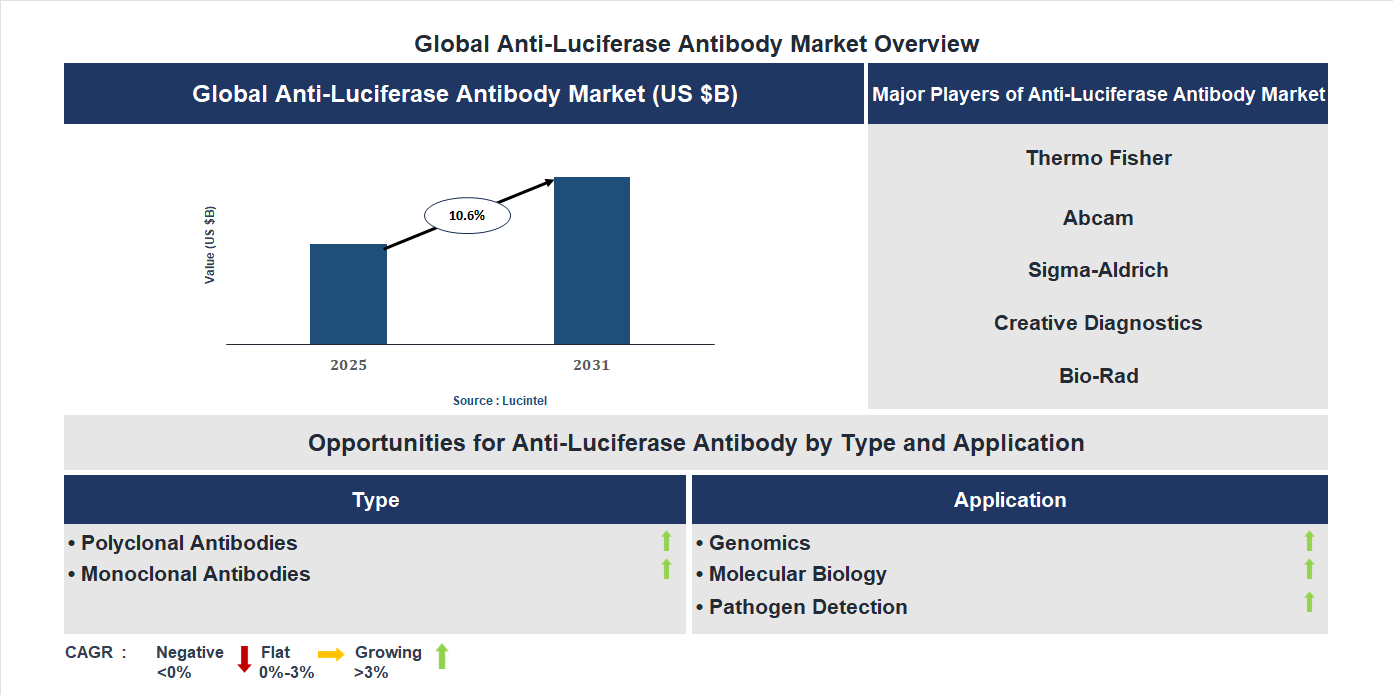
Key data points: The growth forecast = 10.6% annually for the next 7 years. Scroll below to get more insights. This market report covers trends, opportunities and forecasts in anti-luciferase antibody market to 2031 by type (polyclonal antibodies and monoclonal antibodies), application (genomics, molecular biology, and pathogen detection), and region (North America, Europe, Asia Pacific, and the Rest of the World)
We'll send your sample report shortly.
• Lucintel forecasts that, within the type category, monoclonal antibody is expected to witness higher growth over the forecast period.
• Within the application category, molecular biology is expected to witness the highest growth.
• In terms of region, APAC is expected to witness the highest growth over the forecast period. Gain valuable insights for your business decisions with our comprehensive 150+ page report. Sample figures with some insights are shown below.
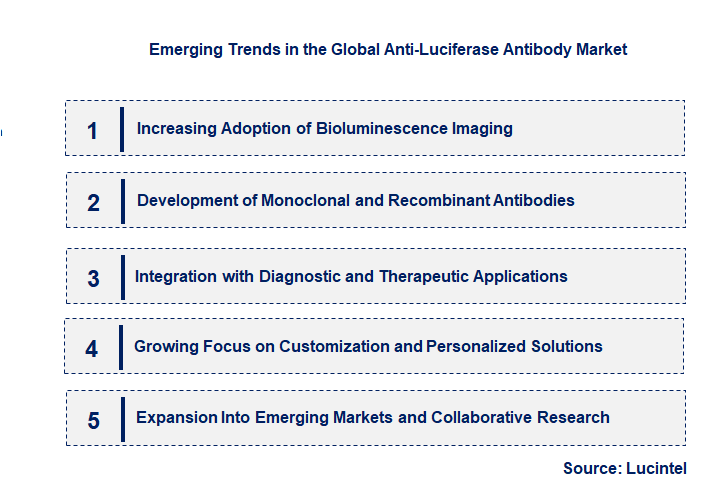
• Increasing Adoption of Bioluminescence Imaging: The rising use of bioluminescence imaging in preclinical research is boosting demand for anti-luciferase antibodies. These antibodies are crucial for detecting luciferase enzymes used as reporters in gene expression studies. Enhanced sensitivity, specificity, and ease of use are making bioluminescence imaging a preferred method for real-time, non-invasive monitoring of biological processes. This trend is expanding the application scope of anti-luciferase antibodies, particularly in cancer research, drug discovery, and molecular biology, thereby driving market growth.
• Development of Monoclonal and Recombinant Antibodies: The shift towards monoclonal and recombinant anti-luciferase antibodies is a significant trend. These antibodies offer higher specificity, consistency, and reduced batch-to-batch variability compared to traditional polyclonal antibodies. Advances in antibody engineering and recombinant DNA technology are enabling the production of highly tailored antibodies for specific research needs. This development enhances experimental accuracy and reproducibility, attracting more research institutions and biotech companies to adopt these advanced products, thus fueling market expansion.
• Integration with Diagnostic and Therapeutic Applications: Anti-luciferase antibodies are increasingly being integrated into diagnostic assays and therapeutic research. Their ability to detect luciferase-tagged molecules facilitates the development of novel diagnostic tools for disease detection and monitoring. Additionally, they are used in targeted therapy research, especially in gene therapy and personalized medicine. This integration broadens the application spectrum, creating new revenue streams and encouraging innovation in the market, ultimately accelerating the commercialization of anti-luciferase antibody-based products.
• Growing Focus on Customization and Personalized Solutions: Customization of anti-luciferase antibodies to meet specific research requirements is gaining prominence. Companies are offering tailored antibodies with enhanced affinity, specificity, and compatibility with various assay formats. This trend aligns with the broader movement towards personalized medicine and bespoke research tools. Customized solutions improve experimental outcomes and reduce costs, making them highly attractive to researchers. The focus on personalization is expected to drive market differentiation and foster collaborations between biotech firms and research institutions.
• Expansion into Emerging Markets and Collaborative Research: The market is witnessing increased penetration into emerging economies, driven by rising research investments and government initiatives supporting biotech innovation. Additionally, collaborations between academic institutions, biotech companies, and pharmaceutical firms are fostering innovation and expanding the application landscape. These partnerships facilitate knowledge exchange, resource sharing, and accelerated product development. The expansion into new markets and collaborative efforts are vital for sustaining growth, diversifying the customer base, and establishing the anti-luciferase antibody market as a global industry. In summary, these emerging trends are collectively transforming the anti-luciferase antibody market by enhancing product capabilities, expanding application areas, and fostering innovation. The integration of advanced technologies, customization, and global expansion is reshaping the competitive landscape, making the market more dynamic and responsive to scientific and medical needs. This evolution promises continued growth and new opportunities for stakeholders across the industry.
• Technological Advancements: Development of highly specific anti-luciferase antibodies has improved assay sensitivity and accuracy, enabling more precise biological research and diagnostics. These innovations facilitate better detection of gene expression and protein interactions, boosting research productivity and clinical applications. Enhanced antibody stability and reduced cross-reactivity are also notable, leading to broader adoption in various laboratory settings. This progress supports the market by expanding product portfolios and improving user confidence, ultimately driving sales and market growth.
• Regulatory Approvals: Recent approvals from regulatory agencies for anti-luciferase antibody-based diagnostic kits and research tools have validated their safety and efficacy. These approvals streamline the pathway for commercialization and increase trust among healthcare providers and researchers. They also open new markets in clinical diagnostics and personalized medicine, fostering increased investment and development activities. Regulatory milestones serve as catalysts for market expansion, encouraging companies to innovate and bring new products to market more rapidly.
• Strategic Collaborations: Partnerships between biotech firms, pharmaceutical companies, and academic institutions have accelerated the development of novel anti-luciferase antibodies and related technologies. These collaborations facilitate resource sharing, knowledge exchange, and joint research initiatives, leading to innovative solutions and faster product commercialization. Such alliances also help companies navigate regulatory landscapes and expand their market reach, strengthening their competitive position and fostering industry growth.
• Expansion in Therapeutic Applications: The use of anti-luciferase antibodies in gene therapy, cancer research, and drug discovery has increased significantly. Their role in monitoring gene expression and validating therapeutic targets enhances treatment development and personalized medicine approaches. This expansion opens new revenue streams and broadens the market scope, attracting investments and encouraging further research into therapeutic applications, which ultimately accelerates market growth.
• Market Penetration and Geographic Expansion: Companies are increasingly focusing on expanding their presence in emerging markets through local partnerships and distribution channels. This geographic diversification addresses unmet needs in regions with growing healthcare infrastructure and research activities. Market penetration strategies include product localization, pricing adjustments, and targeted marketing campaigns, which collectively boost sales and market share. These efforts contribute to a more globalized market, fostering innovation and increasing accessibility to anti-luciferase technologies worldwide. In summary, recent developments in technological innovation, regulatory approvals, strategic collaborations, expanding therapeutic applications, and geographic expansion are collectively propelling the anti-luciferase antibody market forward. These trends are enhancing product offerings, increasing market reach, and fostering a dynamic environment that supports continued growth and innovation in research and clinical applications.
• Research and Development: The anti-luciferase antibodies are crucial for gene expression studies, reporter assays, and molecular biology research, driving demand for innovative products that enhance experimental accuracy and efficiency.
• Diagnostics: These antibodies are increasingly used in diagnostic assays to detect specific biomarkers, improving early diagnosis and personalized treatment options, thereby expanding their clinical application scope.
• Therapeutics: The antibodies are being explored for therapeutic applications, especially in gene therapy and personalized medicine, offering new avenues for treating genetic disorders and cancers with high specificity.
• Biotechnology and Pharmaceutical Manufacturing: They are vital in bioprocessing workflows, ensuring product consistency and quality, which is essential for the development and manufacturing of biologics and biosimilars.
• Personalized Medicine: The ability to precisely target specific molecular pathways with anti-luciferase antibodies supports the growth of personalized medicine, enabling treatments tailored to individual genetic profiles. In summary, these growth opportunities are significantly impacting the anti-luciferase antibody market by broadening its application spectrum, improving diagnostic and therapeutic outcomes, and fostering innovation. This expansion is expected to drive market growth, attract investments, and accelerate the development of novel products, ultimately transforming the landscape of biomedical research and healthcare.
• Technological Advancements: The development of highly specific and sensitive luciferase antibodies has revolutionized molecular imaging and diagnostic applications. Innovations in antibody engineering, such as monoclonal antibody production and recombinant DNA technology, have enhanced the efficacy and stability of luciferase-based assays. These technological improvements enable more accurate disease detection, real-time monitoring, and high-throughput screening, thereby expanding the market scope. Additionally, integration with other diagnostic platforms and automation has increased efficiency, attracting investments from biotech and pharmaceutical companies. As research continues to evolve, these technological advancements are expected to sustain market growth and open new avenues for therapeutic and diagnostic applications.
• Increasing Prevalence of Diseases: The rising incidence of cancer, infectious diseases, and genetic disorders globally is a significant driver for the anti-luciferase antibody market. The need for precise diagnostic tools to detect and monitor these conditions has led to increased adoption of luciferase-based assays. For instance, cancer diagnostics benefit from luciferase reporters in gene expression studies and drug screening, facilitating early detection and personalized treatment plans. Similarly, infectious disease diagnostics leverage luciferase antibodies for rapid and sensitive detection of pathogens. The growing burden of chronic diseases and the demand for innovative diagnostic solutions are fueling market expansion, encouraging ongoing research and development efforts.
• Growing Investment in R&D: Increased funding from government agencies, private investors, and pharmaceutical companies is fueling research and development activities in the anti-luciferase antibody market. This investment aims to improve assay sensitivity, develop novel antibody constructs, and explore new therapeutic applications. Enhanced R&D efforts lead to the discovery of more effective and versatile luciferase antibodies, broadening their utility across diagnostics, drug discovery, and personalized medicine. Moreover, collaborations between academia and industry facilitate knowledge exchange and accelerate product development. The sustained focus on innovation ensures a steady pipeline of advanced products, supporting market growth and competitiveness in a rapidly evolving landscape.
• Regulatory Approvals and Standards: The approval of luciferase-based diagnostic kits and therapeutic agents by regulatory authorities such as the FDA and EMA significantly impacts market dynamics. Clear regulatory pathways and stringent quality standards ensure product safety and efficacy, boosting consumer confidence and adoption. Regulatory approvals also facilitate market entry and commercialization, encouraging companies to invest in research and product development. Conversely, delays or failures in obtaining approvals can hinder market growth. As regulatory frameworks evolve to accommodate emerging technologies, companies must adapt to meet compliance requirements, which can influence innovation timelines and market competitiveness.
• Expansion of Application Areas: The expanding application spectrum of luciferase antibodies across various fields such as oncology, infectious diseases, and gene therapy is a key driver. Their use in molecular imaging, biomarker discovery, and drug screening enhances the precision and efficiency of research and clinical diagnostics. The versatility of luciferase antibodies allows for their integration into novel therapeutic strategies, including targeted gene delivery and immunotherapy. As new applications emerge, market demand increases, encouraging further investment and product development. This diversification not only broadens market opportunities but also reinforces the importance of luciferase antibodies in advancing personalized medicine and innovative healthcare solutions. The challenges in the anti-luciferase antibody market are:
• High Development and Production Costs: Developing luciferase antibodies involves complex processes such as recombinant DNA technology, monoclonal antibody production, and extensive validation, which incur high costs. These expenses can limit the entry of smaller biotech firms and slow down innovation. Additionally, maintaining high standards of purity, stability, and specificity requires substantial investment in manufacturing infrastructure and quality control. The high costs associated with research, development, and production can lead to higher prices for end products, potentially restricting market adoption, especially in cost-sensitive regions. Overcoming these financial barriers is crucial for expanding market reach and ensuring sustainable growth.
• Stringent Regulatory Environment: Navigating the regulatory landscape for diagnostic and therapeutic products involving luciferase antibodies is complex and time-consuming. Regulatory agencies require comprehensive data on safety, efficacy, and manufacturing processes, which can delay product launches. Variability in approval standards across regions adds further complexity, requiring companies to tailor their strategies for different markets. Compliance with evolving regulations demands significant resources and expertise, increasing operational costs. Failure to meet regulatory requirements can result in product rejection or recalls, adversely affecting market reputation and profitability. Therefore, regulatory hurdles remain a critical challenge for market players seeking rapid commercialization.
• Competition from Alternative Technologies: The market faces intense competition from other molecular imaging and diagnostic technologies such as fluorescent proteins, chemiluminescent substrates, and PCR-based methods. These alternatives may offer advantages in terms of cost, ease of use, or sensitivity, challenging the adoption of luciferase-based assays. Additionally, emerging technologies like nanotechnology and next-generation sequencing are expanding diagnostic capabilities, potentially overshadowing luciferase antibody applications. This competitive landscape necessitates continuous innovation and differentiation to maintain market relevance. Companies must invest in research to improve assay performance and reduce costs to stay ahead in a rapidly evolving technological environment. In summary, the anti-luciferase antibody market is driven by technological innovations, increasing disease prevalence, substantial R&D investments, regulatory support, and expanding application areas. However, high development costs, regulatory complexities, and competition from alternative technologies pose significant challenges. These factors collectively influence market growth, requiring stakeholders to balance innovation with strategic navigation of regulatory and competitive landscapes. Overall, the markets future depends on how effectively companies can leverage technological advancements while overcoming financial and regulatory hurdles, ensuring sustainable growth and broader application in healthcare.
• Thermo Fisher
• Abcam
• Sigma-Aldrich
• Creative Diagnostics
• Bio-Rad
• RayBiotech
• Mabtech
• Neogen Corporation
• Santa Cruz Biotechnology
• Agrisera
• Polyclonal Antibodies
• Monoclonal Antibodies
• Genomics
• Molecular Biology
• Pathogen Detection
• North America
• Europe
• Asia Pacific
• The Rest of the World
• United States: The U.S. leads in anti-luciferase antibody research, with major biotech firms investing heavily in novel diagnostic tools and therapeutic applications. Recent approvals of innovative assays have expanded clinical use, while government grants support ongoing research. The market is also seeing increased adoption of these antibodies in personalized medicine, with startups and established companies collaborating to develop targeted treatments. Regulatory agencies are streamlining approval processes and accelerating product launches. Additionally, U.S. academic institutions are contributing significantly to fundamental research, fostering a robust ecosystem for innovation and commercialization.
• China: China has rapidly advanced in the anti-luciferase antibody market, driven by government initiatives to boost biotech innovation. The country has seen a surge in local startups focusing on diagnostic and therapeutic applications, supported by substantial funding and favorable policies. Recent developments include the launch of domestically developed assays and increased collaborations with international firms. China’s expanding clinical research infrastructure and focus on precision medicine are further propelling market growth. Efforts to reduce reliance on imports and develop indigenous technologies are also notable, positioning China as a key emerging player in this sector.
• Germany: Germany remains a leader in biomedical research, with a strong emphasis on developing anti-luciferase antibodies for research and clinical diagnostics. Recent advancements include the integration of these antibodies into innovative diagnostic platforms and personalized treatment strategies. The country benefits from a highly skilled workforce, robust regulatory standards, and strong collaborations between academia and industry. German companies are focusing on improving assay sensitivity and specificity, alongside expanding applications in oncology and infectious diseases. Funding from European Union programs supports ongoing innovation, ensuring Germany maintains its competitive edge in the global market.
• India: India’s anti-luciferase antibody market is witnessing rapid growth, fueled by increasing investments in biotech startups and research institutions. Recent developments include the development of cost-effective diagnostic kits and expansion into therapeutic research. The government’s initiatives to promote innovation and manufacturing capabilities are facilitating market expansion. Indian companies are forming strategic partnerships with international firms to enhance product offerings and access new markets. The focus on affordable healthcare solutions and increasing clinical research activities is further driving demand. Overall, India is positioning itself as a significant emerging hub for anti-luciferase antibody development and application.
• Japan: Japan continues to advance in the anti-luciferase antibody market through innovative research and technological development. Recent progress includes the creation of highly specific antibodies for use in cancer diagnostics and targeted therapies. The country’s strong emphasis on precision medicine and aging population health needs is shaping research priorities. Japanese firms are investing in next-generation assay technologies and expanding collaborations with global biotech companies. Government support through funding and regulatory reforms is fostering a conducive environment for innovation. These efforts are helping Japan maintain its position as a key player in the development and application of anti-luciferase antibodies.


• Thermo Fisher
• Abcam
• Sigma-Aldrich
• Creative Diagnostics
• Bio-Rad
• RayBiotech
• Mabtech
• Neogen Corporation
• Santa Cruz Biotechnology
• Agrisera Q5. Which anti-luciferase antibody market segment will be the largest in future? Answer: Lucintel forecasts that, within the type category, monoclonal antibody is expected to witness higher growth over the forecast period. Q6. In anti-luciferase antibody market, which region is expected to be the largest in next 5 years? Answer: In terms of region, APAC is expected to witness the highest growth over the forecast period. Q7. Do we receive customization in this report? Answer: Yes, Lucintel provides 10% customization without any additional cost.


Choose a license that fits your team. Instant PDF delivery.
Prices exclude taxes. Instant delivery. Custom licensing available on request.
Market Report · July 15, 2026
Market Report · May 18, 2026
Market Report · May 18, 2026
Trusted partner for strategic intelligence and business growth


Receive a complimentary market analysis tailored to your industry. Our analysts will identify key growth opportunities and competitive dynamics specific to your business.

Market size, growth rate, and key trend analysis for your specific sector.

Top competitor positioning and market share analysis.

Strategic recommendations backed by data-driven insights.
Get curated market intelligence and competitive moves straight to your inbox.
By subscribing, you agree to receive our monthly insights. Unsubscribe anytime.
Receive a complimentary market analysis tailored to your industry. Our analysts will identify key growth opportunities and competitive dynamics specific to your business.
Market size, growth rate, and key trend analysis for your specific sector.
Top competitor positioning and market share analysis.
Strategic recommendations backed by data-driven insights.
Get curated market intelligence, emerging trends, and competitive moves straight to your inbox each month.
By subscribing, you agree to receive our monthly insights. Unsubscribe anytime.
We'll send your sample report shortly.