
Report Feature
Animal Sedative Market Trends and Forecast
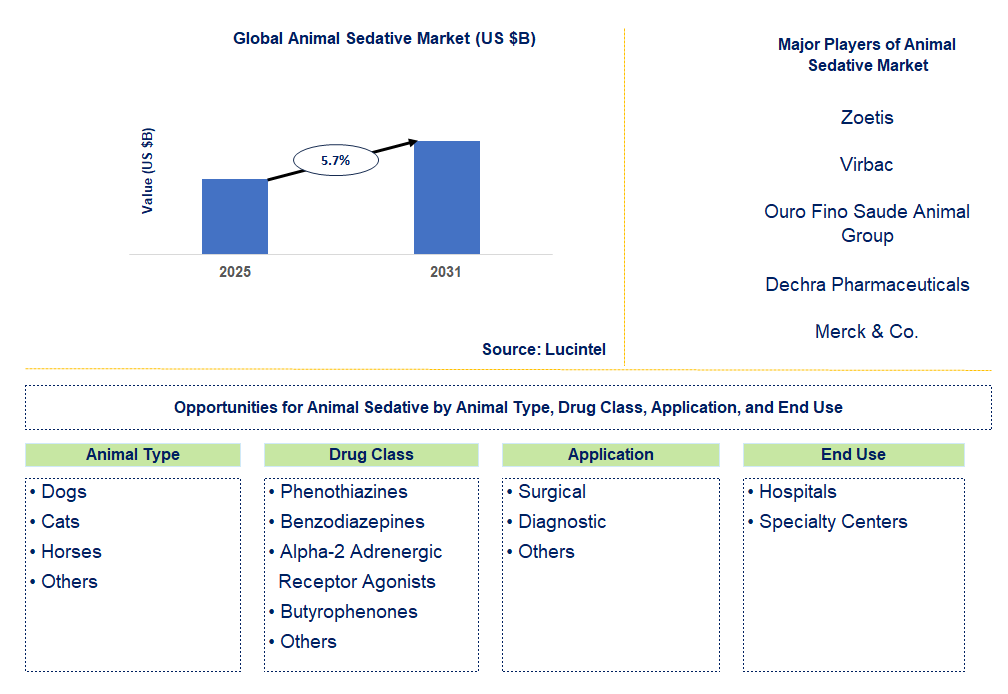
The future of the global animal sedative market looks promising with opportunities in the hospital and specialty center markets. The global animal sedative market is expected to grow with a CAGR of 5.7% from 2025 to 2031. The major drivers for this market are the increasing demand for safe animal sedation, the rising number of veterinary procedures & surgeries, and the growing awareness of animal pain management.• Lucintel forecasts that, within the animal type category, cat is expected to witness the highest growth over the forecast period.
• Within the end use category, specialty center is expected to witness the highest growth.
• In terms of region, APAC is expected to witness the highest growth over the forecast period. Gain valuable insights for your business decisions with our comprehensive 150+ page report. Sample figures with some insights are shown below.

Emerging Trends in the Animal Sedative Market
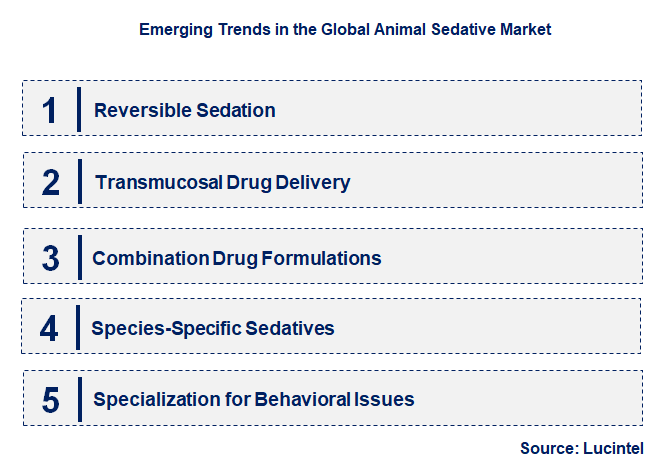
The animal sedative market is undergoing a fundamental shift, with emerging trends that are making sedation more precise, reversible, and user-friendly. These trends are driven by a greater understanding of animal stress, a demand for safer procedures, and the integration of new technologies that improve administration and recovery. They are fundamentally changing how veterinary professionals manage animal behavior.• Reversible Sedation: The trend toward reversible sedation is a major development in the market. This involves the use of drugs like α2-agonists that can be quickly reversed by a specific antagonist. The impact is a more controlled and predictable recovery for the animal, reducing the risk of prolonged sedation and post-procedural complications. It is a significant improvement in both safety and efficiency.
• Transmucosal Drug Delivery: The market is seeing a trend toward non-injectable drug delivery, such as transmucosal gels and oral formulations. This reduces the stress and anxiety associated with injections for both the animal and the handler. The impact is a more humane and easier administration method, which is particularly beneficial for fearful or aggressive animals and for use outside of a clinical setting.
• Combination Drug Formulations: The development of combination drugs is a key trend. These formulations combine different active ingredients to achieve a more balanced effect, such as sedation with concurrent analgesia and muscle relaxation. The impact is a more comprehensive and safer sedation protocol, allowing veterinarians to perform a wider range of procedures with a single product and reduced side effects.
• Species-Specific Sedatives: The trend toward developing sedatives tailored for specific species is a notable development. These products are formulated to account for the unique physiological and metabolic characteristics of different animals, from small pets to large livestock. The impact is improved efficacy and safety, as it reduces the risk of adverse reactions that can occur with a "one-size-fits-all" approach.
• Specialization for Behavioral Issues: There is a growing trend of using sedatives for behavioral management, not just for surgical procedures. This includes treating anxiety during transport, fear of thunderstorms, or aggression. The impact is an expansion of the market beyond clinical applications and into everyday animal care, improving the quality of life for pets and their owners. These emerging trends are collectively reshaping the animal sedative market by making it more targeted, humane, and technologically advanced. The move toward reversible and combination drugs, non-invasive delivery, and species-specific formulations is not only improving animal welfare but also creating a more efficient and effective toolkit for veterinary professionals, ensuring a more resilient and modern industry.
Recent Development in the Animal Sedative Market
Recent developments in the animal sedative market are focused on enhancing safety, improving efficacy, and broadening applications. These advancements are driven by the increasing demand for high-quality, humane, and comprehensive care for both companion and large animals. These key developments are not only improving existing workflows but are also enabling new frontiers in animal health and wellness.• Introduction of Reversible α2-Agonists: A major development is the introduction of new α2-agonist sedatives that can be reversed with an antagonist. These drugs provide predictable sedation for procedures and can be quickly reversed to facilitate a rapid recovery. The impact is a significant improvement in patient safety and clinical efficiency, as veterinarians have more control over the duration and depth of sedation.
• Development of Combination Sedatives: The market has seen a rise in the development of combination sedatives that integrate multiple drugs into a single formulation. These products often combine a sedative with an analgesic. The impact is a streamlined and more effective sedation protocol that provides both calming effects and pain relief, which is crucial for surgical and painful diagnostic procedures.
• Advancements in Non-Invasive Delivery: The development of non-invasive sedative delivery systems, such as oral gels and transmucosal formulations, is a key development. These products are administered without a needle, reducing stress for the animal. The impact is enhanced animal welfare and improved ease of use for pet owners and veterinary staff, especially for minor procedures or for calming anxious animals.
• Approval of Species-Specific Drugs: There is a significant development in the approval of sedatives designed specifically for certain species. For example, some new drugs are approved only for dogs or cats, taking into account their unique metabolisms. This reduces the risk of side effects and improves the predictability of the sedative’s effects, a major advancement over off-label use of human drugs.
• Increased Use in Behavioral Care: A key development is the market’s growing application of sedatives for managing behavioral issues, such as anxiety and phobias. This reflects a shift in veterinary practice toward addressing psychological health in addition to physical health. The impact is a new, growing market segment that provides solutions for a wide range of non-clinical, day-to-day problems. These key developments, from the revolutionary power of reversible drugs to the accessibility of non-invasive delivery, are collectively driving the evolution of the animal sedative market. They are enhancing safety, precision, and versatility, thereby expanding the market’s reach into new applications and geographies. This evolution is reshaping animal sedation from a simple task to a sophisticated health and wellness strategy.
Strategic Growth Opportunities in the Animal Sedative Market
The animal sedative market is rich with strategic growth opportunities across various key applications. These opportunities are driven by the increasing demand for high-quality, humane care and the need for more efficient and effective veterinary procedures. Leveraging these opportunities is essential for market players to gain a competitive edge and drive future innovation.• Pet Sedation for Routine Procedures: The companion animal sector offers a major growth opportunity. Pet owners are increasingly willing to pay for sedatives to reduce their pets’ stress during routine procedures like grooming, dental cleanings, and vet visits. This opportunity is fueled by the "pet humanization" trend and a desire for a more humane approach to animal care, ensuring a positive experience for all.
• Large Animal Transport: The use of sedatives for livestock transport presents a significant growth opportunity. Sedation reduces stress, injury, and disease transmission during long-distance transportation of animals. This is fueled by stricter animal welfare regulations and the need to ensure the health and safety of livestock, which in turn protects the economic value of the herd.
• Surgical and Diagnostic Procedures: The demand for sedatives in surgical and diagnostic procedures offers a strong growth opportunity. As veterinary medicine advances, more complex and minimally invasive procedures are being performed, which require precise and reliable sedation. This is driven by technological advancements and the increasing willingness of pet owners to invest in advanced medical care for their animals.
• Zoo and Wildlife Management: The management of zoo animals and wildlife presents a niche but high-value growth opportunity. The chemical immobilization of large and exotic animals for research, medical procedures, or relocation requires specialized, potent, and safe sedatives. This is fueled by global conservation efforts and the need for humane and effective tools for wildlife management.
• Addressing Behavioral Issues: The use of sedatives for behavioral management, such as treating anxiety or aggression, is a key growth area. As more pets are adopted into urban environments, behavioral problems are on the rise. This opportunity is driven by the need for solutions that improve the quality of life for both animals and their owners, expanding the market beyond traditional clinical applications. These strategic growth opportunities across key applications are collectively driving the evolution of the animal sedative market. The increasing need for sophisticated and humane care for animals is pushing the boundaries of what is possible, leading to a more dynamic and innovative market. Capitalizing on these opportunities is essential for sustained growth and technological leadership.
Animal Sedative Market Driver and Challenges
The animal sedative market is influenced by a complex interplay of drivers and challenges, including various technological, economic, and regulatory factors. The market is propelled by a rising demand for high-quality care, but also faces significant barriers related to regulatory hurdles, a potential for misuse, and a growing concern over side effects. Understanding these dynamics is crucial for navigating the market. The factors responsible for driving the animal sedative market include: 1. Rising Pet Ownership: The increasing global trend of pet ownership is a primary driver. As pets are treated as family members, owners are more willing to spend on their health and comfort. This societal shift creates a large and expanding client base for animal sedatives, used to ensure animal well-being during veterinary visits, grooming, and travel. 2. Advancements in Veterinary Medicine: The continuous progress in veterinary medical procedures is a key driver. As more complex surgeries and advanced diagnostic imaging become available, the need for precise and reliable sedation increases. This technological progress is making animal care more sophisticated, which in turn fuels the demand for high-quality sedatives. 3. Focus on Animal Welfare: A growing global focus on animal welfare is a significant driver. Veterinarians and owners are increasingly prioritizing stress-free handling and humane treatment for animals during procedures. This trend encourages the use of sedatives to prevent anxiety, pain, and injury, ensuring a safer experience for both the animal and the handler. 4. Increasing Livestock Productivity: In the livestock sector, sedatives are used to facilitate handling during medical procedures, branding, and transportation. This is a key driver, as it reduces stress-related injuries and improves the overall productivity and health of the herd. It is crucial for modern, large-scale farming operations to ensure animal welfare and economic viability. 5. Growth of Veterinary Clinics: The global expansion of veterinary clinics and hospitals is a major driver. A greater number of facilities means more access to veterinary care and, consequently, a higher demand for sedatives for a variety of procedures. This infrastructure growth provides a stable market for animal sedative products. Challenges in the animal sedative market are: 1. Stringent Regulatory Frameworks: The market faces a significant challenge from stringent and complex regulatory frameworks. Sedatives are often classified as controlled substances, requiring specific licensing, handling, and record-keeping. This adds to the cost and complexity of product development and distribution, which can slow down innovation and limit market entry. 2. Risk of Side Effects: Concerns over the potential side effects of sedatives, such as respiratory depression, hypotension, or prolonged recovery times, pose a major challenge. Veterinarians and owners are hesitant to use sedatives if there is a perceived risk to the animal’s health. This drives a need for safer, more targeted formulations, which are costly to develop. 3. Potential for Misuse and Abuse: The potential for the misuse or abuse of animal sedatives, particularly those with a history of human abuse, is a significant challenge. This risk requires manufacturers and distributors to implement strict controls on sales and distribution. This can limit the availability of certain drugs and creates a need for enhanced security measures throughout the supply chain. The animal sedative market is driven by powerful forces, including the global "pet humanization" trend and technological advancements. However, it is also constrained by significant challenges, such as stringent regulations and concerns over side effects. For the market to continue its robust growth, it must effectively address these challenges by providing innovative and safe solutions that are both effective for animals and accessible to veterinary professionals.List of Animal Sedative Companies
Companies in the market compete on the basis of product quality offered. Major players in this market focus on expanding their manufacturing facilities, R&D investments, infrastructural development, and leverage integration opportunities across the value chain. With these strategies animal sedative companies cater increasing demand, ensure competitive effectiveness, develop innovative products & technologies, reduce production costs, and expand their customer base. Some of the animal sedative companies profiled in this report include-• Zoetis
• Virbac
• Ouro Fino Saude Animal Group
• Dechra Pharmaceuticals
• Merck & Co.
• Bimeda
• vetcare
• Chanelle Pharma
• Randlab Australia
• Troy Laboratories
Animal Sedative Market by Segment
The study includes a forecast for the global animal sedative market by animal type, drug class, application, end use, and region.Animal Sedative Market by Animal Type [Value from 2019 to 2031]:
• Dogs
• Cats
• Horses
• Others
Animal Sedative Market by Drug Class [Value from 2019 to 2031]:
• Phenothiazines
• Benzodiazepines
• Alpha-2 Adrenergic Receptor Agonists
• Butyrophenones
• Others
Animal Sedative Market by Application [Value from 2019 to 2031]:
• Surgical
• Diagnostic
• Others
Animal Sedative Market by End Use [Value from 2019 to 2031]:
• Hospitals
• Specialty Centers
Animal Sedative Market by Region [Value from 2019 to 2031]:
• North America
• Europe
• Asia Pacific
• The Rest of the World
Country Wise Outlook for the Animal Sedative Market
Recent developments in the animal sedative market are characterized by a shift toward more targeted, safer, and reversible formulations. This is driven by an increasing focus on animal welfare and the need to reduce stress during veterinary procedures, grooming, and transport. The market is also seeing a rise in specialized products for both companion and large animals, reflecting the diverse needs of the global veterinary industry.• United States: The U.S. market is a leader in innovative sedative formulations, with a strong emphasis on reversible and combination drugs that offer better safety profiles. Recent developments include the FDA approval of new α2-agonist combinations, which reduce cardiovascular risk. This is driven by high per-pet spending and a growing consumer demand for minimally invasive, stress-free procedures for companion animals.
• China: China’s animal sedative market is experiencing rapid growth, fueled by rising pet ownership and the modernization of its livestock industry. A key development is the increasing adoption of advanced veterinary practices from Western countries, leading to a greater demand for imported, high-quality sedatives. The market is also seeing a focus on large animal sedatives to support the management of its massive pig and cattle populations.
• Germany: In Germany, the animal sedative market is mature and highly regulated, with a strong focus on animal welfare. Recent developments are centered on precision dosing and the use of targeted drugs to minimize side effects. German manufacturers are at the forefront of developing new formulations and delivery systems that comply with stringent national and European regulations regarding veterinary medicine.
• India: The Indian animal sedative market is in a nascent but high-growth phase. Recent developments are driven by a rapid increase in pet ownership in urban areas and a growing awareness of modern veterinary care. The market is seeing a rise in the availability of basic sedatives and is starting to attract global players, who are introducing more advanced formulations to meet the evolving needs of the country’s veterinary sector.
• Japan: The Japanese market is highly developed and proactive in ensuring animal welfare and food safety. Recent developments are driven by a high cultural emphasis on responsible pet care and livestock management. The market is investing in innovative solutions, including the use of advanced sedative formulations for high-end surgeries and specialized procedures to minimize stress and ensure optimal animal health.

Features of the Global Animal Sedative Market
Market Size Estimates: Animal sedative market size estimation in terms of value ($B). Trend and Forecast Analysis: Market trends (2019 to 2024) and forecast (2025 to 2031) by various segments and regions. Segmentation Analysis: Animal sedative market size by various segments, such as by animal type, drug class, application, end use, and region in terms of value ($B). Regional Analysis: Animal sedative market breakdown by North America, Europe, Asia Pacific, and Rest of the World. Growth Opportunities: Analysis of growth opportunities in different animal types, drug class, applications, end uses, and regions for the animal sedative market. Strategic Analysis: This includes M&A, new product development, and competitive landscape of the animal sedative market. Analysis of competitive intensity of the industry based on Porter’s Five Forces model.
FAQ
Q1. What is the growth forecast for animal sedative market? Answer: The global animal sedative market is expected to grow with a CAGR of 5.7% from 2025 to 2031. Q2. What are the major drivers influencing the growth of the animal sedative market? Answer: The major drivers for this market are the increasing demand for safe animal sedation, the rising number of veterinary procedures & surgeries, and the growing awareness of animal pain management. Q3. What are the major segments for animal sedative market? Answer: The future of the animal sedative market looks promising with opportunities in the hospital and specialty center markets. Q4. Who are the key animal sedative market companies? Answer: Some of the key animal sedative companies are as follows:• Zoetis
• Virbac
• Ouro Fino Saude Animal Group
• Dechra Pharmaceuticals
• Merck & Co.
• Bimeda
• vetcare
• Chanelle Pharma
• Randlab Australia
• Troy Laboratories Q5. Which animal sedative market segment will be the largest in future? Answer: Lucintel forecasts that, within the animal type category, cat is expected to witness the highest growth over the forecast period. Q6. In animal sedative market, which region is expected to be the largest in next 5 years? Answer: In terms of region, APAC is expected to witness the highest growth over the forecast period. Q7. Do we receive customization in this report? Answer: Yes, Lucintel provides 10% customization without any additional cost.
Table of Contents
Methodology
- In-depth interviews of the major players in this market
- Detailed secondary research from competitors’ financial statements and published data
- Extensive searches of published works, market, and database information pertaining to industry news, company press releases, and customer intentions
- A compilation of the experiences, judgments, and insights of Lucintel’s professionals, who have analyzed and tracked this market over the years.


Buy Now
Choose a license that fits your team. Instant PDF delivery.
Prices exclude taxes. Instant delivery. Custom licensing available on request.
Key Questions
- • What are some of the most promising, high-growth opportunities for the animal sedative market by animal type (dogs, cats, horses, and others), drug class (phenothiazines, benzodiazepines, alpha-2 adrenergic receptor agonists, butyrophenones, and others), application (surgical, diagnostic, and others), end use (hospitals and specialty centers), and region (North America, Europe, Asia Pacific, and the Rest of the World)?
- • Which segments will grow at a faster pace and why?
- • Which region will grow at a faster pace and why?
- • What are the key factors affecting market dynamics? What are the key challenges and business risks in this market?
- • What are the business risks and competitive threats in this market?
- • What are the emerging trends in this market and the reasons behind them?
- • What are some of the changing demands of customers in the market?
- • What are the new developments in the market? Which companies are leading these developments?
- • Who are the major players in this market? What strategic initiatives are key players pursuing for business growth?
- • What are some of the competing products in this market and how big of a threat do they pose for loss of market share by material or product substitution?
- • What M&A activity has occurred in the last 5 years and what has its impact been on the industry? For any questions related to Animal Sedative Market, Animal Sedative Market Size, Animal Sedative Market Growth, Animal Sedative Market Analysis, Animal Sedative Market Report, Animal Sedative Market Share, Animal Sedative Market Trends, Animal Sedative Market Forecast, Animal Sedative Companies, write Lucintel analyst at email: helpdesk@lucintel.com. We will be glad to get back to you soon.


