
Market Report · May 18, 2026

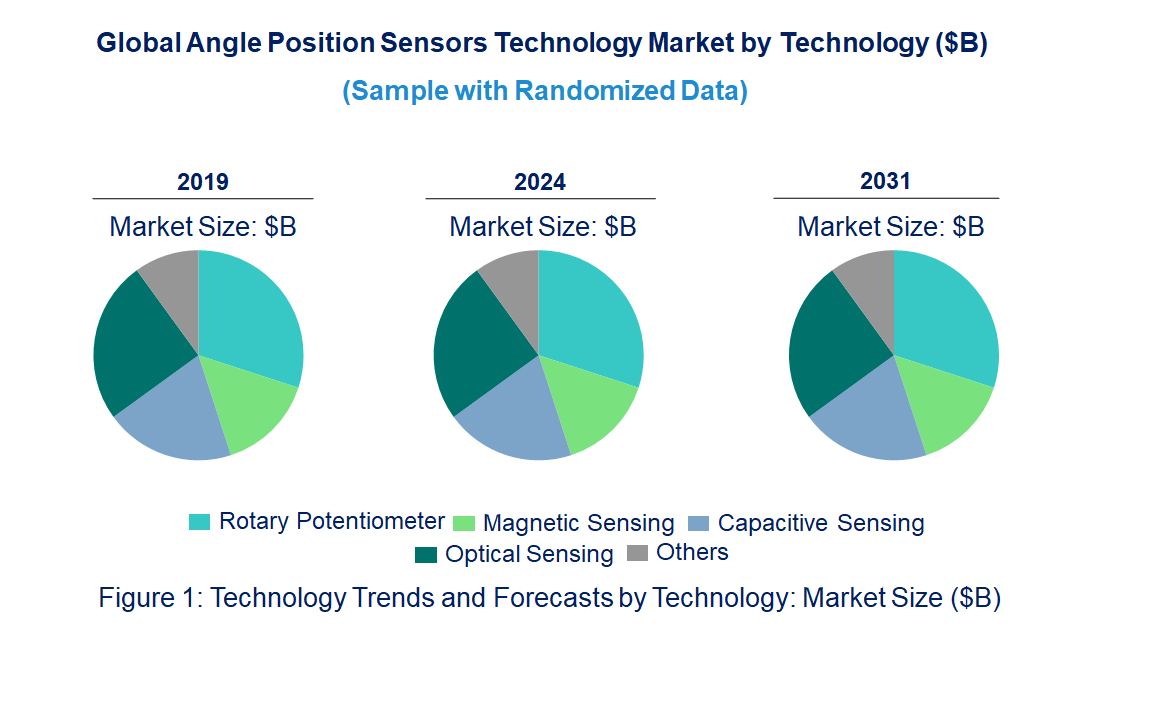
This market report covers trends, opportunities, and forecasts in the global angle position sensors market to 2031 by technology (rotary potentiometer, magnetic sensing, capacitive sensing, optical sensing, and others), application (industrial, medical, automotive, marine, and agriculture), and region (North America, Europe, Asia Pacific, and the Rest of the World)
We'll send your sample report shortly.
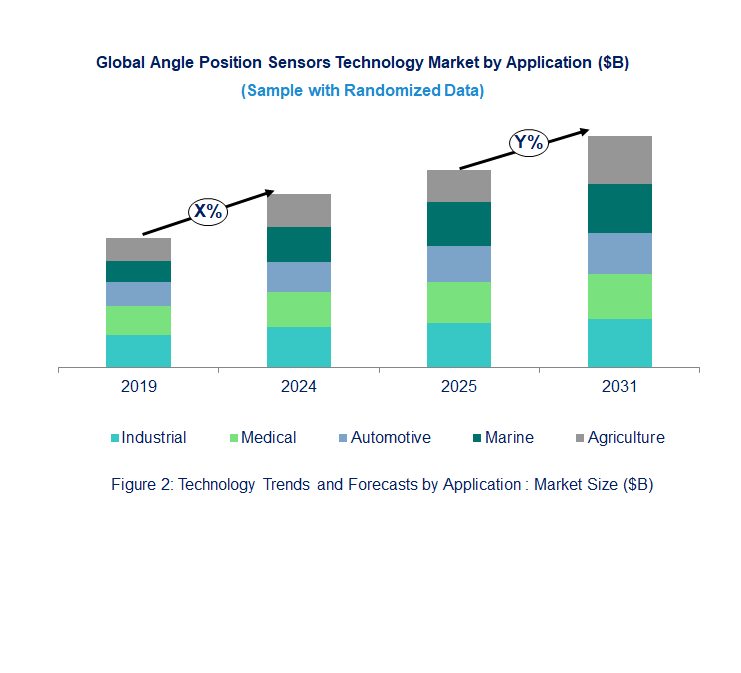
• Integration of IoT-enabled Sensors: IoT integration is allowing angle sensors to transmit real-time data, enabling predictive maintenance and improving operational efficiency in industrial and automotive applications.
• Miniaturization of Sensors: Miniaturized angle sensors are increasingly used in compact devices and systems, offering enhanced performance without increasing size or weight, particularly in medical and consumer electronics.
• Adoption of Non-contact Sensing Technologies: Non-contact magnetic and optical sensing technologies are gaining traction for their durability, precision, and reliability, especially in harsh environments like marine and agriculture.
• Focus on Energy Efficiency: Development of low-power angle sensors is driven by the need for energy-efficient solutions in battery-powered devices, including wearable and portable medical equipment.
• Customization for Specific Applications: Customized sensors tailored for specialized applications, such as high-temperature automotive environments or medical robotics, are becoming a differentiator for manufacturers. These trends highlight the market’s shift towards smarter, smaller, and more efficient angle position sensors, making them integral to diverse applications.
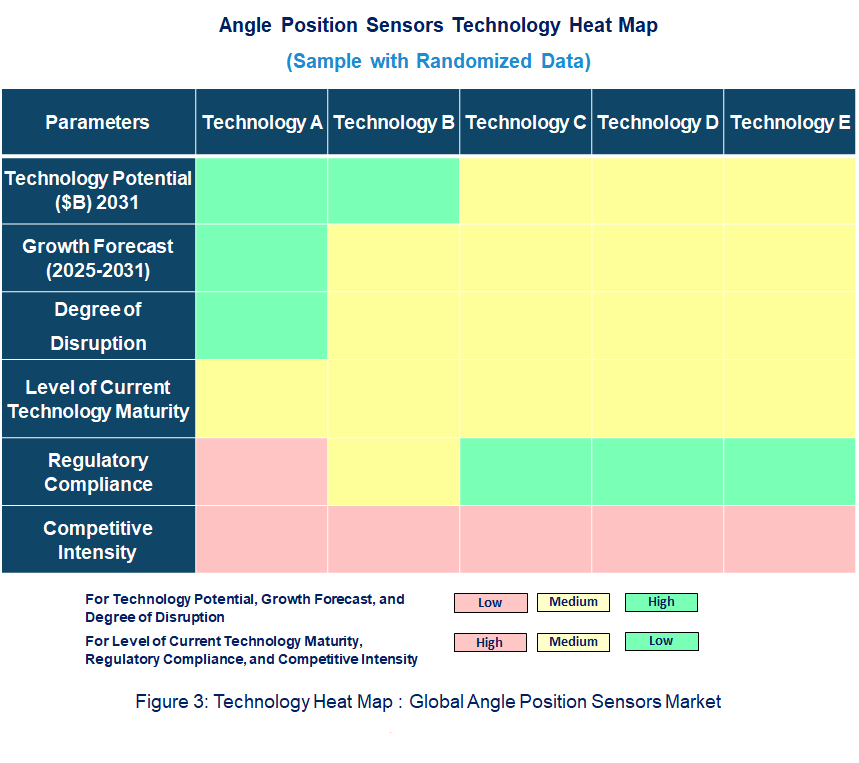
• Technology Potential: The angle position sensors market holds significant potential due to the growing demand for precision and reliability in applications such as automotive, industrial automation, medical devices, and agriculture. Technologies like magnetic and optical sensing offer high accuracy, non-contact operation, and durability, making them ideal for harsh and dynamic environments. Capacitive sensing is valued for its ability to provide cost-effective solutions in compact devices.
• Degree of Disruption: The market is experiencing moderate to high disruption. Non-contact technologies like magnetic and optical sensing are replacing traditional rotary potentiometers, providing enhanced reliability and reduced wear and tear. Integration with IoT and AI is further transforming these sensors into intelligent devices capable of real-time data transmission and predictive maintenance, significantly impacting traditional manufacturing processes.
• Level of Current Technology Maturity: Technologies such as magnetic and capacitive sensing are reaching maturity, with established applications in industries like automotive and robotics. However, ongoing research is driving further innovations, such as increased sensitivity, miniaturization, and wireless capabilities. Optical sensing is still evolving, offering room for innovation in high-precision applications.
• Regulatory Compliance: Regulatory compliance is critical, especially in safety-sensitive sectors like automotive and medical. These sensors must adhere to stringent standards, such as ISO and FDA guidelines, ensuring reliability, electromagnetic compatibility, and performance under varied conditions. Compliance fosters trust and drives market growth.
• ZF: ZF recently launched a next-generation magnetic angle sensor designed for automotive applications. This sensor offers enhanced precision and durability, catering to the growing demand for electric and autonomous vehicles. The development reinforces ZF’s position in the market by addressing the evolving needs of advanced driver-assistance systems (ADAS).
• MPS (Monolithic Power Systems): MPS introduced a compact angle position sensor leveraging its proprietary Hall-effect technology. The product is optimized for cost-efficiency and high accuracy, targeting industrial automation and robotics. This launch enhances MPS’s portfolio and expands its presence in emerging industrial markets.
• Amphenol: Amphenol unveiled a robust angle sensor suitable for harsh environments, particularly in aerospace and defense applications. With its advanced design and reliability, the sensor meets stringent industry standards, thereby strengthening Amphenol’s footprint in critical applications requiring resilience and precision.
• P3 AMRICA: P3 AMRICA developed a software-integrated angle sensor solution tailored for IoT-connected systems. The product combines hardware with advanced analytics, enabling predictive maintenance and system optimization. This innovation positions P3 AMRICA as a frontrunner in the smart manufacturing domain.
• SIKO: SIKO launched an advanced angle sensor for agricultural machinery, featuring real-time data transmission and compatibility with IoT platforms. This development addresses the demand for precision farming technologies and bolsters SIKO’s market share in the agriculture sector.
• Technological Advancements in Sensing Capabilities: Continuous innovation in magnetic and optical sensing technologies enhances the precision, reliability, and durability of angle position sensors, driving their adoption across diverse industries.
• Rising Demand in Electric Vehicles (EVs): The shift toward electrification in the automotive sector fuels the need for angle position sensors in EV motor control and battery management, contributing to market growth.
• Increased Industrial Automation: The adoption of Industry 4.0 and the demand for automated systems in manufacturing boost the use of angle position sensors for robotics and machinery, enhancing productivity and efficiency.
• Growing Integration with IoT: The capability of angle position sensors to connect with IoT platforms enables real-time monitoring and predictive maintenance, driving their demand in smart systems and connected devices.
• Expanding Applications in Aerospace and Defense: High precision and reliability make angle position sensors indispensable for flight control systems, navigation, and military applications, bolstering their market adoption. Challenges in the angle position sensors market are:
• High Production Costs: The development and manufacturing of high-precision sensors involve significant costs, which may limit adoption, particularly in cost-sensitive industries.
• Technical Complexities in Design: Developing sensors with high accuracy, durability, and compatibility with diverse applications poses significant technical challenges, impacting scalability.
• Competition from Alternative Technologies: Emerging sensing solutions like capacitive and inductive sensors offer competition, requiring angle position sensors to continuously innovate to maintain relevance.
• Market Fragmentation: A highly fragmented market with multiple players increases competitive pressures, leading to pricing challenges and potential margin reductions. The drivers and challenges in the angle position sensors market collectively shape its growth trajectory. While drivers such as advancements in EVs, industrial automation, and IoT integration expand opportunities, challenges like high costs and competition necessitate constant innovation. Together, these dynamics underscore the critical role of angle position sensors in advancing technology across industries.
• Zf
• Mps
• Amphenol
• P3 Amrica
• Siko
• Technology Readiness by Technology Type: Rotary potentiometers exhibit moderate readiness, excelling in cost-sensitive areas but lagging in advanced precision. Magnetic sensing boasts high readiness with robust, non-contact features, finding applications in automotive, robotics, and industrial automation. Capacitive sensing is highly competitive, especially in compact and consumer electronics, offering high sensitivity. Optical sensing shows readiness in premium, high-accuracy applications such as aerospace, but struggles with cost barriers. Emerging MEMS-based sensors, while innovative, are still gaining traction in broader markets. Across all technologies, regulatory compliance and targeted applications play a crucial role in defining readiness and competitive positioning.
• Competitive Intensity and Regulatory Compliance: Competitive intensity among angle position sensor technologies is high, as magnetic and capacitive sensing dominate due to their versatility and durability. Optical sensing competes in premium markets, while rotary potentiometers retain a foothold in cost-sensitive applications. Regulatory compliance is pivotal, especially for safety-critical sectors like automotive and medical devices. Stringent standards ensure reliability and environmental sustainability, pushing manufacturers to innovate while adhering to guidelines. The competitive environment fosters rapid development, with each technology vying for adoption across emerging and established industries, creating a balanced interplay between competition and compliance.
• Disruption Potential: Technologies like rotary potentiometers, magnetic sensing, capacitive sensing, optical sensing, and others are redefining the angle position sensors market. Rotary potentiometers, though traditional, face declining relevance due to wear issues. Magnetic sensing offers robust, non-contact solutions with high precision, driving its demand in automotive and industrial automation. Capacitive sensing disrupts compact electronics by enabling miniaturized and efficient designs. Optical sensing brings unparalleled accuracy for high-end applications, but is limited by cost. Emerging technologies such as MEMS-based sensors cater to niche markets with unique capabilities. Together, these innovations push the boundaries of performance, creating a competitive and dynamic market landscape.
• Rotary Potentiometer
• Magnetic Sensing
• Capacitive Sensing
• Optical Sensing
• Others
• Industrial
• Medical
• Automotive
• Marine
• Agriculture
• North America
• Europe
• Asia Pacific
• The Rest of the World
• Latest Developments and Innovations in the Angle Position Sensors Technologies
• Companies / Ecosystems
• Strategic Opportunities by Technology Type


Choose a license that fits your team. Instant PDF delivery.
Prices exclude taxes. Instant delivery. Custom licensing available on request.
Market Report · May 18, 2026
Market Report · May 18, 2026
Market Report · May 18, 2026
Trusted partner for strategic intelligence and business growth


Receive a complimentary market analysis tailored to your industry. Our analysts will identify key growth opportunities and competitive dynamics specific to your business.

Market size, growth rate, and key trend analysis for your specific sector.

Top competitor positioning and market share analysis.

Strategic recommendations backed by data-driven insights.
Get curated market intelligence and competitive moves straight to your inbox.
By subscribing, you agree to receive our monthly insights. Unsubscribe anytime.
Receive a complimentary market analysis tailored to your industry. Our analysts will identify key growth opportunities and competitive dynamics specific to your business.
Market size, growth rate, and key trend analysis for your specific sector.
Top competitor positioning and market share analysis.
Strategic recommendations backed by data-driven insights.
Get curated market intelligence, emerging trends, and competitive moves straight to your inbox each month.
By subscribing, you agree to receive our monthly insights. Unsubscribe anytime.
We'll send your sample report shortly.