
Report Feature
Aneurysm Therapy Market Trends and Forecast
The future of the global aneurysm therapy market looks promising with opportunities in the hospital, clinic and others markets. The global aneurysm therapy market is expected to grow with a CAGR of 5.7% from 2025 to 2031. The major drivers for this market are rising global elderly population is contributing, growing aging population, and increasing availability of minimally invasive procedures. Lucintel forecasts that, within the type category, surgery is expected to witness the highest growth over the forecast period. Within the application category, hospital is expected to witness the highest growth. In terms of region, APAC is expected to witness the highest growth over the forecast period. Gain valuable insights for your business decisions with our comprehensive 150+ page report. Sample figures with some insights are shown below.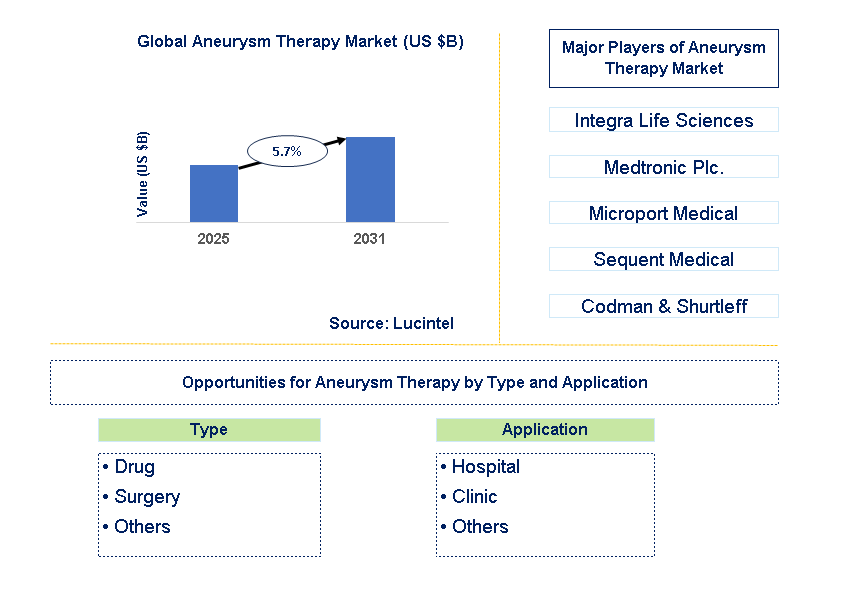
Aneurysm Therapy Market by Segment
• Advanced Imaging Technologies: The use of advanced imaging technologies is transforming the aneurysm therapy market. Techniques such as 3D CT angiography, MRI, and high-resolution ultrasound are allowing for more precise diagnosis, preoperative planning, and real-time monitoring during surgeries. These imaging tools help identify aneurysms at earlier stages, improving treatment outcomes and minimizing complications. In addition, they enable surgeons to tailor treatments to the individual characteristics of each aneurysm, enhancing the efficacy of interventions and reducing the risk of rupture.
• Hybrid Procedures: Hybrid procedures, which combine endovascular and open surgical techniques, are gaining popularity in the treatment of complex aneurysms. This approach allows surgeons to address aneurysms that may not be suitable for traditional or purely endovascular treatment options. Hybrid procedures are particularly useful in treating cases where aneurysms involve multiple arteries or are located in challenging anatomical areas. By offering a balance between minimally invasive techniques and traditional surgery, hybrid procedures provide a comprehensive solution for complex aneurysm cases, improving patient outcomes and expanding treatment options.
• Personalized Medicine: Personalized medicine is making its way into aneurysm therapy, with treatment plans becoming more tailored to individual patients based on factors such as genetics, lifestyle, and the specific characteristics of their aneurysms. This trend allows for more precise treatments, improving outcomes and reducing complications. For example, personalized stent grafts can be designed to fit the unique anatomy of a patient’s aneurysm, offering a more effective solution than one-size-fits-all devices. As personalized therapies continue to evolve, patients will benefit from more targeted and effective treatments.
• Increased Focus on Preventive Care: There is an increasing focus on preventive care in the aneurysm therapy market, particularly for high-risk individuals. Screening programs for early detection of aneurysms are becoming more common, especially for populations with a family history of aneurysms or those with known risk factors such as hypertension or smoking. Early detection allows for timely intervention, preventing aneurysms from reaching critical stages. This trend is helping reduce the incidence of aneurysm rupture, improving patient outcomes and lowering healthcare costs by avoiding the need for emergency surgeries. These emerging trends are reshaping the aneurysm therapy market by improving treatment precision, reducing recovery times, and offering more personalized approaches. As technologies advance and the focus shifts toward prevention, the landscape of aneurysm treatment is becoming more effective, accessible, and patient-centered." src="Emerging Trends in the Aneurysm Therapy Market" style="height: auto;width: auto;" title="Emerging trends in the aneurysm therapy market reflect the ongoing shift toward less invasive procedures, personalized treatment approaches, and advancements in medical technology. These trends are enhancing treatment outcomes, reducing recovery times, and improving patient experiences. The following trends are reshaping how aneurysms are diagnosed, treated, and managed.
• Minimally Invasive Procedures: Minimally invasive procedures, such as endovascular aneurysm repair (EVAR), are increasingly replacing traditional open surgeries. These procedures involve smaller incisions, reducing the risk of complications, shortening recovery times, and lowering healthcare costs. The rise of EVAR is especially notable in the treatment of abdominal and thoracic aortic aneurysms, offering patients a quicker recovery and less post-operative discomfort. As advancements in stent grafting technologies continue, the effectiveness of these minimally invasive procedures will increase, making them the preferred treatment option.
• Advanced Imaging Technologies: The use of advanced imaging technologies is transforming the aneurysm therapy market. Techniques such as 3D CT angiography, MRI, and high-resolution ultrasound are allowing for more precise diagnosis, preoperative planning, and real-time monitoring during surgeries. These imaging tools help identify aneurysms at earlier stages, improving treatment outcomes and minimizing complications. In addition, they enable surgeons to tailor treatments to the individual characteristics of each aneurysm, enhancing the efficacy of interventions and reducing the risk of rupture.
• Hybrid Procedures: Hybrid procedures, which combine endovascular and open surgical techniques, are gaining popularity in the treatment of complex aneurysms. This approach allows surgeons to address aneurysms that may not be suitable for traditional or purely endovascular treatment options. Hybrid procedures are particularly useful in treating cases where aneurysms involve multiple arteries or are located in challenging anatomical areas. By offering a balance between minimally invasive techniques and traditional surgery, hybrid procedures provide a comprehensive solution for complex aneurysm cases, improving patient outcomes and expanding treatment options.
• Personalized Medicine: Personalized medicine is making its way into aneurysm therapy, with treatment plans becoming more tailored to individual patients based on factors such as genetics, lifestyle, and the specific characteristics of their aneurysms. This trend allows for more precise treatments, improving outcomes and reducing complications. For example, personalized stent grafts can be designed to fit the unique anatomy of a patient’s aneurysm, offering a more effective solution than one-size-fits-all devices. As personalized therapies continue to evolve, patients will benefit from more targeted and effective treatments.
• Increased Focus on Preventive Care: There is an increasing focus on preventive care in the aneurysm therapy market, particularly for high-risk individuals. Screening programs for early detection of aneurysms are becoming more common, especially for populations with a family history of aneurysms or those with known risk factors such as hypertension or smoking. Early detection allows for timely intervention, preventing aneurysms from reaching critical stages. This trend is helping reduce the incidence of aneurysm rupture, improving patient outcomes and lowering healthcare costs by avoiding the need for emergency surgeries. These emerging trends are reshaping the aneurysm therapy market by improving treatment precision, reducing recovery times, and offering more personalized approaches. As technologies advance and the focus shifts toward prevention, the landscape of aneurysm treatment is becoming more effective, accessible, and patient-centered." />
Emerging Trends in the Aneurysm Therapy Market
Recent Development in the Aneurysm Therapy Market
Recent developments in the aneurysm therapy market reflect a growing shift towards advanced treatment methods, driven by innovations in surgical techniques, medical devices, and diagnostic technologies. These developments are improving patient outcomes and enhancing the effectiveness of aneurysm treatments.• Endovascular Aneurysm Repair (EVAR): Endovascular aneurysm repair (EVAR) has seen significant advancements in recent years, with the development of more sophisticated stent grafts and less invasive techniques. These procedures offer patients a faster recovery, lower risk of complications, and less post-operative pain compared to traditional open surgeries. The increasing adoption of EVAR, especially for aortic aneurysms, is transforming the way aneurysms are treated, making them the first-line option in many cases.
• Development of Hybrid Procedures: Hybrid procedures, which combine endovascular and open surgery techniques, have emerged as a crucial development in aneurysm treatment. These procedures are particularly beneficial for complex aneurysms that cannot be treated with either endovascular or open surgery alone. Hybrid techniques allow surgeons to treat aneurysms in challenging locations or those involving multiple arteries, improving treatment outcomes and expanding the range of aneurysms that can be treated effectively.
• Advancements in Stent Grafts: Stent grafts, which are used in endovascular procedures to repair aneurysms, have undergone significant improvements in both design and functionality. Newer models are more customizable, allowing for better fit and more effective treatment of complex aneurysms. These innovations have contributed to the wider adoption of endovascular procedures, offering patients a less invasive option with higher success rates.
• Improved Imaging and Diagnostic Tools: The development of advanced imaging techniques, including 3D CT angiography, MRI, and high-definition ultrasound, has revolutionized aneurysm diagnosis and treatment planning. These technologies enable earlier detection of aneurysms, more precise monitoring, and more accurate surgical planning. By providing detailed images of the aneurysm and surrounding structures, these diagnostic tools allow for better decision-making and improved patient outcomes.
• Personalized Treatment Approaches: Personalized treatment approaches, including the use of custom-made stent grafts and tailored surgical plans, have become more common in the treatment of aneurysms. Advances in imaging and diagnostic technologies allow doctors to create more individualized treatment strategies, resulting in better outcomes and fewer complications. Personalized medicine is becoming a key trend in the aneurysm therapy market, with patients benefiting from more effective, customized care. These recent developments are significantly improving the way aneurysms are diagnosed and treated. With advances in surgical techniques, medical devices, and diagnostic tools, the aneurysm therapy market is seeing better outcomes, reduced recovery times, and more personalized care options
Strategic Growth Opportunities in the Aneurysm Therapy Market
Strategic growth opportunities in the aneurysm therapy market are being driven by innovations in treatment options, diagnostic technologies, and the growing global awareness of aneurysm risks. By addressing underserved regions and advancing medical techniques, there are significant opportunities for companies in this market to expand and grow.• Expansion of Endovascular Aneurysm Repair (EVAR): The continued expansion of EVAR presents a major growth opportunity in the aneurysm therapy market. As endovascular procedures become the preferred treatment for many types of aneurysms, there is significant potential for growth in the development of new stent grafts and the enhancement of existing techniques. Further adoption of EVAR, particularly in developing regions, will increase access to effective aneurysm treatments and improve patient outcomes globally.
• Focus on Personalized Treatment Options: Personalized treatments, such as custom-made stent grafts and individualized care plans, represent a key growth opportunity. With advancements in imaging and diagnostic technologies, personalized treatments are becoming more common, offering a better fit for patients and improved surgical outcomes. As the demand for tailored treatments grows, companies can capitalize on this trend by developing more sophisticated and customizable treatment solutions.
• Growth in Preventive Screening Programs: The growing focus on early detection and preventive care is creating new opportunities in the aneurysm therapy market. Screening programs for high-risk populations, such as those with a family history of aneurysms or hypertension, can lead to earlier diagnosis and intervention, preventing aneurysms from reaching critical stages. As awareness of aneurysm risks increases, healthcare providers can expand screening initiatives, contributing to market growth.
• Investment in Emerging Markets: Emerging markets, particularly in Asia and Latin America, represent significant growth opportunities for aneurysm therapies. As healthcare infrastructure improves and access to advanced medical treatments increases, these regions are expected to see a rise in the demand for aneurysm therapies. Companies that invest in these markets can tap into a growing patient base while addressing the rising need for advanced aneurysm treatments.
• Advancements in Hybrid Procedures: Hybrid procedures, which combine endovascular and open surgical techniques, offer growth potential, especially for complex aneurysm cases. As these procedures become more refined, they will provide new solutions for treating aneurysms that cannot be addressed with either technique alone. This expanding treatment approach offers healthcare providers more options and greater flexibility in treating complex aneurysms. These growth opportunities highlight the potential for significant advancements in aneurysm therapy. By focusing on new treatment methods, personalized care, early detection, and emerging markets, companies can position themselves for success in a rapidly evolving and expanding market.
Aneurysm Therapy Market Driver and Challenges
The aneurysm therapy market is influenced by a variety of drivers and challenges. Key drivers include technological advancements, improved access to care, and the rising awareness of aneurysm risks. However, challenges such as high treatment costs, limited access in certain regions, and the complexity of treating aneurysms in elderly patients persist. Below are the key drivers and challenges impacting the market. The factors responsible for driving the Aneurysm Therapy market include: 1. Technological Advancements: Innovations in aneurysm treatment technologies, particularly endovascular techniques and imaging technologies, are major drivers of the market. Advances in stent grafts, minimally invasive procedures, and hybrid techniques are making treatments safer, less invasive, and more effective, contributing to the growth of the market. 2. Aging Population: The increasing number of elderly individuals worldwide is contributing to the rise in aneurysm cases, particularly those related to aortic aneurysms. The aging population is a significant driver for the aneurysm therapy market as demand for treatments and preventative care continues to increase. 3. Rising Awareness and Early Detection: Increased awareness of aneurysms and improved diagnostic methods are driving market growth. Early detection through screening programs, especially for high-risk populations, allows for timely intervention and better patient outcomes. This heightened awareness leads to earlier diagnoses and contributes to the growth of the market. 4. Growing Healthcare Access: Improved access to healthcare, especially in emerging markets, is driving the aneurysm therapy market. As healthcare infrastructure expands and medical technologies become more widely available, more patients can receive effective treatment, contributing to market growth. 5. Investment in Research and Development: Increased investments in R&D are driving the development of new aneurysm treatment options. Continued innovation in stent grafts, surgical techniques, and imaging technologies is enhancing treatment outcomes, contributing to the expansion of the aneurysm therapy market. Challenges in the Aneurysm Therapy market are: 1. High Treatment Costs: The high cost of advanced aneurysm treatments, including stent grafts and minimally invasive procedures, poses a significant challenge. The expense of these treatments can limit access, particularly in low-income regions, preventing some patients from receiving the necessary care. 2. Access to Advanced Therapies: Limited access to advanced therapies, especially in rural or underserved areas, is a challenge. Patients in certain regions may not have access to the latest medical technologies or skilled healthcare providers, impacting their treatment outcomes. 3. Complexity of Treatment in Elderly Patients: Treating elderly patients with aneurysms can be complicated by the presence of other health conditions and frailty. Managing multiple comorbidities alongside aneurysm treatment requires careful planning, which can increase treatment costs and complicate outcomes. While the aneurysm therapy market is growing due to technological advancements and increased awareness, challenges such as high treatment costs, limited access to therapies, and the complexity of care for elderly patients remain. Addressing these challenges will be crucial to ensuring continued growth and improving patient care across the globe.List of Aneurysm Therapy Companies
Companies in the market compete on the basis of product quality offered. Major players in this market focus on expanding their manufacturing facilities, R&D investments, infrastructural development, and leverage integration opportunities across the value chain. With these strategies aneurysm therapy companies cater increasing demand, ensure competitive effectiveness, develop innovative products & technologies, reduce production costs, and expand their customer base. Some of the aneurysm therapy companies profiled in this report include-• Integra Life Sciences Corporation
• Medtronic Plc.
• Microport Medical Company
• Sequent Medical
• Codman & Shurtleff
• Abbott
• Boston Scientific
Aneurysm Therapy Market by Segment
The study includes a forecast for the global aneurysm therapy market by type, application, and region.Aneurysm Therapy Market by Type [Value from 2019 to 2031]:
• Drug
• Surgery
• Others
Aneurysm Therapy Market by Application [Value from 2019 to 2031]:
• Hospital
• Clinic
• Others
Aneurysm Therapy Market by Region [Value from 2019 to 2031]:
• North America
• Europe
• Asia Pacific
• The Rest of the World
Country Wise Outlook for the Aneurysm Therapy Market
Recent developments in the aneurysm therapy market are being shaped by advancements in medical technology, increasing patient awareness, and improved treatment options. Aneurysms, which can occur in various parts of the body, including the brain, abdomen, and chest, require immediate medical attention due to the risk of rupture and complications. Treatments have evolved from traditional surgical methods to less invasive interventions, with growing emphasis on endovascular techniques, personalized care, and advancements in imaging technologies. This market has seen significant developments in the United States, China, Germany, India, and Japan, each contributing to new treatment strategies and therapies.• United States: In the United States, the aneurysm therapy market has seen significant progress, especially in endovascular treatments. New developments in endovascular aneurysm repair (EVAR) techniques, including the use of branched stent grafts and fenestrated grafts, have enhanced the treatment of complex aneurysms. The rise in minimally invasive procedures is a key trend, reducing recovery times and improving patient outcomes. Moreover, advancements in imaging technologies, such as 3D imaging and improved CT scans, allow for more precise diagnosis and better treatment planning. The increasing adoption of hybrid procedures, combining endovascular and open surgery, is also boosting treatment efficacy.
• China: China is experiencing rapid growth in its aneurysm therapy market, driven by improving healthcare infrastructure and greater access to modern medical treatments. As the country’s population ages and the prevalence of cardiovascular diseases rises, the demand for aneurysm treatment options has surged. Key advancements include the adoption of advanced stent graft technologies and the expansion of endovascular techniques. These innovations are increasingly becoming the standard of care, reducing the need for invasive surgeries. Additionally, the Chinese government’s focus on improving healthcare delivery is supporting the growth of medical technologies and treatment facilities, helping to make aneurysm treatments more accessible.
• Germany: Germany remains one of the leaders in aneurysm therapy in Europe, with ongoing advancements in both surgical and non-surgical treatments. Minimally invasive endovascular procedures continue to gain traction, especially in treating abdominal and thoracic aortic aneurysms. German medical institutions are at the forefront of adopting advanced stent grafts and hybrid surgical techniques, offering patients less invasive and more effective treatment options. Additionally, the use of innovative imaging tools for better preoperative planning is enhancing the precision of procedures. German healthcare providers are also focusing on personalized treatment approaches, ensuring that each patient’s treatment is tailored to their specific needs.
• India: In India, the aneurysm therapy market is witnessing rapid growth, fueled by increasing awareness and the adoption of advanced medical technologies. The market is transitioning from traditional surgical approaches to more minimally invasive endovascular procedures, which are gaining popularity due to their lower risk and quicker recovery times. There has been a rise in the availability of modern stent grafts, with the increasing use of advanced imaging technologies helping doctors plan and execute precise interventions. India’s healthcare sector is expanding, with more hospitals equipped to handle complex aneurysm cases, and an increasing number of patients opting for advanced treatments, including hybrid surgeries.
• Japan: Japan’s aneurysm therapy market has evolved with the advent of cutting-edge technologies in both diagnostics and treatments. The country’s high standards of healthcare and focus on precision medicine have led to rapid adoption of advanced endovascular therapies, particularly for aortic aneurysms. Innovations in stent grafting, including custom-made devices, are allowing for more personalized treatments. Japan also leads in the use of advanced imaging techniques, such as 3D CT angiography and MRI, for accurate diagnosis and surgical planning. Furthermore, the country’s aging population is contributing to an increased demand for aneurysm treatments, driving market growth.

Features of the Global Aneurysm Therapy Market
Market Size Estimates: Aneurysm therapy market size estimation in terms of value ($B). Trend and Forecast Analysis: Market trends (2019 to 2024) and forecast (2025 to 2031) by various segments and regions. Segmentation Analysis: Aneurysm therapy market size by type, application, and region in terms of value ($B). Regional Analysis: Aneurysm therapy market breakdown by North America, Europe, Asia Pacific, and Rest of the World. Growth Opportunities: Analysis of growth opportunities in different type, application, and regions for the aneurysm therapy market. Strategic Analysis: This includes M&A, new product development, and competitive landscape of the aneurysm therapy market. Analysis of competitive intensity of the industry based on Porter’s Five Forces model.
FAQ
Q1. What is the growth forecast for aneurysm therapy market? Answer: The global aneurysm therapy market is expected to grow with a CAGR of 5.7% from 2025 to 2031. Q2. What are the major drivers influencing the growth of the aneurysm therapy market? Answer: The major drivers for this market are rising global elderly population is contributing, growing aging population, and increasing availability of minimally invasive procedures. Q3. What are the major segments for aneurysm therapy market? Answer: The future of the aneurysm therapy market looks promising with opportunities in the hospital, clinic and others markets. Q4. Who are the key aneurysm therapy market companies? Answer: Some of the key aneurysm therapy companies are as follows:• Integra Life Sciences Corporation
• Medtronic Plc.
• Microport Medical Company
• Sequent Medical
• Codman & Shurtleff
• Abbott
• Boston Scientific Q5. Which aneurysm therapy market segment will be the largest in future? Answer: Lucintel forecasts that surgery is expected to witness the highest growth over the forecast period. Q6. In aneurysm therapy market, which region is expected to be the largest in next 5 years? Answer: APAC is expected to witness the highest growth over the forecast period. Q7. Do we receive customization in this report? Answer: Yes, Lucintel provides 10% customization without any additional cost.
Table of Contents
Methodology
- In-depth interviews of the major players in this market
- Detailed secondary research from competitors’ financial statements and published data
- Extensive searches of published works, market, and database information pertaining to industry news, company press releases, and customer intentions
- A compilation of the experiences, judgments, and insights of Lucintel’s professionals, who have analyzed and tracked this market over the years.


Buy Now
Choose a license that fits your team. Instant PDF delivery.
Prices exclude taxes. Instant delivery. Custom licensing available on request.
Key Questions
- • What are some of the most promising, high-growth opportunities for the aneurysm therapy market by type (drug, surgery, and others), application (hospital, clinic, and others), and region (North America, Europe, Asia Pacific, and the Rest of the World)?
- • Which segments will grow at a faster pace and why?
- • Which region will grow at a faster pace and why?
- • What are the key factors affecting market dynamics? What are the key challenges and business risks in this market?
- • What are the business risks and competitive threats in this market?
- • What are the emerging trends in this market and the reasons behind them?
- • What are some of the changing demands of customers in the market?
- • What are the new developments in the market? Which companies are leading these developments?
- • Who are the major players in this market? What strategic initiatives are key players pursuing for business growth?
- • What are some of the competing products in this market and how big of a threat do they pose for loss of market share by material or product substitution?
- • What M&A activity has occurred in the last 5 years and what has its impact been on the industry? For any questions related to Aneurysm Therapy Market, Aneurysm Therapy Market Size, Aneurysm Therapy Market Growth, Aneurysm Therapy Market Analysis, Aneurysm Therapy Market Report, Aneurysm Therapy Market Share, Aneurysm Therapy Market Trends, Aneurysm Therapy Market Forecast, Aneurysm Therapy Companies, write Lucintel analyst at email: helpdesk@lucintel.com. We will be glad to get back to you soon.


