
Market Report · July 29, 2026

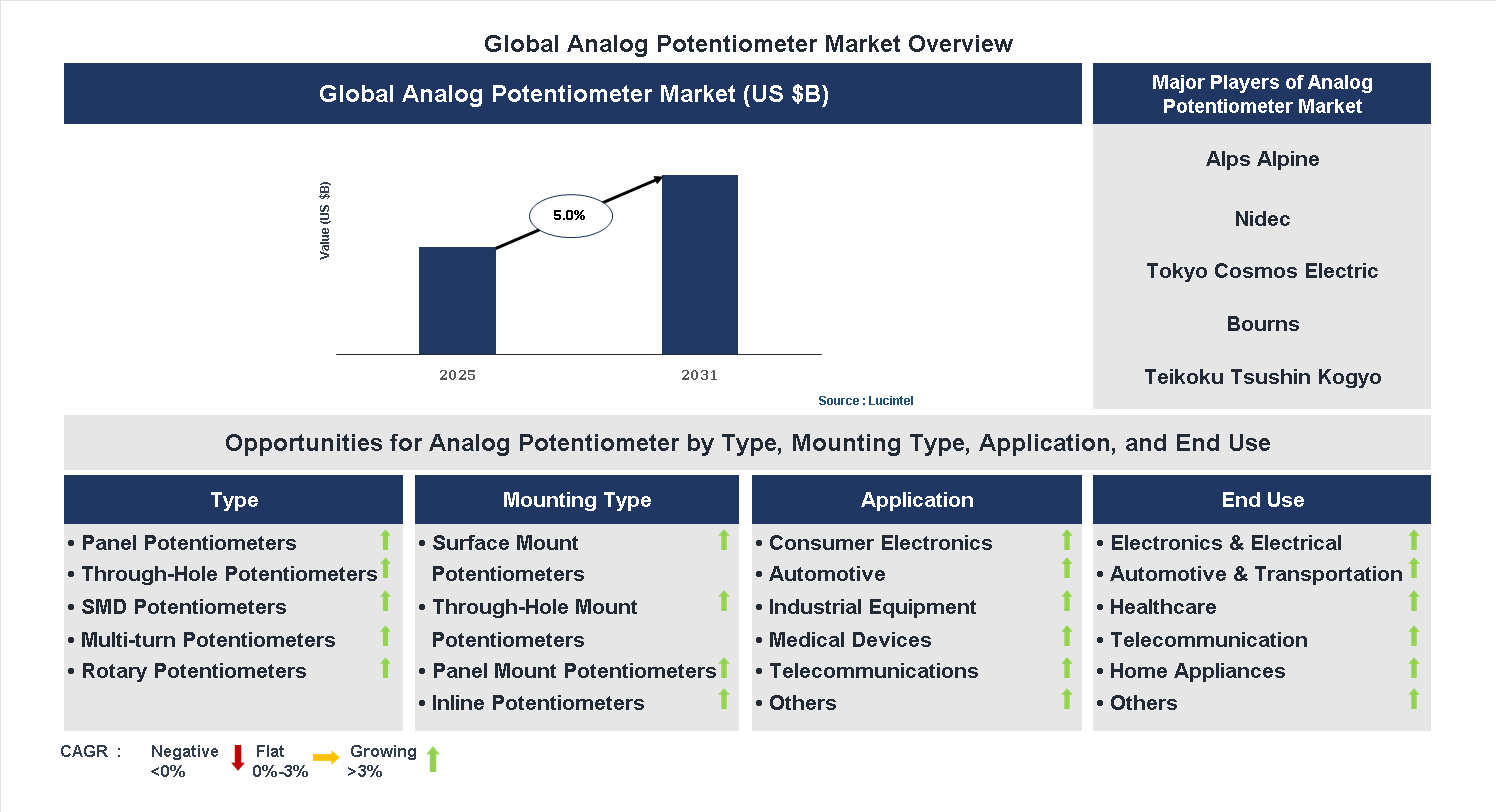
Key data points: The growth forecast = 5% annually for the next 7 years. Scroll below to get more insights. This market report covers trends, opportunities and forecasts in analog potentiometer market to 2031 by type (panel potentiometers, through-hole potentiometers, SMD potentiometers, multi-turn potentiometers, and rotary potentiometers), mounting type (surface mount potentiometers, through-hole mount potentiometers, panel mount potentiometers, and inline potentiometers), application (consumer electronics, automotive, industrial equipment, medical devices, telecommunications, and others), end use (electronics & electrical, automotive & transportation, healthcare, telecommunication, home appliances, and others), and region (North America, Europe, Asia Pacific, and the Rest of the World)
We'll send your sample report shortly.
• Lucintel forecasts that, within the type category, panel potentiometer, through-hole potentiometer, SMD potentiometer, multi-turn potentiometer, and rotary potentiometer is expected to witness higher growth over the forecast period.
• Within the end use category, electronics & electrical is expected to witness the highest growth.
• In terms of region, APAC is expected to witness the highest growth over the forecast period. Gain valuable insights for your business decisions with our comprehensive 150+ page report. Sample figures with some insights are shown below.
• Increasing Adoption of Digital Potentiometers: The shift from traditional analog to digital potentiometers is driven by the need for more precise, programmable, and remotely controllable components. Digital potentiometers offer advantages such as better stability, repeatability, and integration with microcontrollers, making them ideal for modern electronic devices. This trend is impacting the market by reducing reliance on mechanical parts, enabling smarter systems, and opening new avenues in automation and IoT applications. As digital solutions become more affordable and accessible, their adoption is expected to accelerate, further transforming the analog potentiometer landscape.
• Miniaturization and Integration in Compact Devices: The demand for smaller, lightweight electronic components is fueling the miniaturization of potentiometers. Manufacturers are developing surface-mount and integrated solutions that fit into compact devices like smartphones, wearables, and automotive sensors. This trend enhances device portability, reduces assembly complexity, and improves overall system performance. The impact is significant, as it allows for more sophisticated functionalities in limited spaces, driving innovation in consumer electronics and industrial applications. As technology advances, the market will see even more integrated and miniaturized potentiometer solutions.
• Use of Advanced Materials for Enhanced Performance: Innovations in materials such as conductive polymers, carbon composites, and ceramic compounds are improving the durability, stability, and temperature resistance of potentiometers. These advanced materials enable potentiometers to operate reliably in harsh environments, including extreme temperatures, vibrations, and moisture. The impact on the market is substantial, as it broadens application possibilities in sectors like aerospace, automotive, and industrial machinery. Enhanced material properties also lead to longer product lifespans and reduced maintenance costs, making them more attractive to end-users.
• Growing Focus on Energy Efficiency and Sustainability: As environmental concerns and energy-saving initiatives gain prominence, the market is shifting towards potentiometers that consume less power and are made from eco-friendly materials. Manufacturers are designing energy-efficient components that contribute to overall system savings, especially in battery-powered devices. This trend influences the market by aligning product development with sustainability goals, appealing to eco-conscious consumers and regulatory standards. The emphasis on green manufacturing practices and recyclable materials is expected to further drive innovation and market growth in this direction.
• Integration with IoT and Smart Systems: The proliferation of IoT devices and smart systems is creating a demand for potentiometers that can seamlessly connect and communicate with digital networks. Smart potentiometers enable real-time monitoring, remote adjustments, and data collection, enhancing system automation and efficiency. This trend is transforming the market by enabling more intelligent, connected devices across various sectors, including home automation, industrial control, and automotive systems. The integration of potentiometers with IoT platforms is expected to accelerate, fostering the development of smarter, more responsive electronic systems. In summary, these emerging trends are reshaping the analog potentiometer market by driving innovation, improving performance, and expanding application possibilities. The shift towards digital, miniaturized, and environmentally sustainable solutions, coupled with integration into IoT ecosystems, is creating new opportunities and challenges. As these trends continue to evolve, the market is poised for significant growth, with companies that adapt quickly gaining a competitive edge in this dynamic landscape.

• Technological Innovation: Introduction of digital potentiometers and hybrid models has improved accuracy and programmability, enabling more sophisticated control systems and reducing mechanical wear, which enhances device lifespan and reliability.
• Material Advancements: Development of high-performance conductive materials, such as carbon nanotubes and conductive polymers, has increased the durability and temperature stability of potentiometers, making them suitable for harsh environments and high-precision applications.
• Miniaturization and Integration: The trend toward smaller, integrated potentiometers has facilitated their incorporation into compact electronic devices, supporting the growth of IoT and wearable technology markets, and enabling more efficient space utilization.
• Manufacturing Process Improvements: Adoption of advanced manufacturing techniques like surface-mount technology (SMT) and automation has reduced production costs, improved consistency, and enabled mass production, thereby expanding market accessibility.
• Sustainability and Eco-friendly Designs: Increasing focus on environmentally sustainable materials and manufacturing processes has led to the development of eco-friendly potentiometers, aligning with global sustainability goals and appealing to environmentally conscious consumers. These developments are collectively transforming the analog potentiometer market by enhancing product performance, expanding application scope, and reducing costs. The integration of innovative materials and technologies is driving market growth, while miniaturization and sustainability efforts are opening new opportunities. Overall, these trends are positioning the market for sustained expansion and increased competitiveness in the evolving electronics landscape.
• Consumer Electronics: Expansion in smart devices and wearable technology is boosting demand for precise, miniaturized potentiometers, enhancing user experience and device functionality.
• Automotive Industry: Integration of potentiometers in vehicle control systems, including infotainment and adaptive cruise control, is driving market growth through increased safety and automation features.
• Industrial Automation: The rise of smart factories and IoT-enabled machinery relies heavily on potentiometers for accurate sensor feedback, improving process efficiency and automation capabilities.
• Healthcare Equipment: The development of advanced medical devices, such as diagnostic tools and patient monitoring systems, depends on high-precision potentiometers for reliable operation and data accuracy.
• Aerospace & Defense: The need for durable, high-performance potentiometers in navigation, control systems, and instrumentation is expanding, supporting the growth of advanced aerospace applications. In summary, these growth opportunities are significantly impacting the analog potentiometer market by fostering innovation, expanding application scope, and enhancing product performance. This evolution is attracting new investments and driving competitive differentiation, ultimately leading to a broader market footprint and sustained growth trajectory.
• Technological Advancements: The continuous development of high-precision and miniaturized potentiometers enhances performance and application scope. Innovations in materials and manufacturing processes improve durability, accuracy, and response times, making analog potentiometers more suitable for complex electronic systems. These advancements enable integration into IoT devices, automotive electronics, and industrial automation, fueling market growth. As technology evolves, manufacturers can offer more sophisticated products, attracting new customers and expanding existing applications.
• Growing Demand for Consumer Electronics: The proliferation of smart devices, wearable gadgets, and home automation systems drives the need for reliable, compact, and efficient potentiometers. Consumers demand enhanced user interfaces and precise control, which analog potentiometers provide. This surge in consumer electronics adoption boosts production volumes and encourages manufacturers to innovate, thereby expanding the market. Additionally, the trend toward connected devices necessitates high-quality components like potentiometers to ensure seamless operation.
• Automotive Industry Expansion: The automotive sectors shift toward electric vehicles (EVs) and advanced driver-assistance systems (ADAS) significantly impacts the analog potentiometer market. These systems require accurate sensing and control components, where potentiometers play a vital role. As automakers focus on safety, comfort, and connectivity, the demand for durable, high-performance potentiometers increases. This growth is further supported by regulatory standards emphasizing vehicle safety and emissions, prompting automakers to incorporate sophisticated electronic controls that rely on analog potentiometers.
• Industrial Automation Growth: The increasing adoption of automation in manufacturing and process control systems propels the demand for analog potentiometers. These components are essential for precise position sensing, volume control, and feedback mechanisms. As industries aim for higher efficiency and reduced human intervention, the need for reliable, long-lasting potentiometers rises. The integration of IoT and Industry 4.0 initiatives further amplifies this demand, encouraging manufacturers to develop products that meet stringent industrial standards. The challenges facing this analog potentiometer market include:-
• Technological Obsolescence: Rapid technological changes threaten the relevance of existing analog potentiometers. As digital and smart alternatives emerge, traditional components risk becoming obsolete, leading to reduced demand. Manufacturers must continuously innovate to keep pace with evolving technologies, which can be costly and time-consuming. Failure to adapt may result in loss of market share and decreased profitability, especially as industries shift toward digital solutions that offer enhanced functionality.
• Supply Chain Disruptions: The global supply chain has faced significant disruptions due to geopolitical tensions, pandemics, and logistical issues. These disruptions impact the availability of raw materials and components necessary for manufacturing analog potentiometers. Delays and increased costs can hinder production schedules and reduce profit margins. Small and medium-sized manufacturers are particularly vulnerable, which could lead to market consolidation or reduced product diversity, ultimately affecting market growth.
• Regulatory and Environmental Challenges: Increasing regulatory standards related to electronic waste, safety, and environmental impact impose compliance costs on manufacturers. Stricter regulations may require redesigning products or adopting eco-friendly materials, increasing R&D expenses. Non-compliance can result in penalties and market restrictions. Navigating these regulatory landscapes demands significant resources and expertise, potentially slowing innovation and market expansion, especially for smaller players lacking the necessary infrastructure. In summary, the analog potentiometer market is shaped by technological innovations, rising demand across various industries, and regulatory developments. While growth opportunities abound in consumer electronics, automotive, and industrial sectors, challenges such as technological obsolescence, supply chain issues, and regulatory compliance pose risks. The markets future will depend on how effectively stakeholders adapt to these dynamics, balancing innovation with resilience. Strategic investments in R&D, supply chain management, and regulatory compliance will be crucial for sustained growth and competitiveness in this evolving landscape.
• Alps Alpine
• Nidec
• Tokyo Cosmos Electric
• Bourns
• Teikoku Tsushin Kogyo
• Vishay
• Sakae Tsushin Kogyo
• Panasonic
• TT Electronics
• Honeywell
• Panel Potentiometers
• Through-Hole Potentiometers
• SMD Potentiometers
• Multi-turn Potentiometers
• Rotary Potentiometers
• Surface Mount Potentiometers
• Through-Hole Mount Potentiometers
• Panel Mount Potentiometers
• Inline Potentiometers
• Consumer Electronics
• Automotive
• Industrial Equipment
• Medical Devices
• Telecommunications
• Others
• Electronics & Electrical
• Automotive & Transportation
• Healthcare
• Telecommunication
• Home Appliances
• Others
• North America
• Europe
• Asia Pacific
• The Rest of the World
• United States: The US market has seen increased adoption of smart potentiometers integrated with digital interfaces, driven by the growth of IoT and automation sectors. Major players are investing in R&D to develop high-precision, miniaturized potentiometers suitable for aerospace, automotive, and consumer electronics. The focus on sustainability has led to innovations in environmentally friendly manufacturing processes and recyclable materials. Additionally, strategic partnerships between tech firms and component manufacturers are accelerating product development and market penetration.
• China: China remains a dominant force in the analog potentiometer market, with rapid manufacturing scale-up and technological advancements. The country is focusing on enhancing product quality and expanding its export capabilities. Local companies are investing heavily in automation and smart manufacturing to improve efficiency and reduce costs. The government’s support for high-tech industries has fostered innovation, leading to the development of more durable, high-performance potentiometers tailored for industrial automation, consumer electronics, and automotive applications.
• Germany: Germany’s market is characterized by a strong emphasis on precision engineering and high-quality standards. Leading firms are integrating advanced materials and innovative design techniques to produce highly reliable potentiometers for industrial machinery and automotive sectors. The country is also investing in Industry 4.0 initiatives, promoting smart manufacturing and digital integration. Research institutions collaborate with industry players to develop cutting-edge solutions that meet stringent European regulations and sustainability goals.
• India: The Indian market is witnessing rapid growth driven by expanding electronics manufacturing and increasing demand for automation in various sectors. Local companies are focusing on cost-effective, reliable potentiometers to serve domestic and emerging markets. Government initiatives aimed at boosting electronics exports and establishing manufacturing hubs are fostering innovation and capacity building. Additionally, startups are exploring IoT-enabled potentiometers, integrating connectivity features for smart applications across industrial and consumer segments.
• Japan: Japan continues to lead in high-precision analog potentiometers, emphasizing durability and performance in demanding environments. The market benefits from advanced research in materials science and sensor technology, enabling the development of highly sensitive and stable components. Japanese firms are also investing in miniaturization and energy-efficient designs to cater to the automotive, robotics, and consumer electronics industries. Collaboration with global tech companies and focus on sustainable manufacturing practices further strengthen Japan’s position in this market.


• Alps Alpine
• Nidec
• Tokyo Cosmos Electric
• Bourns
• Teikoku Tsushin Kogyo
• Vishay
• Sakae Tsushin Kogyo
• Panasonic
• TT Electronics
• Honeywell Q5. Which analog potentiometer market segment will be the largest in future? Answer: Lucintel forecasts that, within the type category, panel potentiometer, through-hole potentiometer, SMD potentiometer, multi-turn potentiometer, and rotary potentiometer is expected to witness higher growth over the forecast period. Q6. In analog potentiometer market, which region is expected to be the largest in next 5 years? Answer: In terms of region, APAC is expected to witness the highest growth over the forecast period. Q7. Do we receive customization in this report? Answer: Yes, Lucintel provides 10% customization without any additional cost.


Choose a license that fits your team. Instant PDF delivery.
Prices exclude taxes. Instant delivery. Custom licensing available on request.
Market Report · July 29, 2026
Market Report · July 20, 2026
Market Report · July 20, 2026
Trusted partner for strategic intelligence and business growth


Receive a complimentary market analysis tailored to your industry. Our analysts will identify key growth opportunities and competitive dynamics specific to your business.

Market size, growth rate, and key trend analysis for your specific sector.

Top competitor positioning and market share analysis.

Strategic recommendations backed by data-driven insights.
Get curated market intelligence and competitive moves straight to your inbox.
By subscribing, you agree to receive our monthly insights. Unsubscribe anytime.
Receive a complimentary market analysis tailored to your industry. Our analysts will identify key growth opportunities and competitive dynamics specific to your business.
Market size, growth rate, and key trend analysis for your specific sector.
Top competitor positioning and market share analysis.
Strategic recommendations backed by data-driven insights.
Get curated market intelligence, emerging trends, and competitive moves straight to your inbox each month.
By subscribing, you agree to receive our monthly insights. Unsubscribe anytime.
We'll send your sample report shortly.