
Report Feature
Ammonium Ion Selective Electrode Trends and Forecast
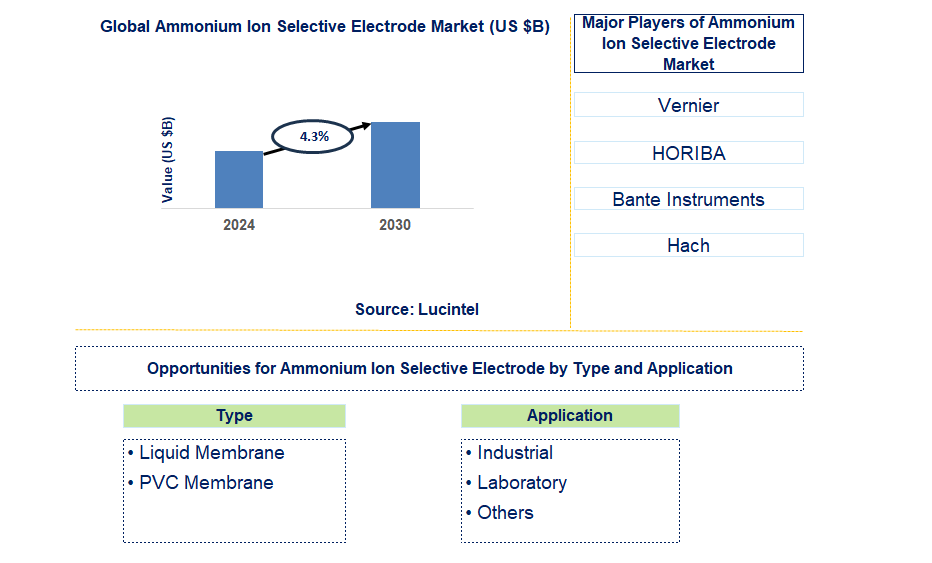
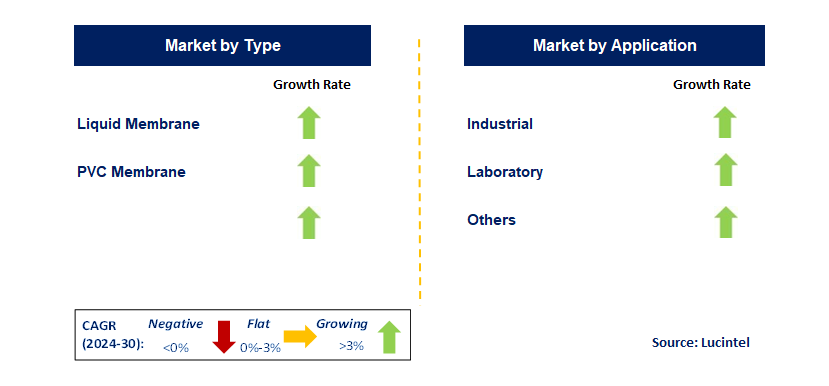
The future of the global ammonium ion selective electrode market looks promising with opportunities in the industrial and laboratory markets. The global ammonium ion selective electrode market is expected to grow with a CAGR of 4.3% from 2024 to 2030. The major drivers of this market are rising agricultural activities, increased investment in wastewater treatment facilities, and a growing demand for ammonium ion monitoring solutions.• Lucintel forecasts that, within the type category, liquid membrane is expected to witness higher growth over the forecast period.
• Within this application category, industrial is expected to witness higher growth.
• In terms of region, APAC is expected to witness the highest growth over the forecast period. A more than 150-page report is developed to help in your business decisions.
Emerging Trends in the Ammonium Ion Selective Electrode Market
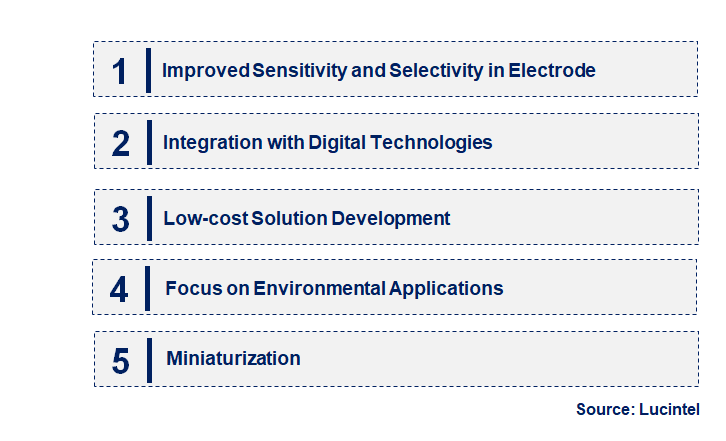
The ammonium ISE market is in an evolving stage, with several emerging trends that represent advances in technology and changing market demands. These trends are improving electrode performance, increasing the number of applications, and encouraging integration for better measurement and monitoring of end markets.• Improved Sensitivity and Selectivity in Electrode Materials: Advanced electrode materials are being developed to enhance sensitivity and selectivity. Polymers and composites are widely used to improve the performance of ammonium ion-selective electrodes, yielding more reliable and accurate measurements across a broad range of applications.
• Integration with Digital Technologies: Integration of ammonium ISEs with digital technologies, such as data logging and real-time monitoring systems, enables deeper data analysis, remote monitoring, and automated control processes, thus enhancing the efficiency and utility of the electrodes.
• Low-cost Solution Development: Low-cost ammonium ISEs, particularly for developing markets, are being developed. These solutions are aimed at agricultural and environmental applications, offering quality measurements to a broader audience.
• Focus on Environmental Applications: There is growing focus on the use of ammonium ISEs in environmental applications, such as water quality assessment and pollution control. This reflects the increasing need for accurate measurement tools to address environmental challenges and meet regulatory requirements.
• Miniaturization: There is a growing interest in miniaturizing ammonium ISEs, with efforts focused on developing compact and portable devices. Miniaturized electrodes are being designed for field applications, offering on-site testing and greater flexibility for different measurement scenarios. These evolving trends—improved electrode materials, integration with digital technologies, low-cost solutions, a focus on environmental applications, and miniaturization—will reshape the ammonium ISE market. They drive innovation and expand the application of ammonium ISEs across industries.
Recent Developments in the Ammonium Ion Selective Electrode Market
Advances in the ammonium ISE market in recent years have been significant. These developments are driving improvements in performance, cost-efficiency, and integration, reflecting the changing industrial needs for accurate ammonium ion measurement.• Sensitivity of the Electrodes: Continuous improvements in electrode materials and designs have led to significant strides in sensitivity. New materials and coatings adopted for ammonium ISEs help identify low concentrations of ammonium ions, offering greater accuracy and reliability across various applications.
• Integration with IoT Technologies: A major development is the integration of ammonium ISEs with IoT technologies, enabling real-time data collection and remote monitoring. This provides valuable insights for environmental and industrial applications, increasing monitoring system efficiency.
• Expansion of Industrial Applications: Ammonium ISEs are increasingly used in industries such as wastewater treatment and fertilizer production. Efforts are focused on building robust electrodes that can perform accurately under extreme conditions.
• Advancements in Calibration and Maintenance: New technologies and methods are enhancing electrode calibration and maintenance, thereby increasing the lifetime and performance of ammonium ISEs. Innovations such as self-calibrating electrodes and automated maintenance systems have reduced manual intervention and ensured consistent performance.
• Eco-friendly Materials of Interest: There is growing interest in developing ammonium ISEs using sustainable materials and processes to minimize environmental impact, aligning with green initiatives. Recent progress in sensitivity, IoT integration, industrial applications, advanced calibration and maintenance, and eco-friendly materials signals significant technological advancements in ammonium ion measurement devices.
Strategic Growth Opportunities for Ammonium Ion Selective Electrode Market
The ammonium ISE market is characterized by various strategic growth opportunities, driven by technological advancements, expanded applications, and increasing demand across industries.• Agricultural Monitoring: The agricultural sector offers substantial growth prospects for ammonium ISEs. Special electrodes for soil analysis and fertilizer management can help ensure high crop yields and optimize nutrient use with minimal waste, which is in high demand due to the recent adoption of precision agriculture technologies.
• Water Quality Testing: Water quality testing is a key growth area, and innovations in electrode design could further increase the accuracy and ease of testing water sources for ammonium levels, helping protect the environment and meet regulatory requirements.
• Industrial Process Control: Ammonium ISEs are poised to play a major role in industrial process control, particularly in wastewater treatment and chemical manufacturing. The development of robust, high-performance electrodes can improve process controls in industries reliant on precise ammonium ion measurements.
• Pharmaceutical Applications: The pharmaceutical industry offers significant growth opportunities in drug development and quality control. Special electrodes can be designed for accurate ammonium ion measurements in various pharmaceutical formulations, ensuring product quality and safety.
• Portable and iFeld Applications: There is growing demand for portable and field-deployable ammonium ISEs. The development of compact, user-friendly electrodes for on-site testing could expand their use in environmental monitoring, field research, and remote applications. Strategic growth opportunities in agricultural monitoring, water quality testing, industrial process control, pharmaceutical applications, and portable field applications are driving innovation and expanding the market for ammonium ion measurement technology.
Ammonium Ion Selective Electrode Market Driver and Challenges
Several factors—ranging from technological advances to regulatory requirements—are driving the growth of the ammonium ISE market. Understanding these drivers and challenges is essential for successfully navigating the market and leveraging opportunities. Drivers of the ammonium ISE market include:• Technological Advances: Advances in electrode materials and manufacturing methods are continuously improving the performance of ammonium ISEs. Improvements in sensitivity, selectivity, and durability are driving market growth and expanding the scope of applications.
• Increasing Demand for Precise Measurement: There is rising demand across agriculture, water quality testing, and industrial processes for precise ammonium ion measurement. Regulatory requirements and process optimization are pushing for greater accuracy and reliability in electrode performance.
• Expansion of Industrial Applications: Ammonium ISEs are increasingly used in industries like wastewater treatment and chemical manufacturing, driven by the need for robust, high-performance electrodes in these sectors.
• Investment in Research and Development: Significant investment in R&D accelerates innovation in ammonium ISE technology. Research into new materials, designs, and applications is driving progress and improving electrode performance.
• Environmental Protection Focus: As environmental protection becomes a greater concern, regulatory pressures are increasing. Measuring ammonium levels in water and soil is critical for assessing pollution and ensuring sustainability. Challenges in the ammonium ISE market include:
• High Development Costs: Developing sophisticated ammonium ISE technology is expensive, creating an entry barrier for smaller companies. High development costs can limit innovation and competitiveness.
• Technical Limitations: Despite advances, ammonium ISEs face technical limitations, such as sensitivity to interference and difficulties with calibration maintenance. Overcoming these challenges is essential to ensure accuracy and reliability.
• Regulatory Compliance: Environmental and industrial applications each have specific regulatory requirements. Ensuring that ammonium ISEs meet these standards is crucial for market entry and product development. Technological advances, increasing demand for precision, expanding industrial applications, and a focus on environmental protection are driving growth in the ammonium ISE market. However, challenges such as high development costs, technical limitations, and regulatory compliance must be overcome to foster further growth and innovation.
List of Ammonium Ion Selective Electrode Companies
Companies in the market compete on the basis of product quality offered. Major players in this market focus on expanding their manufacturing facilities, R&D investments, infrastructural development, and leverage integration opportunities across the value chain. Through these strategies ammonium ion selective electrode companies cater increasing demand, ensure competitive effectiveness, develop innovative products & technologies, reduce production costs, and expand their customer base. Some of the ammonium ion selective electrode companies profiled in this report include-• Vernier
• HORIBA
• Bante Instruments
• Hach
Ammonium Ion Selective Electrode by Segment
The study includes a forecast for the global ammonium ion selective electrode market by type, application, and region.Ammonium Ion Selective Electrode Market by Type [Analysis by Value from 2018 to 2030]:
• Liquid Membrane
• PVC Membrane
Ammonium Ion Selective Electrode Market by Application [Analysis by Value from 2018 to 2030]:
• Industrial
• Laboratory
• Others
Ammonium Ion Selective Electrode Market by Region [Analysis by Value from 2018 to 2030]:
• North America
• Europe
• Asia Pacific
• The Rest of the World
Country Wise Outlook for the Ammonium Ion Selective Electrode Market
The ammonium ion selective electrode market is evolving, with technological advancements and rising demand driving significant developments. Key regions are seeing notable progress in electrode sensitivity, environmental monitoring applications, industrial processes, and manufacturing techniques.• United States: In the U.S., the focus is on increasing electrode sensitivity and stability, with new materials enhancing performance for complex samples. Companies are also investing in digital integration, enabling real-time monitoring and data analysis for environmental and wastewater treatment applications.
• China: The ammonium ISE market in China is growing rapidly due to the expansion of industries and agriculture. Cost-effective, robust electrodes are being developed for large-scale applications, and there is a focus on automating measurement processes to improve efficiency and accuracy in environmental and agricultural monitoring.
• Germany: Germany is leading the development of high-precision ammonium ISEs, with a strong emphasis on environmental science and pharmaceutical applications. Recent developments include higher selectivity electrodes, miniaturized designs for portable devices, and new materials to improve performance and lifespan.
• India: The Indian market is still emerging for ammonium ISEs, with a focus on making products affordable and widely available. New electrode developments are aimed at making low-cost, reliable electrodes for agricultural and water testing applications. Indian manufacturers are focusing on electrode robustness for local environmental conditions.
• Japan: Innovation in electrode technology is driving the ammonium ISE market in Japan, with advancements focusing on high-accuracy applications. Recent developments include electrodes with higher interference tolerance and longer lifetimes. Japanese companies are integrating ammonium ISEs into advanced digital systems for industrial and environmental monitoring.

Features of the Global Ammonium Ion Selective Electrode Market
Market Size Estimates: Ammonium ion selective electrode market size estimation in terms of value ($B). Trend and Forecast Analysis: Market trends (2018 to 2023) and forecast (2024 to 2030) by various segments and regions. Segmentation Analysis: Ammonium ion selective electrode market size by type, application, and region in terms of value ($B). Regional Analysis: Ammonium ion selective electrode market breakdown by North America, Europe, Asia Pacific, and Rest of the World. Growth Opportunities: Analysis of growth opportunities in different types, applications, and regions for the ammonium ion selective electrode market. Strategic Analysis: This includes M&A, new product development, and competitive landscape of the ammonium ion selective electrode market. Analysis of competitive intensity of the industry based on Porter’s Five Forces model.If you are looking to expand your business in this market or adjacent markets, then contact us. We have done hundreds of strategic consulting projects in market entry, opportunity screening, due diligence, supply chain analysis, M & A, and more.

FAQ
Q1. What is the growth forecast for ammonium ion selective electrode market? Answer: The global ammonium ion selective electrode market is expected to grow with a CAGR of 4.3% from 2024 to 2030. Q2. What are the major drivers influencing the growth of the ammonium ion selective electrode market? Answer: The major drivers of this market are rising agricultural activities, increased investment in wastewater treatment facilities, and a growing demand for ammonium ion monitoring solutions. Q3. What are the major segments for ammonium ion selective electrode market? Answer: The future of the ammonium ion selective electrode market looks promising with opportunities in the industrial and laboratory markets. Q4. Who are the key ammonium ion selective electrode market companies? Answer: Some of the key ammonium ion selective electrode companies are as follows:• Vernier
• HORIBA
• Bante Instruments
• Hach Q5. Which ammonium ion selective electrode market segment will be the largest in future? Answer: Lucintel forecasts that liquid membrane is expected to witness higher growth over the forecast period. Q6. In ammonium ion selective electrode market, which region is expected to be the largest in next 5 years? Answer: APAC is expected to witness the highest growth over the forecast period. Q.7 Do we receive customization in this report? Answer: Yes, Lucintel provides 10% customization without any additional cost.
Table of Contents
Methodology
- In-depth interviews of the major players in this market
- Detailed secondary research from competitors’ financial statements and published data
- Extensive searches of published works, market, and database information pertaining to industry news, company press releases, and customer intentions
- A compilation of the experiences, judgments, and insights of Lucintel’s professionals, who have analyzed and tracked this market over the years.


Buy Now
Choose a license that fits your team. Instant PDF delivery.
Prices exclude taxes. Instant delivery. Custom licensing available on request.
Key Questions
- • What are some of the most promising, high-growth opportunities for the ammonium ion selective electrode market by type (liquid membrane and PVC membrane), application (industrial, laboratory, and others), and region (North America, Europe, Asia Pacific, and the Rest of the World)?
- • Which segments will grow at a faster pace and why?
- • Which region will grow at a faster pace and why?
- • What are the key factors affecting market dynamics? What are the key challenges and business risks in this market?
- • What are the business risks and competitive threats in this market?
- • What are the emerging trends in this market and the reasons behind them?
- • What are some of the changing demands of customers in the market?
- • What are the new developments in the market? Which companies are leading these developments?
- • Who are the major players in this market? What strategic initiatives are key players pursuing for business growth?
- • What are some of the competing products in this market and how big of a threat do they pose for loss of market share by material or product substitution?
- • What M&A activity has occurred in the last 5 years and what has its impact been on the industry? For any questions related to Ammonium Ion Selective Electrode Market, Ammonium Ion Selective Electrode Market Size, Ammonium Ion Selective Electrode Market Growth, Ammonium Ion Selective Electrode Market Analysis, Ammonium Ion Selective Electrode Market Report, Ammonium Ion Selective Electrode Market Share, Ammonium Ion Selective Electrode Market Trends, Ammonium Ion Selective Electrode Market Forecast, Ammonium Ion Selective Electrode Market Companies, write Lucintel analyst at email: helpdesk@lucintel.com. We will be glad to get back to you soon.


