
Market Report · May 18, 2026

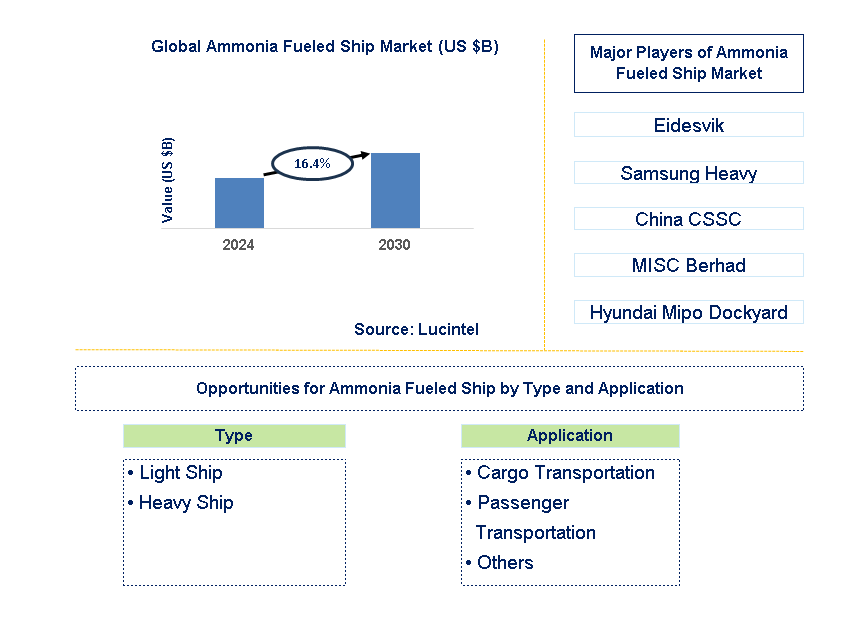
Key data points: The growth forecast = 16.4% annually next 6 years. Scroll below to get more insights. This market report covers trends, opportunities, and forecast in the global ammonia fueled ship market to 2030 by type (light ship and heavy ship), application (cargo transportation, passenger transportation, and others), and region (North America, Europe, Asia Pacific, and the Rest of the World)
We'll send your sample report shortly.
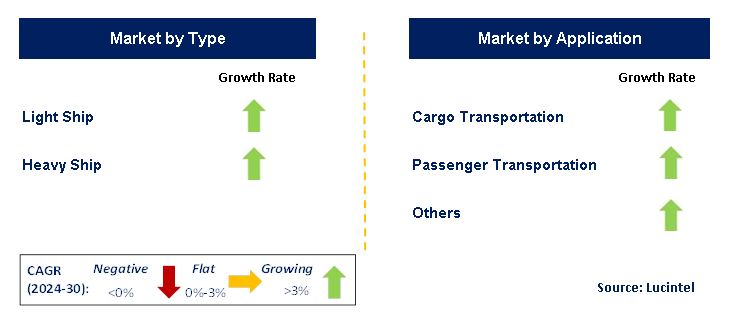
• Lucintel forecasts that, within the type category, light ship is expected to witness the higher growth over the forecast period.
• Within the application category, cargo transportation is expected to witness the higher growth.
• In terms of regions, North America is expected to witness highest growth over the forecast period. Gain valuable insights for your business decisions with our comprehensive 150+ page report.
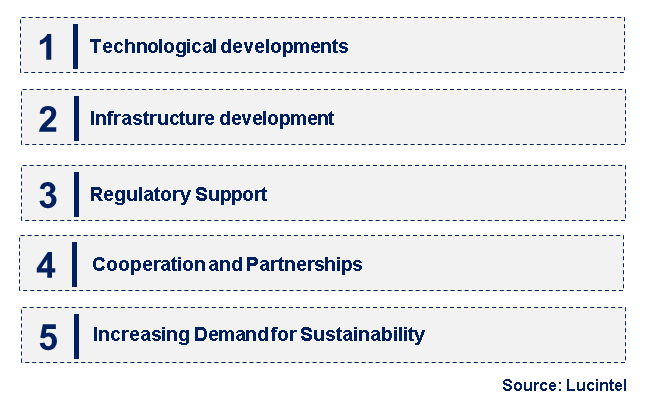
• Technological Developments: Improvements in ammonia engine technology will significantly enhance efficiency while reducing emissions. Enhanced combustion processes and fuel reliability will make ammonia a more viable option for shipping purposes.
• Infrastructure Development: Bunkering infrastructure for ammonia is gradually being established. Ports are beginning to invest in storage and refueling facilities for ammonia, which is crucial for the large-scale adoption of ammonia-fueled vessels.
• Regulatory Support: Governments are developing policies that promote the use of alternative fuels, including ammonia. There is an emerging need to provide regulatory support that fosters an environment conducive to investments and innovations in ammonia-fueled shipping.
• Cooperation and Partnerships: Collaborations between shipping companies, technology developers, and research institutions are becoming increasingly common. These partnerships are important as they bring together knowledge and resources, accelerating the development and implementation of ammonia technologies.
• Increasing Demand for Sustainability in the Market: There has been a rising demand from consumers and other market stakeholders for more environmentally sustainable shipping practices. This demand is pushing many shipping companies to invest more in cleaner technologies, positioning ammonia as a major player in the pursuit of greener maritime solutions. These emerging trends are revolutionizing the market for ammonia-fueled ships, paving the way for cleaner and more sustainable maritime transportation. As companies adapt to these trends, ammonia is poised to become a strong alternative fuel in shipping.
• Innovative Engine Designs: Recent innovations in engine design target enhancements in the efficiency of ammonia combustion. Although workable, dual-fuel engines can easily switch from ammonia to conventional fuels, allowing for a seamless transition to greener fuel options.
• Enhancement of Safety Mechanisms: Because ammonia is toxic, considerable effort goes into creating effective safety mechanisms. Research is being conducted to minimize the dangers associated with ammonia storage and handling, ensuring that safety features automatically seal shipping operations.
• Demonstration Projects and Testing: Many demonstration projects are underway worldwide to test ammonia-fired vessels in real-world scenarios. This includes evaluating performance, emissions, and operational feasibility, allowing technologies to be optimized and best practices to be established.
• Regulatory Development: Countries are developing individual regulatory frameworks for ammonia, encompassing safety, emissions, and bunkering regulations to facilitate the acceptance and utilization of ammonia-fueled ships.
• International Collaborations: Countries and companies are increasingly collaborating on the development of ammonia technology. Such partnerships open avenues for knowledge sharing and resource pooling, thus accelerating related developments globally for ammonia-fueled ships. In recent years, ammonia-fueled ships have undergone significant changes that promote technological advancements, safety, and regulatory standards. All these developments will be vital in making ammonia a standard maritime fuel.
• Container Shipping: Container vessels represent a substantial opportunity for ammonia as a fuel, particularly given the industry's ambitious reduction targets. The production of ammonia-fueled container ships could enhance operational performance and help establish global environmental standards.
• Bulk Carriers: Ammonia is increasingly being adopted as an alternative fuel among bulk carrier fleets. Its high energy density makes it suitable for over-the-road transportation. Implementing ammonia in the bulk shipping sector has been shown to reduce carbon footprints while expanding transport capabilities over long distances.
• Ferries and Coastal Vessels: Ammonia-powered ferries present an attractive opportunity for transportation in coastal areas. Such vessels can benefit from reduced emissions while operating in sensitive marine ecosystems, appealing to environmentally conscious consumers.
• Fishing Vessels: The acceptance of ammonia in fishing fleets enhances the sustainability of the sector. Ammonia-powered vessels can help reduce the ecological impacts associated with fishing activities, which are increasingly scrutinized regarding environmental sustainability.
• Research and Development: Continuous research on ammonia fuel systems offers significant potential for innovation. High R&D investments enable companies to be first movers in sustainable maritime solutions as breakthroughs in engine efficiency and safety occur. These strategic growth opportunities suggest a wide application for ammonia-fueled ships. Companies can leverage these trends to enhance their competitiveness while promoting cleaner shipping practices.
• Environmental Regulations: Tightening global environmental regulations are pushing the development of alternative fuel substitutes, including ammonia. Companies in the shipping industry are being compelled to seek cleaner technologies to achieve the targeted emission reductions.
• Technological Advancements: Ongoing advancements in engine design and ammonia handling processes are increasing the viability of ammonia as a marine fuel. Technological hurdles must be overcome to improve efficiency.
• Rising Market Demand for Sustainability: With growing consumer and stakeholder pressure for improved shipping sustainability, shipping lines are under increasing pressure to adopt cleaner technologies. Ammonia is considered one of the fuels that can potentially be utilized in future operations.
• Government Support and Funding: Many governments provide grants and incentives for research and development of alternative fuels like ammonia. These conditions are key factors that accelerate the commercialization of ammonia-fueled ships.
• Collaborations and Partnerships: Significant players, including shipping companies, technology providers, and research institutions, are cooperating in ways that facilitate innovation. In these collaborations, assets and expertise combine to advance ammonia technology. Challenges in the ammonia-fueled ship market include:
• Safety Issues: Ammonia is toxic and poses safety risks when stored and handled. Significant efforts must be made to develop stringent safety protocols and training to manage these risks for safe operations in ammonia-fueled shipping.
• Infrastructure Development: The lack of bunkering infrastructure for ammonia presents a major challenge. Transitioning to ammonia-fueled vessels will require considerable investment in bunkering storage and refueling facilities.
• High Initial Investment: The development and retrofitting of ammonia fueled ships are highly capital-intensive processes. Firms must carefully weigh these expenses against the economic viability of the investment under uncertain market conditions. These drivers and challenges have created a complex landscape for the ammonia-fueled ship market. They continuously impact strategies and operational decisions. By navigating these factors efficiently, stakeholders can better position themselves for sustainable growth within the maritime sector.
• Eidesvik
• Samsung Heavy Industries
• China CSSC
• MISC Berhad
• Hyundai Mipo Dockyard
• Eidesvik
• Hafnia
• Light Ship
• Heavy Ship
• Cargo Transportation
• Passenger Transportation
• Others
• North America
• Europe
• Asia Pacific
• The Rest of the World
• United States: In the United States, ammonia-fueled ships are undergoing significant development. Current advancements are driven by collaboration and partnerships between government agencies, universities, and maritime companies. With the Department of Energy funding research on efficient combustion engines using ammonia, improvements in emissions profiles and engine reliability are urgent priorities. Initiatives are also being rolled out to provide appropriate infrastructure at ports for ammonia storage and bunkering, facilitating the transition to this alternative fuel.
• China: As one of the early movers toward achieving carbon neutrality by 2060, China is developing ammonia-fueled ships. Key state-owned shipping companies are investing in R&D to create ammonia-powered vessels. The government is also introducing regulations and standards for ammonia use in shipping, which will integrate this technology into a national maritime framework, significantly reducing reliance on fossil fuels.
• Germany: Germany is a leader in ammonia-based shipping technology, having invested heavily in research and testing. Companies like MAN Energy Solutions are innovating in ammonia as a marine fuel, focusing on design and safety considerations. The German government supports initiatives to advance regulatory frameworks that encourage the use of ammonia in shipping, positioning the country at the forefront of a sustainable maritime fuel future.
• India: India is recognizing the potential of ammonia as a marine fuel while pursuing sustainable development. The Indian government encourages research into ammonia fueled ships and is exploring partnerships with foreign companies to enhance this technology. Infrastructure for fueling ships with ammonia will be established at major ports, making ammonia an accepted fuel in maritime logistics.
• Japan: Japan is at the forefront of ammonia-fueled ship development, with NYK Line heavily investing in this technology. Recent advancements include the integration of ammonia fuel systems into existing vessels and the development of ammonia bunkering facilities. The Japanese government has also supported international partnerships in ammonia as a clean energy carrier for maritime transport, contributing to their decarbonization goals.


• Eidesvik
• Samsung Heavy Industries
• China CSSC
• MISC Berhad
• Hyundai Mipo Dockyard
• Eidesvik
• Hafnia Q5. Which ammonia fueled ship market segment will be the largest in future? Answer: Lucintel forecasts that light ship is expected to witness the higher growth over the forecast period. Q6. In ammonia fueled ship market, which region is expected to be the largest in next 5 years? Answer: North America is expected to witness highest growth over the forecast period. Q.7 Do we receive customization in this report? Answer: Yes, Lucintel provides 10% customization without any additional cost.


Choose a license that fits your team. Instant PDF delivery.
Prices exclude taxes. Instant delivery. Custom licensing available on request.
Market Report · May 18, 2026
Market Report · May 16, 2026
Market Report · May 16, 2026
Trusted partner for strategic intelligence and business growth


Receive a complimentary market analysis tailored to your industry. Our analysts will identify key growth opportunities and competitive dynamics specific to your business.

Market size, growth rate, and key trend analysis for your specific sector.

Top competitor positioning and market share analysis.

Strategic recommendations backed by data-driven insights.
Get curated market intelligence and competitive moves straight to your inbox.
By subscribing, you agree to receive our monthly insights. Unsubscribe anytime.
Receive a complimentary market analysis tailored to your industry. Our analysts will identify key growth opportunities and competitive dynamics specific to your business.
Market size, growth rate, and key trend analysis for your specific sector.
Top competitor positioning and market share analysis.
Strategic recommendations backed by data-driven insights.
Get curated market intelligence, emerging trends, and competitive moves straight to your inbox each month.
By subscribing, you agree to receive our monthly insights. Unsubscribe anytime.
We'll send your sample report shortly.