
Market Report · May 18, 2026

This market report covers trends, opportunities, and forecasts in the global altimeter sensors market to 2031 by technology (mems technology, optical technology, and resistive technology), application (aerospace, automotive sector, and consumer electronics), and region (North America, Europe, Asia Pacific, and the Rest of the World)
We'll send your sample report shortly.
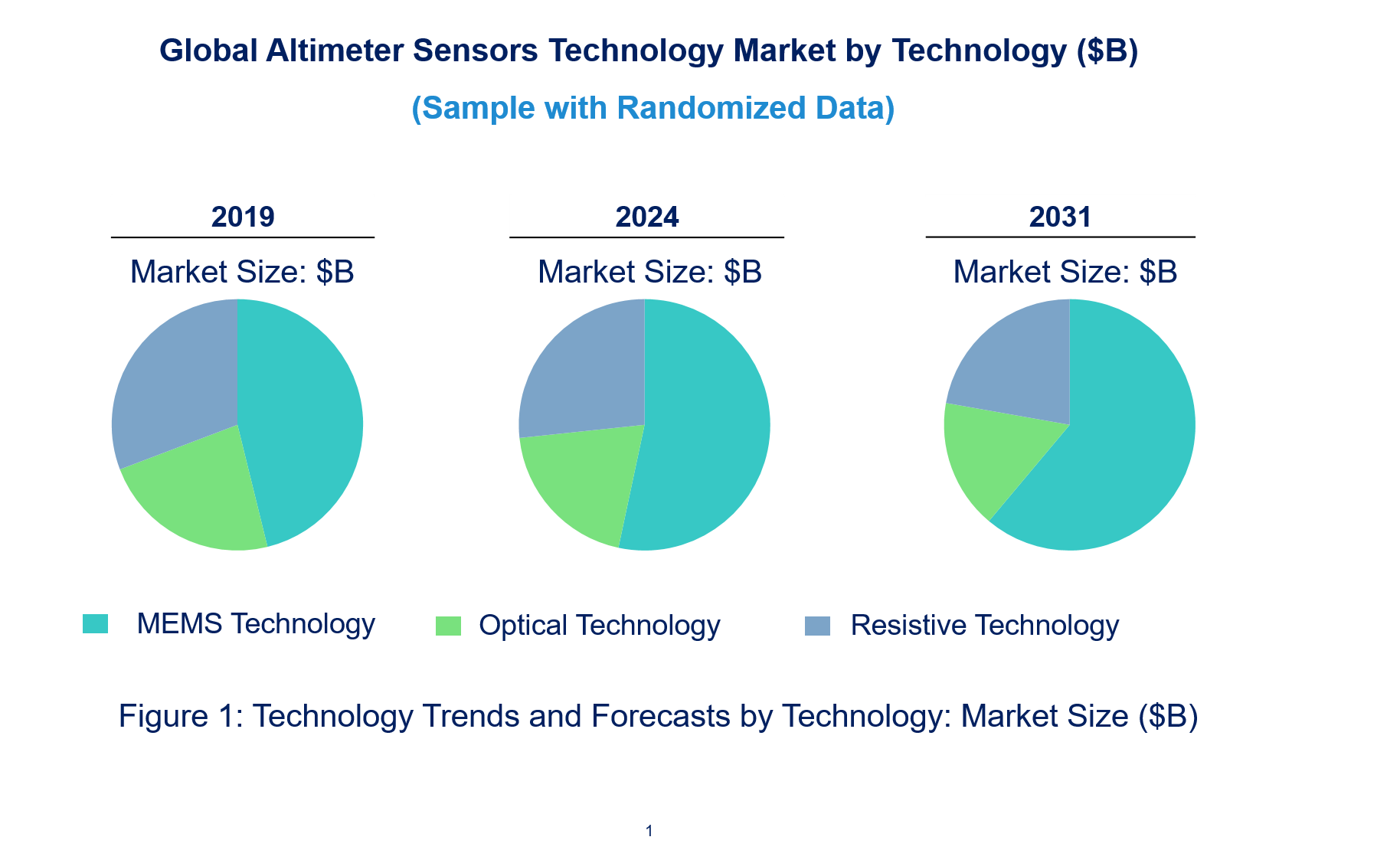
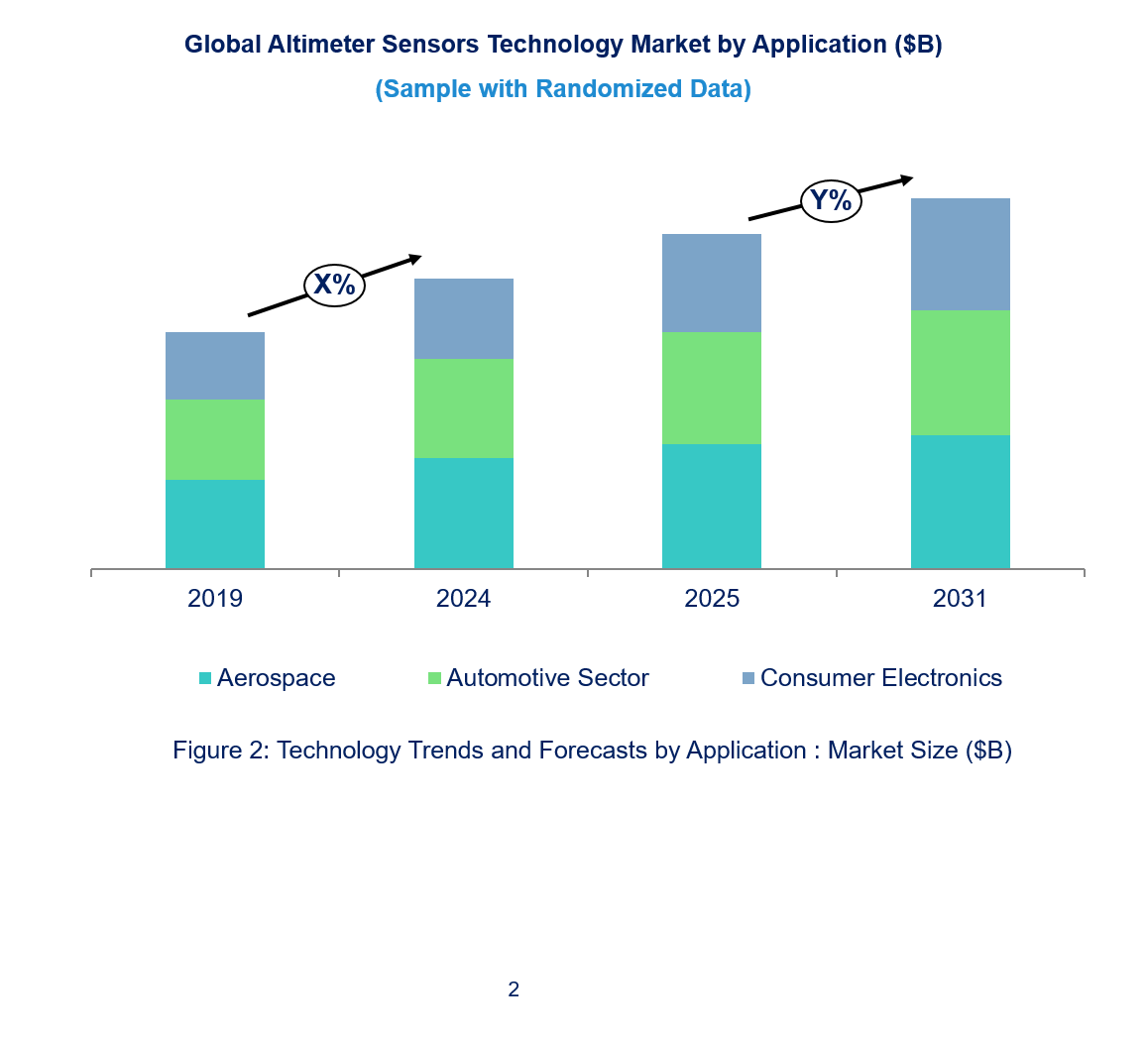
• Miniaturization and Compact Sensors: As the demand for smaller, lightweight devices grows, MEMS altimeter sensors are becoming the preferred choice. Their compact size allows them to be integrated into portable devices, unmanned aerial vehicles (UAVs), and wearable technologies, driving innovation in consumer electronics and aerospace.
• Integration with IoT and Connected Systems: The rise of the Internet of Things (IoT) has led to increased integration of altimeter sensors into connected systems. This allows real-time data collection, remote monitoring, and improved decision-making in applications such as autonomous vehicles, drones, and industrial automation.
• Increased Demand in Aerospace and Aviation: Aerospace continues to be a major sector driving innovation in altimeter sensors. As aircraft and UAVs require high-precision altitude measurements for safe operation, new altimeter sensors that offer higher accuracy and resilience to harsh environments are being developed to meet these demands.
• Advancements in MEMS Technology: The shift toward MEMS technology is providing more cost-effective, reliable, and accurate altimeter sensors compared to traditional technologies. These sensors are now capable of providing high-performance measurements with low power consumption, making them ideal for mobile devices and automotive applications.
• Focus on Energy Efficiency and Power Savings: Energy-efficient sensors are becoming increasingly important in applications where power consumption is a major concern, such as in mobile devices, UAVs, and IoT-connected devices. Manufacturers are focusing on improving the power efficiency of altimeter sensors to extend the battery life of devices. These emerging trends indicate a shift towards smaller, more integrated, and energy-efficient altimeter sensors. The integration of MEMS technology, IoT, and advancements in aerospace applications is reshaping how altimeter sensors are designed and used, offering more innovative, connected, and precise solutions across industries.
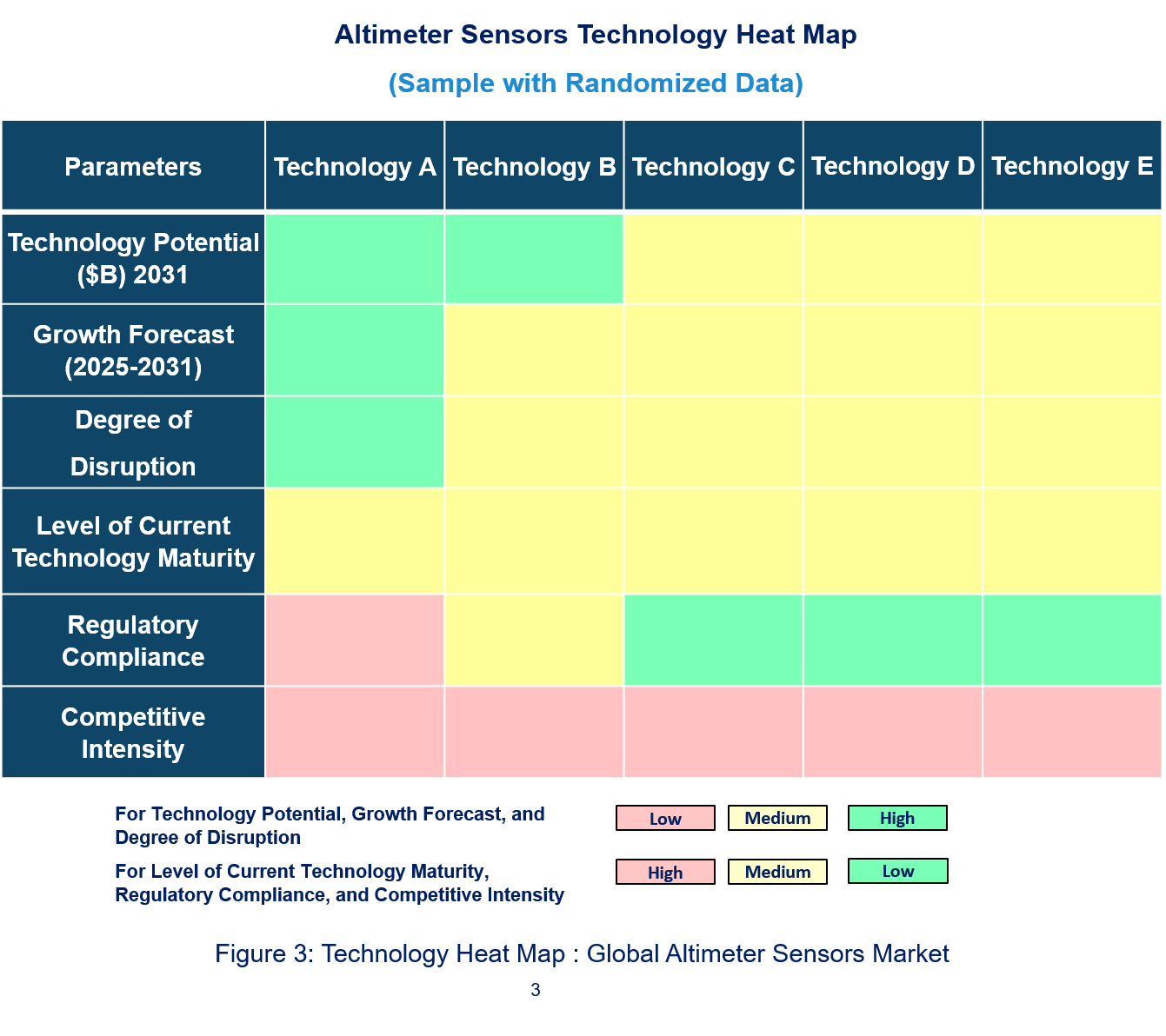
• Potential in technology: MEMS technology, with its compact form factor, low cost, and high accuracy, is expected to disrupt traditional altimeter sensor solutions, especially in consumer electronics and automotive applications. Its ability to integrate seamlessly into smaller devices, such as smartphones and drones, positions it as a game-changer. Optical altimeter sensors, offering superior precision, are poised to transform aerospace navigation and defense applications.
• Degree of Disruption: These sensors can operate in a variety of challenging environments, including high altitudes and extreme weather, offering a significant edge over traditional barometric sensors. Although resistive technology is less common, it remains relevant in specific industrial applications and is continuously improving to compete with MEMS and optical solutions.
• Current Technology Maturity Level: MEMS technology is highly mature and already widely used, particularly in consumer electronics. Optical sensors are also advancing quickly, gaining market acceptance in aerospace and defense. Resistive altimeter technologies, while more traditional, are still developing and finding niche applications.
• Regulatory Compliance: Regulatory standards, especially in aerospace and automotive sectors, require altimeter sensors to meet stringent accuracy and safety requirements. Technologies like MEMS and optical sensors are being developed with these regulations in mind, ensuring compliance with aviation and automotive industry standards.
• Aerocontrolex Group Inc.: Aerocontrolex has focused on enhancing the performance of its mechanical and electronic altimeter systems, particularly for military and commercial aerospace applications. Their integration of MEMS technology into altimeter systems has contributed to more compact, cost-effective, and reliable altitude measurement solutions for aircraft.
• Aerosonic Corporation: Aerosonic has introduced new digital and analog altimeter products with improved accuracy for aviation applications. Their sensors are designed for military, commercial, and general aviation, enhancing the precision and reliability of altitude readings, which is crucial for flight safety.
• Free Flight Systems Inc.: Free Flight Systems has been at the forefront of integrating advanced GPS and altimeter sensor technologies. Their ADS-B (Automatic Dependent Surveillance-Broadcast) solutions have gained popularity, enabling enhanced navigation and air traffic management capabilities, which are essential for evolving airspace control systems.
• Garmin International Inc.: Garmin has introduced cutting-edge altimeter sensors that leverage GPS technology for more accurate altitude measurements. Their sensors are particularly popular in consumer electronics, such as handheld devices and wearables, offering precise location-based services for outdoor activities and aviation.
• Hindustan Aeronautics Limited: Hindustan Aeronautics has been working on integrating advanced altimeter sensor technology into defense and aerospace applications. Their focus on improving sensor durability and performance under extreme environmental conditions has positioned them as a key player in India’s aerospace sector.
• Honeywell Aerospace Inc.: Honeywell continues to lead the development of high-precision altimeter sensors for aerospace and defense applications. Their advanced sensor systems offer greater reliability, reduced size, and enhanced performance in various aircraft, including commercial airliners and military jets.
• Revue Thommen AG: Revue Thommen has focused on precision altimeter sensors for use in high-performance aircraft. Their altimeters are known for their durability and accuracy in extreme environments, making them ideal for commercial aviation, private aircraft, and military applications.
• Rockwell Collins: Rockwell Collins has been improving its altimeter sensor systems by integrating them with avionics solutions to create more reliable, accurate, and integrated flight management systems. Their developments in sensor fusion technology contribute to safer and more efficient navigation in aviation.
• Thales SA: Thales has developed state-of-the-art optical and radar altimeters used in both civil and military aviation. Their technologies are crucial for improving landing accuracy in challenging conditions, including low-visibility environments and remote areas.
• UTC Aerospace Systems: UTC Aerospace Systems has introduced altimeter sensors with advanced digital capabilities, improving altitude accuracy and performance. Their systems are widely used in commercial and military aircraft, contributing to enhanced navigation safety and operational efficiency. These developments reflect the ongoing advancements in altimeter sensor technology, contributing to better accuracy, reliability, and integration in aerospace, defense, and consumer sectors.
• Technological Advancements: The integration of MEMS (micro-electro-mechanical systems) technology has revolutionized altimeter sensors by enhancing their performance, reducing size, and improving reliability. These innovations are making altimeter sensors more accessible and versatile across multiple industries, including aerospace and automotive.
• Rising Demand for Precision Navigation Systems: Altimeter sensors play a vital role in precision navigation systems, especially in aerospace and military sectors. The increasing need for accurate altitude measurement, especially for autonomous systems, drones, and aircraft, is propelling the demand for high-performance altimeter sensors.
• Growth in Consumer Electronics: With the growing use of wearables, fitness trackers, and smart devices, altimeter sensors are increasingly integrated into consumer electronics. The trend of providing advanced features such as elevation tracking in smartphones and smartwatches is driving the demand for compact, low-cost altimeter sensors.
• Increased Use in Autonomous Vehicles: As autonomous vehicles continue to grow in popularity, there is an increasing need for accurate sensors to monitor vehicle altitude, road conditions, and obstacles. Altimeter sensors are integral to providing real-time data for safe navigation, thereby boosting their market demand.
• Government and Military Investments: Increased investments in defense and aerospace technologies by governments worldwide are driving the growth of altimeter sensors. Their critical role in military and aviation systems, such as in fighter jets and surveillance equipment, is significantly contributing to market growth. Challenges in the altimeter sensors market are:
• High Manufacturing Costs: Despite advancements, the high cost of producing advanced altimeter sensors, particularly those using MEMS technology, remains a challenge. This limits their affordability for mass-market applications, particularly in industries like automotive and consumer electronics.
• Regulatory Compliance: Altimeter sensors, especially in aerospace and defense applications, must comply with stringent regulations and certifications, such as the Federal Aviation Administration (FAA) standards. Navigating these complex requirements can increase development time and costs for manufacturers.
• Technological Limitations in Harsh Environments: While altimeter sensors are widely used, their performance in extreme conditions (e.g., high altitude, fluctuating temperatures, and pressure) can be unreliable. This can limit their effectiveness in certain applications, such as in space exploration or deep-sea operations. The altimeter sensors market is benefiting from technological advancements, especially in MEMS technology, and the increasing demand for precision in navigation, aerospace, and consumer electronics. Growth opportunities are further driven by the rise in autonomous vehicles and military investments. However, challenges related to high manufacturing costs, regulatory hurdles, and technological limitations continue to impact market growth. The industry’s ability to address these challenges while capitalizing on emerging trends will shape the future trajectory of the altimeter sensors market.
• Aerocontrolex Group Inc.
• Aerosonic Corporation
• Free Flight Systems Inc.
• Garmin International Inc.
• Hindustan Aeronautics Limited
• Honeywell Aerospace Inc.
• Technology Readiness for Technology Type: MEMS technology is highly mature and ready for widespread use, with applications across aerospace, automotive, and consumer electronics. Optical technology is advancing but faces higher costs and complexity, making it more suitable for niche high-precision applications such as aerospace. Resistive technology, while reliable and cost-effective, lags in terms of technological readiness and performance, primarily serving in less demanding consumer applications. Competitive pressures are intensifying, especially as MEMS and optical technologies are improving their affordability and performance, while regulatory compliance remains stringent in sectors like aerospace, ensuring only the most reliable technologies dominate high-accuracy markets.
• Competitive Intensity and Regulatory Compliance: The competitive intensity in the altimeter sensors market is high, driven by innovation in MEMS, optical, and resistive technologies. MEMS and optical technologies are gaining traction due to their advanced capabilities, leading to strong competition among key players such as Honeywell and Garmin. These technologies must adhere to strict regulatory standards, especially in aerospace and automotive sectors, where certifications such as FAA and ISO are required. Resistive technology faces less regulatory scrutiny, but its limitations in accuracy compared to MEMS and Optical technologies put it at a competitive disadvantage, especially in high-precision applications.
• Disruption Potential of Different Technologies: MEMS, optical, and resistive technologies each bring significant disruption potential to the altimeter sensors market. MEMS technology offers high accuracy, miniaturization, and low-cost sensors, which could revolutionize consumer electronics and automotive sectors with widespread adoption. Optical technology, by enabling precise altitude measurements with minimal interference, is ideal for aerospace and military applications, where high accuracy and reliability are crucial. Resistive technology, though more traditional, still provides affordable solutions with reasonable accuracy for various consumer applications. The combination of these technologies offers a diverse range of possibilities, enabling improvements in sensor performance across different industries.
• MEMS Technology
• Optical Technology
• Resistive Technology
• Aerospace
• Automotive Sector
• Consumer Electronics
• North America
• Europe
• Asia Pacific
• The Rest of the World
• Latest Developments and Innovations in the Altimeter Sensors Technologies
• Companies / Ecosystems
• Strategic Opportunities by Technology Type




Choose a license that fits your team. Instant PDF delivery.
Prices exclude taxes. Instant delivery. Custom licensing available on request.
Market Report · May 18, 2026
Market Report · May 18, 2026
Market Report · May 18, 2026
Trusted partner for strategic intelligence and business growth


Receive a complimentary market analysis tailored to your industry. Our analysts will identify key growth opportunities and competitive dynamics specific to your business.

Market size, growth rate, and key trend analysis for your specific sector.

Top competitor positioning and market share analysis.

Strategic recommendations backed by data-driven insights.
Get curated market intelligence and competitive moves straight to your inbox.
By subscribing, you agree to receive our monthly insights. Unsubscribe anytime.
Receive a complimentary market analysis tailored to your industry. Our analysts will identify key growth opportunities and competitive dynamics specific to your business.
Market size, growth rate, and key trend analysis for your specific sector.
Top competitor positioning and market share analysis.
Strategic recommendations backed by data-driven insights.
Get curated market intelligence, emerging trends, and competitive moves straight to your inbox each month.
By subscribing, you agree to receive our monthly insights. Unsubscribe anytime.
We'll send your sample report shortly.