
Market Report · July 20, 2026

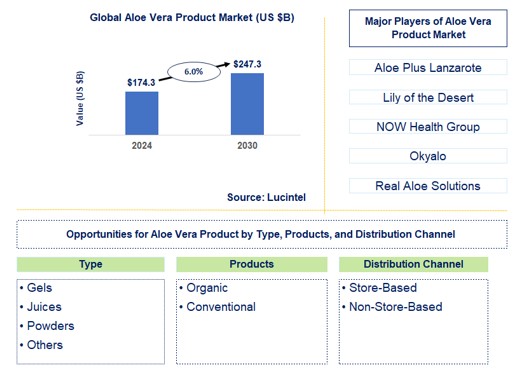
Key data points: The market size in 2030 = $247.3 billion, growth forecast = 6.0% annually for the next 6 years. Scroll below to get more insights. This market report covers trends, opportunities, and forecasts in the global aloe vera product market to 2030 by type (gels, juices, powders, and others), products (organic and conventional), distribution channel (store-based and non-store-based), and region (North America, Europe, Asia Pacific, and the Rest of the World)
We'll send your sample report shortly.
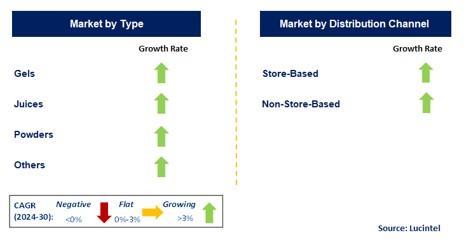
• Lucintel forecasts that, within the type category, the juices is expected to witness the highest growth over the forecast period due to increasing number of people suffering from gastrointestinal disorders coupled with the increasing benefits associated with its consumption of aloe vera juices.
• Within the distribution channel category, store-based will remain the largest segment due to increasing advantages that supermarkets and hypermarkets have, like self-service operations, a wide selection of products at discounted prices, and customer choice.
• In terms of regions, APAC is expected to witness the highest growth over the forecast period due to presence of significant regional competitors in the aloe vera product market. Gain valuable insights for your business decisions with our comprehensive 150+ page report.
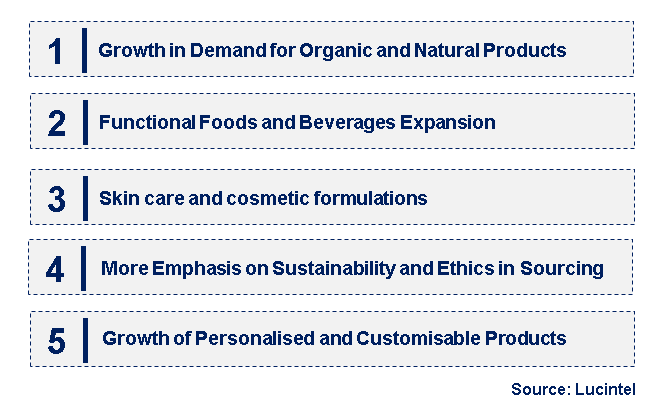
• Growth in demand for organic and natural products: Organic and natural Aloe Vera products are in greater demand due to perceived safety and health concerns. This trend influences companies to emphasize the organic certification of their products and the transparent sourcing of ingredients to meet consumers' preferences for eco-friendly and chemical-free products.
• Functional foods and beverages expansion: Health drinks and fortified snacks are among the functional foods and beverages that contain Aloe Vera. This trend reflects the current interest in the possible health benefits of Aloe Vera for general well-being through daily consumption.
• Skincare and cosmetic formulations: Skincare and cosmetic products are entering the market with new formulations made from Aloe Vera combined with active ingredients. These innovations will target improved efficacy and address different skin concerns to satisfy various consumer needs.
• More emphasis on sustainability and ethics in sourcing: There is a growing focus on sustainability and ethics in the sourcing of Aloe Vera. Companies are increasingly sourcing products through sustainable farming and ethical supply chains to meet consumer demands for environmentally responsible and socially conscious products.
• Growth of personalized and customizable products: The trend toward personalized and customizable Aloe Vera products is gaining momentum. Companies are developing tailored solutions based on individual skin types and health needs, offering consumers products that precisely serve their specific needs. Increased demand for organic products, expansion into functional foods, innovations in skincare formulations, a heightened focus on sustainability, and the growth of personalized products are some of the latest trends reshaping the Aloe Vera product marketplace. These trends are driving innovation, improving products, and meeting the evolving expectations of the health-conscious consumer.
• New product formulations: Companies are introducing new Aloe Vera products with value-added formulations, including advanced cosmetic care and health supplements. Such formulations enhance efficacy and provide specific benefits, thus meeting the growing demand for high-performance natural products.
• Marketplace expansion via e-commerce: E-commerce has opened access, making products increasingly available worldwide. Online channels facilitate direct sales to consumers while enabling firms to reach new markets and demographics.
• Development of eco-friendly packaging solutions: There is now an increased focus on sustainable packaging for Aloe Vera products, with companies adopting eco-friendly materials and reducing plastic use in response to consumer concerns over environmental impact and to enhance their brand's sustainability credentials.
• Integration of Aloe Vera into new health categories: Aloe Vera is being applied to new health categories, including functional foods, beverages, and dietary supplements. This diversification taps into different consumer segments and expands product applications in health and well-being.
• Increased investment in research and development: Companies continue to invest millions in research and development to discover new uses and benefits of Aloe Vera. Such investments improve scientific insight into health benefits, making the products evidence-based and more effective. New product formulations, expansion via e-commerce, sustainable packaging, integration into new health categories, and increased R&D investments are shaping the market for Aloe Vera products. These developments mirror a dynamic industry that is evolving, driven by innovation and changing consumer preferences.
• Expansion into functional foods and beverages: The potential use of Aloe Vera in functional foods and beverages is significant. This development opportunity enables companies to introduce health-enhancing products that cater to the increasing demand for functional and convenient health solutions.
• Premium skincare products development: A key growth opportunity exists in the premium segment of Aloe Vera skincare products. Consumers are willing to pay more for better and effective skincare solutions, especially when premium brands offer differentiation advantages in a competitive market.
• Emerging markets entry: Opportunities for growth in emerging markets for Aloe Vera products exist, particularly in regions where health awareness is rising alongside disposable income. Product differentiation must align with local tastes and needs for companies to reach new consumers.
• Sustainable and ethical practices: Emphasizing sustainable and ethical sourcing and production practices creates better growth opportunities. As consumers become more aware of environmental and social responsibility, companies can enhance market appeal by adhering to these values.
• Innovation in personalized health solutions: There is a growing opportunity to develop personalized Aloe Vera products that address individual health needs and preferences. Personalized solutions offer specific benefits aimed at attracting consumers seeking customized health and wellness options. Strategic growth opportunities in the Aloe Vera product market will include expansion into functional foods, development of premium skincare products, entry into emerging markets, a focus on sustainability, and innovation in personalized solutions. Exploiting these opportunities will facilitate market growth, enhance product offerings, and adapt to the evolving consumer needs and requirements.
• Rising demand from consumers for natural products: Demand for Aloe Vera is growing alongside consumer preference for natural and organic products. This reflects increased health consciousness and ecological friendliness, both of which spur market growth.
• Growing health awareness: Increased awareness of the health benefits of Aloe Vera, particularly its anti-inflammatory and moisturizing properties, is a primary reason for market growth. More education and research enhance consumer understanding and acceptance of these products.
• Enhancing extraction and processing technologies: Innovative extraction and processing technologies improve the quality and effectiveness of Aloe Vera products. The application of such technologies allows for the production of superior extracts and formulations, thereby elevating consumer expectations of efficacy.
• Diversification of product applications: This diversification can be attributed to the incorporation of Aloe Vera into various products, ranging from skincare and health supplements to functional foods. Such variety increases the appeal and accessibility of Aloe Vera products.
• E-commerce and growth of online retail: The rise of e-commerce and online retail channels facilitates the distribution of Aloe Vera products. Online platforms enhance market reach and consumer convenience, supporting market growth. Challenges in the Aloe Vera product market include:
• Supply chain and sourcing issues: Consistently supplying high-quality Aloe Vera is challenging due to reliance on climatic conditions and farming practices. Disruptions in the supply chain can affect product availability and pricing.
• Regulatory and quality control requirements: Meeting the various demands for regulation and quality control can be complex and costly. Inconsistencies in regulations across regions necessitate careful management, significantly influencing market entry and operations.
• Market competition and price pressures: Intense competition and price pressures can negatively impact profitability in the Aloe Vera market. Companies must balance quality and cost while finding ways to differentiate their products in a crowded market. The Aloe Vera product market is in high demand due to growing awareness of health benefits and preferences for natural products over synthetically manufactured alternatives. The increasing consumer demand, improved interest in health and well-being, advancements in technology, expanded uses of products, and e-commerce drive market growth. However, challenges such as effective supply chains, regulatory requirements, and market competition can hinder sustainable growth.
• Aloe Plus Lanzarote
• Lily of the Desert
• NOW Health Group
• Okyalo
• Real Aloe Solutions
• Patanjali Ayurved Limited
• Herbalife International of America
• Gels
• Juices
• Powders
• Others
• Organic
• Conventional
• Store-Based
• Non-Store-Based
• North America
• Europe
• Asia Pacific
• The Rest of the World
• U.S.: The United States has a growing Aloe Vera product market, driven by the trend toward organic and natural health-related products. Recent innovations include Aloe Vera-based skincare and health supplements. Companies are focusing on quality, high-grade ingredients that are sustainably sourced, in response to increased consumer demand for transparency and effectiveness. The growth of holistic wellness trends is facilitating greater adoption of Aloe Vera-based products for personal care and dietary supplement purposes.
• China: The Aloe Vera market is experiencing rapid growth due to heightened awareness of health and a general trend toward natural remedies. Key developments include the use of Aloe Vera in traditional Chinese medicine and Aloe Vera-based beverages. Companies are conducting research to improve the efficacy of Aloe Vera products and are widening their product portfolios to meet increasing demand.
• Germany: German consumers increasingly appreciate Aloe Vera products for their perceived health benefits and eco-friendliness. Recent trends include significant growth in high-end Aloe Vera cosmetics and skincare products, with organic and cruelty-free labels touted as primary selling points. The German market is also expanding in terms of supplying Aloe Vera ingredients to cosmetic firms, offering a value proposition in quality formulation and sustainability.
• India: The Aloe Vera market in India is thriving due to its alignment with the general shift toward nature and herbalism. Recent launches include Aloe Vera-based wellness products and beauty treatments addressing various consumer needs. Indian companies are also integrating Aloe Vera into Ayurvedic products, reflecting the country's rich tradition in herbal medicine and natural remedies.
• Japan: In Japan, Aloe Vera is primarily applied in functional foods and skincare products. Recent developments include new health supplements and modernized skincare formulations using Aloe Vera. Japanese consumers appreciate Aloe Vera for its multifunctionality, leading to an increase in products that combine Aloe Vera with other traditional Japanese ingredients for enhanced health and beauty benefits.


• Aloe Plus Lanzarote
• Lily of the Desert
• NOW Health Group
• Okyalo
• Real Aloe Solutions
• Patanjali Ayurved Limited
• Herbalife International of America Q6. Which aloe vera product market segment will be the largest in future? Answer: Lucintel forecasts that juices is expected to witness the highest growth over the forecast period due to increasing number of people suffering from gastrointestinal disorders coupled with the increasing benefits associated with its consumption of aloe vera juices. Q7. In aloe vera product market, which region is expected to be the largest in next 5 years? Answer: APAC is expected to witness the highest growth over the forecast period due to presence of significant regional competitors in the aloe vera product market. Q.8 Do we receive customization in this report? Answer: Yes, Lucintel provides 10% customization without any additional cost.


Choose a license that fits your team. Instant PDF delivery.
Prices exclude taxes. Instant delivery. Custom licensing available on request.
Market Report · July 20, 2026
Market Report · July 15, 2026
Market Report · July 15, 2026
Trusted partner for strategic intelligence and business growth


Receive a complimentary market analysis tailored to your industry. Our analysts will identify key growth opportunities and competitive dynamics specific to your business.

Market size, growth rate, and key trend analysis for your specific sector.

Top competitor positioning and market share analysis.

Strategic recommendations backed by data-driven insights.
Get curated market intelligence and competitive moves straight to your inbox.
By subscribing, you agree to receive our monthly insights. Unsubscribe anytime.
Receive a complimentary market analysis tailored to your industry. Our analysts will identify key growth opportunities and competitive dynamics specific to your business.
Market size, growth rate, and key trend analysis for your specific sector.
Top competitor positioning and market share analysis.
Strategic recommendations backed by data-driven insights.
Get curated market intelligence, emerging trends, and competitive moves straight to your inbox each month.
By subscribing, you agree to receive our monthly insights. Unsubscribe anytime.
We'll send your sample report shortly.