
Market Report · July 31, 2026

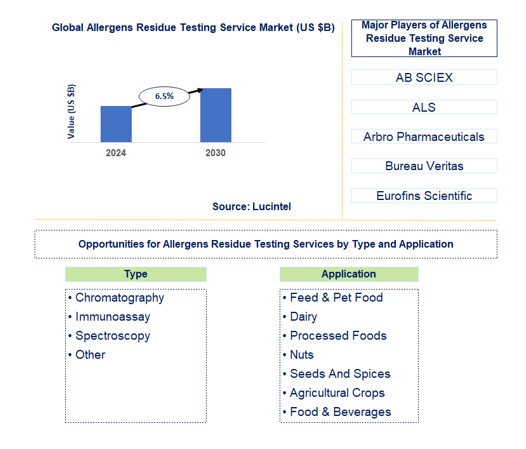
Key data points: The growth forecast = 6.5% annually for the next 6 years. Scroll below to get more insights. This market report covers trends, opportunities, and forecasts in the global allergens residue testing service market to 2030 by type (chromatography, immunoassay, spectroscopy, and other), application (feed & pet food, dairy, processed foods, nuts, seeds and spices, agricultural crops, and food & beverages), and region (North America, Europe, Asia Pacific, and the Rest of the World)
We'll send your sample report shortly.
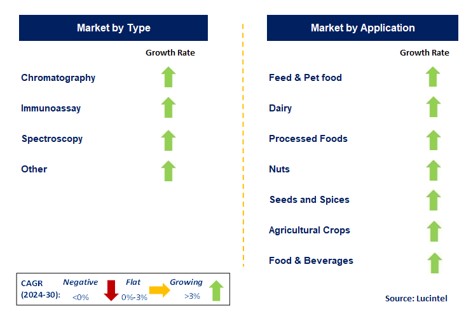
• Lucintel forecasts that, within the type category, chromatography is expected to witness the highest growth over the forecast period.
• Within the application category, feed & pet food is expected to witness the highest growth.
• In terms of regions, North America is expected to witness the highest growth over the forecast period. Gain valuable insights for your business decisions with our comprehensive 150+ page report.
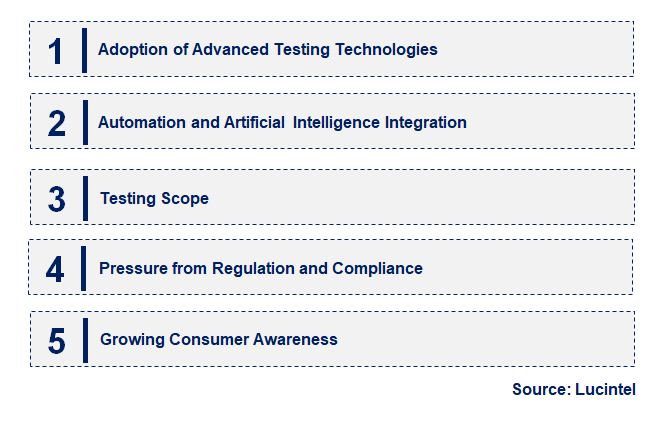
• Adoption of Advanced Testing Technologies: The use of advanced technologies such as PCR and mass spectrometry is an increasingly popular trend. These methods offer much greater sensitivity and better accuracy in detecting allergen residues, providing increased reliability of test results against strict regulatory requirements.
• Automation and Artificial Intelligence Integration: Integration of automation and artificial intelligence into allergen testing processes is evident. Automated systems make the testing processes more efficient and reduce human error, whereas AI algorithms enhance data analysis, improving predictive capabilities for faster and more accurate results.
• Testing Scope: The scope of testing has been extended to include more types of allergens. With increased demand from regulatory bodies and consumers for comprehensive testing, companies are working toward detecting less common allergens and contaminants.
• Pressure from Regulation and Compliance: The increased regulatory requirements are forcing stricter allergen testing. As various governments and their regulatory bodies stipulate more stringent guidelines on permissible limits, companies have no choice but to adopt more advanced testing methods to ensure compliance, as penalties for non-compliance increase.
• Growing Consumer Awareness: There is increasing consumer awareness about food allergies and safety, which in turn raises the demand for accurate allergen testing. With more information available to consumers about the risks of allergens, increased transparency and accuracy are expected from testing of allergen residues. These trends are reshaping the allergens residue testing service market through technological innovation, improved accuracy in testing, and expansion of service portfolios to meet evolving market demand.
• Introduction of Real-Time Testing Solutions: Real-time allergen testing solutions are being developed by companies to offer immediate results. These developments enhance the efficiency of allergen detection and allow for a quicker response to potential contamination, thus improving overall food safety.
• Improving Detection Technologies: The incorporation of novel technologies, such as high-sensitivity mass spectrometry and biosensors, is a growing trend in allergen residue testing. These developments increase the sensitivity and speed of tests, which are highly demanded given the increasing need for reliable allergen detection.
• Testing Services Extended to New Emerging Markets: As testing services are in higher demand globally, they have expanded into emerging markets. Expansion involves creating new laboratories and partnerships in countries with a growing focus on food safety regulation and consumer awareness.
• Stricter Regulations Imposed: Allergen testing is subject to more stringent regulations by various governments globally, which have been a significant factor driving growth in this market. Compliance with these regulations requires companies to invest in advanced testing methods and technologies to improve their testing capabilities.
• Industry Collaboration Increases: There is an increase in collaboration among testing service providers, technology developers, and regulatory bodies to advance testing standards, develop new methodologies, and ensure compliance with evolving regulations. The growth of the allergens residue testing service market is driven by enhanced technology, expanded services, and increased regulatory and consumer demand for accurate allergen detection.
Several strategic growth opportunities are available within different applications of the allergens residue testing service market, driven by technological advancements and changes in regulations.• On-Site Testing Kits: The development of portable on-site testing kits for allergens will provide great convenience and immediate results for food producers and consumers. These testing kits will facilitate quick testing in any environment, improving food safety and ensuring compliance.
• Growth Avenues in Emerging Markets: As food safety becomes an increasing concern in emerging markets, significant growth opportunities exist in these regions. Companies can build new facilities and form relationships in these areas as demand for allergen testing rises.
• Integration of Digital Technologies: Adoption of cloud-based data management and AI-driven analytics will enhance the testing process. These technologies improve data quality, operational efficiency, and provide valuable insights for enhanced allergen management.
• Development of Multi-Allergen Testing: Multi-allergen testing can be offered to identify a wide range of allergens all at once, meeting the growing demand for comprehensive allergen profiling. This expanded service offering is designed to address both consumer and regulatory needs for more detailed allergen information.
• Strategic Partnerships with Food Industry Players: Strategic partnerships with food manufacturers, retailers, and regulatory agencies will enable growth by integrating allergen testing into broader food safety programs. Such collaborations can improve overall testing capabilities and establish industry-wide safety standards. These opportunities shape the allergens residue testing service market through continuous expansion of service offerings, targeting new regions, and integrating advanced technologies to meet evolving consumer and regulatory demands.
The market for allergen residue testing services is affected by significant drivers and challenges that shape the growth and development of the market. The allergen residue testing service market is influenced by both technological and regulatory factors, coupled with market dynamics. Key drivers and challenges affect the ability of the industry to offer appropriate and effective allergen testing services. The factors responsible for driving the allergen residue testing service market include:• Technological Advancements: Innovations in testing technologies, such as PCR and mass spectrometry, contribute to market growth. These improvements offer increased sensitivity and accuracy in the detection of allergens, meeting strict regulatory standards to improve food safety.
• Stricter Regulatory Requirements: Increasing regulatory requirements for allergen testing are driving demand for more comprehensive testing services. Governments are imposing strict guidelines, and companies are forced to adopt advanced testing methods to ensure regulatory compliance.
• Expanding Global Food Supply Chain: The globalization of food supply chains increases the demand for testing to avoid cross-contaminations and ensure safety. Companies invest in testing services to handle complex supply chains and meet international standards.
• Increased Investment in Food Safety: Higher investments in food safety and quality assurance are driving the growth of allergen residue testing services. Firms are focusing on food safety measures to avoid consumer harm and brand reputation damage, and one such safety measure includes allergen testing. Challenges in the allergen residue testing service market include:
• High Costs of Testing: The high costs of some state-of-the-art technologies and services in testing are barriers to entry for some companies. Managing these costs while maintaining high testing standards is another challenge facing the industry.
• Complex Regulatory Compliance: Complex and variable regulations in different regions can be difficult to track. Companies must ensure compliance with various standards and regulations, making testing procedures cumbersome and sometimes raising operational costs.
• Technical Limitations and Accuracy: A key challenge is ensuring that allergen testing methods are both accurate and reliable. This is influenced by the technical limitations and development of testing technologies. The drivers and challenges are setting the framework for the allergen residue testing service market, as they influence technological development and regulatory compliance, further impacting market dynamics. Addressing these factors will be key to advancing the industry and meeting the growing demand for precise and reliable allergen testing services.
• AB SCIEX
• ALS
• Arbro Pharmaceuticals
• Bureau Veritas
• Eurofins Scientific
• Fera Science
• Intertek
• Microbac Laboratories
• SGS
• SciCorp
• Chromatography
• Immunoassay
• Spectroscopy
• Other
• Feed & Pet food
• Dairy
• Processed Foods
• Nuts
• Seeds and Spices
• Agricultural Crops
• Food & Beverages
• North America
• Europe
• Asia Pacific
• The Rest of the World
• United States: Due to the growing stringency in FDA regulations and enhanced consumer awareness, the demand for allergen residue testing is increasing in the U.S. Advanced methods, such as PCR and ELISA, are now being employed by companies to improve the effectiveness of allergen testing. Increased investment in automated systems for testing also enhances efficiencies and scalability of allergen detection.
• China: China continues to develop its allergen residue testing capabilities to address rising concerns about food safety and changing regulations. The government is implementing stricter standards, which raises demand for comprehensive allergen testing services. Companies are expanding their capabilities with new technologies and broadening their testing scopes to meet these regulatory requirements.
• Germany: The growth of the allergen residue testing market is supported by advancements in analytical techniques and increased regulatory vigilance. High-sensitivity testing methods, such as mass spectrometry, are being increasingly adopted in the country to ensure food product safety and comply with EU regulations. Emphasis on precision has improved the reliability of allergen detection across a wide range of food products.
• India: Growing demand for such services is attributed to increasing food safety standards and greater consumer awareness. New regulatory frameworks are introducing more stringent testing. Indian companies are investing extensively in state-of-the-art testing technologies to meet both domestic and international standards, driving growth in the market.
• Japan: With increasing concern for food safety and health awareness among consumers, allergen residue testing services are gaining momentum. Companies are now incorporating advanced technologies, such as biosensors and HPLC, into their processes to improve the efficiency and accuracy of testing, ensuring compliance with national standards and meeting consumer demand.


• AB SCIEX
• ALS
• Arbro Pharmaceuticals
• Bureau Veritas
• Eurofins Scientific
• Fera Science
• Intertek
• Microbac Laboratories
• SGS
• SciCorp Q5. Which allergens residue testing service market segment will be the largest in future? Answer: Lucintel forecasts that chromatography is expected to witness the highest growth over the forecast period. Q6. In allergens residue testing service market, which region is expected to be the largest in next 5 years? Answer: North America is expected to witness the highest growth over the forecast period. Q7. Do we receive customization in this report? Answer: Yes, Lucintel provides 10% customization without any additional cost.


Choose a license that fits your team. Instant PDF delivery.
Prices exclude taxes. Instant delivery. Custom licensing available on request.
Market Report · July 31, 2026
Market Report · July 31, 2026
Market Report · July 31, 2026
Trusted partner for strategic intelligence and business growth


Receive a complimentary market analysis tailored to your industry. Our analysts will identify key growth opportunities and competitive dynamics specific to your business.

Market size, growth rate, and key trend analysis for your specific sector.

Top competitor positioning and market share analysis.

Strategic recommendations backed by data-driven insights.
Get curated market intelligence and competitive moves straight to your inbox.
By subscribing, you agree to receive our monthly insights. Unsubscribe anytime.
Receive a complimentary market analysis tailored to your industry. Our analysts will identify key growth opportunities and competitive dynamics specific to your business.
Market size, growth rate, and key trend analysis for your specific sector.
Top competitor positioning and market share analysis.
Strategic recommendations backed by data-driven insights.
Get curated market intelligence, emerging trends, and competitive moves straight to your inbox each month.
By subscribing, you agree to receive our monthly insights. Unsubscribe anytime.
We'll send your sample report shortly.