
Algae Protein Market Report: Trends, Forecast and Competitive Analysis to 2035

Key data points: The market size in 2035 = $425 million, growth forecast = 8.0% annually for the next 8 years. Scroll below to get more insights. This market report covers trends, opportunities and forecasts in algae protein market to 2035 by source (freshwater algae and marine algae), type (spirulina, chlorella, and others), application (food & beverages, supplements, and animal feed), and region (North America, Europe, Asia Pacific, and the Rest of the World)

Publisher: Lucintel Last Updated: July 2026
See Pricing

Download Sample Report

| ✨ New Download Sample report — Get instant insights! | ✨ New Download Sample report — Get instant insights!

Algae Protein Market Report: Trends, Forecast and Competitive Analysis to 2035

Algae Protein Market

The future of the global algae protein market looks promising with opportunities in the food & beverage, supplement, and animal feed markets. The global algae protein market is expected to reach an estimated $425 million by 2035 with a CAGR of 8.0% from 2026 to 2035. The major drivers for this market are the increasing demand for plant based proteins, the rising adoption of sustainable protein sources, and the growing use of algae in functional foods.

  • Lucintel forecasts that, within the type category, marine algae is expected to witness higher growth over the forecast period due to the high protein content and superior nutritional profile.
  • Within the application category, supplement is expected to witness the highest growth due to the increasing demand for plant-based dietary supplements.
  • In terms of regions, North America is expected to witness the highest growth over the forecast period due to the rising health awareness and protein-rich diet adoption.

Gain valuable insights for your business decisions with our comprehensive 150+ page report. Sample figures with some insights are shown below.
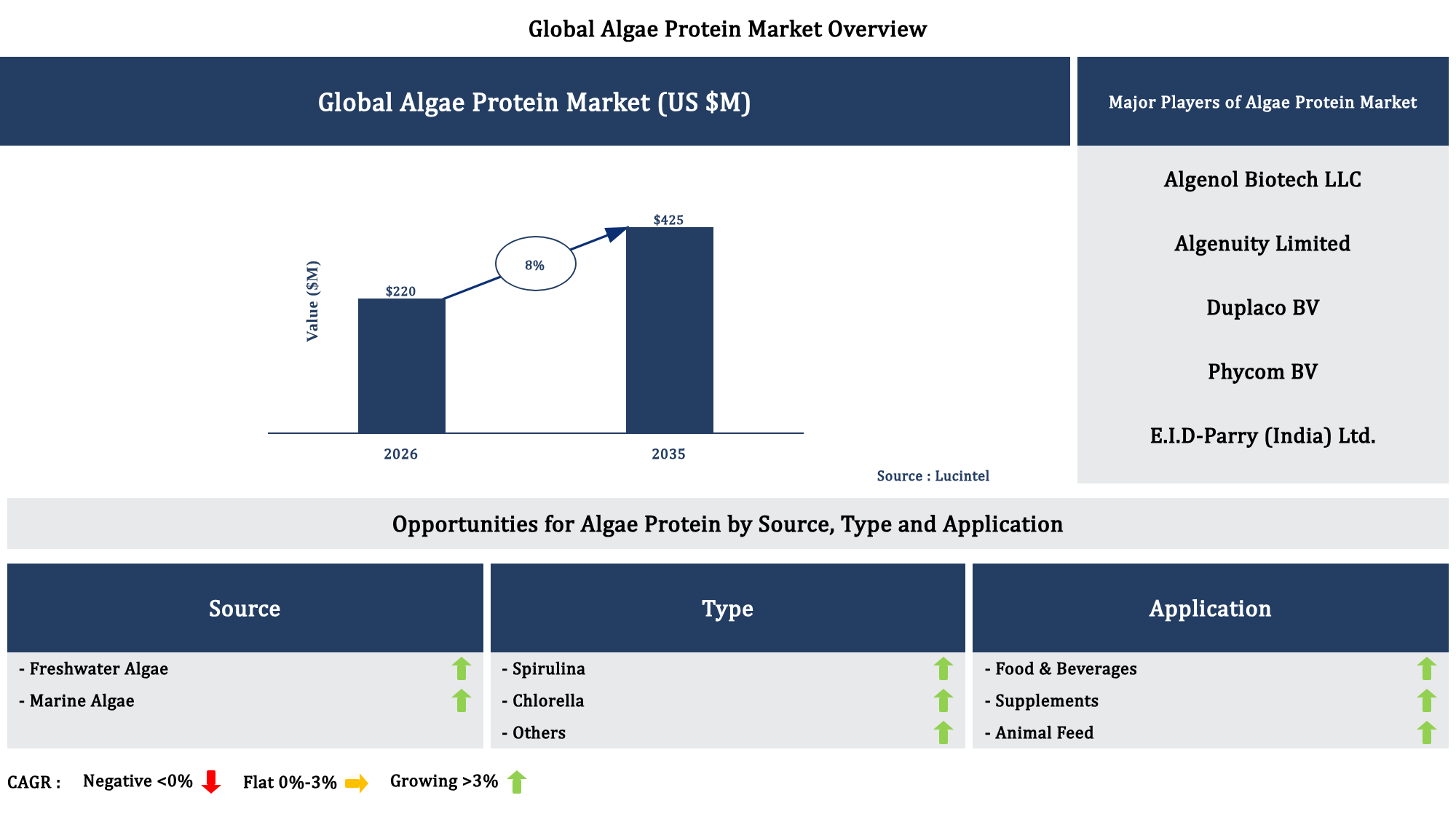
Algae Protein Market

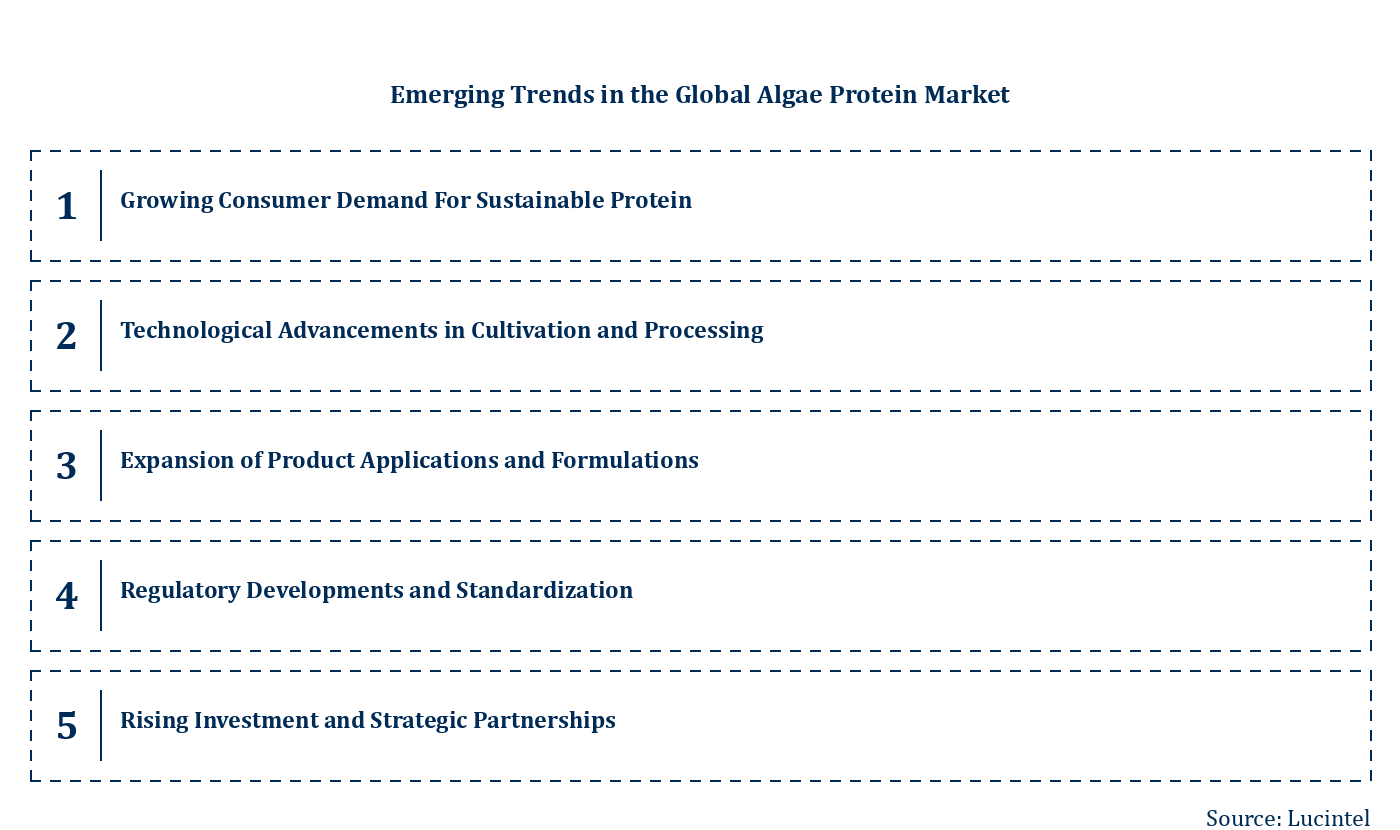
Emerging Trends in the Algae Protein Market

The algae protein market is experiencing rapid growth driven by increasing consumer demand for sustainable, plant-based protein sources. As environmental concerns and health consciousness rise, consumers are seeking innovative alternatives to traditional animal proteins. Advances in biotechnology and cultivation techniques are making algae-based products more accessible and affordable. This market is also influenced by regulatory developments and the expanding scope of functional foods. These trends are collectively transforming the landscape, creating new opportunities for producers and offering consumers diverse, eco-friendly options. The following key trends highlight the major developments shaping the future of the algae protein industry.

  • Growing Consumer Demand for Sustainable Protein: Consumers are increasingly prioritizing sustainability in their food choices, leading to a surge in demand for plant-based and environmentally friendly proteins. Algae protein is viewed as a highly sustainable option due to its low land and water requirements, rapid growth rate, and ability to absorb CO2. This trend is driven by environmental awareness, climate change concerns, and a desire to reduce reliance on traditional animal agriculture, positioning algae protein as a key player in the future of sustainable nutrition.
  • Technological Advancements in Cultivation and Processing: Innovations in algae cultivation, such as photobioreactors and open pond systems, are improving yield efficiency and reducing costs. Advances in extraction and processing techniques are enhancing the nutritional profile and taste of algae protein, making it more appealing to consumers. These technological improvements are crucial for scaling production, ensuring product consistency, and lowering prices, thereby increasing market accessibility and competitiveness.
  • Expansion of Product Applications and Formulations: Algae protein is increasingly incorporated into diverse food and beverage products, including snacks, smoothies, protein powders, and meat substitutes. Companies are developing novel formulations to improve texture, flavor, and functionality, catering to various dietary needs such as vegan, gluten-free, and allergen-free options. This diversification broadens the market reach and encourages innovation, making algae protein a versatile ingredient in the functional food sector.
  • Regulatory Developments and Standardization: Governments and regulatory bodies are establishing guidelines and standards for algae-based products, ensuring safety, quality, and transparency. These regulations facilitate consumer trust and market acceptance, while also encouraging industry players to adhere to best practices. Clear regulatory frameworks are essential for international trade and investment, fostering growth and innovation within the algae protein market.
  • Rising Investment and Strategic Partnerships: Increased funding from venture capitalists, food corporations, and biotech firms is fueling research, development, and commercialization efforts. Strategic alliances between algae producers, food manufacturers, and distributors are accelerating product launches and expanding distribution channels. This influx of investment and collaboration is vital for overcoming technical challenges, scaling production, and capturing new markets, ultimately driving the industry’s growth trajectory.

These emerging trends are collectively reshaping the algae protein market by enhancing sustainability, technological innovation, product diversity, regulatory clarity, and investment. As a result, algae protein is poised to become a mainstream component of the global food system, offering a nutritious, eco-friendly alternative to traditional proteins and supporting the shift toward more sustainable consumption patterns.
Algae Protein Market by country

Recent Developments in the Algae Protein Market

The algae protein market is experiencing rapid growth driven by increasing consumer demand for sustainable, plant-based protein sources. Innovations in cultivation and processing technologies are expanding product offerings, while regulatory support and environmental concerns are boosting market confidence. The shift towards health-conscious lifestyles and the food industry's push for eco-friendly ingredients are further accelerating development. These trends are creating new opportunities for producers and investors, positioning algae protein as a key player in the future of sustainable nutrition.

  • Growing Demand for Sustainable Protein Sources: The shift towards plant-based diets and environmental awareness is fueling demand for algae protein, recognized for its high nutritional value and eco-friendly production. Consumers are seeking alternatives to traditional animal proteins, prompting companies to innovate and expand product lines. This trend is expected to continue, making algae protein a significant component of sustainable food systems and driving market growth globally.
  • Advances in Cultivation and Processing Technologies: Innovations in algae cultivation, such as photobioreactors and open pond systems, are reducing costs and increasing yields. Improved extraction and processing methods enhance protein purity and functionality, making algae protein more versatile for various food applications. These technological advancements are enabling producers to scale operations efficiently, meet rising demand, and lower prices, thereby expanding market accessibility and consumer adoption.
  • Regulatory Support and Industry Standards: Governments and regulatory bodies are increasingly recognizing algae protein as a safe and sustainable ingredient, establishing standards for its use in food products. This support facilitates market entry for new products and encourages investment. Clear regulations and certifications boost consumer confidence, helping to overcome skepticism and accelerate adoption across food, beverage, and supplement sectors.
  • Rising Consumer Awareness and Health Consciousness: Consumers are becoming more health-conscious and environmentally aware, favoring plant-based and functional foods. Algae proteins rich nutrient profile, including essential amino acids, antioxidants, and omega-3 fatty acids, appeals to this demographic. Marketing efforts emphasizing health benefits and sustainability are increasing product visibility, leading to higher demand and expanding the consumer base for algae-based products.
  • Expansion Into New Markets and Product Categories: Companies are diversifying algae protein applications into snacks, beverages, dietary supplements, and animal feed. Emerging markets in Asia and Europe are showing significant growth potential due to rising health trends and environmental concerns. This diversification broadens market reach, stimulates innovation, and creates new revenue streams, positioning algae protein as a versatile ingredient across multiple sectors and geographies.

The recent developments in cultivation technology, regulatory support, consumer awareness, and market diversification are significantly impacting the algae protein market. These factors are driving increased production, lowering costs, and expanding applications, which collectively boost market growth. As sustainability and health continue to influence consumer choices, algae protein is poised to become a vital component of the global protein supply chain, shaping the future of eco-friendly nutrition and food innovation.

Strategic Growth Opportunities in the Algae Protein Market

The algae protein market is experiencing rapid expansion driven by increasing consumer demand for sustainable, plant-based protein sources. Innovations in cultivation and processing technologies are enhancing product quality and affordability. Growing awareness of environmental benefits and health advantages is fueling adoption across the food, beverage, and supplement sectors. Strategic investments and collaborations are further accelerating market growth, creating diverse opportunities for industry players to capture new segments and expand global reach.

  • Expanding Plant-Based Food and Beverage Sectors Present Significant Growth Opportunities: The rising shift towards vegetarian and vegan diets, coupled with consumer preference for sustainable ingredients, is driving demand for algae protein in various food and beverage applications. Companies can capitalize on this trend by developing innovative, nutritious, and eco-friendly products that meet consumer expectations for taste, texture, and health benefits, thereby capturing a larger share of the plant-based market.
  • Technological Advancements in Algae Cultivation and Processing Enhance Product Quality and Scalability: Innovations such as closed-loop cultivation systems, genetic engineering, and efficient extraction methods are improving the yield, purity, and cost-effectiveness of algae protein production. These advancements enable producers to meet increasing demand while reducing environmental impact. Investing in R&D to optimize these technologies can lead to higher-quality products and expanded production capacity, supporting market growth and competitiveness.
  • Growing Consumer Awareness of Health and Environmental Benefits Boosts Algae Protein Adoption: Consumers are increasingly seeking sustainable, nutrient-rich, and allergen-free protein sources. Algae protein offers high bioavailability, essential amino acids, and eco-friendly cultivation, making it attractive for health-conscious buyers. Marketing efforts emphasizing these benefits can increase consumer acceptance, expand market penetration, and foster brand loyalty, ultimately driving sales across multiple sectors.
  • Strategic Collaborations and Partnerships Facilitate Market Expansion and Innovation: Alliances between algae producers, food manufacturers, and research institutions foster product development, technological innovation, and market access. Such collaborations can accelerate commercialization, improve supply chain efficiency, and enable entry into new geographic regions. Building strategic networks enhances credibility and resource sharing, positioning companies to capitalize on emerging opportunities and stay ahead in a competitive landscape.
  • Regulatory Support and Sustainability Initiatives Promote Market Growth: Governments and industry bodies are implementing policies and standards favoring sustainable ingredients like algae protein. Certification programs and environmental incentives encourage adoption by food producers and consumers. Companies that align with these initiatives can benefit from favorable regulatory environments, enhance brand reputation, and access new markets, thereby accelerating growth and establishing a competitive edge in the evolving landscape.

The overall impact of these opportunities is poised to significantly accelerate the growth trajectory of the algae protein market, fostering innovation, sustainability, and consumer acceptance. As industry players leverage technological, strategic, and regulatory advantages, the market is expected to expand rapidly, offering diverse avenues for revenue generation and global expansion. This dynamic environment will shape the future of sustainable protein sources and meet the increasing global demand for healthy, eco-friendly nutrition options.

Algae Protein Market Drivers and Challenges

The algae protein market is influenced by a variety of technological, economic, and regulatory factors that shape its growth trajectory. Advances in biotechnology and sustainable farming practices are enabling more efficient production methods, while increasing consumer demand for plant-based and sustainable protein sources is driving market expansion. Economic factors such as rising health consciousness and the global shift towards environmentally friendly products further bolster growth prospects. However, regulatory challenges related to safety standards and labeling, along with technological hurdles in large-scale cultivation, pose significant obstacles. Understanding these drivers and challenges is essential for stakeholders aiming to capitalize on the markets potential.

The factors responsible for driving the algae protein market include:

  • Technological Innovation: The development of advanced cultivation and extraction techniques has significantly improved yield efficiency and product quality. Innovations such as photobioreactors and genetic engineering enable scalable and cost-effective production, making algae protein more commercially viable. These technological advancements reduce production costs and enhance the nutritional profile, attracting food manufacturers and consumers alike. As research continues, further innovations are expected to expand applications across various sectors, including functional foods and animal feed, thereby fueling market growth.
  • Rising Consumer Demand for Sustainable and Plant-Based Proteins: Increasing awareness of environmental issues and health benefits associated with plant-based diets is driving consumer preference for algae protein. As consumers seek alternatives to traditional animal proteins, algae-based products are gaining popularity due to their high nutritional value, low environmental footprint, and allergen-free nature. This shift is supported by the growing vegan and vegetarian populations, as well as flexitarians looking to reduce meat consumption, which collectively boost demand and market expansion.
  • Economic Growth and Urbanization: Rapid economic development in emerging markets has led to increased disposable incomes and changing dietary preferences. Urbanization fosters demand for convenient, nutritious, and sustainable food options, positioning algae protein as an attractive solution. Additionally, government initiatives promoting sustainable agriculture and investments in biotech startups are creating a favorable environment for market growth. As economies grow, consumers are more willing to pay a premium for innovative, health-oriented products, further propelling the algae protein industry.
  • Regulatory Support and Sustainability Initiatives: Governments and international organizations are increasingly endorsing sustainable food sources to combat climate change and ensure food security. Regulatory frameworks are evolving to facilitate the approval and commercialization of algae-based products, including safety standards and labeling requirements. These supportive policies encourage investment and innovation, reducing barriers for market entrants. Moreover, sustainability initiatives emphasizing reduced carbon footprints and resource conservation are aligning with algae protein’s eco-friendly profile, thereby fostering market acceptance and expansion.
  • Strategic Collaborations and Investments: The market is witnessing a surge in partnerships between biotech firms, food companies, and research institutions aimed at developing innovative algae protein products. Venture capital investments and funding programs are fueling research and commercialization efforts. These collaborations facilitate knowledge sharing, technological advancements, and market penetration strategies, accelerating growth. As companies seek to differentiate themselves through product innovation, strategic alliances are crucial for scaling production, expanding distribution channels, and capturing emerging market segments.

The challenges in the algae protein market are:

  • Technological and Scale-Up Challenges: Despite advancements, large-scale cultivation of algae remains complex and costly. Maintaining optimal growth conditions, preventing contamination, and ensuring consistent quality are significant hurdles. Scaling laboratory successes to commercial levels requires substantial investment in infrastructure and technology, which can be prohibitive for new entrants. Additionally, the energy-intensive nature of some cultivation methods raises concerns about sustainability and cost-effectiveness, potentially limiting widespread adoption and market growth.
  • Regulatory and Safety Concerns: The lack of standardized regulations and safety assessments for algae-based proteins poses a barrier to market expansion. Variability in safety standards across regions complicates product approval processes and can delay market entry. Concerns about potential toxins, allergens, and contaminants in algae products necessitate rigorous testing and certification, increasing costs and time-to-market. Addressing these regulatory uncertainties is critical for building consumer trust and ensuring widespread acceptance.
  • Consumer Awareness and Acceptance: Despite growing interest, consumer awareness about algae protein’s benefits remains limited. Misconceptions about taste, texture, and safety can hinder adoption, especially in markets unfamiliar with algae-based foods. Overcoming cultural barriers and educating consumers about nutritional advantages and sustainability benefits are essential for market penetration. Without effective marketing and education strategies, the market may face slow growth and limited consumer engagement.

The algae protein market is driven by technological innovations, rising demand for sustainable and plant-based foods, economic growth, supportive regulations, and strategic investments. However, technological challenges, regulatory uncertainties, and consumer acceptance issues pose significant hurdles. The interplay of these factors will shape the market’s future trajectory, requiring stakeholders to navigate complexities while leveraging opportunities for sustainable growth and innovation.

List of Algae Protein Market Companies

Companies in the market compete on the basis of product quality offered. Major players in this market focus on expanding their manufacturing facilities, R&D investments, infrastructural development, and leverage integration opportunities across the value chain. Through these strategies algae protein market companies cater increasing demand, ensure competitive effectiveness, develop innovative products & technologies, reduce production costs, and expand their customer base. Some of the algae protein market companies profiled in this report include-

  • Algenol Biotech LLC
  • Algenuity Limited
  • Duplaco BV
  • Phycom BV
  • E.I.D-Parry (India) Ltd.
  • Sun Chlorella Corporation
  • DIC Corporation (Earthrise)
  • Aliga Microalgae
  • Japan Algae Co., Ltd.
  • Far East Bio-Tec Co., Ltd

Algae Protein Market by Segment

The study includes a forecast for the global algae protein market by source, type, application, and region.

  • Algae Protein Market by Source [Value from 2019 to 2035]:
    • Freshwater Algae
    • Marine Algae
  • Algae Protein Market by Type [Value from 2019 to 2035]:
    • Spirulina
    • Chlorella
    • Others
  • Algae Protein Market by Application [Value from 2019 to 2035]:
    • Food & Beverages
    • Supplements
    • Animal Feed
  • Algae Protein Market by Region [Value ($M) from 2019 to 2035]:
    • North America
    • Europe
    • Asia Pacific
    • The Rest of the World

Country Wise Outlook for the Algae Protein Market

The algae protein market has experienced significant growth driven by increasing consumer demand for sustainable and plant-based protein sources. Innovations in cultivation techniques, product diversification, and regulatory support have accelerated market expansion across major economies. Countries are investing in research to improve algae cultivation efficiency and develop novel products to meet rising health and environmental concerns. This global shift towards sustainable nutrition has created new opportunities for industry players, fostering collaborations and technological advancements. As the market evolves, key regions are adopting tailored strategies to capitalize on the growing demand for algae-based proteins, positioning themselves as leaders in this emerging sector.

  • United States: The US has seen rapid innovation in algae cultivation technology, with startups and established companies investing heavily in R&D. There is a rising consumer interest in plant-based and sustainable proteins, leading to increased product launches such as algae-based snacks and beverages. Regulatory agencies are providing clearer guidelines, encouraging market growth. Major food corporations are forming partnerships with algae producers to incorporate algae protein into mainstream products, boosting market penetration. Additionally, government grants and incentives are supporting research initiatives aimed at scaling production and reducing costs.
  • China: China is rapidly expanding its algae protein industry, driven by government policies promoting sustainable agriculture and food security. The country has invested in large-scale algae farms and advanced biotechnologies to increase yield and reduce costs. Domestic demand for plant-based proteins is rising due to health awareness and environmental concerns. Chinese companies are developing innovative algae-based products, including protein powders and functional foods, to cater to both local and export markets. The government’s support and increasing consumer acceptance are key factors propelling market growth in China.
  • Germany: Germany is at the forefront of sustainable food innovation in Europe, with a focus on algae protein as part of its clean-label and organic product trends. The country has seen a surge in startups developing algae-based protein products, including meat alternatives and dietary supplements. Research institutions are collaborating with industry players to improve algae cultivation methods and product formulations. Consumer awareness about environmental impacts and health benefits is driving demand. Regulatory frameworks are supportive, facilitating market entry and product approval. Germany’s emphasis on eco-friendly and innovative food solutions positions it as a key player in the algae protein market.
  • India: India is emerging as a significant market for algae protein, leveraging its vast biodiversity and agricultural resources. The country’s focus on sustainable and affordable nutrition has led to increased interest in algae as a protein source. Local startups and research institutions are exploring low-cost cultivation techniques suitable for Indian climates. The government’s initiatives to promote organic and plant-based foods are encouraging market development. Algae-based products such as protein powders and health supplements are gaining popularity among health-conscious consumers. The expanding middle class and rising awareness of sustainable diets are expected to further boost market growth in India.
  • Japan: Japan is actively investing in algae research, particularly in microalgae like spirulina and chlorella, for their high nutritional value. The country’s aging population and health-conscious consumers are driving demand for functional foods containing algae protein. Japanese companies are developing innovative products, including energy bars, drinks, and dietary supplements, emphasizing health benefits. The government supports algae research through grants and collaborations with academia. Japan’s focus on sustainable and clean-label foods aligns with global trends, positioning it as a leader in algae protein innovation. Market growth is also supported by export opportunities to other Asian countries.

Features of the Algae Protein Market

  • Market Size Estimates: Algae protein market size estimation in terms of value ($M).
  • Trend and Forecast Analysis: Market trends (2019 to 2025) and forecast (2026 to 2035) by various segments and regions.
  • Segmentation Analysis: Algae protein market size by source, type, application, and region in terms of value ($M).
  • Regional Analysis: Algae protein market breakdown by North America, Europe, Asia Pacific, and Rest of the World.
  • Growth Opportunities: Analysis of growth opportunities in different sources, types, applications, and regions for the algae protein market.
  • Strategic Analysis: This includes M&A, new product development, and competitive landscape of the algae protein market.
  • Analysis of competitive intensity of the industry based on Porter’s Five Forces model.

Top 5 Companies

  • Algenol Biotech LLC
  • Algenuity Limited
  • Duplaco BV
  • Phycom BV
  • E.I.D-Parry (India) Ltd.

Table of Contents

1. Executive Summary
14.1 Competitive Analysis Overview

List of Figures

List of Tables

Methodology

Lucintel has been in the business of market research and management consulting since 2000 and has published over 1000 market intelligence reports in various markets / applications and served over 1,000 clients worldwide. This study is a culmination of four months of full-time effort performed by Lucintel's analyst team. The analysts used the following sources for the creation and completion of this valuable report:

  • In-depth interviews of the major players in this market
  • Detailed secondary research from competitors' financial statements and published data
  • Extensive searches of published works, market, and database information pertaining to industry news, company press releases, and customer intentions
  • A compilation of the experiences, judgments, and insights of Lucintel's professionals, who have analyzed and tracked this market over the years.

Extensive research and interviews are conducted across the supply chain of this market to estimate market share, market size, trends, drivers, challenges, and forecasts. Below is a brief summary of the primary interviews that were conducted by job function for this report.

Lucintel's methodology for market research

Thus, Lucintel compiles vast amounts of data from numerous sources, validates the integrity of that data, and performs a comprehensive analysis. Lucintel then organizes the data, its findings, and insights into a concise report designed to support the strategic decision-making process. The figure below is a graphical representation of Lucintel's research process.

Primary interviews by job function

Buy Now

Choose a license that fits your team. Instant PDF delivery.

Market Report

1 User PDF

$4,850
Buy Now

Market Report

2-5 Users PDF

$6,700
Buy Now

Market Report

Corporate PDF

$8,850
Buy Now

Market Report

Global PDF

$10,000
Buy Now

Prices exclude taxes. Instant delivery. Custom licensing available on request.

Frequently Asked Questions

What is the algae protein market size?
The global algae protein market is expected to reach an estimated $425 million by 2035.
What is the growth forecast for algae protein market?
The global algae protein market is expected to grow with a CAGR of 8.0% from 2026 to 2035.
What are the major drivers influencing the growth of the algae protein market?
The major drivers for this market are the increasing demand for plant based proteins, the rising adoption of sustainable protein sources, and the growing use of algae in functional foods.
What are the major segments for algae protein market?
The future of the algae protein market looks promising with opportunities in the food & beverage, supplement, and animal feed markets.
Who are the key algae protein market companies?

Some of the key algae protein companies are as follows:

  • Algenol Biotech LLC
  • Algenuity Limited
  • Duplaco BV
  • Phycom BV
  • E.I.D-Parry (India) Ltd.
  • Sun Chlorella Corporation
  • DIC Corporation (Earthrise)
  • Aliga Microalgae
  • Japan Algae Co., Ltd.
  • Far East Bio-Tec Co., Ltd
Which algae protein market segment will be the largest in future?
Lucintel forecasts that, within the type category, marine algae is expected to witness higher growth over the forecast period.
In algae protein market, which region is expected to be the largest in next 8 years?
In terms of region, North America is expected to witness the highest growth over the forecast period.
Do we receive customization in this report?
Yes, Lucintel provides 10% customization without any additional cost.

Key Questions

  • What are some of the most promising, high-growth opportunities for the algae protein market by source (freshwater algae and marine algae), type (spirulina, chlorella, and others), application (food & beverages, supplements, and animal feed), and region (North America, Europe, Asia Pacific, and the Rest of the World)?
  • Which segments will grow at a faster pace and why?
  • Which region will grow at a faster pace and why?
  • What are the key factors affecting market dynamics? What are the key challenges and business risks in this market?
  • What are the business risks and competitive threats in this market?
  • What are the emerging trends in this market and the reasons behind them?
  • What are some of the changing demands of customers in the market?
  • What are the new developments in the market? Which companies are leading these developments?
  • Who are the major players in this market? What strategic initiatives are key players pursuing for business growth?
  • What are some of the competing products in this market and how big of a threat do they pose for loss of market share by material or product substitution?
  • What M&A activity has occurred in the last 5 years and what has its impact been on the industry?
Why Choose Us

The Lucintel Advantage

Trusted partner for strategic intelligence and business growth

25+ Years Excellence

25+ Years Excellence

Quarter century of proven expertise in management consulting and market research across global markets.
Game-Changer Ideas

Game-Changer Ideas

Innovative strategies and actionable insights that help clients become the smartest in their industry.
Global Reach

Global Reach

Extensive coverage across 50+ industries and markets worldwide with localized expertise.
Start Your Growth Journey

Get Your Free
Market Intelligence
Briefing

Receive a complimentary market analysis tailored to your industry. Our analysts will identify key growth opportunities and competitive dynamics specific to your business.

Custom Market Snapshot

Market size, growth rate, and key trend analysis for your specific sector.

Competitive Landscape Overview

Top competitor positioning and market share analysis.

Growth Opportunity Identification

Strategic recommendations backed by data-driven insights.

Subscribe

Subscribe to our Newsletter

Get curated market intelligence and competitive moves straight to your inbox.

By subscribing, you agree to receive our monthly insights. Unsubscribe anytime.

Industry Trends Market Signals Opportunities Competitor Moves