
Market Report · July 22, 2026

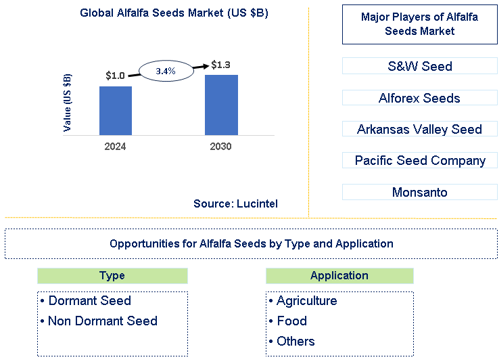
Key data points: The market size in 2030 = $1.3 billion, growth forecast = 3.4% annually for the next 6 years. Scroll below to get more insights. This market report covers trends, opportunities, and forecasts in the global alfalfa seeds market to 2030 by type (dormant seed and non dormant seed), application (agriculture, food, and others), and region (North America, Europe, Asia Pacific, and the Rest of the World)
We'll send your sample report shortly.
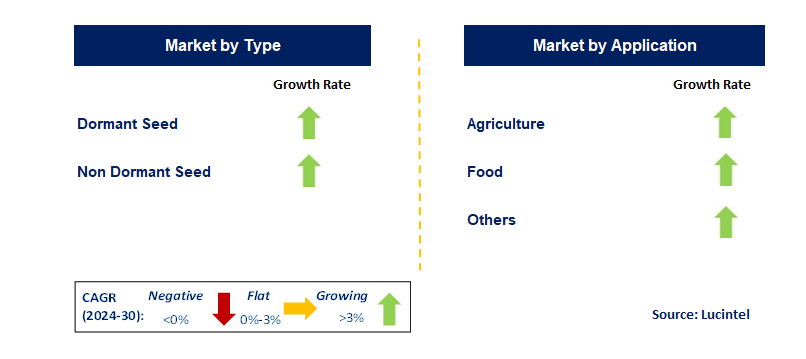
• Lucintel forecasts that, within the type category, dormant seed segment is expected to witness higher growth over the forecast period.
• Within the application category, agriculture is expected to witness the higher growth.
• In terms of regions, APAC is expected to witness the highest growth over the forecast period. A more than 150-page report is developed to help in your business decisions.
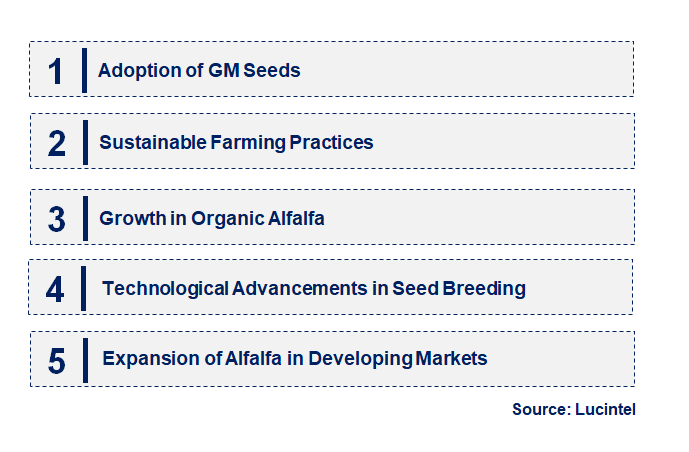
• Adoption of GM Seeds: The use of genetically modified alfalfa seeds is rising, offering improved resistance to pests and environmental stressors. This trend helps farmers increase yields and reduce the need for chemical inputs, boosting efficiency.
• Sustainable Farming Practices: Farmers are increasingly using alfalfa as a cover crop to enhance soil fertility through nitrogen fixation. This trend supports sustainable agriculture by improving soil health, reducing the need for synthetic fertilizers, and promoting biodiversity.
• Growth in Organic Alfalfa: The organic farming movement is driving demand for non-GMO and organically certified alfalfa seeds. This trend caters to the rising consumer preference for organic dairy and meat products, fostering growth in the organic livestock sector.
• Technological Advancements in Seed Breeding: Advances in seed breeding techniques, including hybrid and drought-resistant varieties, are emerging to tackle climate change and water scarcity. These innovations improve yields and resilience, making alfalfa more adaptable to changing environmental conditions.
• Expansion of Alfalfa in Developing Markets: Developing countries, particularly in Asia and Africa, are increasing their use of alfalfa seeds to boost livestock feed production. This trend supports the growing demand for meat and dairy products, stimulating market expansion in these regions. These emerging trends are reshaping the alfalfa seeds market by promoting innovation, sustainability, and adaptation to global environmental challenges.
• GM Seed Innovation: Genetically modified alfalfa seeds are being developed to improve resistance to pests and harsh weather conditions. This innovation helps farmers reduce crop losses and boost productivity, especially in regions facing climate challenges.
• Organic Seed Expansion: The demand for organic alfalfa seeds is growing, particularly in the U.S. and Europe, where organic livestock production is rising. This development supports eco-friendly farming and meets the needs of the organic dairy and meat industries.
• Hybrid Seed Varieties: The introduction of hybrid alfalfa seed varieties is improving crop resilience and yields, especially in arid regions. This development is crucial for countries like India, where water scarcity impacts agricultural productivity.
• Sustainable Farming Initiatives: Alfalfa seeds are increasingly used in crop rotation systems to enhance soil health and reduce nitrogen fertilizer use. This development supports sustainable agriculture and promotes eco-friendly farming practices.
• International Partnerships: Collaborations between global seed companies and local farmers are enhancing seed research and development, particularly in Asia and Africa. These partnerships are expanding access to high-quality seeds and boosting agricultural productivity. These key developments are driving the growth of the alfalfa seeds market, fostering innovation, sustainability, and improved productivity across regions.
• Livestock Feed: The rising demand for high-protein livestock feed is a major growth opportunity for alfalfa seeds. This application supports the dairy and meat industries by improving animal nutrition and increasing milk and meat production.
• Sustainable Agriculture: Alfalfa seeds play a crucial role in sustainable agriculture by enhancing soil fertility and reducing the need for synthetic fertilizers. This growth opportunity is driven by the growing adoption of eco-friendly farming practices worldwide.
• Organic Farming: The growing demand for organic dairy and meat products is creating opportunities for organic alfalfa seed production. This application is particularly significant in regions where organic farming is supported by consumer preferences and government policies.
• Soil Health Improvement: Alfalfa is increasingly used as a cover crop to improve soil structure and prevent erosion. This application offers growth opportunities in sustainable farming systems, particularly in regions with degraded soils.
• Water Conservation Farming: Hybrid and drought-resistant alfalfa seed varieties offer growth opportunities in water-scarce regions. These seeds allow farmers to maintain crop yields while conserving water, addressing the challenges of climate change and water scarcity. These strategic growth opportunities are driving the expansion of the alfalfa seeds market, supporting sustainable agriculture, and enhancing livestock productivity.
• Increasing Livestock Demand: The growing demand for meat and dairy products is a major driver, boosting the need for high-protein forage crops like alfalfa to improve livestock productivity.
• Technological Advancements: Innovations in seed breeding, including GM and hybrid seeds, are enhancing alfalfa crop resilience and yield, driving market growth by meeting the challenges of climate change and resource scarcity.
• Sustainable Farming Trends: The shift towards sustainable agriculture is driving the adoption of alfalfa seeds in crop rotation and soil health improvement. Alfalfa’s nitrogen-fixing properties support eco-friendly farming practices.
• Government Support: Governments are offering subsidies and support for organic and sustainable farming, encouraging farmers to adopt alfalfa as part of environmentally friendly agricultural systems.
• Global Partnerships: International collaborations between seed companies and local farmers are expanding access to advanced seed varieties, driving productivity and market expansion in developing regions. Challenges in the alfalfa seeds market are:
• Water Scarcity: In regions facing water scarcity, alfalfa cultivation can be limited due to its high water requirements, posing a challenge for expansion in drought-prone areas.
• High Production Costs: The cost of high-quality alfalfa seeds, especially GM and organic varieties, can be prohibitive for small-scale farmers, limiting widespread adoption. Environmental Regulations: Stringent environmental regulations, particularly around GM crops, can restrict the adoption of genetically modified alfalfa seeds in certain regions. The alfalfa seeds market is driven by growing livestock demand, technological advancements, and sustainable farming trends, but faces challenges such as water scarcity, high costs, and regulatory hurdles. Balancing these drivers and challenges will shape the market's future trajectory.
• S&W Seed
• Alforex Seeds
• Arkansas Valley Seed
• Pacific Seed Company
• Monsanto
• Latham Hi-Tech Seed
• Kussmaul Seed
• Dormant Seed
• Non Dormant Seed
• Agriculture
• Food
• Others
• North America
• Europe
• Asia Pacific
• The Rest of the World
• United States: U.S. alfalfa seed production is seeing advancements in genetically modified (GM) seeds to improve drought resistance and yields. Increased focus on organic alfalfa is also shaping the market, with farmers targeting the growing organic livestock sector.
• China: China's alfalfa seed market is driven by the growing dairy industry, leading to greater investments in high-quality seed varieties. Recent partnerships with foreign seed companies aim to boost seed innovation and agricultural productivity.
• Germany: Germany is focusing on sustainable agriculture, with research into eco-friendly alfalfa seed varieties that improve soil nitrogen levels. Government subsidies for organic farming are encouraging the use of alfalfa as a rotation crop to boost soil health.
• India: India is expanding its alfalfa seed market as demand for livestock feed increases. Recent developments focus on hybrid seed varieties that can withstand local climatic conditions and improve yields, particularly in water-scarce regions.
• Japan: Japan is adopting advanced alfalfa seeds to meet the growing demand for high-quality forage in the dairy sector. Partnerships with global seed companies are enhancing seed development, with a focus on improving crop resilience to Japan's unique climate.


• S&W Seed
• Alforex Seeds
• Arkansas Valley Seed
• Pacific Seed Company
• Monsanto
• Latham Hi-Tech Seed
• Kussmaul Seed Q6. Which alfalfa seeds market segment will be the largest in future? Answer: Lucintel forecasts that dormant seed segment is expected to witness higher growth over the forecast period. Q7. In alfalfa seeds market, which region is expected to be the largest in next 5 years? Answer: APAC is expected to witness the highest growth over the forecast period. Q.8 Do we receive customization in this report? Answer: Yes, Lucintel provides 10% customization without any additional cost.


Choose a license that fits your team. Instant PDF delivery.
Prices exclude taxes. Instant delivery. Custom licensing available on request.
Market Report · July 22, 2026
Market Report · July 20, 2026
Market Report · July 20, 2026
Trusted partner for strategic intelligence and business growth


Receive a complimentary market analysis tailored to your industry. Our analysts will identify key growth opportunities and competitive dynamics specific to your business.

Market size, growth rate, and key trend analysis for your specific sector.

Top competitor positioning and market share analysis.

Strategic recommendations backed by data-driven insights.
Get curated market intelligence and competitive moves straight to your inbox.
By subscribing, you agree to receive our monthly insights. Unsubscribe anytime.
Receive a complimentary market analysis tailored to your industry. Our analysts will identify key growth opportunities and competitive dynamics specific to your business.
Market size, growth rate, and key trend analysis for your specific sector.
Top competitor positioning and market share analysis.
Strategic recommendations backed by data-driven insights.
Get curated market intelligence, emerging trends, and competitive moves straight to your inbox each month.
By subscribing, you agree to receive our monthly insights. Unsubscribe anytime.
We'll send your sample report shortly.