
Market Report · May 18, 2026

This market report covers trends, opportunities, and forecasts in the global alarm battery market to 2031 by technology (aa batteries and 9v batteries), application (security alarm and fire alarm), and region (North America, Europe, Asia Pacific, and the Rest of the World)
We'll send your sample report shortly.
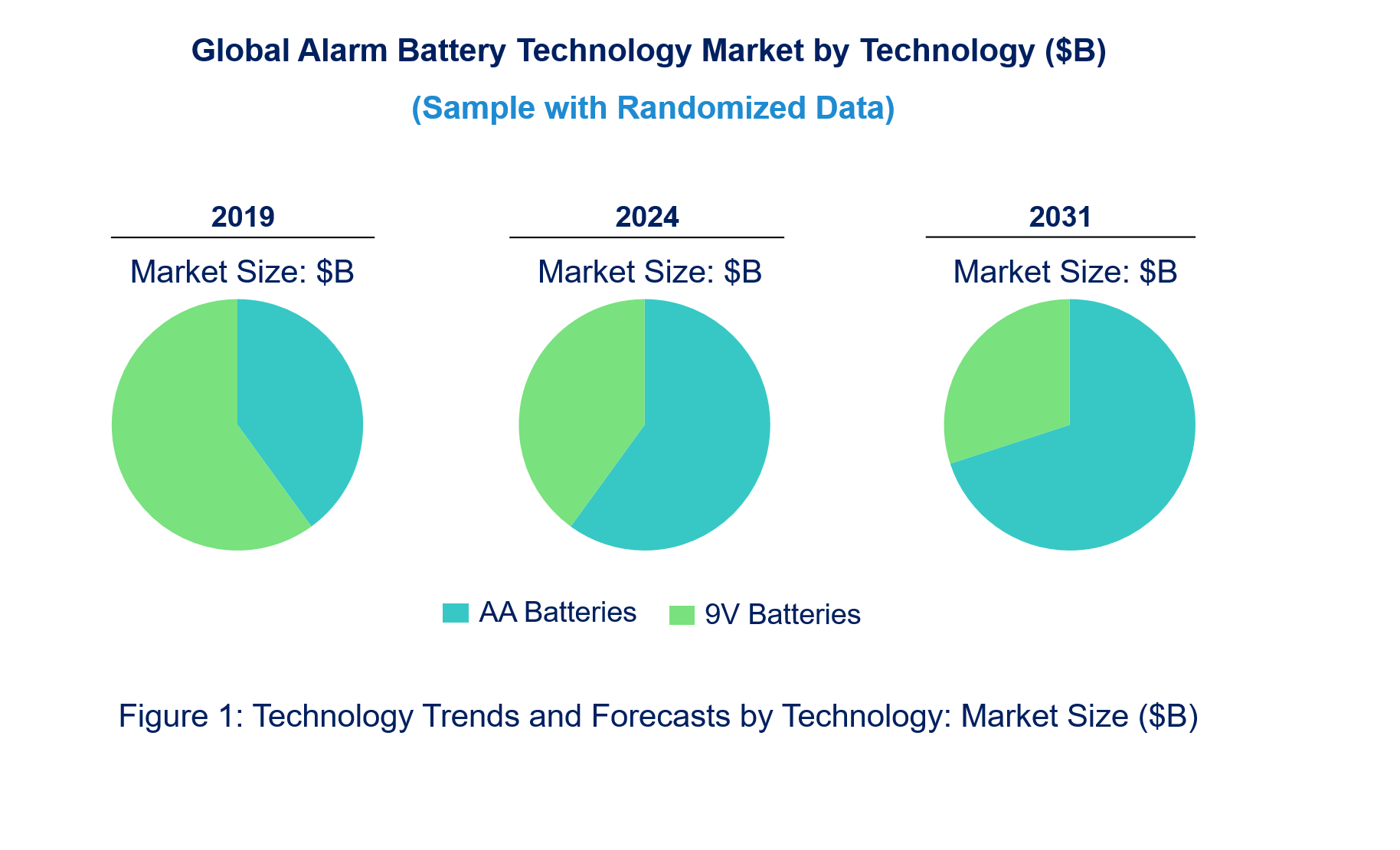
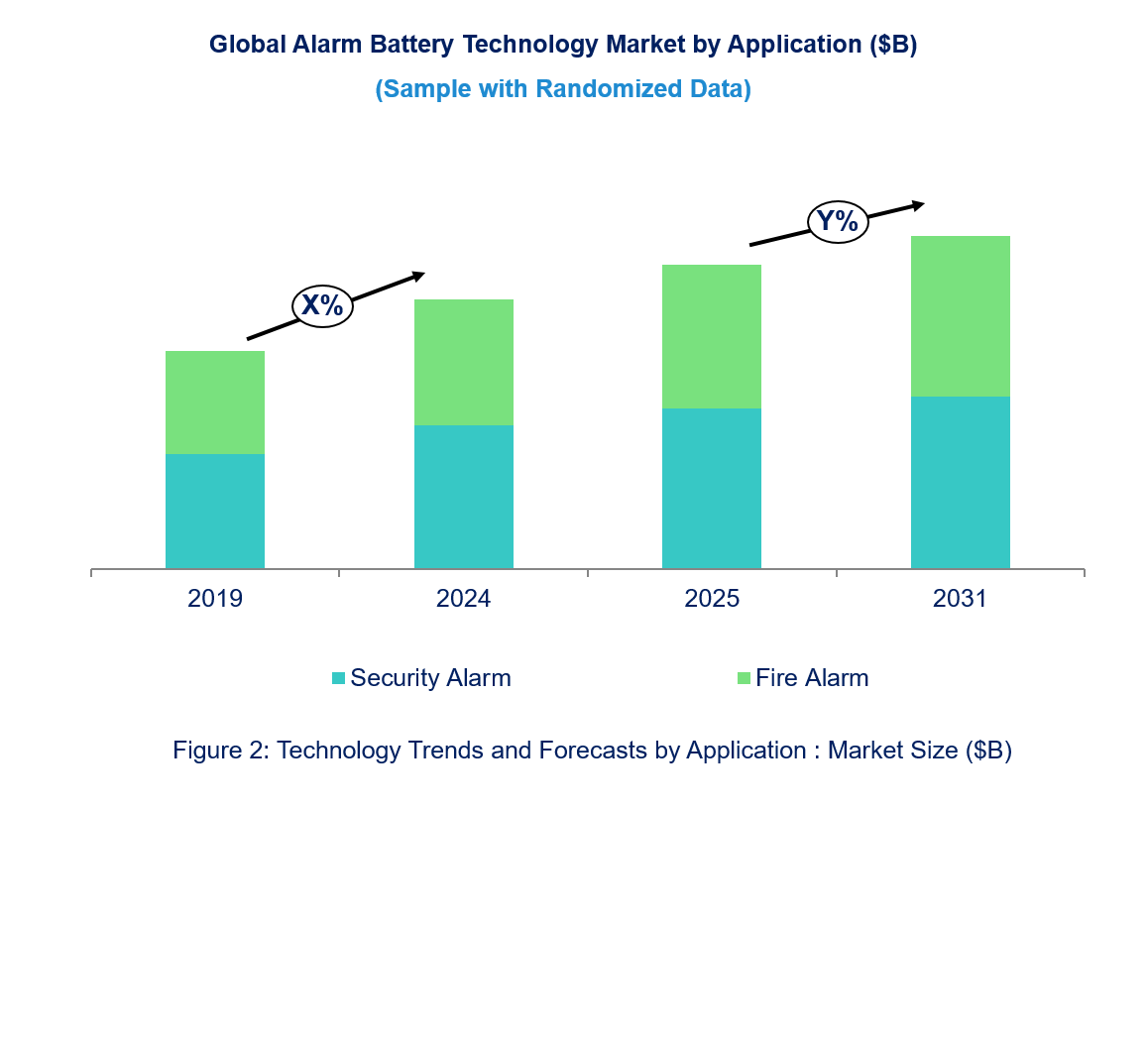
• Rechargeable Batteries Trend: Lithium-ion and nickel-metal hydride (Ni-Mh) batteries are among the rechargeable types used in alarm systems. Rechargeable batteries have longer life cycles and are more cost-effective compared to disposable types, hence waste is reduced, and sustainability increases. Rechargeable options are becoming increasingly popular for both residential and commercial alarm systems.
• Advances in Lithium-Based Battery Technologies: The new energy density of lithium-based batteries makes them preferred over the other options as they also have a long shelf life. Such batteries replace themselves less often and hence find ideal use in applications that include fire alarms and security systems to be maintained over longer periods.
• Smart Battery Management Systems (BMS) integration: Smart battery management systems are now being incorporated into alarm batteries to monitor performance, detect faults, and optimize battery life. Such systems ensure that the battery operates efficiently, and therefore, enhances the reliability of alarm systems by giving real-time data about battery health and charge status.
• Energy Efficiency and Long-Life Batteries: It means higher requirements for energy-efficient batteries from an alarm system due to its increasing demand for low maintenance as well as long-lasting power supply systems. This is, therefore, a trend toward producing battery systems with longer operational lifetime lifespans. Such devices should be replaced and maintained fewer times, especially in more considerable installations.
• More environmentally friendly batteries: With the increasing level of environmental awareness, eco-friendly batteries that cause less harm to the environment are in high demand. Manufacturers are now aiming at producing alarm batteries made from less toxic materials that are recyclable with minimal carbon footprint, which also attracts regulatory bodies and environmentally conscious consumers. The alarm battery market is changing with several key trends in place, including the shift toward rechargeable batteries, the emergence of lithium-based battery technologies, and smart battery management systems integration. These trends enhance the efficiency, sustainability, and reliability of alarm systems and increase their demand within residential, commercial, and industrial sectors. As such trends are unfolding, the alarm battery market will continue to evolve in growth and innovation.
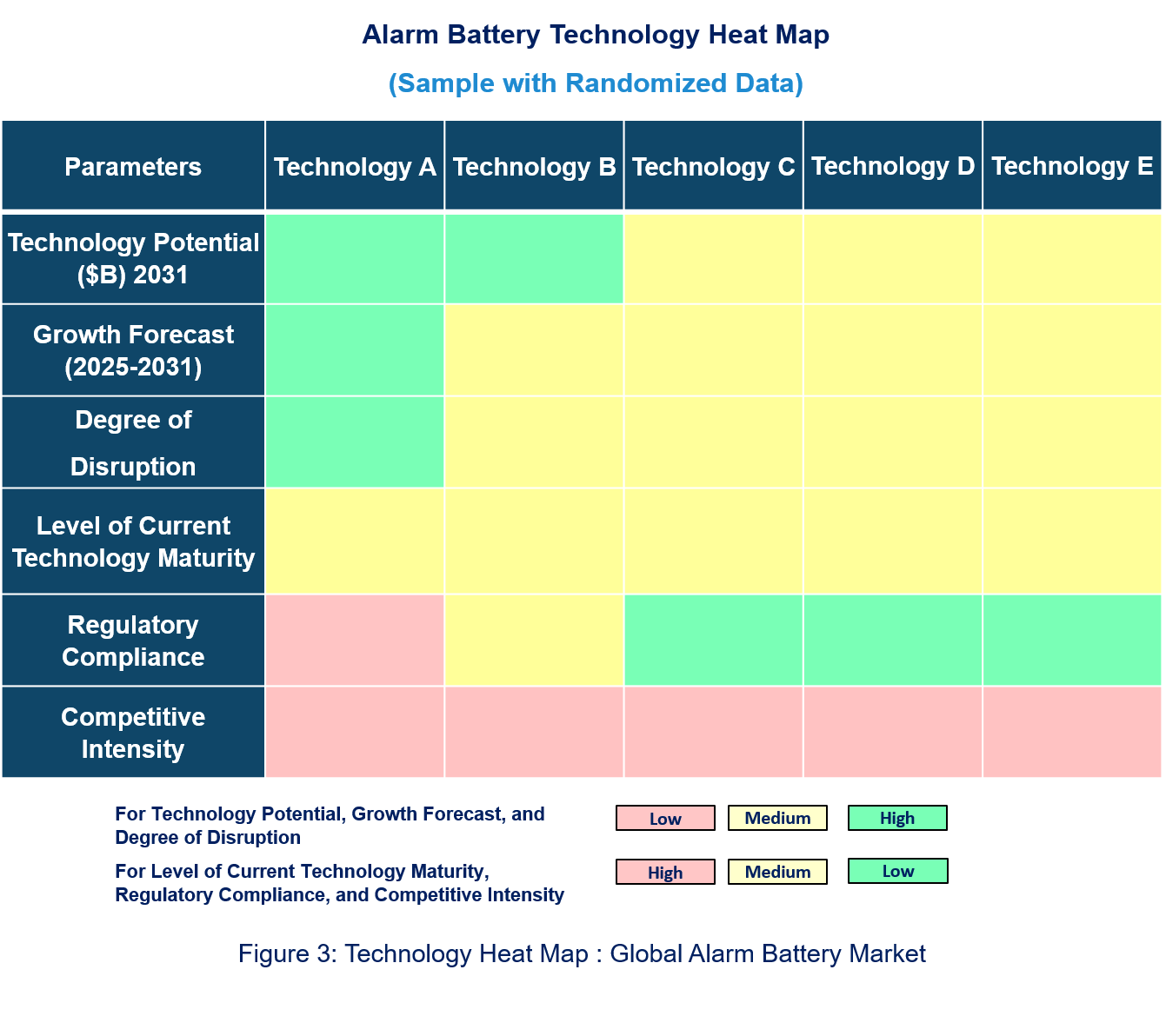
• Potential in Technology: Alarm batteries, especially those based on lithium-ion and other advanced chemistries, offer significant potential for improving the performance of alarm systems. With innovations in energy density and longer cycle lives, these batteries can provide more reliable and longer-lasting backup power. Moreover, consumers will save on maintenance and replacement costs as a result of increased energy efficiency. The use of rechargeable batteries also promotes sustainability by reducing waste and the need for frequent replacements. Additionally, the integration of smart features with alarm batteries can enhance monitoring and management, giving users more control over their security systems.
• Degree of Disruption: The disruption potential for alarm battery technologies is moderate to high. With smart home systems increasingly being adopted and the demand for greener, more efficient solutions, battery technologies are changing fast to meet these demands. Advanced technologies, such as lithium-ion, may replace traditional alkaline batteries, thus improving performance and environmental impact.
• Current Technology Maturity Level: Alarm battery technology maturity varies by type. While the more conventional alkaline batteries are ubiquitous, they are gradually being replaced by more modern, energy-efficient, and longer-lasting technologies, such as lithium-ion. However, these advanced technologies are still under development, with efforts continually made to enhance energy density, charging cycles, and reliability for alarm systems.
• Regulatory Compliance: Alarm batteries must be under regulatory compliance concerning safety, environmental impact, and eventual disposal. In many locations, there are strict performance standards for batteries to achieve some level of energy efficiency; they also need to be less hazardous and recyclable materials. Manufacturers need to guarantee that their alarm batteries keep up with these stringent environmental standards, more so on end-of-life disposal and recycling.
• Floyd Bell Company: Floyd Bell Company has launched a high-capacity line of alarm batteries designed to be reliable long-term in security and fire alarm systems. It has new batteries with energy density that is more enhanced plus faster charging time. This promises a more reliable power supply that reduces replacement frequencies and ensures fault-free alarm function.
• Storage Battery Systems: Storage Battery Systems has launched a new range of lithium-ion-based alarm batteries for commercial applications. These batteries offer extended service life, are more eco-friendly compared to traditional lead-acid alternatives, and provide superior performance in both security and fire alarms, making them an ideal choice for businesses seeking a more sustainable energy solution.
• Bohlinger: Bohlinger has developed a new generation of rechargeable AA batteries. These batteries are designed for applications in alarm systems. The new AA type has a much longer life cycle compared to previous generations and provides power consistently, even when exposed to fluctuating temperatures, so it can keep security and fire alarms running uninterruptedly across any environment.
• Crown Supply Co.: Crown Supply Co. has expanded its product line with new advanced 9V lithium batteries designed for security and fire alarm applications that provide higher energy density and power longevity, reducing replacement needs while enhancing the reliability of these systems in residential and commercial applications.
• Nppower International: Nppower International has launched a new range of high-performance alarm batteries with improved safety features. Their new batteries feature built-in overcharge protection and increased thermal stability, which make them safer and more reliable power sources for security alarms and fire detection systems.
• Varta Microbattery: It has developed a compact, yet powerful, lithium-ion battery solution specifically meant for use in fire and security alarms. The new technology involves a smaller form factor having higher energy output, providing a highly efficient and space-saving option for alarm systems that require a compact power source without sacrificing performance.
• Static Power: Static Power has launched a range of alarm batteries specifically designed for long-duration standby applications. The batteries provide stable voltage over a long period, allowing fire and security alarm systems to stay functional during power cuts, and therefore critical to infrastructure.
• SAFT America: SAFT America developed high-capacity, rechargeable lithium batteries to further enhance its alarm battery technology, with a considerable reduction in maintenance costs. This has more extended operational life, improved charge cycles, and increased reliability than traditional battery types. Hence, they provide substantial long-term savings for alarm system operators.
• FIAMM Technologies: FIAMM Technologies has introduced a series of eco-friendly alarm batteries based on next-generation lead-carbon technology. These are supposed to provide better deep-cycle performance and longer life, in order to meet the increasing demand for affordable and renewable power sources for fire and security alarm systems. In so many ways, the developments suggest constant evolution in the alarm battery market, as key innovators are striving to meet ever more specific and demanding needs in modern security alarms. With improvements in battery science and technology, this market seems to be transitioning toward ever-durability, safer, and better sustainable power supplies for different application sectors of security and fire alarms.
• Increased Demand for Security and Fire Alarm Systems: Increasing security and fire alarm systems installations across residential, commercial, and industrial sectors, with a focus on achieving high-performance batteries, also contributes to the growth in demand for alarm batteries, which are essential for consistent and continuous power supply that would work uninterruptedly through failures in the power distribution.
• Technological advancements in the chemistry of the battery: Innovations in battery chemistries, especially in lithium-based and nickel-metal hydride (Ni-Mh) technologies, enhance the performance and life of alarm batteries. These developments bring along longer battery life, higher energy density, and faster charging times, making for better reliability and reduced maintenance needs in alarm systems.
• Regulatory Standards and Safety Concerns: Governments and regulatory authorities are making stricter safety standards for alarm systems, including the quality and reliability of the batteries. The demand to comply with these regulations and ensure that alarm systems operate without interruptions is driving the development and demand for more efficient, high-quality alarm batteries.
• Consumer Shift Toward Rechargeable and Sustainable Solutions: Rechargeable and environment-friendly batteries are the new choice for consumers and businesses in light of increasing sustainability awareness. Over time, rechargeable alarm batteries are less expensive, and they do not produce as much waste as traditional disposable, which resonates with environmental concerns that are on the rise and more green energy options.
• Smart Features Integration into Alarm Systems: The rising smart home technologies are shaping the alarm battery market. Smart alarms need batteries that are efficient, long-lasting, and possess features such as low power consumption, higher energy density, and longer operational lifespans. The requirements for such batteries in alarm systems are creating a demand for more advanced battery solutions in alarm systems. Challenges in the alarm battery market are:
• High Cost of Advanced Battery Technologies: Despite these benefits, advanced battery technologies including lithium-ion and solid-state remain too expensive. These pricey start-up costs create difficulties in the high price sensitive user and business segments in bringing high-performance alarm systems more broadly to the low-cost markets.
• Poor Lifespan of Battery when Used in Extreme Conditions: Alarm batteries often struggle with harsh environmental conditions, for example, high temperatures or humidity. In such conditions, battery performance degrades rapidly and impacts the reliability of an alarm system. Manufacturers are investing in better battery technologies, but it remains a challenge for long-term, uninterrupted operation.
• Supply Chain and Raw Material Constraints: The production of high-performance alarm batteries depends on raw materials such as lithium, cobalt, and nickel. Fluctuations in the supply and cost of these materials can impact the price and availability of alarm batteries. Supply chain disruptions and material shortages could hinder the growth of the market in the near term.
• Consumer Awareness and Education: Consumer awareness about replacing and maintaining alarm batteries is yet another challenge in the alarm battery market. Most consumers are less aware of the quality standards of alarm system batteries used, which may impact how long their devices last reliably.
• Issues related to Battery Disposal and Recycling: As the demand for alarm batteries is rising, so is the problem of disposal and recycling of these batteries. Improper disposal of batteries can cause environmental damage. Although there is development in eco-friendly solutions for batteries, there still is a challenge in building efficient recycling programs for alarm batteries, especially in areas that do not have much recycling infrastructure. The alarm battery market is growing due to increasing demand for security and fire alarms. Improvements in battery chemistry and acceptance of rechargeable and sustainable solutions also make up this market. Key challenges for the growth include high battery costs, non-performance issues in harsh environmental conditions, and supply chain-related constraints. The key driving forces, along with associated challenges, will be crucial in the future development and adoption of alarm batteries in various applications.
• Floyd Bell
• Storage Battery Systems
• Bohlinger
• Crown Supply Co.
• Nppower International
• Varta Microbattery
• Technology Readiness: AA and 9V batteries are mature technologies with widespread application in alarm systems. While AA batteries are versatile and ubiquitous, their energy efficiency is limited compared to newer options. 9V batteries, though reliable, face pressure from advanced alternatives and require updates for better efficiency and sustainability in alarm systems.
• Competitive Intensity and Regulatory Compliance: Both AA and 9V have stiff competition from newer battery technologies, mainly rechargeable lithium-ion batteries. Although AA will dominate many general applications, there are unique uses for which 9V remains highly important-for example, for alarms. Both battery types must stay compliant with relevant regulations about safety standards and other disposal regulations.
• Disruption Potential: AA and 9V batteries have different levels of disruption potential in the alarm battery market. AA batteries are the most used due to their low price and convenience, but it is at risk of being substituted with a more efficient technology called lithium-ion. 9V is a critical battery for smoke detectors, but newer technologies offering longer battery life might steal the show.
• AA Batteries
• 9V Batteries
• Security Alarm
• Fire Alarm
• North America
• Europe
• Asia Pacific
• The Rest of the World
• Latest Developments and Innovations in the Alarm Battery Technologies
• Companies / Ecosystems
• Strategic Opportunities by Technology Type




Choose a license that fits your team. Instant PDF delivery.
Prices exclude taxes. Instant delivery. Custom licensing available on request.
Market Report · May 18, 2026
Market Report · May 18, 2026
Market Report · May 18, 2026
Trusted partner for strategic intelligence and business growth


Receive a complimentary market analysis tailored to your industry. Our analysts will identify key growth opportunities and competitive dynamics specific to your business.

Market size, growth rate, and key trend analysis for your specific sector.

Top competitor positioning and market share analysis.

Strategic recommendations backed by data-driven insights.
Get curated market intelligence and competitive moves straight to your inbox.
By subscribing, you agree to receive our monthly insights. Unsubscribe anytime.
Receive a complimentary market analysis tailored to your industry. Our analysts will identify key growth opportunities and competitive dynamics specific to your business.
Market size, growth rate, and key trend analysis for your specific sector.
Top competitor positioning and market share analysis.
Strategic recommendations backed by data-driven insights.
Get curated market intelligence, emerging trends, and competitive moves straight to your inbox each month.
By subscribing, you agree to receive our monthly insights. Unsubscribe anytime.
We'll send your sample report shortly.